Weight Loss · Reference
GLP-1 Pills vs Injections: Semaglutide Tablets, Weekly Shots and What Actually Works
The only GLP-1 medication with an FDA-approved pill is semaglutide, which has a once-daily tablet approved for type 2 diabetes and, since December 2025, for weight management; every other GLP-1 medication covered on this site, including tirzepatide, is an injection.
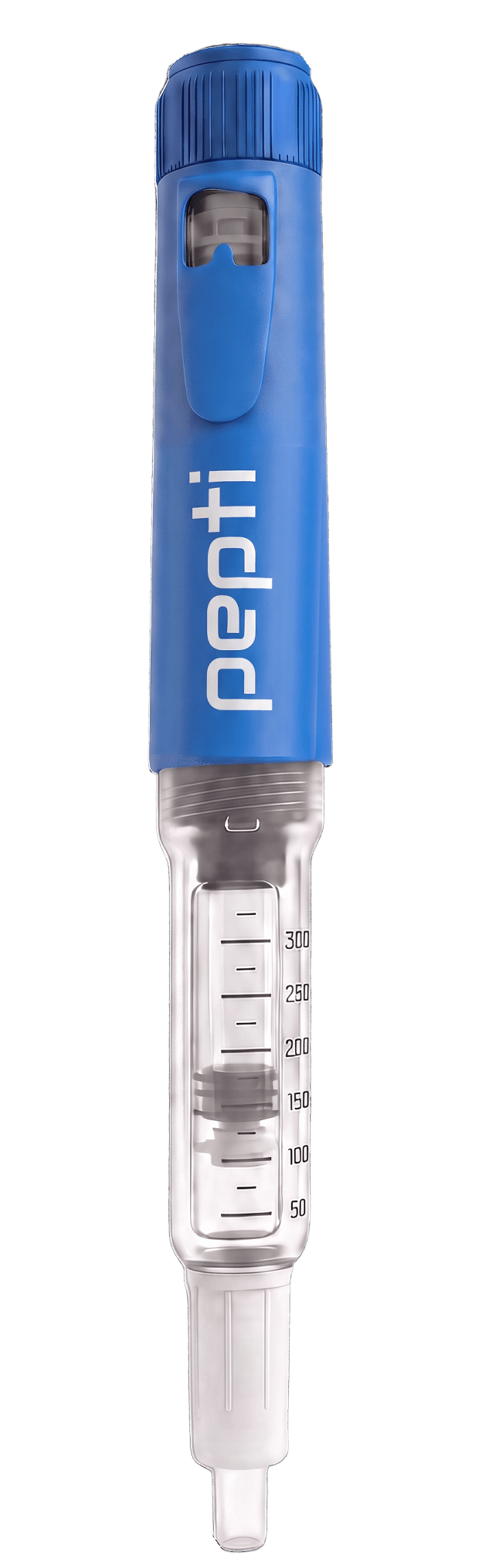
Treatments mentioned
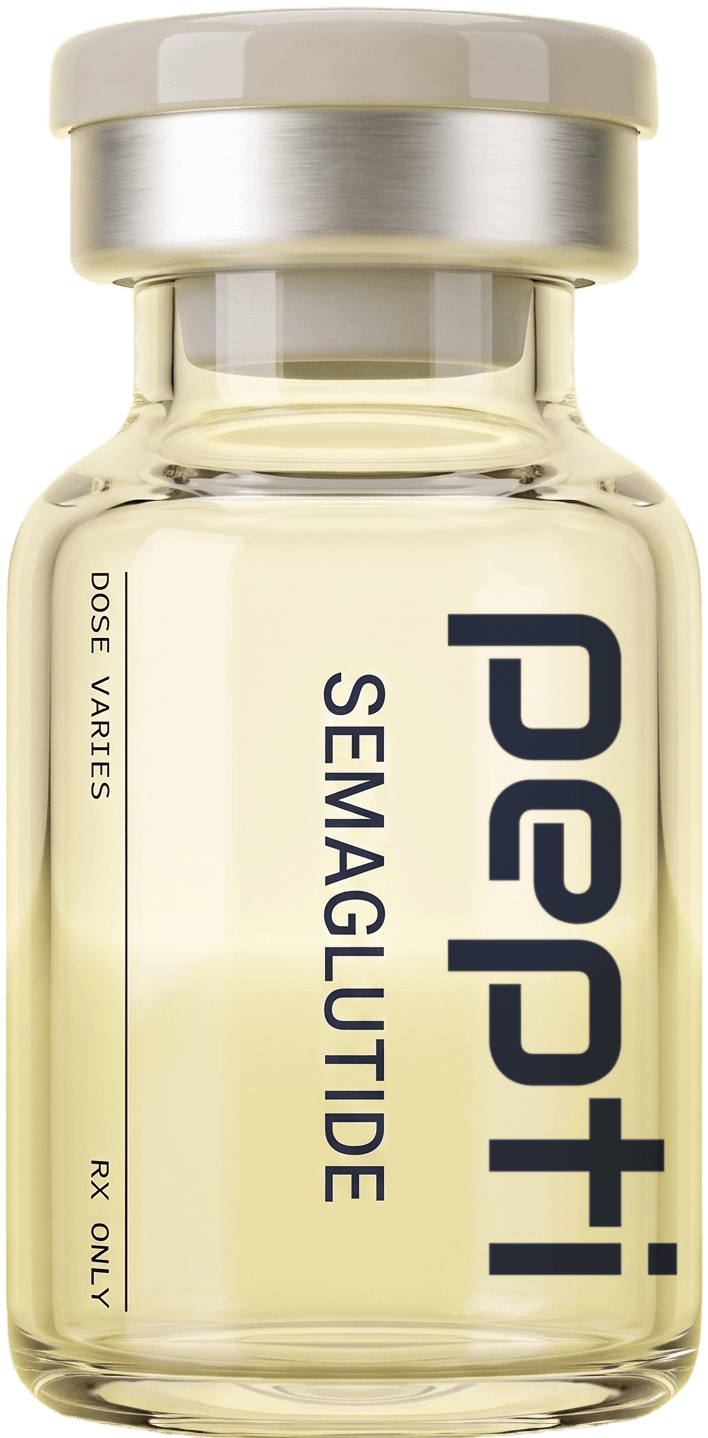
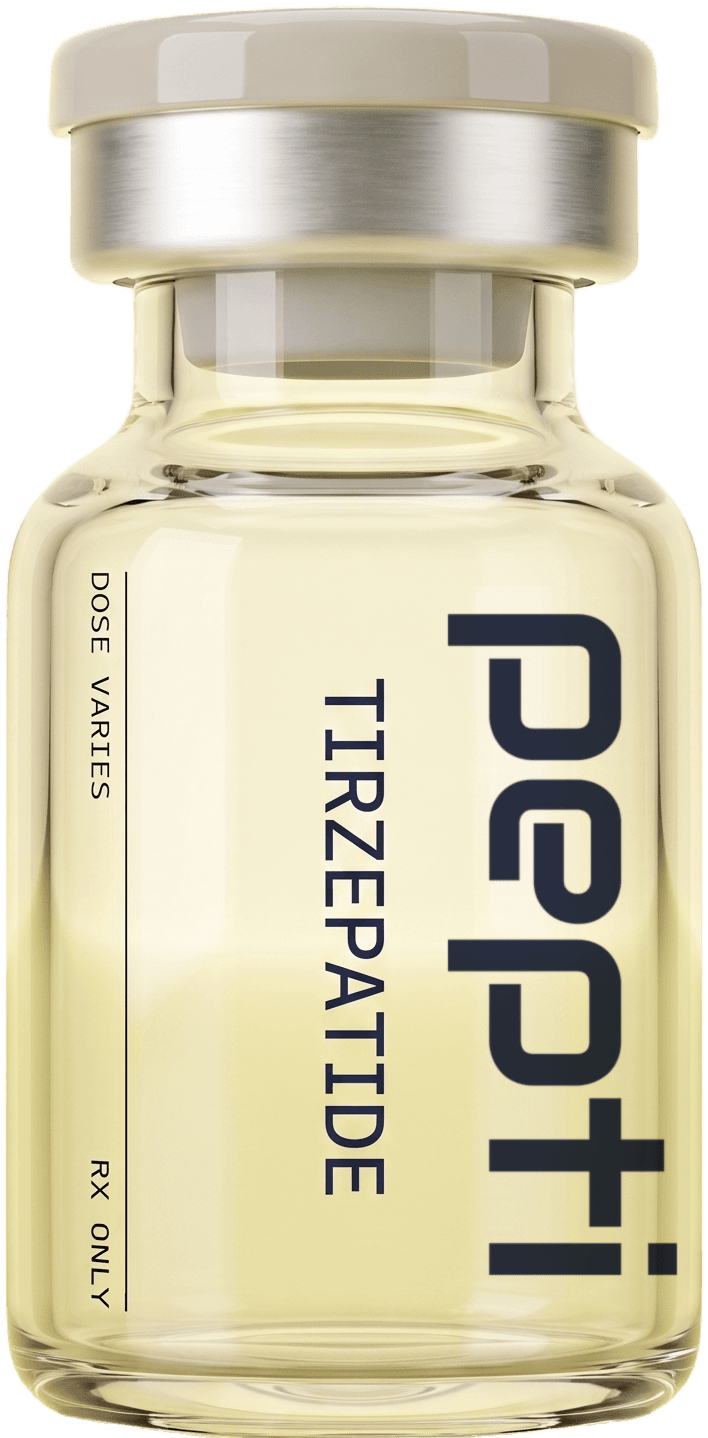
An approved semaglutide tablet is a real prescription medicine, reviewed by the FDA for its approved uses. Supplements sold as "GLP-1 pills" or "natural GLP-1 boosters" are a different thing: they are not GLP-1 receptor agonists, and nothing about them is established by the GLP-1 trials. Pepti prescribes compounded semaglutide and tirzepatide as once-weekly injections, not tablets.
This page compares the pill and the injection, explains why most peptides are injected, sorts real GLP-1 tablets from supplements that borrow the name, and sets out what Pepti offers.
GLP-1 Pills vs Injections
The short answer
| Question | Pill | Injection |
|---|---|---|
| Which GLP-1 medications come this way? | Semaglutide only | Semaglutide, tirzepatide, liraglutide, dulaglutide, exenatide |
| How often? | Once daily | Once weekly for semaglutide and tirzepatide |
| FDA approved? | The semaglutide tablet is an approved product | The manufactured injections are approved; compounded vials are not |
| Does Pepti prescribe it? | No | Yes: semaglutide from $99/mo and tirzepatide from $159/mo |
| Needle? | No | A small insulin syringe under the skin |
| Prescription needed? | Yes | Yes |
Both Pepti prices are "from" prices, because GLP-1 vials are dose-specific and the price moves with the strength. Every price is all-in, covering medication, physician review, refill management and shipping, with no separate membership fee. Compounded medications are not FDA approved.
GLP-1 Pills vs Injections
Which GLP-1 medications come as a pill
By generic name, and leaving brand names out:
| Medication | Receptors | Approved forms | What Pepti prescribes |
|---|---|---|---|
| Semaglutide | GLP-1 | Weekly injection for type 2 diabetes; daily tablet for type 2 diabetes (approved September 2019); weekly injection for weight management; daily 25 mg tablet for weight management (added December 2025) | Compounded weekly injection |
| Tirzepatide | GIP and GLP-1 | Weekly injection | Compounded weekly injection |
| Liraglutide | GLP-1 | Daily injection | Not prescribed |
| Dulaglutide | GLP-1 | Injection | Not prescribed |
| Exenatide | GLP-1 | Injection | Not prescribed |
So "semaglutide pills" are real, approved and prescription-only. "Tirzepatide pills" are not something Pepti's references describe as approved; that question is answered in is there a tirzepatide pill.
GLP-1 Pills vs Injections
Why most GLP-1 medications are injected
The digestion problem
GLP-1 medications are peptides: short chains of amino acids. The digestive system exists to dismantle proteins, and gastric acid and pancreatic enzymes break most peptides into fragments before absorption. That is why almost every peptide medication is injected subcutaneously. More is in peptides for gut health.
A tablet form of a peptide has to get around that problem, and the semaglutide tablet is the one GLP-1 product that has been engineered and approved to do so. That is also why it is dosed daily rather than weekly.
Why the injection can be weekly
The natural GLP-1 hormone is broken down within minutes by an enzyme called DPP-4. Semaglutide was modified so DPP-4 cannot clear it quickly and so it binds albumin in the blood, which stretches its half-life to roughly a week. Tirzepatide uses a similar albumin-binding chain and has a half-life of about five days. Given under the skin, that long half-life is what allows one injection a week. The full mechanism is in what is a GLP-1.
GLP-1 Pills vs Injections
Pill vs injection, side by side
| Semaglutide tablet | Weekly GLP-1 injection | |
|---|---|---|
| Active ingredient | Semaglutide | Semaglutide or tirzepatide |
| How often | Every day | Once a week, same day each week |
| What you handle | A tablet | A vial and an insulin syringe, or a manufacturer's pen |
| Missed dose | A daily schedule to keep | One weekly appointment to keep; the tirzepatide label allows a missed dose within 4 days (96 hours) |
| Side effects | Same molecule, same class profile | Gastrointestinal effects concentrated after starting and after each increase |
| Contraindications | Medullary thyroid carcinoma or MEN 2 history, pregnancy | The same |
| Who makes it | The manufacturer, as an approved product | The manufacturer (approved) or a 503A pharmacy (compounded, not approved) |
| Available at Pepti | No | Yes, as compounded dose-specific vials |
Do GLP-1 pills work?
The approved semaglutide tablet is an FDA-approved medicine for type 2 diabetes and, since December 2025, for chronic weight management, which means the FDA reviewed evidence for those uses. Pepti's references do not summarize the tablet's own trials, so this page does not compare its results with the injections and does not quote a number for either. What can be said plainly is that the large trials cited across this site, STEP, SELECT, SURPASS and SURMOUNT, were run on the injections, and that trial averages describe groups rather than any one person.
"Do GLP-1 pills work" has a different answer for products that are not medications at all, covered next.
The side effects do not change with the form
The molecule brings the side effects, whatever the route. Across the class they are mostly gastrointestinal: nausea, diarrhea, vomiting, constipation, indigestion, reflux and early fullness, concentrated in the days after starting and after each dose increase. Serious but uncommon: pancreatitis, gallbladder disease, dehydration that can injure the kidneys, bowel obstruction and allergic reactions. Both semaglutide and tirzepatide carry a boxed warning based on thyroid C-cell tumors in rodents. The full list is in GLP-1 side effects.
GLP-1 Pills vs Injections
"GLP-1 pills" that are not GLP-1 medications
Search results for GLP-1 pills include supplements, "natural GLP-1 boosters," patches and drops. Pepti does not sell any of them, and none of Pepti's references describes a trial of any of them. Described neutrally:
| What it is called | What it is | What is established |
|---|---|---|
| "GLP-1 supplement" or "natural GLP-1 booster" | A non-prescription product, usually plant extracts or fibers, marketed around the GLP-1 name | It is not a GLP-1 receptor agonist; the GLP-1 medication trials say nothing about it |
| "GLP-1 patch" | A product applied to the skin | No GLP-1 medication on this site is approved in that form |
| Oral drops or strips sold without a prescription | Usually sold "for research purposes" | The FDA has warned companies selling unapproved semaglutide and tirzepatide under those labels |
| Salt forms such as "semaglutide sodium" | A different active ingredient | The FDA has stated salt forms are not the ingredient in the approved drugs |
The plain point: a GLP-1 receptor agonist is a prescription medication. A product that does not need a prescription is not one, whatever the label says. More on unaccountable sellers is in research peptides vs prescription peptides.
GLP-1 Pills vs Injections
Which one makes sense for you
| Your situation | What it points toward |
|---|---|
| You want a tablet specifically | The approved semaglutide tablet, prescribed and filled through the approved-product route; Pepti does not dispense it |
| Your insurance covers a branded GLP-1 | Check that route first; see does insurance cover compounded GLP-1 |
| You prefer one dose a week | A weekly injection, semaglutide or tirzepatide |
| You are paying cash | Pepti's compounded vials, from $99/mo (semaglutide) or from $159/mo (tirzepatide), all-in |
| You have a medullary thyroid carcinoma or MEN 2 history, or are pregnant | Neither form |
| Needles are the barrier | Raise it on your intake; the injection is a small subcutaneous syringe once a week |
Whichever form is right is worked out with a physician who has your history. Semaglutide and tirzepatide are alternatives, never combined, and a pill and an injection of semaglutide are not taken together either.
GLP-1 Pills vs Injections
What Pepti prescribes
Pepti prescribes compounded semaglutide and compounded tirzepatide as dose-specific vials, once weekly. Each strength is a separate vial concentrated so that one weekly dose is a single draw; the directions, in millilitres and units on a U-100 insulin syringe, are printed on the vial. Each vial holds four weekly doses, refills run every 28 days, one vial per fill, and both ship refrigerated with ice packs, sterile syringes and alcohol prep pads. Neither is offered as a pen or tablet. Pepti's GLP-1 vials contain no B12.
Your physician sets your strength and directions after reviewing your intake. The dose ladders are in semaglutide dosing chart and tirzepatide dosing chart, and which molecule suits whom is in best GLP-1 for weight loss.
GLP-1 Pills vs Injections
What the evidence shows, honestly
The GLP-1 medications have the strongest evidence base of anything in this category, and almost all of the trials cited on this site were run on the manufacturers' weekly injections. The semaglutide tablet is an approved product with its own review behind it. Compounded vials share the active ingredient with the approved products, not their trials or approval.
What is not established: any effect of supplements or "boosters" marketed with the GLP-1 name, any approved oral form of tirzepatide in Pepti's references, and any reason to expect a compounded tablet to behave like the approved one. No one can tell you in advance how you will respond to any form.
GLP-1 Pills vs Injections
Where to get a GLP-1 prescribed
- Complete a free online intake covering your history, medications and what you want help with.
- A physician licensed in your state reviews it, usually within 24 hours.
- If it is appropriate, a PCAB-accredited, FDA-registered US 503A pharmacy compounds it to that prescription. Lot test results are published at /quality/lab-results.
- It ships refrigerated with ice packs, sterile syringes and alcohol prep pads, with your directions printed on the vial.
- Your care team stays reachable for questions and side effects, and refills run every 28 days.
Pepti is cash-pay and does not bill insurance. Step-by-step pages: how to get semaglutide prescribed online and how to get tirzepatide prescribed online.
References
What this is based on.
References
- Wilding JPH, Batterham RL, Calanna S, et al.. Once-Weekly Semaglutide in Adults with Overweight or Obesity (STEP 1) · New England Journal of Medicine (2021) · PMID 33567185
- Lincoff AM, Brown-Frandsen K, Colhoun HM, et al.. Semaglutide and Cardiovascular Outcomes in Obesity without Diabetes (SELECT) · New England Journal of Medicine (2023) · PMID 37952131
- Wadden TA, Bailey TS, Billings LK, et al.. Effect of subcutaneous semaglutide vs placebo as an adjunct to intensive behavioral therapy on body weight in adults with overweight or obesity (STEP 3) · JAMA (2021) · PMID 33625476
- Rubino D, Abrahamsson N, Davies M, et al.. Effect of Continued Weekly Subcutaneous Semaglutide vs Placebo on Weight Loss Maintenance in Adults With Overweight or Obesity: The STEP 4 Randomized Clinical Trial · JAMA (2021) · PMID 33755728
- Marso SP, Bain SC, Consoli A, et al.. Semaglutide and Cardiovascular Outcomes in Patients with Type 2 Diabetes (SUSTAIN-6) · New England Journal of Medicine (2016) · PMID 27633186
- Davies M, Færch L, Jeppesen OK, et al.. Semaglutide 2.4 mg once a week in adults with overweight or obesity, and type 2 diabetes (STEP 2): a randomised, double-blind, double-dummy, placebo-controlled, phase 3 trial · The Lancet (2021) · PMID 33667417
- Garvey WT, Batterham RL, Bhatta M, et al.. Two-year effects of semaglutide in adults with overweight or obesity: the STEP 5 trial · Nature Medicine (2022) · PMID 36216945
- Rubino DM, Greenway FL, Khalid U, et al.. Effect of Weekly Subcutaneous Semaglutide vs Daily Liraglutide on Body Weight in Adults With Overweight or Obesity Without Diabetes: The STEP 8 Randomized Clinical Trial · JAMA (2022) · PMID 35015037
- Aronne LJ, Horn DB, le Roux CW, et al.. Tirzepatide as Compared with Semaglutide for the Treatment of Obesity (SURMOUNT-5) · New England Journal of Medicine (2025) · PMID 40353578
- Sanyal AJ, Newsome PN, Kliers I, et al.. Phase 3 Trial of Semaglutide in Metabolic Dysfunction-Associated Steatohepatitis (ESSENCE) · New England Journal of Medicine (2025) · PMID 40305708
- Wilding JPH, Batterham RL, Davies M, Van Gaal LF, Kandler K et al.. Weight regain and cardiometabolic effects after withdrawal of semaglutide: The STEP 1 trial extension · Diabetes Obes Metab (2022) · PMID 35441470
- Batsis JA, Gavras A, Gross DC, Cheever CR, Da Silva BR et al.. Effect of Incretin-Based and Nonpharmacologic Weight Loss on Body Composition: A Systematic Review · Ann Intern Med (2026) · PMID 41996180
Citations are provided for educational purposes. They do not constitute medical advice. Always discuss any peptide protocol with your prescribing physician.
Common questions
GLP-1 Pills vs Injections, answered.
Yes, one: semaglutide has an approved once-daily tablet, for type 2 diabetes since September 2019 and for weight management since December 2025. Every other GLP-1 medication on this site is an injection.
The approved semaglutide tablet is an FDA-approved medicine for its labeled uses. Supplements sold as "GLP-1 pills" or boosters are not GLP-1 receptor agonists, and the GLP-1 trials establish nothing about them.
Same active ingredient, different product and schedule: the tablet is taken daily, the injection weekly. The side effects and contraindications come from the molecule, so they are the same.
Pepti's references do not compare the two head to head, so this page does not claim either is better. The practical differences are daily versus weekly dosing, a tablet versus a syringe, and whether insurance or cash pay is involved.
No. Pepti prescribes compounded semaglutide as a once-weekly injection from dose-specific vials, from $99 a month.
Not at Pepti, and Pepti's references describe no approved tirzepatide tablet. See is there a tirzepatide pill.
They are peptides, and the digestive tract breaks most peptides down before absorption. Under the skin, semaglutide and tirzepatide last long enough for one dose a week.
The side effects come from the molecule, so the same gastrointestinal profile and the same warnings apply. Pepti's references do not show that the tablet is gentler.
They are not GLP-1 medications, and nothing in the GLP-1 evidence applies to them. If a product does not need a prescription, it is not a GLP-1 receptor agonist.
No. Combining GLP-1 receptor agonists is not recommended on the approved labels, whether two injections or a tablet and an injection.
No. Compounded medications are not FDA approved. The approved products are the manufacturers' injections and tablet; a compounded vial shares the active ingredient, not the approval.
No. Bloodwork is not required for any Pepti treatment. If your physician wants labs for your care, they'll ask through your account. The free assessment goes to a physician licensed in your state. A consultation does not guarantee a prescription.
Related answers
Keep reading.
- What Is a GLP-1? Meaning, How GLP-1 Medications Work, and the List by Generic Name
- GLP-1 Sulfur Burps: Why Semaglutide and Tirzepatide Cause Burping and What Helps
- GLP-1 Vomiting: How Common It Is on Semaglutide and Tirzepatide and When to Get Help
- GLP-1 Weekly Injection Day: How to Pick It, Keep It, and Change It
- Glutathione IV vs Injection: Dose, Evidence, Safety & Cost
Next step
See what a physician recommends for you.
A licensed physician in your state reviews your intake to see whether treatment fits your history. A consultation does not guarantee a prescription.