Weight Loss · Reference
Can You Use HSA or FSA Funds for Peptides? What to Know Before You Pay
This page covers how HSA and FSA funds work with a peptide prescription, why insurance and HSA/FSA eligibility are separate questions, what to ask your plan administrator, what to keep, and what a month of treatment actually costs.
Medically reviewed by Dr. Gene, MD · November 4, 2026

Yes, most patients can use HSA or FSA funds for peptides prescribed by a physician: physician-prescribed compounded medications are generally HSA and FSA eligible. An HSA or FSA card is a payment card, so you can use it at Pepti's checkout like any other card. Whether a specific purchase is approved is up to your plan, so check with your plan administrator and keep your receipts. Insurance is a different question: Pepti is cash-pay and does not bill insurance, and insurance plans almost never cover compounded peptides.
This page covers how HSA and FSA funds work with a peptide prescription, why insurance and HSA/FSA eligibility are separate questions, what to ask your plan administrator, what to keep, and what a month of treatment actually costs.
Can You Use HSA or FSA Funds for Peptides? What to Know Before You Pay
The short answer
| Question | Answer |
|---|---|
| Can I use my HSA or FSA for peptides? | Most patients can. Physician-prescribed compounded medications are generally HSA and FSA eligible |
| Can I pay with my HSA or FSA card at checkout? | Yes. It is a payment card and works like any card |
| Is my specific purchase guaranteed to be approved? | No. That is up to your plan, so check with your plan administrator |
| What should I keep? | Your receipts |
| Does Pepti bill insurance? | No. Pepti is cash-pay |
| Will insurance cover compounded peptides? | Almost never |
| What does this apply to? | Physician-prescribed compounded medications, which is what Pepti dispenses |
Can You Use HSA or FSA Funds for Peptides? What to Know Before You Pay
How HSA and FSA funds work with a peptide prescription
A health savings account (HSA) and a flexible spending account (FSA) both hold money set aside for medical expenses. Many come with a debit-style card, and that card runs through checkout like any other payment card.
At Pepti, every medication is prescribed by a physician licensed in your state after reviewing your intake, then compounded by a PCAB-accredited, FDA-registered US 503A pharmacy against that prescription. Physician-prescribed compounded medications like these are generally HSA and FSA eligible.
What "generally eligible" means in practice
Eligibility is decided by your plan, not by Pepti and not by a website. Most patients can use their HSA or FSA, but plans and administrators differ in what they approve and what documentation they ask for. Before you rely on it:
- Check with your plan administrator that prescribed compounded medications are covered by your account.
- Ask whether they need any documentation beyond a receipt, and what form it should take.
- Keep your receipts for every charge.
That is the whole process. This page does not give tax advice; your plan administrator is the right person for any question about your own account.
Paying at checkout
Enter your HSA or FSA card at checkout the same way you would any card. Treatment is billed as one all-in monthly price, and refills run every 28 days, so each refill is a separate charge with its own receipt. If your card is ever declined, your plan administrator can tell you why.
Can You Use HSA or FSA Funds for Peptides? What to Know Before You Pay
What to keep
| Keep this | Why |
|---|---|
| Every receipt | Your plan may ask you to show what each charge was for |
| Your order confirmation | Shows the medication and date |
| The pharmacy label or paperwork from the vial | Shows the medication was dispensed on a prescription in your name |
| Any letter or form your administrator asks for | Some plans want extra documentation before approving a claim |
Store them together, by month. Each 28-day refill is one charge and one receipt, which makes the record simple.
Can You Use HSA or FSA Funds for Peptides? What to Know Before You Pay
Why insurance is a different question
People often assume that if insurance will not pay, an HSA or FSA will not either. They are separate systems with separate rules. Insurance coverage is built around FDA-approved products on a formulary. HSA and FSA accounts follow their own rules, set by your plan, and physician-prescribed compounded medications are generally eligible.
Why insurance almost never covers compounded peptides
What a plan needs to pay a pharmacy claim What a compounded peptide has Result A listing on the plan formulary Formularies list approved manufactured products No listing to pay against A National Drug Code for the finished product Compounded preparations are made per prescription, not assigned a finished-product code in the usual way The claim cannot be processed normally An approved indication matching a diagnosis code No approved indication for most of these molecules No code to submit under Evidence of efficacy for that indication Most wellness peptides have preclinical evidence only Fails medical-necessity review Compounded medications are not FDA approved. They are lawful because section 503A of the Federal Food, Drug, and Cosmetic Act exempts a preparation compounded for an identified individual patient from new-drug approval, and a pharmacy benefit pays against products that went through approval. The exemption that makes compounding legal is the same one that puts it outside insurance coverage. That is a category mismatch, not a clinical judgement, which is why appeals for compounded preparations almost never succeed. The full explanation is in does insurance cover peptide therapy.
Compounding riders
Some plans have a compounding benefit, usually with a dollar cap and a requirement that every active ingredient be an individually covered drug. Multi-ingredient blends are the first thing such a benefit excludes, so a four-peptide vial such as KLOW fails that test on every component.
The branded GLP-1 exception
Approved branded semaglutide and tirzepatide products are on some formularies for approved indications, usually with prior authorization and documented criteria. If you may qualify, it is worth asking your plan before paying directly, because a covered copay usually beats direct pay. That route runs through your own prescriber and your own plan. Coverage of a branded product tells you nothing about a compounded preparation of the same active ingredient: a plan looks up a product identifier, not a molecule.
Medicare
A covered Part D drug is defined by reference to drugs approved for safety and effectiveness under section 505 of the Federal Food, Drug, and Cosmetic Act. A compounded preparation is exempt from that section, so it does not meet the definition. Part D also incorporates excludable categories that include agents used for weight loss or weight gain and for cosmetic purposes or hair growth.
Can You Use HSA or FSA Funds for Peptides? What to Know Before You Pay
What a month costs at Pepti
Because insurance is not part of the picture, the price you see is the price you pay. Every Pepti price is one all-in monthly figure covering the medication, physician review, refill management and shipping, with no membership fee. Injectables ship with sterile syringes and alcohol prep pads, refrigerated with ice packs.
| Treatment | What is in the vial | Price |
|---|---|---|
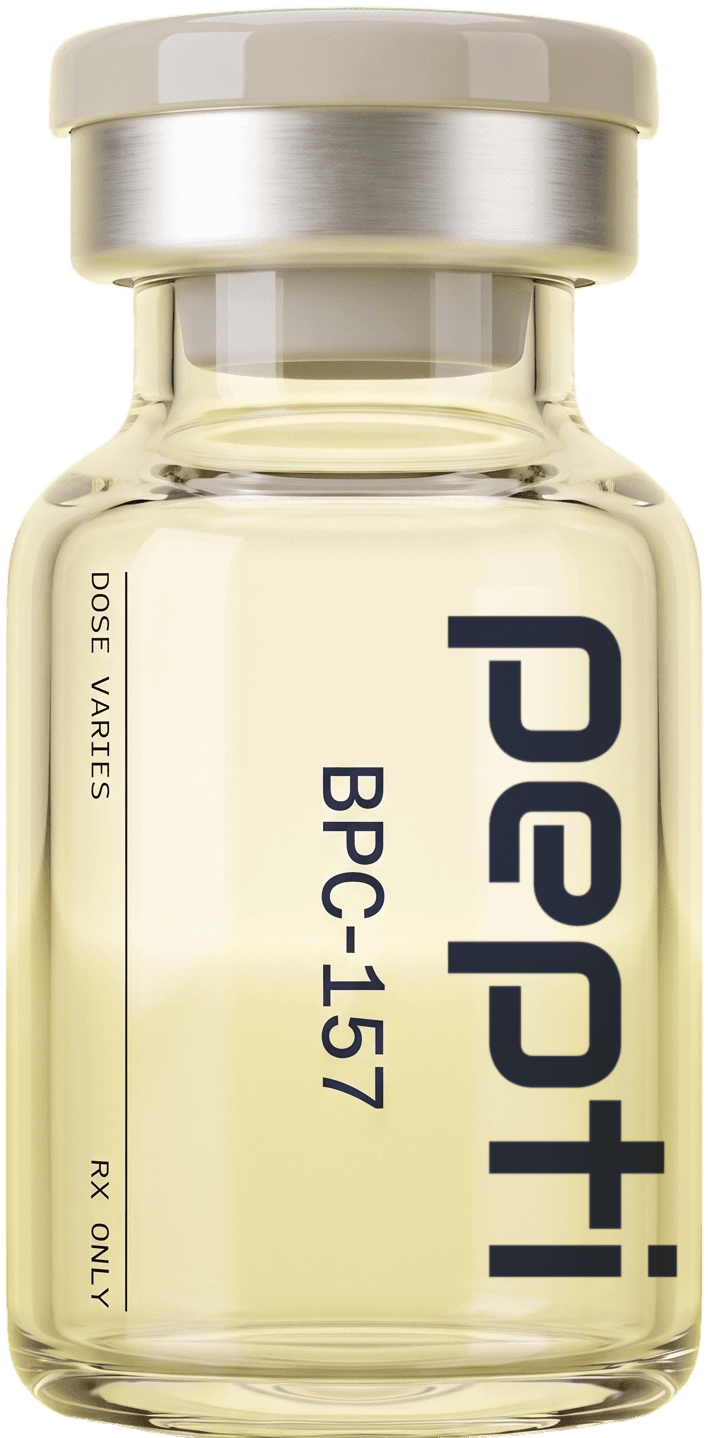
| BPC-157 | 5 mg BPC-157 in 5 mL | $209/mo |
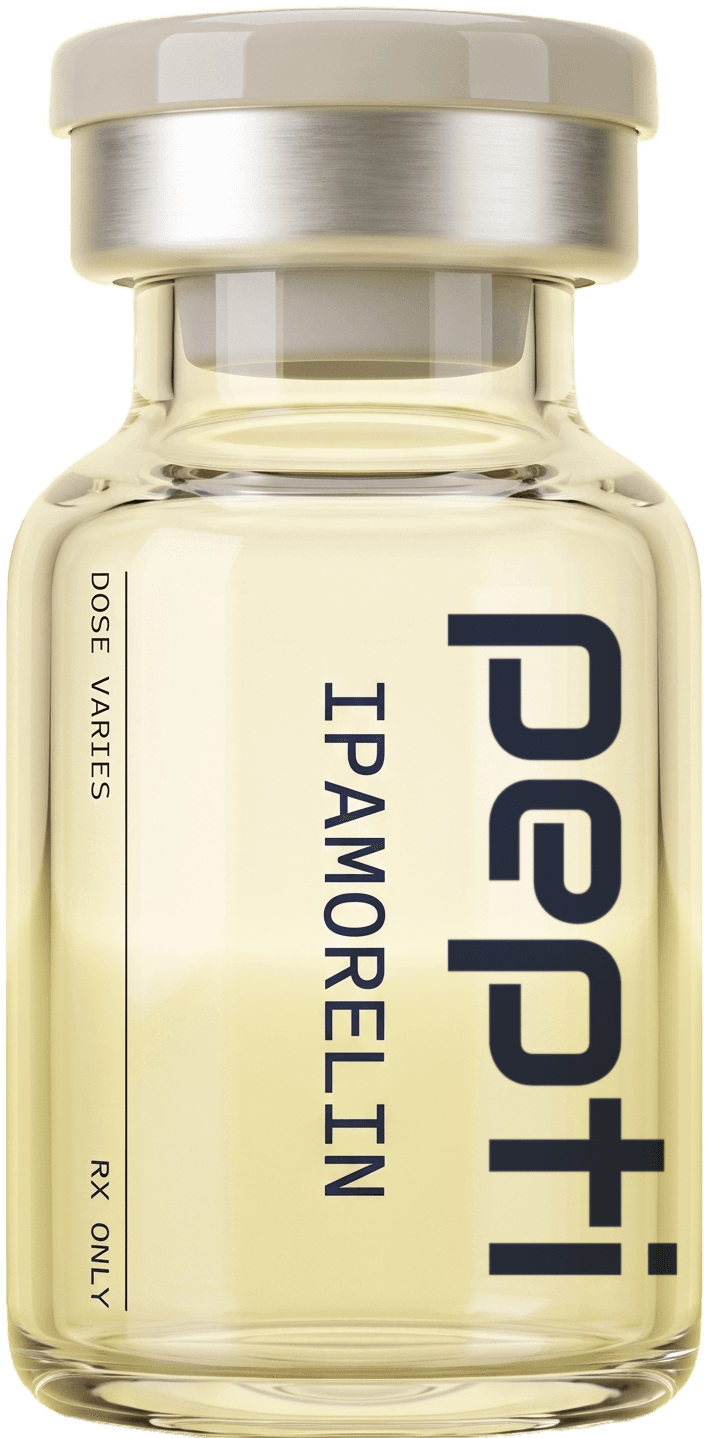
| CJC-1295 / Ipamorelin | 6 mg CJC-1295, 12 mg ipamorelin in 5 mL | $239/mo |
| NAD+ Injection | 1000 mg NAD+ in 10 mL | $249/mo |
| KLOW Blend | GHK-Cu, KPV, BPC-157, TB-500 in 5 mL | $259/mo |
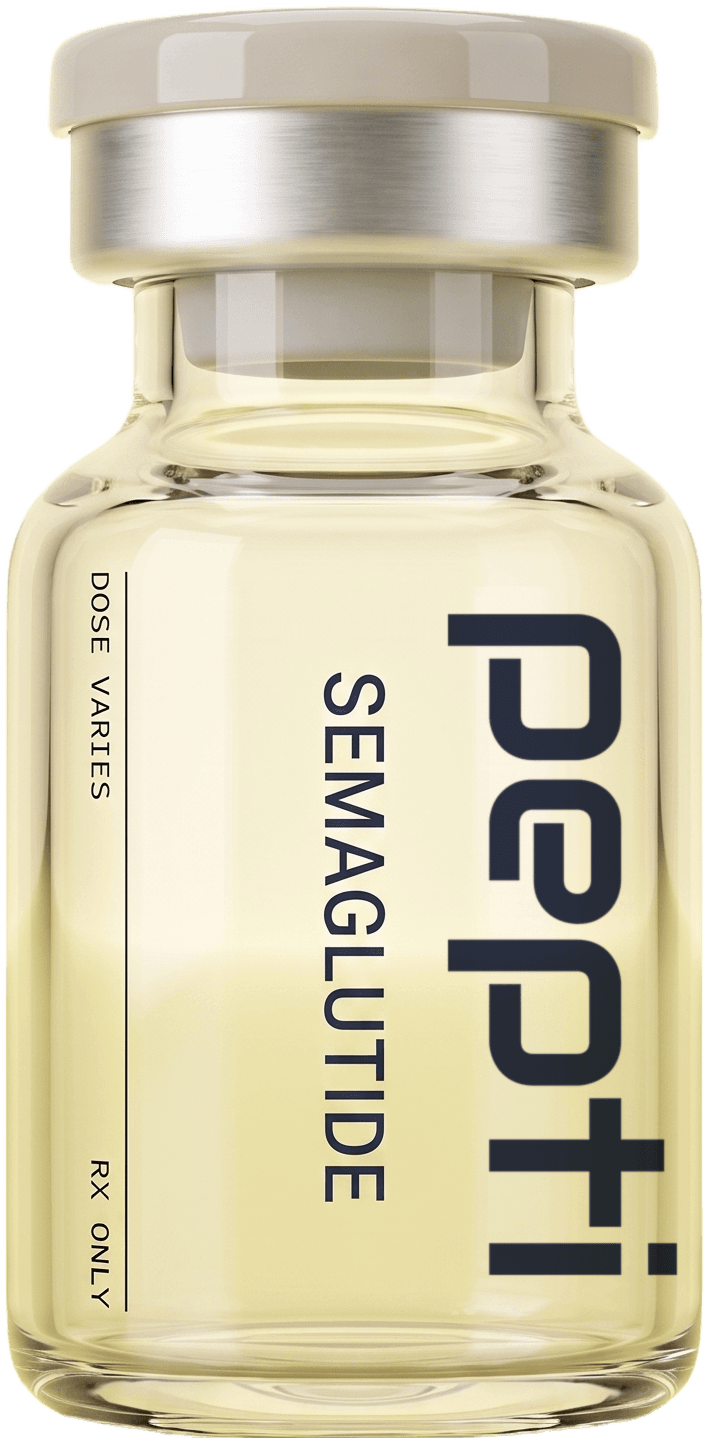
| Semaglutide | Dose-specific vials | From $99/mo |
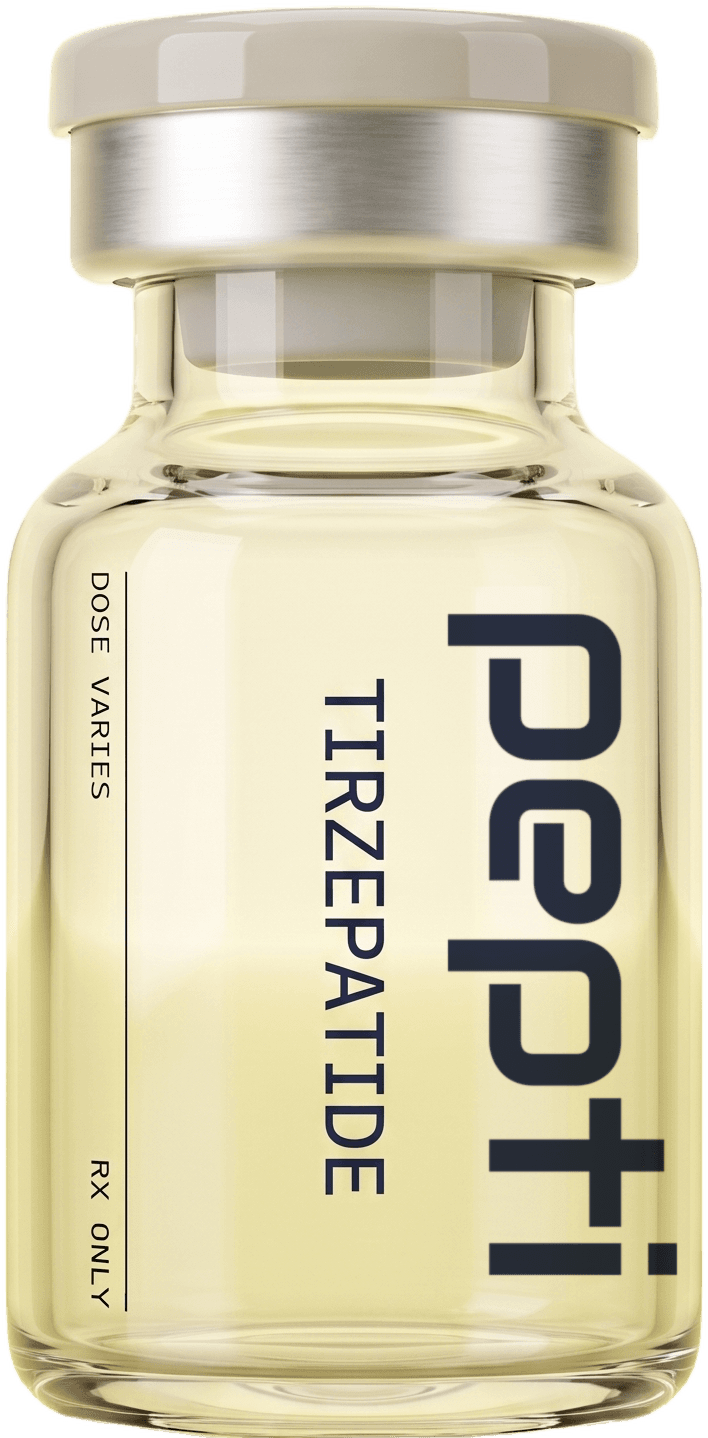
| Tirzepatide | Dose-specific vials with glycine | From $159/mo |
You can pay any of these with an HSA or FSA card, subject to your plan. Why compounded peptides cost what they do is in how much do peptides cost and why are compounded peptides cheaper.
Can You Use HSA or FSA Funds for Peptides? What to Know Before You Pay
What does not help
- Submitting an insurance claim for a compounded peptide and hoping. It is a category exclusion, not a judgement you can argue.
- Asking a prescriber to code a wellness treatment as something else. That is insurance fraud.
- Buying "research use only" peptides to save money. They sit outside the pharmacy system, are not prescribed, and nobody is accountable for what is in the vial. See can you buy peptides without a prescription.
Can You Use HSA or FSA Funds for Peptides? What to Know Before You Pay
What about bloodwork?
Bloodwork is not required for any Pepti treatment. If your physician wants labs for your care, they'll ask through your account. Labs your own doctor orders for a clinical reason are billed the ordinary way and are often covered by insurance even when the treatment is not.
Can You Use HSA or FSA Funds for Peptides? What to Know Before You Pay
What the evidence shows, honestly
Coverage and eligibility say nothing about whether a treatment works. Plans decline things that help people and pay for things that do not. Compounded medications are not FDA approved, and for most peptides outside the GLP-1 class the published research is preclinical rather than large human trials. Paying with an HSA or FSA changes how you pay, not what the evidence shows. A physician licensed in your state reviews your intake and tells you whether a peptide is the right tool at all.
Can You Use HSA or FSA Funds for Peptides? What to Know Before You Pay
How to get a prescription
- Complete the free online assessment covering your history, medications and goals.
- A physician licensed in your state reviews it, usually within 24 hours.
- If it is appropriate, a PCAB-accredited, FDA-registered US pharmacy compounds it to that prescription. Lot test results are published at /quality/lab-results.
- Pay at checkout with your HSA or FSA card or any other card.
- It ships refrigerated with your directions printed on the vial, and refills run every 28 days.
References
What this is based on.
References
- Chang CH, Tsai WC, Hsu YH, Pang JH. Pentadecapeptide BPC 157 enhances the growth hormone receptor expression in tendon fibroblasts · Molecules (2014) · PMID 25415472
- Krivic A, Anic T, Seiwerth S, et al.. Achilles detachment of rat and stable gastric pentadecapeptide BPC 157 · Journal of Orthopaedic Research (2006) · PMID 16583442
- Sikiric P, Seiwerth S, Rucman R, et al.. Stable gastric pentadecapeptide BPC 157: novel therapy in gastrointestinal tract · Current Pharmaceutical Design (2011) · PMID 21548867
- Cerovecki T, Bojanic I, Brcic L, Radic B, et al.. Pentadecapeptide BPC 157 (PL 14736) improves ligament healing in the rat · J Orthop Res (2010) · PMID 20225319
- Sikiric P, Seiwerth S, Rucman R, Turkovic B, et al.. Stable gastric pentadecapeptide BPC 157-NO-system relation · Curr Pharm Des (2014) · PMID 23755725
- Cox HD, Miller GD, Eichner D. Detection and in vitro metabolism of the confiscated peptides BPC 157 and MGF R23H · Drug Test Anal (2017) · PMID 28035768
- Thomas A, Görgens C, Guddat S et al.. Simplifying and expanding the screening for peptides <2 kDa by direct urine injection, liquid chromatography, and ion mobility mass spectrometry · J Sep Sci (2016) · PMID 26578461
- Farrar JT, Young JP Jr, LaMoreaux L, Werth JL et al.. Clinical importance of changes in chronic pain intensity measured on an 11-point numerical pain rating scale · Pain (2001) · PMID 11690728
- Meyer JD, Ho B, Manning MC. Effects of conformation on the chemical stability of pharmaceutically relevant polypeptides · Pharm Biotechnol (2002) · PMID 11987755
- Xu C, Sun L, Ren F, Huang P, et al.. Preclinical Safety Evaluation of Body Protective Compound-157, a Potential Drug for Treating Various Wounds · Regul Toxicol Pharmacol (2020) · PMID 32334036
- He L, Feng D, Guo H, et al.. Pharmacokinetics, distribution, metabolism, and excretion of body-protective compound 157, a potential drug for treating various wounds, in rats and dogs · Front Pharmacol (2022) · PMID 36588717
- Lee E, Padgett B. Intra-Articular Injection of BPC 157 for Multiple Types of Knee Pain · Altern Ther Health Med (2021) · PMID 34324435
Citations are provided for educational purposes. They do not constitute medical advice. Always discuss any peptide protocol with your prescribing physician.
Common questions
Can You Use HSA or FSA Funds for Peptides? What to Know Before You Pay, answered.
Most patients can. Physician-prescribed compounded medications are generally HSA eligible, and your HSA card works at checkout like any card. Whether a specific purchase is approved is up to your plan, so check with your plan administrator and keep your receipts.
Most patients can, on the same basis: physician-prescribed compounded medications are generally FSA eligible. FSA administrators sometimes ask for documentation, so check with yours and keep your receipts.
Physician-prescribed compounded medications are generally HSA and FSA eligible. Your plan makes the final decision on any specific purchase.
Yes. HSA and FSA cards are payment cards and can be used at checkout like any card.
Compounded semaglutide and tirzepatide prescribed by a physician are prescription medications, and physician-prescribed compounded medications are generally HSA and FSA eligible. Check with your plan administrator for your own account.
No. Pepti is cash-pay and does not bill insurance. Prices are one all-in monthly figure covering medication, physician review, refill management and shipping.
Almost never for compounded peptides, because coverage is built around FDA-approved products on a formulary and a medication compounded for one patient is neither. Approved branded GLP-1 products are sometimes covered for approved indications through your own prescriber.
Some plans ask for extra documentation and many do not. Ask your plan administrator exactly what they need before you submit anything.
Every receipt, your order confirmations and the pharmacy label or paperwork showing the medication was dispensed on a prescription in your name. Each 28-day refill is a separate charge with its own receipt.
Your plan administrator can tell you why, and you can pay with another card in the meantime.
Research-use-only peptides are not prescribed and are not dispensed by a pharmacy, so they are not what this page is about. Pepti's position covers physician-prescribed compounded medications; for anything else, ask your plan administrator. The free assessment goes to a physician licensed in your state. A consultation does not guarantee a prescription.
Next step
See what a physician recommends for you.
A licensed physician in your state reviews your intake and decides what is appropriate. A consultation does not guarantee a prescription.