Intimacy · Reference
Oxytocin: What It Is, Where to Get It Prescribed, and What It Costs
This page covers what oxytocin is, the pathways researchers have described, what the published human trials do and do not establish, how the compounded injection differs from the FDA-approved hospital product, how it is dosed, and how to get it prescribed.

Reviewed by Dr. Gene, MD · Board-certified Family Medicine
Every Pepti prescription is reviewed by a licensed U.S. physician before it's dispensed — and only provided if clinically appropriate.
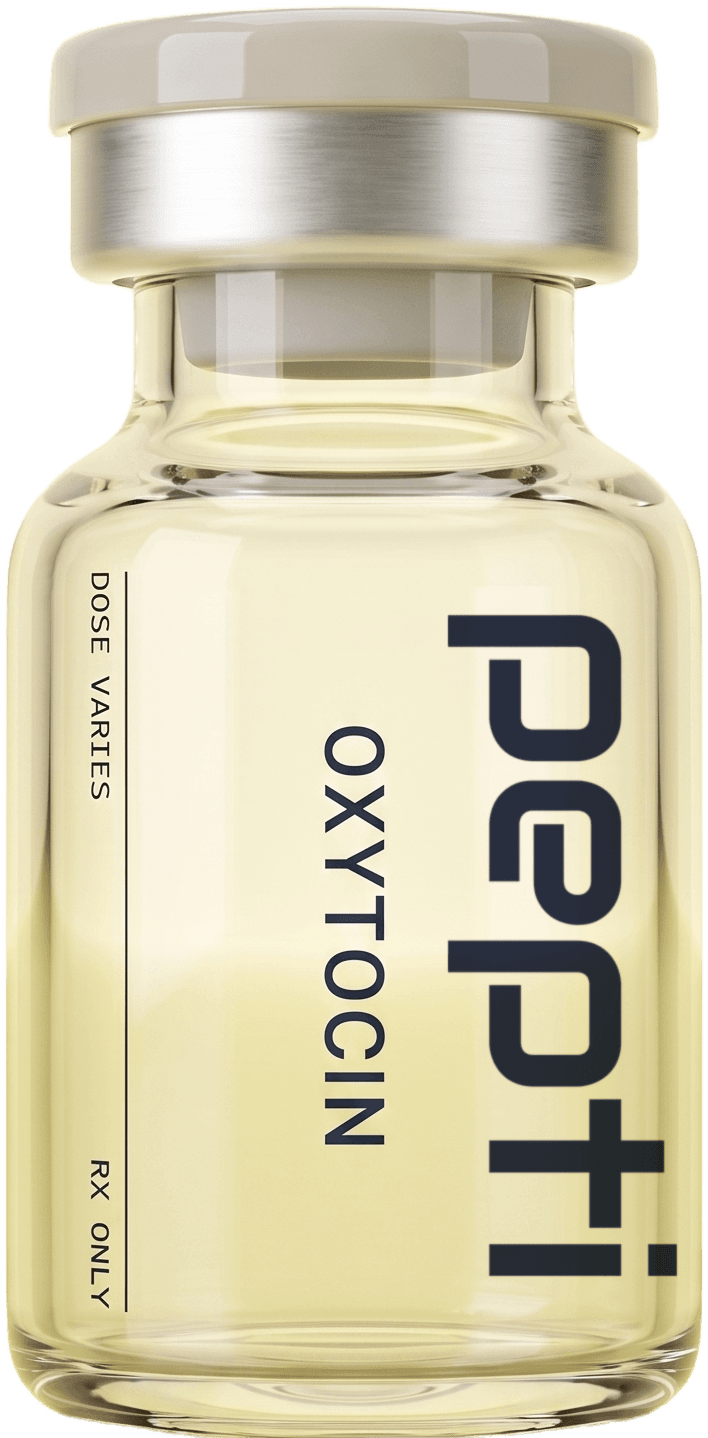
Treatments mentioned
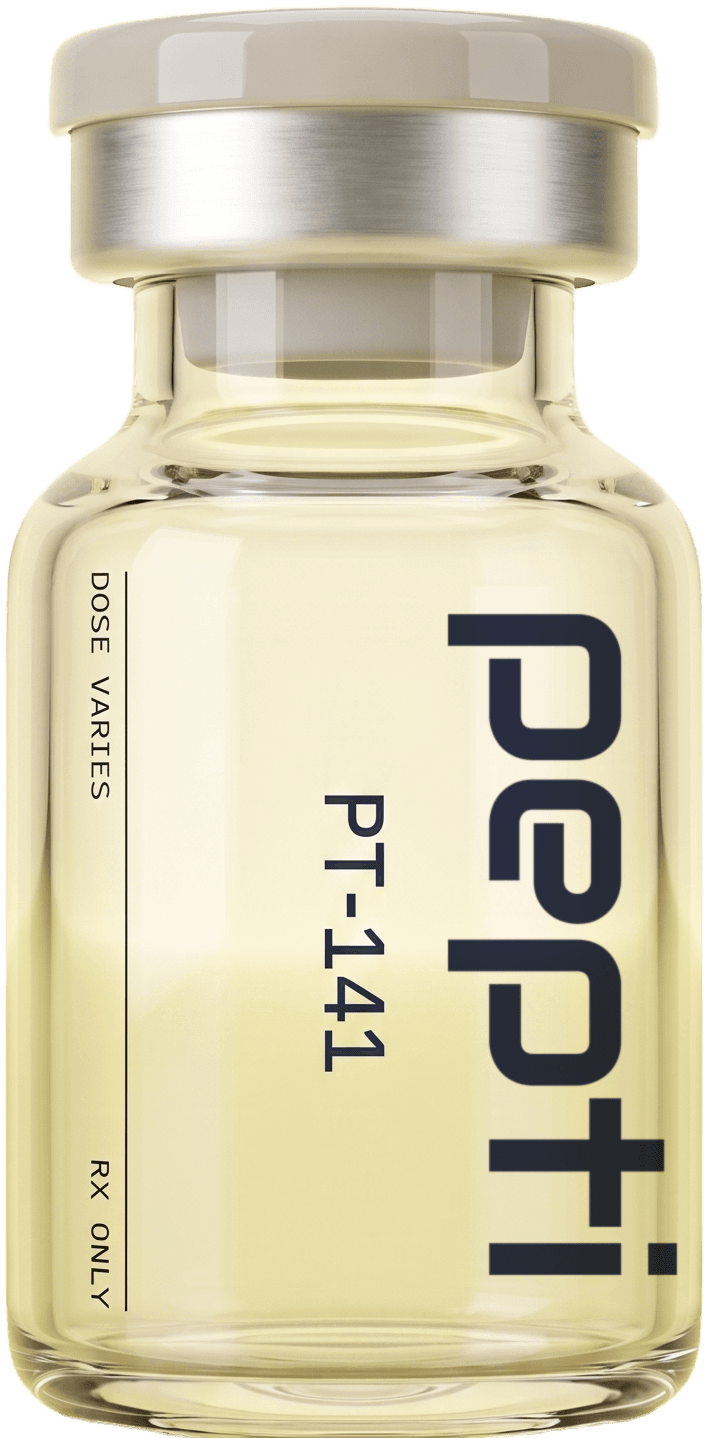
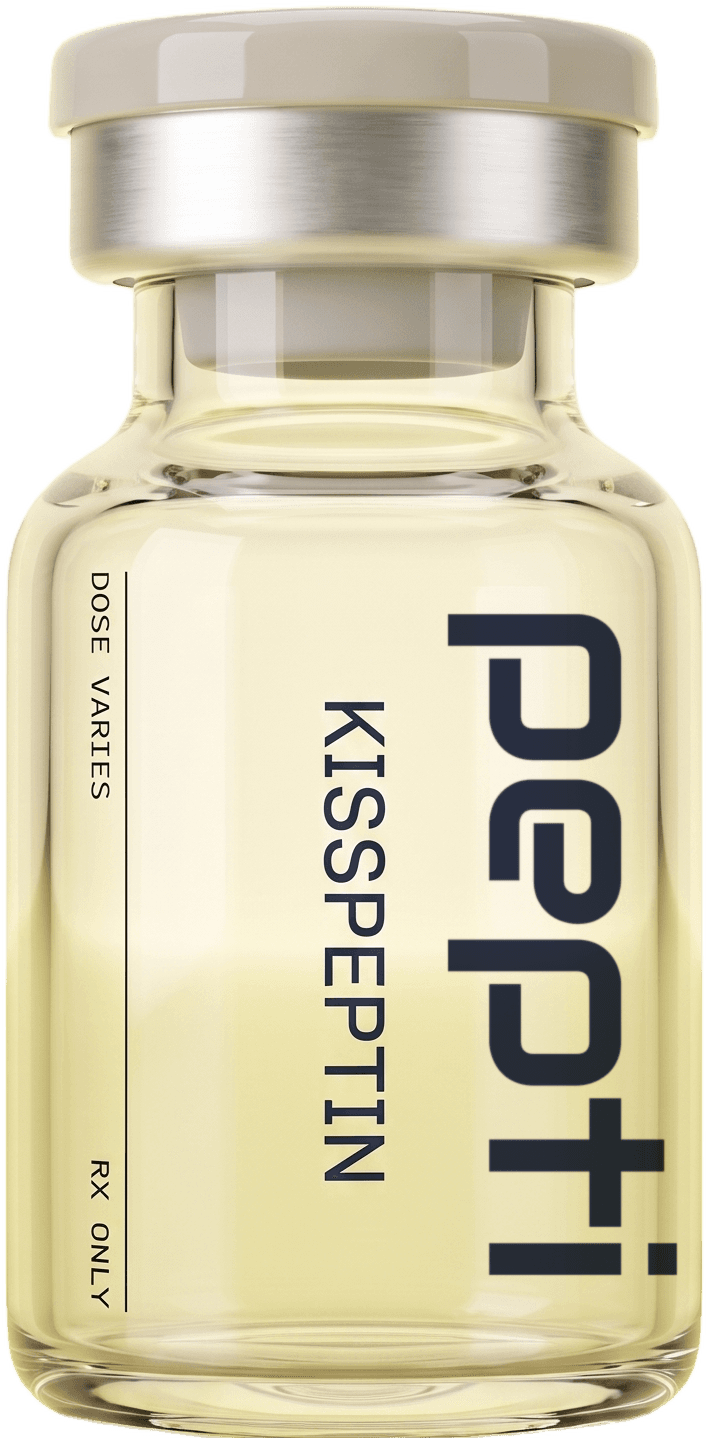
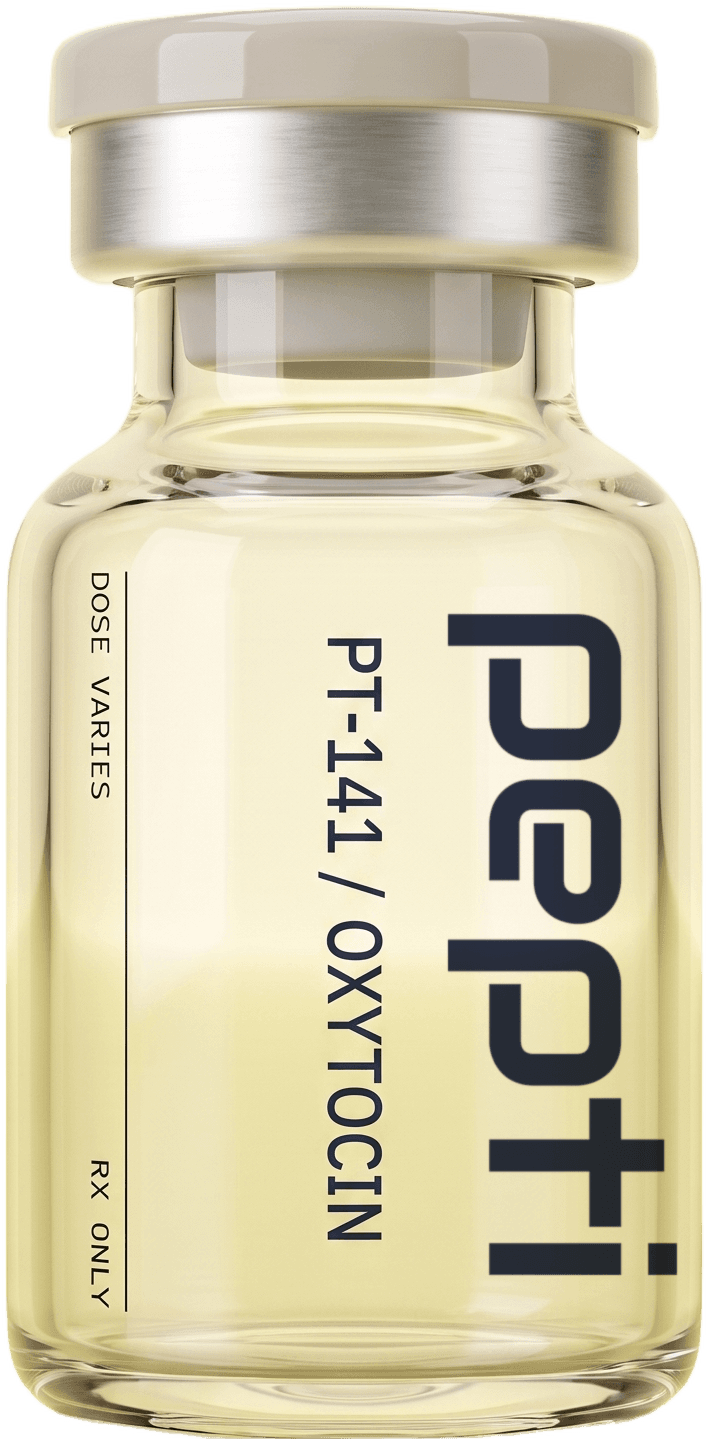
Oxytocin is a prescription injection supplied as vial — Oxytocin 10mg/5mL 2mg/mL (5mL). The reviewed directions are: Inject 0.10 mL (10 units) subcutaneously 30-60 minutes before intimacy as needed. That is 50 doses per vial, about 10 weeks at as directed. It requires a prescription from a physician licensed in your state, is compounded by a state-licensed US pharmacy, and is not FDA approved.
This page covers what oxytocin is, the pathways researchers have described, what the published human trials do and do not establish, how the compounded injection differs from the FDA-approved hospital product, how it is dosed, and how to get it prescribed.
Oxytocin
What oxytocin actually is
A hormone the body already makes
Oxytocin is a nine-amino-acid peptide hormone, sequence CYIQNCPLG with a disulfide bridge between the two cysteines. It is made in the hypothalamus and released from the posterior pituitary into the bloodstream, and also within the brain, where it acts on oxytocin receptors in regions involved in social behaviour. Its physiology is among the best characterised of any peptide: it drives uterine contractions in labour, triggers milk ejection during breastfeeding, and is released during sexual activity. A 1987 paper in the Journal of Clinical Endocrinology and Metabolism measured plasma oxytocin rising during arousal and peaking around orgasm in both sexes, which is the observation the intimacy use is built on.
Unlike most peptides on this site, oxytocin is not a research compound. It has been an approved hospital drug for decades; the compounded version is the same molecule at a different concentration for a different route and purpose.
The name, and why it is called a bonding hormone
The name comes from the Greek for "swift birth." The "bonding hormone" label came much later, from animal research — mostly in prairie voles, a monogamous rodent — showing that oxytocin signalling in the brain was necessary for pair-bonding and maternal behaviour; a 2009 review in Frontiers in Neuroendocrinology covers that literature. The popular name overstates what is known in people, and this page tries not to.
What it is not
It is not a hormone replacement; there is no accepted "oxytocin deficiency" diagnosis in adults. It is not a treatment for erectile dysfunction — the couples trial below reported no effect on erection or lubrication. It is not a libido drug in the sense that PT-141 is; the trials describe effects on the experience of intimacy, not on desire. And it is not a psychiatric medication, despite a large literature testing it in psychiatric conditions.
Oxytocin
How oxytocin is described to work
The peripheral physiology is not in dispute. The brain-related mechanisms are largely from animal work, with human behavioural studies layered on top.
The oxytocin receptor, peripherally
Oxytocin binds a single G-protein-coupled receptor found on uterine smooth muscle, the myoepithelial cells of the breast, and tissues throughout the reproductive tract in both sexes. Activation causes smooth-muscle contraction — the mechanism behind the approved obstetric uses and the rhythmic contractions of orgasm.
Central release and social behaviour
Oxytocin neurons project into the amygdala, nucleus accumbens and prefrontal cortex. In animals, signalling there is described as reducing the amygdala's response to social threat and increasing the reward value of social contact; the vole pair-bonding work sits on this pathway. In humans, the modern literature began with a 2005 study in Nature reporting that a 24 IU intranasal dose increased trust in an economic game; many behavioural studies followed, and a good number did not replicate at the same size in larger samples. Whether a dose given to a human reaches these brain regions in meaningful concentration is an open question — see "The delivery problem."
The stress axis
The 2008 Psychoneuroendocrinology study in healthy men found intranasal oxytocin raised epinephrine during sexual activity without changing cortisol, and the 2014 couples study found cortisol, alpha-amylase and heart rate unaffected. The "reduces stress" description seen elsewhere is not supported by those measurements; what the intimacy trials describe is a subjective effect, not a hormonal one.
The delivery problem
Oxytocin has a plasma half-life of a few minutes and crosses the blood–brain barrier poorly. A 2016 paper in Biological Psychiatry, "Intranasal Oxytocin: Myths and Delusions," argued that the amount of sprayed oxytocin reaching the brain is uncertain and many reported effects may be peripheral or placebo; a statistical critique in the same journal that year found most studies too small to detect the effects they claimed. Those critiques apply at least as strongly to an injection, which has no nose-to-brain pathway. The peripheral effects are certain; the central effects of an exogenous dose in adults are plausible but unproven.
Oxytocin
What the research actually shows
Obstetrics — the approved use
The one indication where the evidence is not in doubt: oxytocin injection has been used to induce and augment labour and control postpartum bleeding for generations. None of this transfers to the intimacy use; it is mentioned so the strength of the evidence is not confused across indications.
Sexual function and partner interaction
The best study is a 2014 paper in Hormones and Behavior: 29 healthy heterosexual couples given 24 IU intranasal oxytocin or placebo in a double-blind crossover and assessed after intercourse at home. Oxytocin did not change sexual drive, arousal, erection or lubrication. What it did change was orgasm intensity and contentment after intercourse, with men reporting higher sexual satiety and women feeling more relaxed and, in subgroups, better able to share sexual desires and empathise with their partner. The authors described the effect sizes as small to moderate.
A 2008 Psychoneuroendocrinology study in ten healthy men found no change in appetitive, consummatory or refractory sexual behaviour on the scale used, though eight of ten could correctly guess when they had received oxytocin.
On the negative side, a 2015 randomised crossover trial in Fertility and Sterility gave 30 pre- and postmenopausal women with sexual dysfunction 32 IU intranasal oxytocin or placebo before intercourse for eight weeks each. Both groups improved substantially on the Female Sexual Function Index and on distress and quality-of-life scales, with no significant difference between oxytocin and placebo. This is the largest trial in women with an actual diagnosis, and it was null.
Anorgasmia
The 2008 Journal of Sexual Medicine paper is a single case report: one man with treatment-resistant acquired anorgasmia, given intranasal oxytocin during intercourse, with ejaculation reported as restored. It is the origin of the "before intimacy" timing on compounded prescriptions. It is one patient, not a trial.
Social anxiety
A 2009 randomised, placebo-controlled trial in Psychoneuroendocrinology gave 24 IU oxytocin or placebo alongside exposure therapy to 25 people with social anxiety disorder. Participants on oxytocin rated their own appearance and speech performance more positively, but overall symptom reduction was the same in both groups.
Autism
The largest body of controlled data, and the clearest lesson in why small trials mislead. A 2016 crossover trial in Molecular Psychiatry in 31 young children reported improved caregiver-rated social responsiveness; a 2017 meta-analysis in Pharmacopsychiatry found the pooled evidence weak. Then in 2021 the New England Journal of Medicine published SOARS-B: 290 children and adolescents, 24 weeks, placebo-controlled. The change on the primary social-withdrawal measure was −3.7 with oxytocin and −3.5 with placebo. Pepti does not prescribe for autism; the trial is here because it is the best-powered test of whether exogenous oxytocin changes social behaviour in humans, and the answer was no.
What human data exists
Unusually for a compounded peptide, there is a great deal, pointing in more than one direction. Randomised, placebo-controlled human trials of oxytocin exist, in couples, women with sexual dysfunction, people with social anxiety and children with autism. The strongest positive finding for intimacy is the 2014 couples study; the strongest negative is the 2015 women's trial, where oxytocin did no better than placebo; the largest trial of any kind, SOARS-B, was null.
Every one of those trials used the intranasal route; there are no randomised trials of subcutaneous oxytocin for intimacy, mood or social function. The compounded injection is prescribed on the basis of the intranasal literature plus clinical experience, and the nasal route may have brain-delivery properties an injection does not. A 2021 review in Molecular Psychiatry from the field's own researchers acknowledged that early studies were underpowered and that dosing, delivery and who responds are still being worked out.
What the evidence does not establish
- It does not establish that oxytocin increases sexual desire or arousal. The couples trial found no effect on those; the women's trial found no effect over placebo on anything.
- It does not establish that oxytocin treats anxiety, depression or relationship problems.
- It does not establish that a subcutaneous dose reproduces intranasal findings. That study has not been run.
- It does not establish an effect size or response rate in prescribed patients; the reported effects are from healthy volunteers.
- It does not establish long-term safety of repeated non-obstetric use over years. The longest controlled exposure is 24 weeks.
Oxytocin
Where oxytocin stands with the FDA right now
Oxytocin's regulatory position is simpler than almost any other peptide on this site.
Oxytocin is an FDA-approved drug substance. Pitocin (oxytocin injection, 10 USP units/mL, IV or IM) is approved under NDA 018261, held by Par Health, with a label revised in August 2024; generic oxytocin injections are also marketed. The approved indications are obstetric: initiation or improvement of uterine contractions where induction or augmentation of labour is medically indicated, management of incomplete or inevitable abortion, and uterine contraction in the third stage of labour to control postpartum bleeding. The label states that Pitocin is not indicated for elective induction of labour.
Compounded oxytocin does not depend on the 503A bulks list. Section 503A of the Food, Drug and Cosmetic Act allows a compounding pharmacy to use a bulk drug substance that complies with an applicable United States Pharmacopeia monograph or that is a component of an FDA-approved drug; only substances meeting neither condition need to appear on the FDA's bulks list. Oxytocin satisfies both. It does not appear on the FDA's Category 2 list of substances with identified safety concerns (page current as of 22 April 2026), and it was not among the peptides removed from that list on 15 April 2026 or reviewed by the Pharmacy Compounding Advisory Committee in July 2026, because it was never on it.
The compounded version is still not an FDA-approved product. The vial Pepti supplies is prepared to a prescription at 2 mg/mL for subcutaneous injection — a different concentration, route and purpose from the approved product. Compounded medications are not reviewed or approved by the FDA as finished drug products, and intimacy is not an approved indication for any oxytocin product. No intranasal oxytocin product is currently listed as marketed in the United States. As of September 2026: approved active ingredient, off-label purpose, compounded formulation, legal to prescribe and dispense with a valid prescription.
Oxytocin
Realistic expectations
These are patterns described by prescribers, not trial endpoints. Individual response varies, the trials show a large placebo response in this area, and a physician decides whether treatment is appropriate at all.
The first hour after a dose
Oxytocin is fast and short. Plasma levels rise within minutes of a subcutaneous injection and clear with a half-life of a few minutes, which is why the directions time it 30 to 60 minutes before intimacy and dose it as needed rather than daily. Whatever effect a dose has is confined to that window; nothing accumulates.
The first few uses
Prescribers generally describe patients either noticing something in the first two or three uses — feeling more relaxed, more present with a partner, or a more intense orgasm — or not noticing anything. This matches the couples trial, where effects were on the experience around and after orgasm rather than on getting there. Noticing nothing is common; report it to your physician rather than escalating on your own.
Over the course of a vial
A vial is 50 doses. At a few uses a week that is roughly ten weeks, enough time to know whether it is doing anything for you. The women's trial found both oxytocin and placebo groups improving over eight weeks — a reminder that attending to intimacy on a schedule may itself be part of what people report.
After stopping
No withdrawal, rebound or suppression of your own oxytocin is described in the literature. Each dose clears in minutes, so stopping simply means the next intimate occasion is unmedicated.
Oxytocin
When something else makes more sense
Some honest cases where oxytocin is not the first thing to reach for:
- The problem is desire or arousal, not connection. The couples trial found no effect on drive or arousal. PT-141, whose active, bremelanotide, has randomised human trials in desire disorder, is the more direct conversation for low desire.
- You want both. The PT-141 + Oxytocin preparation exists because prescribers frequently pair the two: one aimed at desire, the other at the experience of intimacy.
- The issue is hormonal. Low testosterone, thyroid dysfunction and perimenopause each produce sexual symptoms oxytocin does not address. At-home blood testing is the sensible first step, and kisspeptin acts upstream on the reproductive hormone axis.
- Erectile function is the concern. Oxytocin did not change erection in the couples trial. That is a physician conversation about established treatments, not a peptide question.
- Anxiety is the primary problem. The social-anxiety trial found no difference in outcome. Selank or the SERENITY blend are aimed at that, and a physician may reasonably suggest neither and refer you.
Your physician will tell you if oxytocin is not the right tool for what you have described. A consultation does not guarantee a prescription, and being declined is refunded.
Oxytocin
Strengths available
| Strength | Directions |
|---|---|
| Oxytocin 10mg/5mL | Inject 0.10 mL (10 units) subcutaneously 30-60 minutes before intimacy as needed. |
Oxytocin is supplied in a single strength. The dose you are prescribed within it is your physician's decision.
Oxytocin
Dosing, and how a vial is actually used
Why the dose is measured in units
The directions are written in millilitres and insulin-syringe units because that is what you can read off the barrel. 0.10 mL is 10 units on a U-100 syringe. This is a syringe-volume unit, not a USP unit of oxytocin — the hospital product is labelled in USP units of activity, the compounded vial in milligrams per millilitre, and the two are not interchangeable. The number is printed on your medication.
Subcutaneous, as needed, timed before intimacy
Subcutaneous means into the fat layer, not the muscle. Abdomen and thigh are the usual sites, rotated. The 30-to-60-minute timing reflects the short half-life: inject too early and the dose is gone before it matters. "As needed" means exactly that — not a daily medication, no loading period.
Why a vial covers about ten weeks
50 doses at the standard volume. Because use is as needed, the "about 10 weeks" figure assumes roughly five uses a week; at fewer, a vial lasts longer, subject to the beyond-use date on the label. One vial per fill, always.
Storage
Refrigerated, and it ships that way in insulated packaging with ice packs. Heat degrades oxytocin, so it goes back in the fridge after each draw. Beyond-use dating runs from first puncture and is on the label. There is no pen format; it is vial and syringe only.
Oxytocin
Safety and side effects
At the small subcutaneous doses used for intimacy, oxytocin is generally described as well tolerated. In the controlled intranasal trials, adverse events did not differ from placebo; the paediatric crossover trial listed thirst, increased urination and constipation as the most reported. Injection-site reactions — redness, mild soreness, occasional bruising — are what prescribers most often hear about, along with occasional brief flushing or headache after a dose.
Two effects are the approved-drug pharmacology. Oxytocin contracts uterine smooth muscle, which is why it must not be used in pregnancy outside a hospital. And at the far larger intravenous doses used in obstetrics, the label warns of water retention and low blood pressure; anyone with a cardiac or fluid-balance condition should say so at intake.
There is no established interaction list for the compounded product, because the trials that would produce one have not been run. That is why the intake asks for every medication you take and a physician reviews it rather than a form.
Stop and contact your physician for any reaction that is severe, spreading, or involves difficulty breathing.
Oxytocin
How oxytocin compares
Oxytocin vs PT-141
Different targets and different jobs. PT-141 (bremelanotide) is a melanocortin-receptor agonist acting on desire and arousal pathways, with randomised trials in hypoactive sexual desire disorder behind it and a more prominent side-effect profile (nausea, flushing, transient blood-pressure rise). Oxytocin's trial evidence is about orgasm intensity, post-intercourse contentment and partner interaction, not desire. They are complementary rather than competing, which is why the PT-141 + Oxytocin preparation exists.
Oxytocin vs kisspeptin
Kisspeptin works upstream, stimulating the hormone axis that governs testosterone and estrogen production; oxytocin has no effect on reproductive hormone output. If the picture is hormonal, kisspeptin is the closer fit; if hormones are normal and the problem is the intimate experience itself, oxytocin is the more direct conversation.
Compounded oxytocin vs Pitocin
Same molecule, different product. Pitocin is 10 USP units/mL for IV or IM use in a hospital, with obstetric indications. The compounded vial is 2 mg/mL for subcutaneous self-injection, off-label, at a fraction of an obstetric dose. The approval covers the hospital product, not the compounded one.
Oxytocin
Availability and formats
| Question | Answer |
|---|---|
| Can I get it by telehealth? | Yes, where a physician licensed in your state prescribes it |
| Which states? | All 50 states and DC |
| Does it come as a pen? | No, this one is a vial and syringe only |
| Does it come as a capsule? | No |
| Does it come as a nasal spray? | No |
| Is bloodwork required first? | Not routinely; your physician decides |
Oxytocin
Where to get Oxytocin prescribed
Oxytocin cannot be bought legitimately without a prescription. Sites shipping it with no prescription are selling a research-use-only product, where no pharmacy is accountable for identity, purity, sterility or concentration.
The prescription route works like this:
- Complete a medical intake covering your history, medications, allergies and what you are treating.
- A physician licensed in your state reviews it.
- If appropriate, a state-licensed, FDA-registered pharmacy compounds it to that prescription.
- It ships refrigerated with your directions printed on the vial.
- Your physician stays reachable afterwards for dose questions and side effects.
Current all-in pricing for Oxytocin is published: medication, physician review, refill management and shipping in one figure, with no separate membership fee. What to check on any provider is in how to tell if a peptide seller is legitimate.
Oxytocin
Who should not take it, or should discuss it first
| Situation | Why |
|---|---|
| Pregnancy or breastfeeding | Not used; safety data is absent |
| Tested athletes | Many peptides are prohibited in competition; check the current list |
Full specification
Everything on the label.
Product
Oxytocin
How supplied
vial — Oxytocin 10mg/5mL 2mg/mL (5mL)
Typical directions
Inject 0.10 mL (10 units) subcutaneously 30-60 minutes before intimacy as needed.
Dose volume
0.1 mL (10 units on a U-100 insulin syringe)
Doses per vial
50
Coverage per vial
about 10 weeks at as directed
Formats
Vial and syringe
Available in
All 50 states and DC
Bloodwork
Not routinely required; your physician decides
Legal status
Prescription-only, compounded, not FDA approved
Category
Intimacy
References
What this is based on.
References
- Behnia B, Heinrichs M, Bergmann W et al.. Differential effects of intranasal oxytocin on sexual experiences and partner interactions in couples · Horm Behav (2014) · PMID 24503174
- IsHak WW, Berman DS, Peters A. Male anorgasmia treated with oxytocin · J Sex Med (2008) · PMID 18086171
- Burri A, Heinrichs M, Schedlowski M, Kruger TH. The acute effects of intranasal oxytocin administration on endocrine and sexual function in males · Psychoneuroendocrinology (2008) · PMID 18375074
- Muin DA, Wolzt M, Marculescu R et al.. Effect of long-term intranasal oxytocin on sexual dysfunction in premenopausal and postmenopausal women: a randomized trial · Fertil Steril (2015) · PMID 26151620
- Carmichael MS, Humbert R, Dixen J et al.. Plasma oxytocin increases in the human sexual response · J Clin Endocrinol Metab (1987) · PMID 3782434
- Kosfeld M, Heinrichs M, Zak PJ, Fischbacher U, Fehr E. Oxytocin increases trust in humans · Nature (2005) · PMID 15931222
- Guastella AJ, Howard AL, Dadds MR, Mitchell P, Carson DS. A randomized controlled trial of intranasal oxytocin as an adjunct to exposure therapy for social anxiety disorder · Psychoneuroendocrinology (2009) · PMID 19246160
- Sikich L, Kolevzon A, King BH et al.. Intranasal Oxytocin in Children and Adolescents with Autism Spectrum Disorder · N Engl J Med (2021) · PMID 34644471
- Yatawara CJ, Einfeld SL, Hickie IB, Davenport TA, Guastella AJ. The effect of oxytocin nasal spray on social interaction deficits observed in young children with autism: a randomized clinical crossover trial · Mol Psychiatry (2016) · PMID 26503762
- Ooi YP, Weng SJ, Kossowsky J, Gerger H, Sung M. Oxytocin and Autism Spectrum Disorders: A Systematic Review and Meta-Analysis of Randomized Controlled Trials · Pharmacopsychiatry (2017) · PMID 27574858
- Leng G, Ludwig M. Intranasal Oxytocin: Myths and Delusions · Biol Psychiatry (2016) · PMID 26049207
- Walum H, Waldman ID, Young LJ. Statistical and Methodological Considerations for the Interpretation of Intranasal Oxytocin Studies · Biol Psychiatry (2016) · PMID 26210057
Citations are provided for educational purposes. They do not constitute medical advice. Always discuss any peptide protocol with your prescribing physician.
Common questions
Oxytocin, answered.
Through a telehealth provider where a physician licensed in your state reviews a medical intake and a licensed US pharmacy compounds the prescription. Pepti prescribes Oxytocin in all 50 states and DC; start with the free assessment.
vial — Oxytocin 10mg/5mL 2mg/mL (5mL)
Inject 0.10 mL (10 units) subcutaneously 30-60 minutes before intimacy as needed. Your physician sets your own dose and it is printed on your medication.
50 at the standard volume, about 10 weeks at as directed.
Oxytocin is supplied as a vial, drawn with an insulin syringe. It is not available as a pen or capsule.
Not routinely, though your physician may want labs depending on your history. at-home blood testing covers hormone, metabolic and thyroid markers without a lab visit.
It is legal to prescribe and dispense in the United States with a valid prescription. It is not FDA approved: compounded medications are prepared by licensed pharmacies pursuant to a prescription rather than approved as manufactured products. See are peptides FDA approved.
Pricing is published on the Oxytocin page as one all-in figure covering medication, physician review, refill management and shipping. What drives peptide pricing generally is in how much do peptides cost.
Same molecule, different product. Pitocin is the FDA-approved hospital injection for labour and postpartum bleeding, at 10 USP units/mL by IV or IM. The compounded vial is 2 mg/mL for subcutaneous injection before intimacy — off-label, and not an approved product.
Yes, and it is mixed. A 2014 placebo-controlled study in 29 healthy couples reported small-to-moderate effects on orgasm intensity, post-intercourse contentment and partner communication, with no effect on desire, arousal, erection or lubrication. A 2015 randomised trial in 30 women with sexual dysfunction found oxytocin no better than placebo. Both used nasal spray; there are no randomised trials of the injection.
Because that is the route the prescribing and the pharmacy's preparation are built around, and no intranasal oxytocin product is currently marketed in the United States. The trial evidence is for the nasal route and has not been reproduced by injection.
Not according to the controlled trials. A 2009 randomised trial in social anxiety disorder found oxytocin changed how participants rated their own performance but not overall treatment outcome. Pepti does not prescribe oxytocin for anxiety.
They are frequently prescribed together, and Pepti supplies a combined PT-141 + Oxytocin preparation in one vial. Whether the combination is appropriate for you is your physician's decision.
Minutes to onset and minutes to clear, which is why the injection is timed 30 to 60 minutes before intimacy and used as needed rather than daily. Nothing accumulates between doses and there is no withdrawal when you stop.
In the controlled intranasal trials, adverse events matched placebo. With the injection, prescribers mostly hear about injection-site redness or soreness and occasional brief flushing or headache. Uterine contraction and, at large intravenous doses, fluid retention and low blood pressure are the approved-drug warnings, which is why pregnancy and cardiac or fluid-balance conditions must be disclosed at intake.
Many peptides are prohibited in competition by anti-doping bodies. If you are a tested athlete, check the current prohibited list for your sport before starting anything, and tell your physician.
Next step
See what a physician recommends for you.
A licensed physician in your state reviews your intake and decides what is appropriate. A consultation does not guarantee a prescription.