— Intimacy · Reference
PT-141: What It Is, Where to Get It Prescribed, and What It Costs
This page covers what PT-141 is, the pathways researchers have described, what the published trials do and do not establish, how the compounded version relates to the FDA-approved brand, how it is dosed, and how to get it prescribed.
— Treatments mentioned
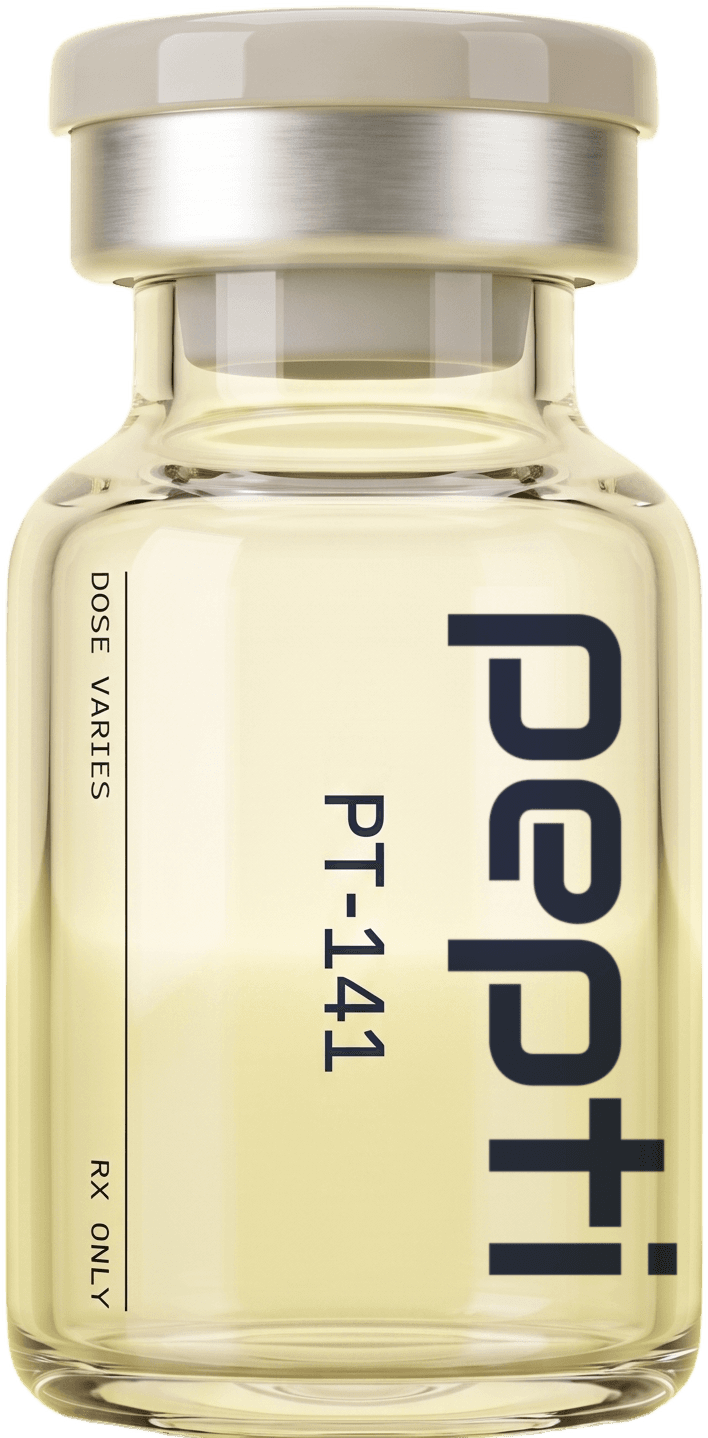
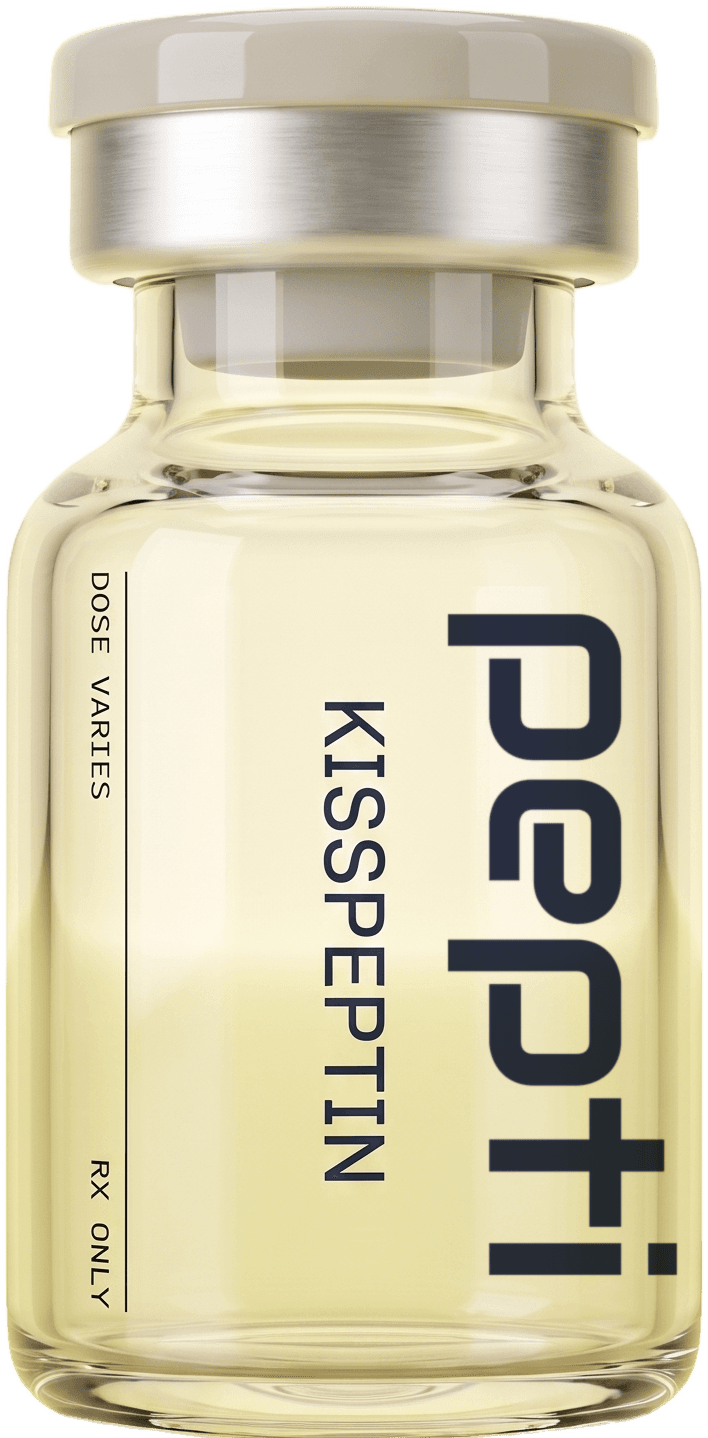
PT-141 is a prescription injection supplied as 5 mL multi-dose vial, PT-141 (Bremelanotide) 2 mg/mL (10 mg PT-141 (Bremelanotide) per vial). The reviewed directions are: Inject 0.50 mL (50 units) subcutaneously 2-4 hours prior to sexual activity. No more than 4 doses per month. That is 10 doses per vial, about 2 weeks at as directed. It requires a prescription from a physician licensed in your state, is compounded by a state-licensed US pharmacy, and is not FDA approved.
This page covers what PT-141 is, the pathways researchers have described, what the published trials do and do not establish, how the compounded version relates to the FDA-approved brand, how it is dosed, and how to get it prescribed.
— PT-141
What PT-141 actually is
— A seven-amino-acid analogue of a hormone the body already makes
PT-141 is the development code for bremelanotide, a cyclic peptide of seven amino acids. It is a synthetic analogue of alpha-melanocyte-stimulating hormone (α-MSH), one of the melanocortin hormones the body uses to signal pigmentation, appetite, inflammation and, as it turns out, sexual arousal. It binds the same receptor family α-MSH does, but survives in the body far longer than the natural hormone.
Unlike most peptides sold for wellness, PT-141 is not an obscure research compound. The same molecule is the active ingredient in Vyleesi, an FDA-approved prescription product, so a full regulatory dossier exists, including two phase 3 trials with more than a thousand women enrolled. That is a very different starting point from a compound whose entire literature is rodent studies.
— Where the name came from
Bremelanotide was found by accident. In the 1990s, researchers testing Melanotan II — a synthetic α-MSH analogue developed for sunless tanning — noticed that male volunteers reported spontaneous erections. A 1998 double-blind crossover study in the Journal of Urology followed that up in men with psychogenic erectile dysfunction. Bremelanotide is a closely related molecule that Palatin Technologies took forward as PT-141 for the sexual-function effect rather than the tanning one; a 2003 review in the Annals of the New York Academy of Sciences summarises that early programme.
— What it is not
PT-141 is not a PDE5 inhibitor. It does not work like sildenafil or tadalafil, which act on the blood vessels of the penis and require sexual stimulation to do anything. It acts on receptors in the brain and is described around desire and arousal, which is why it has been studied in women as well as men. It is not a hormone in the endocrine sense: it does not raise testosterone or oestrogen. And the approved product's label states it is not indicated to enhance sexual performance.
— PT-141
How PT-141 is described to work
Four mechanisms account for most of what is written about it. Unusually for a peptide, the central one is described on an FDA label, not only in animal work.
— Melanocortin receptor activation, mainly MC4R
Bremelanotide is a non-selective melanocortin receptor agonist. The Vyleesi prescribing information lists its order of potency as MC1R, MC4R, MC3R, MC5R, MC2R, and states that at therapeutic doses binding to MC1R and MC4R is what matters. MC4R is the receptor implicated in sexual function; neurons expressing it sit in several brain regions including the hypothalamus. Animal work reviewed in the International Journal of Impotence Research in 2008 describes MC4R-driven erection and solicitation behaviour in rodents.
— Dopamine in the medial preoptic area
A 2007 paper in the Journal of Sexual Medicine and a 2022 review in CNS Spectrums describe the downstream step. In female rats, bremelanotide increased solicitations of a male and dopamine release in the medial preoptic area of the hypothalamus, a region associated with sexual motivation. The proposed model is that melanocortin signalling modulates dopamine there and increases the appetitive, "wanting" side of sexual behaviour rather than the physical response.
— Central, not vascular
PDE5 inhibitors amplify a nitric-oxide signal in penile tissue; without arousal there is nothing to amplify. Two 2004 human studies in the International Journal of Impotence Research, one intranasal and one subcutaneous, reported erectile responses in men without visual sexual stimulation, the pharmacological signature of a centrally acting agent. A 2005 paper in Urology reported that low-dose intranasal PT-141 with sildenafil produced a larger erectile response than either alone, consistent with the two acting at different points in the pathway.
— The MC1R activity that explains pigmentation
Because bremelanotide's highest affinity is for MC1R, the receptor on melanocytes, it keeps some of the parent molecule's tanning activity. That is not a therapeutic mechanism; it explains the focal hyperpigmentation warning on the approved label and why dose frequency is capped.
— PT-141
What the research actually shows
— Hypoactive sexual desire disorder in premenopausal women
This is where the evidence is strongest, and it is randomised human data. A phase 2b dose-finding trial in Women's Health in 2016 randomised premenopausal women to placebo or 0.75, 1.25 or 1.75 mg bremelanotide as desired; in the 327 women analysed, the pooled 1.25/1.75 mg group reported more satisfying sexual events per month than placebo (+0.7 versus +0.2).
The pivotal programme was RECONNECT: two identical 24-week, randomised, double-blind, placebo-controlled phase 3 trials published together in Obstetrics & Gynecology in 2019. Across them, 1,267 premenopausal women with acquired, generalised hypoactive sexual desire disorder were randomised to 1.75 mg bremelanotide or placebo, self-injected as needed. The desire domain of the Female Sexual Function Index improved by 0.30 and 0.42 points more than placebo in the two studies, and distress on item 13 of the Female Sexual Distress Scale improved by 0.37 and 0.29 points more than placebo, all statistically significant. Those are modest absolute differences; the FDA judged them meaningful enough to approve the product, and it is fair to call the effect real but not dramatic.
A 52-week open-label extension, also in Obstetrics & Gynecology in 2019, followed 684 women who chose to continue; no new safety signals emerged, though only 272 completed the full year.
— Arousal in women
Before the desire programme, a 2006 crossover study in the Journal of Sexual Medicine gave 18 premenopausal women with sexual arousal disorder a single 20 mg intranasal dose or placebo; more reported moderate or high desire after bremelanotide. Intranasal delivery was later dropped, so this is a historical data point.
— Erectile dysfunction and desire in men
The men's programme is where PT-141 started and where the compounded product is now most often prescribed. The two 2004 papers in the International Journal of Impotence Research reported, in double-blind placebo-controlled designs, statistically significant erectile responses to intranasal and subcutaneous PT-141 in healthy men and in men with mild-to-moderate erectile dysfunction, including men who had responded inadequately to sildenafil.
These are real randomised human studies, but early-phase: small, clinic-based, measuring erectile response over hours rather than sexual satisfaction over months. The men's programme did not lead to an approved product and there is no phase 3 trial in men.
— What human data exists
Unlike most compounded peptides, PT-141 has a genuine human trial record: a phase 2b dose-finding trial, two phase 3 randomised controlled trials in 1,267 premenopausal women, a 52-week extension, and a 2022 pooled safety analysis in the Journal of Women's Health covering roughly 3,500 subjects across 43 studies. Early-phase randomised studies exist in men. What does not exist is late-phase efficacy data in men, in postmenopausal women, or for any use other than acquired, generalised hypoactive sexual desire disorder.
— What the evidence does not establish
- It does not establish efficacy in men beyond early-phase erectile-response studies.
- It does not establish efficacy in postmenopausal women, who were not studied.
- It does not establish that it "enhances performance" in people without a diagnosed problem; the label says it is not indicated for that.
- It does not establish an effect on low desire caused by a medication, a relationship problem, or another medical or psychiatric condition — all trial exclusion criteria.
- It does not establish anything about a compounded 2 mg/mL vial specifically; the trials used a 1.75 mg autoinjector.
— PT-141
Where PT-141 stands with the FDA right now
PT-141 is in a different regulatory position from almost every other peptide on this site. Status verified September 2026.
Bremelanotide is an FDA-approved active ingredient. The FDA approved Vyleesi (bremelanotide injection, NDA 210557) on 21 June 2019 for premenopausal women with acquired, generalised hypoactive sexual desire disorder. Vyleesi is a 1.75 mg single-dose autoinjector, marketed since early 2024 by Cosette Pharmaceuticals.
That approval is why compounded PT-141 does not depend on the 503A bulks list. Under section 503A, a pharmacy may compound with a bulk substance that has a USP or NF monograph, or that is a component of an FDA-approved drug product, or that appears on the 503A bulks list. Bremelanotide qualifies under the second route. It does not appear in any category of the FDA's interim list as updated 14 May 2026, so it was not among the twelve peptides removed from Category 2 on 15 April 2026, and it was not on the agenda of the Pharmacy Compounding Advisory Committee on 23–24 July 2026.
The restriction that does apply is the "essentially a copy" rule. Because an approved product exists, a 503A pharmacy may not regularly compound something that is essentially a copy of it. The FDA's guidance treats a compounded drug as not a copy when a prescriber determines that a change — such as a different strength, presentation or dosing — produces a significant difference for that patient, and documents it on the prescription. Compounded PT-141 at Pepti is a 2 mg/mL multi-dose vial or a 10 mg Pen cartridge with physician-set directions rather than a fixed 1.75 mg autoinjector; whether that difference is warranted for you is your physician's determination.
So the accurate description today is: the active ingredient is FDA approved and carries a full prescribing label; the compounded vial is not an FDA-approved product and has not been reviewed by the FDA for safety or effectiveness. See are peptides FDA approved.
— PT-141
Realistic expectations
These are patterns described by prescribers and by the approved product's label, not endpoints from a trial of the compounded vial. Individual response varies, and a physician decides whether treatment is appropriate at all.
— The first dose
PT-141 is taken as needed, not on a daily schedule, so "does it work" is answered dose by dose rather than over a course. The approved label reports peak blood levels at about one hour and a half-life of about 2.7 hours; prescribers describe a window opening somewhere between 45 minutes and a few hours after the injection. Nausea, if it happens, tends to arrive in the same window.
— Doses two to four
The label notes nausea improved for most trial participants by the second dose. Prescribers describe the first few uses as calibration: finding the interval that suits you and learning whether the side effects are tolerable. With four doses a month as the ceiling, that takes a month or more.
— Around eight weeks
The approved label instructs discontinuation after eight weeks if a woman does not report improvement. That is a useful benchmark for anyone: if nothing has changed after two months of use as directed, it is not the right tool, and your physician should be told rather than the dose escalated.
— After stopping
No dependence, withdrawal or rebound is described in the trial programme; the effect is per dose, so stopping simply means it is not there. The one thing that may not fully reverse is focal hyperpigmentation in the minority who develop it.
— PT-141
When something else makes more sense
A reference that only ever recommends its own product is not much of a reference. Some honest cases where PT-141 is not the first thing to reach for:
- The problem is erection quality, not desire. If arousal is present and the physical response is the issue, a physician may reasonably start with a conventional PDE5 inhibitor, which has far larger human trials for that job.
- You have uncontrolled blood pressure or heart disease. The approved product is contraindicated in both, and the answer may be no.
- Connection and closeness are the issue more than desire. Oxytocin is aimed at that, and the combined PT-141 + Oxytocin preparation exists because some physicians prescribe them together.
- Low desire sits alongside low hormones. If labs show a reproductive-axis problem, kisspeptin may be the better conversation. At-home blood testing is how that gets established.
- Low desire is caused by a medication, depression or anxiety. Those were exclusion criteria in every trial. Your physician should look at the cause first.
Your physician will tell you if PT-141 is not the right tool for what you have described. A consultation does not guarantee a prescription, and being declined is refunded.
— PT-141
Strengths available
| Strength | Directions |
|---|---|
| PT-141 10mg/5mL | Inject 0.50 mL (50 units) subcutaneously 2-4 hours prior to sexual activity. No more than 4 doses per month. |
One strength is supplied, as a vial or a Pen cartridge. Your directions are your physician's decision.
— PT-141
Dosing, and how a vial is actually used
— Why the dose is measured in units
The directions are written in millilitres and in insulin-syringe units because that is what you can read off the barrel. 0.50 mL is 50 units on a U-100 syringe. You are not calculating anything — the number is printed on your medication.
— Subcutaneous, timed before activity
Subcutaneous means into the fat layer, not the muscle. Abdomen and thigh are the usual sites, rotated so the same spot is not used repeatedly — which matters here because injection-site reactions were among the more common adverse events in the trials. The directions say 2–4 hours before sexual activity; the approved label says at least 45 minutes. Your own directions say which window your physician wants.
— Why "doses per vial" matters more than weeks
A vial holds 10 doses at the directed volume. Because PT-141 is used as needed with a ceiling of four doses a month, a vial is not consumed on a calendar like a once-daily peptide; the "about 2 weeks" figure in the specification is a mechanical conversion. A vial covers ten occasions, and refills are timed to the vial's beyond-use date rather than a fixed 28-day cycle. One vial per fill, always.
— Never more than one dose in 24 hours
The approved label states that consecutive doses within 24 hours have not been shown to add anything and may have additive effects on blood pressure. Taking an extra dose because the first did not seem to work is the one thing prescribers ask patients not to do.
— Storage
Refrigerated, and it ships that way in insulated packaging with ice packs. Beyond-use dating runs from first puncture and is printed on the label; because a vial may sit in the fridge for weeks between uses, that date is the thing to watch.
— PT-141
Safety and side effects
Because the same active ingredient carries an FDA label, the side-effect profile is better characterised than for any other peptide in this category.
In the RECONNECT phase 3 trials, nausea was reported by 40% of women on bremelanotide versus 1.3% on placebo; 13% needed an anti-emetic and 8% left the trial because of it. Flushing (20%), injection-site reactions (13%), headache (11%) and vomiting (5%) followed. Overall, 18% of treated women discontinued for an adverse reaction, against 2% on placebo. The extension and pooled safety analysis reported the same pattern and no new signals.
Two label warnings deserve their own line. Blood pressure: a transient mean rise of about 6 mmHg systolic and 3 mmHg diastolic, peaking two to four hours after the dose and usually back to baseline within twelve. That is why it is contraindicated in uncontrolled hypertension and known cardiovascular disease. Focal hyperpigmentation: reported by 1% of women dosing up to eight times a month, but by 38% of people given it daily for eight days in a separate study, involving the face, gums and breasts, and not always reversible.
The label also lists two interactions: bremelanotide may slow gastric emptying and reduce absorption of oral medications taken around the same time, and it can significantly reduce exposure to oral naltrexone, so people taking naltrexone for alcohol or opioid dependence should not use it. That is why the intake asks for every medication you take and why a physician reviews it rather than a form.
Stop and contact your physician for any reaction that is severe, spreading, involves chest pain or a severe headache, or involves difficulty breathing.
— PT-141
How PT-141 compares
— PT-141 vs Melanotan II
Same family, different job. Melanotan II is the parent molecule, prescribed for pigmentation support; PT-141 is the closely related analogue taken forward for the sexual-function effect, and its active ingredient has phase 3 trials and an approved label. If the goal is desire, PT-141 is the one built for it.
— PT-141 vs Oxytocin, and the combination
Different axis entirely. PT-141 is described around melanocortin signalling and hypothalamic dopamine, the appetitive side of sex. Oxytocin is the body's bonding hormone, prescribed around connection and closeness. The PT-141 + Oxytocin preparation puts both in one vial for physicians who want to address both at once.
— PT-141 vs Kisspeptin
Kisspeptin sits upstream of the reproductive hormone axis, signalling GnRH release, and is prescribed where desire and hormonal balance are entangled. PT-141 does not touch that axis. If bloodwork shows a hormonal problem, kisspeptin or direct hormonal treatment is the more logical conversation; if hormones are normal and desire is the isolated complaint, that is closer to the population PT-141 was trialled in.
— Vial vs Pen
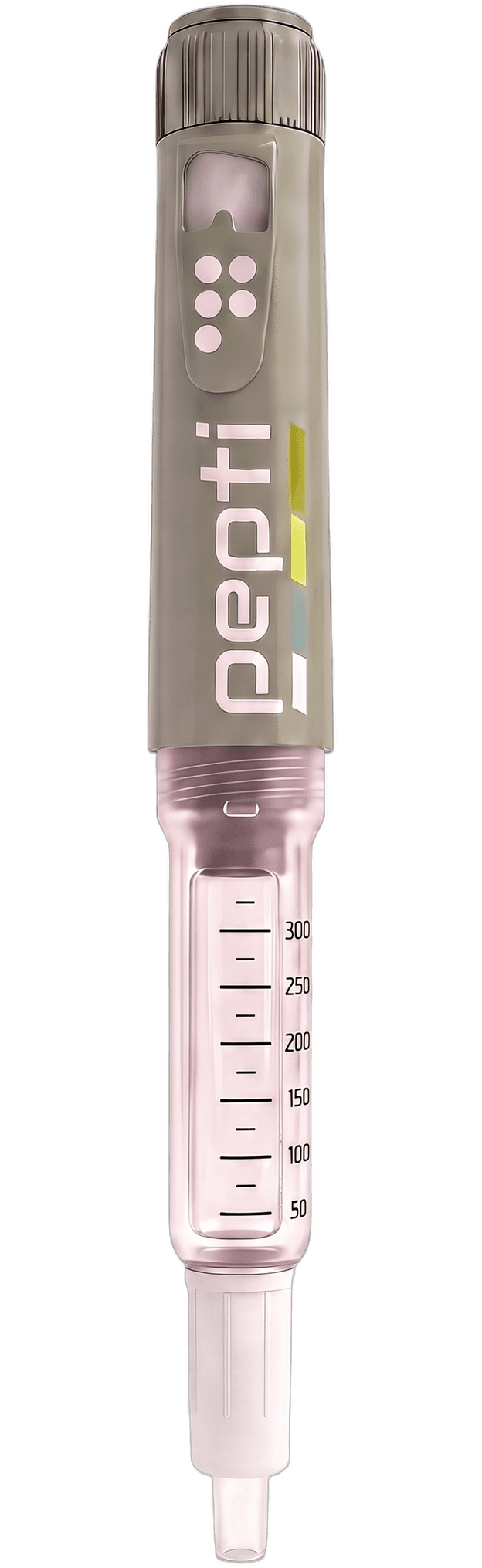
Identical medication. The pepti Pen is a pre-filled 10 mg cartridge in a reusable click-dial injector, dosed in clicks rather than drawn from a vial with a syringe. It costs more and removes the draw step. Neither is clinically better.
— PT-141
Availability and formats
| Question | Answer |
|---|---|
| Can I get it by telehealth? | Yes, where a physician licensed in your state prescribes it |
| Which states? | All 50 states and DC |
| Does it come as a pen? | Yes, as a pre-filled pepti Pen cartridge with a reusable click-dial injector |
| Does it come as a capsule? | No |
| Does it come as a nasal spray? | No |
| Is bloodwork required first? | Not routinely; your physician decides |
— PT-141
Where to get PT-141 prescribed
PT-141 cannot be bought legitimately without a prescription. Sites shipping it with no prescription are selling a research-use-only product, where no pharmacy is accountable for identity, purity, sterility or concentration.
The prescription route works like this:
- Complete a medical intake covering your history, medications, allergies and what you are treating.
- A physician licensed in your state reviews it.
- If appropriate, a state-licensed, FDA-registered pharmacy compounds it to that prescription.
- It ships refrigerated with your directions printed on the vial.
- Your physician stays reachable afterwards for dose questions and side effects.
Current all-in pricing for PT-141 is published: medication, physician review, refill management and shipping in one figure, with no separate membership fee. What to check on any provider is in how to tell if a peptide seller is legitimate.
— PT-141
Who should not take it, or should discuss it first
| Situation | Why |
|---|---|
| Uncontrolled hypertension or significant cardiovascular disease | given described transient blood-pressure effects |
| Nausea is common and can be marked | Raised at intake |
| Pregnancy or breastfeeding | Not used; safety data is absent |
| Tested athletes | Many peptides are prohibited in competition; check the current list |
— Full specification
Everything on the label.
— Product
PT-141 (Injectable)
— How supplied
5 mL multi-dose vial, PT-141 (Bremelanotide) 2 mg/mL (10 mg PT-141 (Bremelanotide) per vial); as the Pen: 3 mL pre-filled Pen cartridge containing 10 mg PT-141 (Bremelanotide)
— Typical directions
Inject 0.50 mL (50 units) subcutaneously 2-4 hours prior to sexual activity. No more than 4 doses per month.
— Dose volume
0.5 mL (50 units on a U-100 insulin syringe)
— Doses per vial
10
— Coverage per vial
about 2 weeks at as directed
— Formats
Vial and syringe · pepti Pen cartridge with a reusable injector
— Available in
All 50 states and DC
— Bloodwork
Not routinely required; your physician decides
— Legal status
Prescription-only, compounded, not FDA approved
— Category
Intimacy
— References
What this is based on.
References
- Simon JA, Kingsberg SA, Portman D, Williams LA, Krop J, Jordan R, Lucas J, Clayton AH. Long-Term Safety and Efficacy of Bremelanotide for Hypoactive Sexual Desire Disorder · Obstetrics & Gynecology (2019) · PMID 31599847
- Clayton AH, Althof SE, Kingsberg S, DeRogatis LR, Kroll R, Goldstein I, Kaminetsky J, Spana C, Lucas J, Jordan R, Portman DJ. Bremelanotide for female sexual dysfunctions in premenopausal women: a randomized, placebo-controlled dose-finding trial · Women's Health (London) (2016) · PMID 27181790
- Clayton AH, Kingsberg SA, Portman D, Sadiq A, Krop J, Jordan R, Lucas J, Simon JA. Safety Profile of Bremelanotide Across the Clinical Development Program · Journal of Women's Health (2022) · PMID 35147466
- Pfaus JG, Sadiq A, Spana C, Clayton AH. The neurobiology of bremelanotide for the treatment of hypoactive sexual desire disorder in premenopausal women · CNS Spectrums (2022) · PMID 33455598
- Diamond LE, Earle DC, Rosen RC, Willett MS, Molinoff PB. Double-blind, placebo-controlled evaluation of the safety, pharmacokinetic properties and pharmacodynamic effects of intranasal PT-141, a melanocortin receptor agonist, in healthy males and patients with mild-to-moderate erectile dysfunction · International Journal of Impotence Research (2004) · PMID 14963471
- Rosen RC, Diamond LE, Earle DC, Shadiack AM, Molinoff PB. Evaluation of the safety, pharmacokinetics and pharmacodynamic effects of subcutaneously administered PT-141, a melanocortin receptor agonist, in healthy male subjects and in patients with an inadequate response to Viagra · International Journal of Impotence Research (2004) · PMID 14999221
- Diamond LE, Earle DC, Garcia WD, Spana C. Co-administration of low doses of intranasal PT-141, a melanocortin receptor agonist, and sildenafil to men with erectile dysfunction results in an enhanced erectile response · Urology (2005) · PMID 15833522
- Molinoff PB, Shadiack AM, Earle D, Diamond LE, Quon CY. PT-141: a melanocortin agonist for the treatment of sexual dysfunction · Annals of the New York Academy of Sciences (2003) · PMID 12851303
- Kingsberg SA, Clayton AH, Portman D, et al.. Bremelanotide for the Treatment of Hypoactive Sexual Desire Disorder: Two Randomized Phase 3 Trials · Obstetrics & Gynecology (2019) · PMID 31599840
- Thompson IM, Tangen CM, Goodman PJ, Probstfield JL, Moinpour CM, Coltman CA. Erectile dysfunction and subsequent cardiovascular disease · JAMA (2005) · PMID 16414947
- Nehra A, Jackson G, Miner M, Billups KL et al.. The Princeton III Consensus recommendations for the management of erectile dysfunction and cardiovascular disease · Mayo Clin Proc (2012) · PMID 22862865
- Carani C, Isidori AM, Granata A, Carosa E, Maggi M, Lenzi A, Jannini EA. Multicenter study on the prevalence of sexual symptoms in male hypo- and hyperthyroid patients · J Clin Endocrinol Metab (2005) · PMID 16204360
Citations are provided for educational purposes. They do not constitute medical advice. Always discuss any peptide protocol with your prescribing physician.
— Common questions
PT-141, answered.
Through a telehealth provider where a physician licensed in your state reviews a medical intake and a licensed US pharmacy compounds the prescription. Pepti prescribes PT-141 in all 50 states and DC; start with the free assessment.
5 mL multi-dose vial, PT-141 (Bremelanotide) 2 mg/mL (10 mg PT-141 (Bremelanotide) per vial); as the Pen: 3 mL pre-filled Pen cartridge containing 10 mg PT-141 (Bremelanotide)
Inject 0.50 mL (50 units) subcutaneously 2-4 hours prior to sexual activity. No more than 4 doses per month. Your physician sets your own dose and it is printed on your medication.
10 at the standard volume, about 2 weeks at as directed.
PT-141 is available as a vial with syringes and as a pre-filled pepti Pen cartridge with a reusable injector.
Not routinely, though your physician may want labs depending on your history. at-home blood testing covers hormone, metabolic and thyroid markers without a lab visit.
It is legal to prescribe and dispense in the United States with a valid prescription. It is not FDA approved: compounded medications are prepared by licensed pharmacies pursuant to a prescription rather than approved as manufactured products. See are peptides FDA approved.
Pricing is published on the PT-141 page as one all-in figure covering medication, physician review, refill management and shipping. What drives peptide pricing generally is in how much do peptides cost.
Same active ingredient, different product. Vyleesi is the FDA-approved bremelanotide injection, a 1.75 mg single-dose autoinjector indicated for premenopausal women with acquired, generalised hypoactive sexual desire disorder. Compounded PT-141 is the same molecule prepared by a licensed pharmacy as a 2 mg/mL multi-dose vial or a Pen cartridge, to a physician's patient-specific prescription. The compounded vial is not FDA approved.
Early-phase randomised studies in men reported erectile responses to intranasal and subcutaneous PT-141, including in men who responded poorly to sildenafil. There is no phase 3 trial in men and no approved indication for men; prescribing in men is a physician's off-label judgement.
Yes, more than for almost any other compounded peptide: two randomised, placebo-controlled phase 3 trials (RECONNECT) in 1,267 premenopausal women, a 52-week extension, a phase 2b trial and a pooled safety analysis of roughly 3,500 subjects. Evidence in men is limited to early-phase studies. The compounded vial itself has not been trialled.
The approved label reports peak blood levels at about one hour and a half-life of about 2.7 hours, and directs dosing at least 45 minutes before activity. Your directions say 2–4 hours before. The label states the duration of effect has not been fully characterised.
Each dose produces a transient rise in blood pressure, and frequent dosing raises the risk of focal hyperpigmentation — 1% of women dosing up to eight times a month, but 38% of people dosed daily for eight days — which is not always reversible. Your directions cap you at four doses a month; the label's ceiling is eight.
It can. In the phase 3 trials 40% of women reported nausea versus 1.3% on placebo; 13% needed an anti-emetic and 8% stopped because of it. The label notes it improved for most people by the second dose. Tell your physician rather than pushing through.
It can, at a much lower rate with as-needed dosing. Bremelanotide retains activity at MC1R, the pigmentation receptor, which is why focal darkening of the face, gums or breasts is a labelled warning. Report any new pigmentation to your physician.
One 2005 study in men reported that low-dose intranasal PT-141 with sildenafil produced a larger erectile response than either alone. Whether the combination is appropriate for you depends on your blood pressure and cardiovascular history. That is your physician's decision.
Many peptides are prohibited in competition by anti-doping bodies. If you are a tested athlete, check the current prohibited list for your sport before starting anything, and tell your physician.
— Next step
See what a physician
recommends for you.
A licensed physician in your state reviews your intake and decides what is appropriate. A consultation does not guarantee a prescription.
Important legal & safety information
The assessment process available on the Pepti website asks a series of medical questions, and the answers provided are reviewed by an independent licensed physician affiliated with our partner physician network. The licensed providers have established exclusionary criteria, and the answers provided determine if the individual is screened out of eligibility for treatment. The licensed clinicians retain the sole decision to prescribe peptide therapy and other compounded medications to patients. Treatment may be denied at the physician's sole discretion. If a prescription is not approved, you will not be charged for the medication.
Pharmacy Providers. Pepti is a technology platform and is not a healthcare provider, pharmacy, or prescriber. All medications offered through the platform are compounded by independent FDA-registered 503A or 503B compounding pharmacies based on a valid prescription written by a licensed physician for an individual patient. Compounded medications are not FDA-approved as products. The active pharmaceutical ingredients used by our partner pharmacies are sourced from FDA-registered facilities. Compounded medications may not undergo the same testing or quality control as commercially manufactured FDA-approved drugs.
Results vary. Results from peptide therapy and other compounded treatments vary based on individual factors, including age, weight, medical history, adherence to the prescribed protocol, lifestyle factors, and physiological response. Pepti makes no guarantee of any specific outcome. Statements about peptide therapy and compounded medications offered through the platform have not been evaluated by the Food and Drug Administration. These products are not intended to diagnose, treat, cure, or prevent any disease.
Product images. Product photographs and renderings shown on this website are for illustrative purposes only. The appearance of vials, packaging, labeling, and other materials you receive may vary and is determined by the dispensing compounding pharmacy.
Off-label use.Many peptides offered through the platform are prescribed for off-label use. “Off-label” means the medication is being prescribed for a use, dose, or patient population that is not specifically approved by the FDA. Off-label prescribing is legal and common in U.S. medical practice when supported by clinical experience and judgment.
Mailing & shipping. Pepti currently dispenses prescription medication to patients in 50 states. All orders ship in unbranded, tamper-evident packaging via expedited delivery from our partner compounding pharmacies. Temperature-sensitive medications ship with insulated packaging and ice packs. Shipping is included at no additional cost. We do not currently ship medication outside 50 states, internationally, or to APO/FPO addresses.
Not for emergencies. Pepti is not designed for medical emergencies. If you are experiencing a medical emergency, call 911 or go to your nearest emergency room immediately. For urgent but non-emergency medical questions, contact your primary care provider or use an urgent care service.
No doctor-patient relationship with Pepti. Your use of the platform does not create a doctor-patient relationship between you and pepti LLC. A doctor-patient relationship is established only between you and the independent licensed physician who reviews your intake and prescribes your treatment. The physicians who use the platform are independent contractors and are solely responsible for the medical care they provide.
Prescription medications. All prescription products require a valid prescription from a licensed healthcare provider. By using the platform, you acknowledge that you are at least 18 years old and that the information you provide is true, accurate, current, and complete. Providing false information may result in inappropriate treatment recommendations or denial of service.
Cosmetic & wellness products.Certain products offered through Pepti — including skincare, hair care, body care, supplements, men's grooming, sports recovery, and sexual wellness products — are cosmetic or dietary supplement products, not prescription medications. These products do not require a prescription and are not reviewed or prescribed by a physician. Statements regarding dietary supplements have not been evaluated by the Food and Drug Administration. These products are not intended to diagnose, treat, cure, or prevent any disease. Results vary by individual. Consult your healthcare provider before starting any new supplement or topical product, especially if you are pregnant, nursing, or taking other medications.
pepti LLC · Delaware Limited Liability Company · 131 Continental Dr, Suite 305, Newark, DE 19713 · For media or partnership inquiries, email hello@hellopepti.com. For patient support, email support@hellopepti.com. For privacy and HIPAA inquiries, email privacy@hellopepti.com.