Intimacy · Reference
PT-141 + Oxytocin Benefits: What the Research on Each Component Shows
This page takes each claimed benefit of the combination vial in turn and says which component it belongs to, what was studied, in whom, and how much weight it can bear. It describes what research has looked at, not what the vial will do for any one person. The full product reference is what is PT-141 + Oxytocin, and the single components have their own pages: PT-141 benefits and oxytocin benefits.
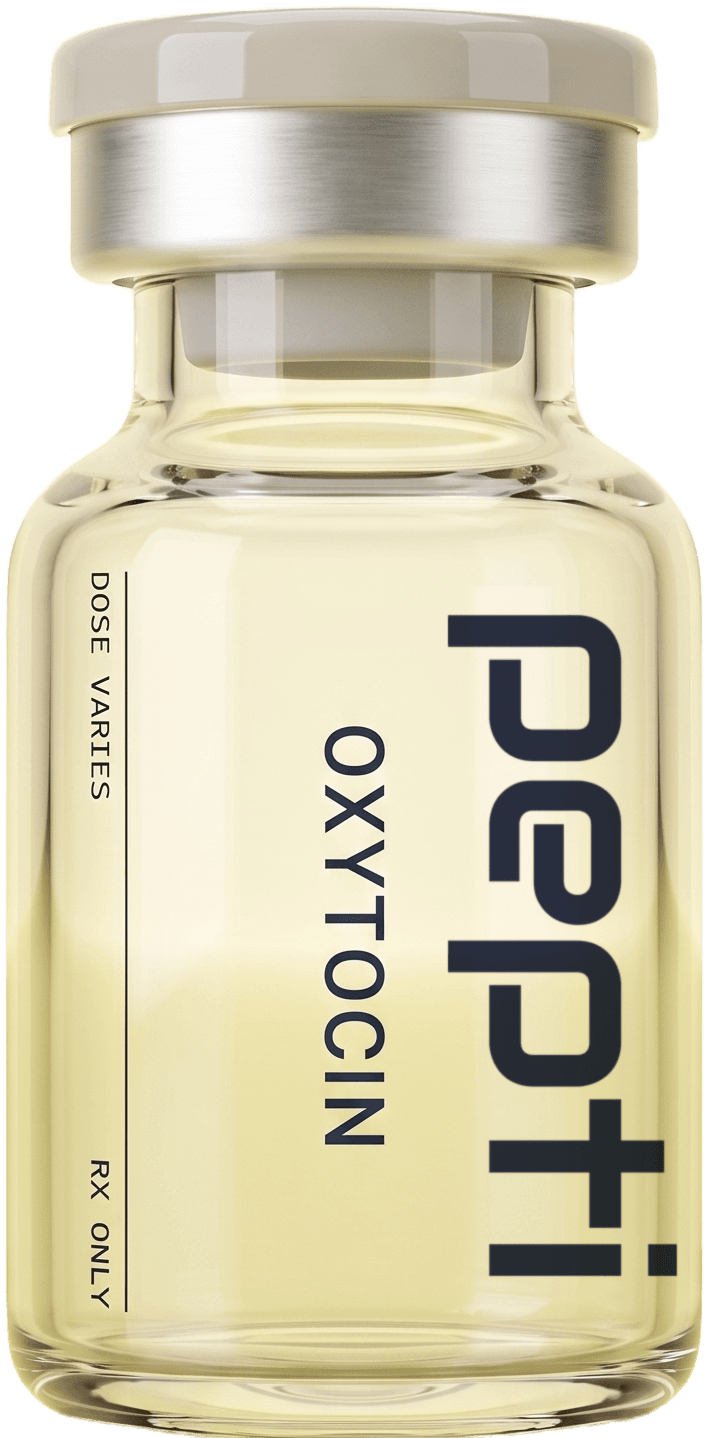
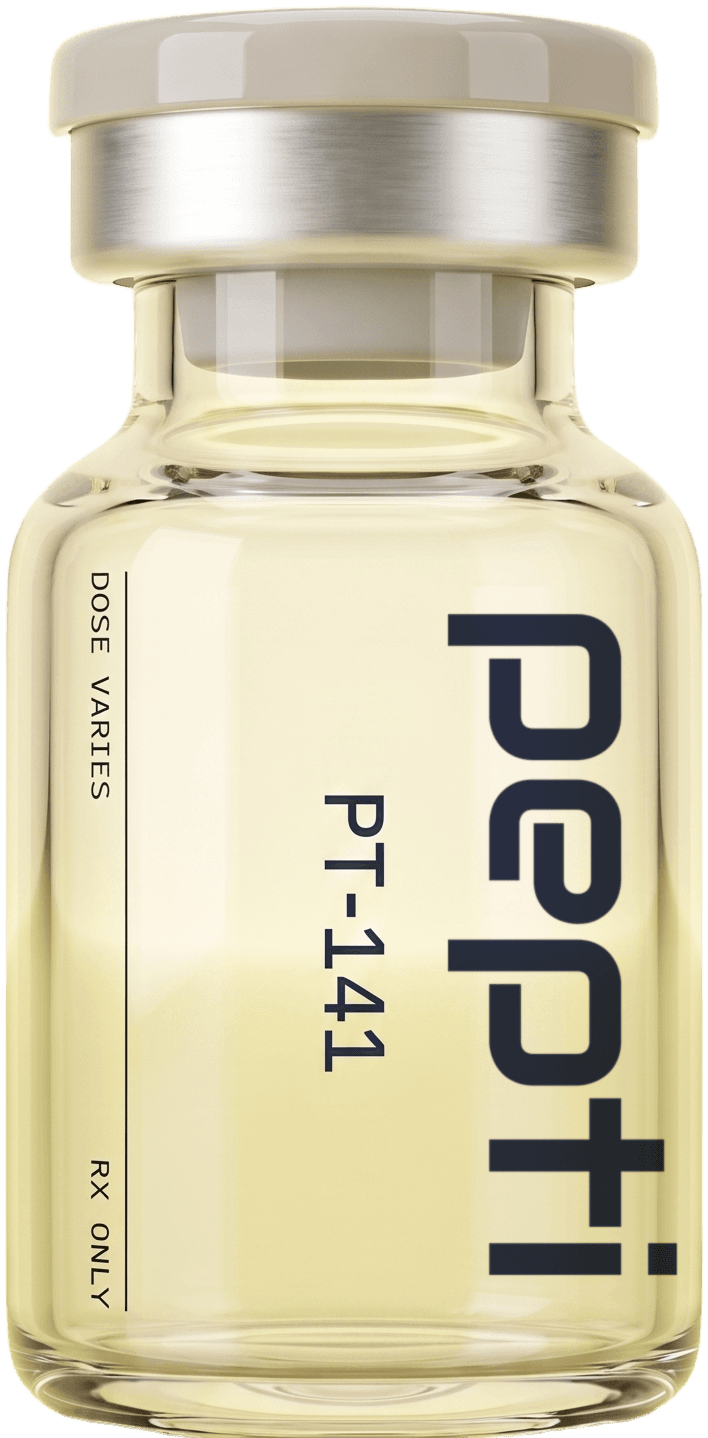
Treatments mentioned
The benefits claimed for PT-141 + Oxytocin come from two separate bodies of research, and the combination itself has never been studied, in people or in animals. The PT-141 component, bremelanotide, has two phase 3 randomised trials in 1,267 premenopausal women with low desire that reported modest, statistically significant improvements in desire and distress, plus small early-phase studies of erectile response in men. The oxytocin component has small nasal spray studies: one in 29 healthy couples reported small to moderate effects on orgasm intensity and contentment after sex, and a randomised trial in 30 women with sexual dysfunction found it no better than placebo. No study has tested whether oxytocin adds anything to PT-141, and compounded medications are not FDA approved.
This page takes each claimed benefit of the combination vial in turn and says which component it belongs to, what was studied, in whom, and how much weight it can bear. It describes what research has looked at, not what the vial will do for any one person. The full product reference is what is PT-141 + Oxytocin, and the single components have their own pages: PT-141 benefits and oxytocin benefits.
PT-141 + Oxytocin Benefits
The short answer
| Claimed benefit | Which component | What the evidence is | Strength of evidence |
|---|---|---|---|
| More sexual desire in premenopausal women with low desire | PT-141 | Two phase 3 randomised trials, RECONNECT, Obstetrics & Gynecology, 2019 | Human, randomised, large; modest in absolute size |
| Less distress about low desire | PT-141 | The same two phase 3 trials | Human, randomised, large; modest |
| Erectile response in men | PT-141 | Two 2004 studies, International Journal of Impotence Research | Human, early-phase; measured over hours |
| More intense orgasm, contentment after sex | Oxytocin | One crossover study in 29 healthy couples, nasal spray, Hormones and Behavior, 2014 | Small human study; small to moderate effects |
| Treating sexual dysfunction in women | Oxytocin | Randomised crossover trial in 30 women, nasal spray, Fertility and Sterility, 2015 | Negative: no better than placebo |
| Closeness and bonding | Oxytocin | Mostly animal work in prairie voles; human findings inconsistent | Animal strong, human weak |
| Covering desire and the orgasmic phase in one injection | Both | A prescribing rationale | No study |
| Oxytocin adding to PT-141 | Both | Never tested | None |
The honest summary: one component with strong trial evidence in one population, one component with mixed and mostly null human evidence, and nothing at all on the two together.
PT-141 + Oxytocin Benefits
What is in the vial
| Component | Per vial | Per 0.10 mL dose | What it is |
|---|---|---|---|
| PT-141 (bremelanotide) | 10 mg | 0.2 mg | A seven-amino-acid cyclic melanocortin receptor agonist that acts in the brain |
| Oxytocin | 5 mg | 0.1 mg | A nine-amino-acid hormone the body already makes, released around orgasm |
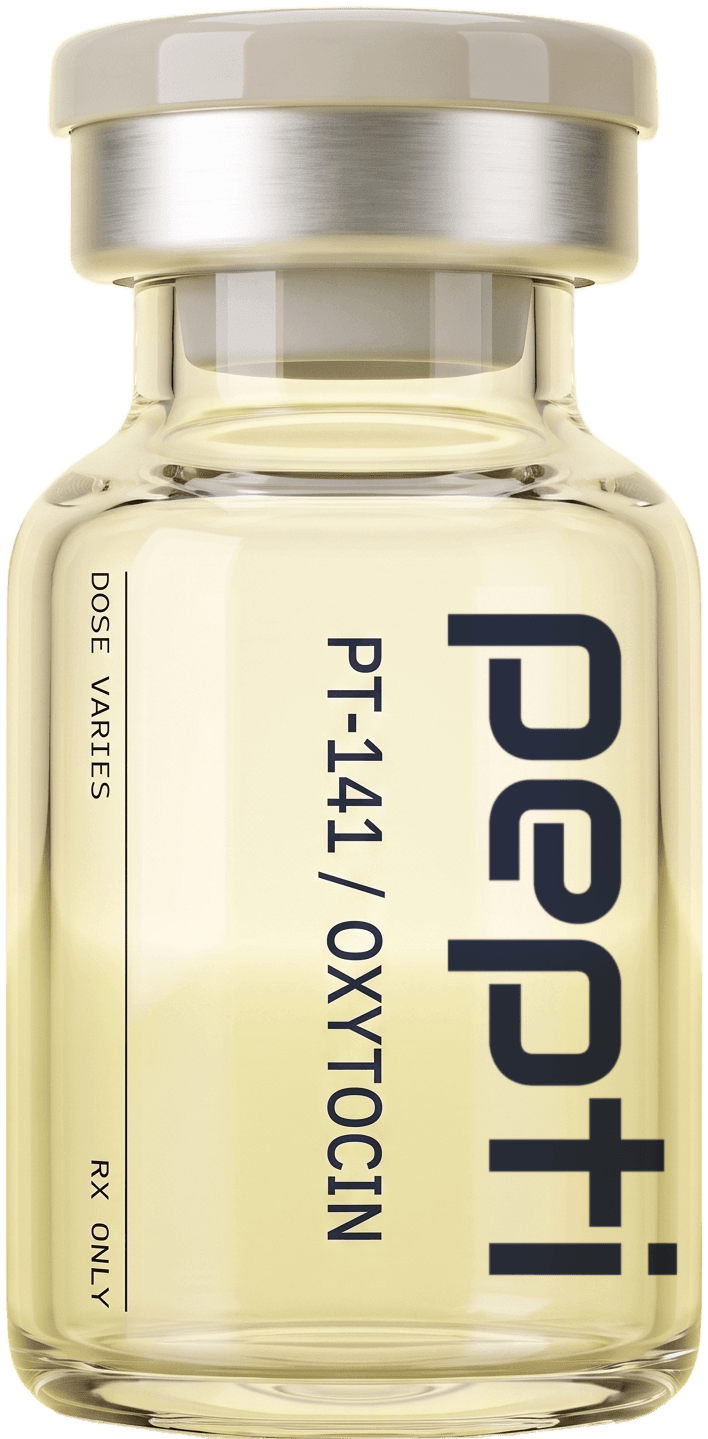
PT-141 + Oxytocin is a 5 mL multi-dose vial at PT-141 2 mg/mL and oxytocin 1 mg/mL. The ratio is fixed, so every draw delivers the same split. Both are the active ingredients of FDA-approved drugs for other purposes: bremelanotide for low desire in premenopausal women, and oxytocin for labour and postpartum bleeding. The per-dose figures are arithmetic from the label, on a U-100 insulin syringe; the full chart is in PT-141 + Oxytocin dosage.
Why the two are combined
The rationale prescribers give is that PT-141 is described around desire and initiation, and oxytocin around the orgasmic and post-orgasmic phase and the closeness afterwards. The one couples study that reported any oxytocin effect found it there, not on drive or arousal. One injection before intimacy is meant to cover both ends of the sequence. That is a rationale, not a finding.
PT-141 + Oxytocin Benefits
Benefit 1: Sexual desire (the PT-141 component)
What was studied. RECONNECT was two identical 24-week, randomised, double-blind, placebo-controlled phase 3 trials published together in Obstetrics & Gynecology in 2019. They enrolled 1,267 premenopausal women with acquired, generalised hypoactive sexual desire disorder and randomised them to 1.75 mg bremelanotide or placebo, self-injected as needed.
What was reported. On the desire domain of the Female Sexual Function Index, scores improved by 0.30 and 0.42 points more than placebo in the two trials, both statistically significant.
The limits. Premenopausal women only. Low desire explained by a medical or psychiatric condition, a relationship problem or a medication was excluded. The trials used a 1.75 mg autoinjector; a dose from the combination vial carries 0.2 mg of PT-141 alongside oxytocin.
Strength. The strongest human evidence for anything in this vial, and modest in absolute size.
PT-141 + Oxytocin Benefits
Benefit 2: Less distress about low desire (the PT-141 component)
What was reported. In the same trials, scores on the desire-related distress item of the Female Sexual Distress Scale improved by 0.37 and 0.29 points more than placebo. A 52-week open-label extension followed 684 women who chose to continue and reported no new safety signals, with most using it two to three times a month.
The limits. The extension was not placebo-controlled, and it is the same population. Distress was measured with bremelanotide alone.
Strength. Human, randomised for the 24-week part; modest.
PT-141 + Oxytocin Benefits
Benefit 3: Erectile response in men (the PT-141 component)
What was studied. Two 2004 papers in the International Journal of Impotence Research report the developer's early work. Intranasal PT-141 above 7 mg produced a statistically significant erectile response, measured by RigiScan, in healthy men without visual sexual stimulation and in men with mild-to-moderate erectile dysfunction. Subcutaneous doses above 1 mg did so in healthy men, and 4 mg and 6 mg in men who had responded inadequately to sildenafil 100 mg.
The limits. Early-phase studies that measured erections over hours in a clinic, not desire or satisfaction over months. The men's programme never reached a phase 3 trial, and the approved bremelanotide product is not indicated in men. Every subcutaneous dose in those studies was at least five times the PT-141 in a combination dose.
Strength. Human, small, early-phase. More is in PT-141 + Oxytocin for men.
PT-141 + Oxytocin Benefits
Benefit 4: Orgasm intensity and contentment (the oxytocin component)
What was studied. A 2014 paper in Hormones and Behavior gave 29 healthy heterosexual couples 24 IU of intranasal oxytocin or placebo in a double-blind crossover, assessed after intercourse at home.
What was reported. Oxytocin did not change sexual drive, arousal, erection or lubrication. It was associated with higher reported orgasm intensity and contentment after intercourse. Men reported higher sexual satiety; women reported feeling more relaxed and, in subgroups, better able to share sexual desires and empathise with their partner. The authors described the effect sizes as small to moderate.
The limits. Healthy volunteers, not people with a complaint. A nasal spray measured in IU, which cannot be converted to the milligrams on this vial. One study. No PT-141 alongside it.
Strength. The strongest positive finding for the oxytocin component, and modest. It is the finding the "orgasmic phase" half of the rationale rests on.
PT-141 + Oxytocin Benefits
Benefit 5: Treating sexual dysfunction in women (the oxytocin component)
What was studied. A 2015 randomised, double-blind, placebo-controlled crossover trial in Fertility and Sterility gave 30 pre- and postmenopausal women with sexual dysfunction 32 IU of intranasal oxytocin or placebo before intercourse, eight weeks on each.
What was reported. Sexual function improved substantially in both arms: the Female Sexual Function Index rose 26% on oxytocin and 31% on placebo, with no treatment effect. A 2017 follow-up found the male partners' sexual quality of life improved whichever spray their partner used.
Strength. Negative, and it is the best-controlled trial of oxytocin in people with an actual diagnosis. In men directly, a 2008 double-blind crossover study in Psychoneuroendocrinology gave ten healthy men 24 IU before laboratory-induced arousal: plasma oxytocin rose sharply, but sexual behaviour did not change.
PT-141 + Oxytocin Benefits
Benefit 6: Closeness and bonding (the oxytocin component)
What is claimed. That the oxytocin half of the vial strengthens bonding with a partner.
What the research describes. The "bonding hormone" label comes from animal research, mostly in prairie voles, a monogamous rodent, showing that oxytocin signalling in the brain was needed for pair-bonding; a 2009 review in Frontiers in Neuroendocrinology covers that literature. In people, a 2005 study in Nature reported that a 24 IU intranasal dose increased trust in an economic game, and many later studies did not replicate at the same size in larger samples.
The delivery problem. Oxytocin crosses the blood-brain barrier poorly. A 2016 paper in Biological Psychiatry, "Intranasal Oxytocin: Myths and Delusions," argued that very little of a large nasal research dose reaches the cerebrospinal fluid, while levels in the blood rise far more. That applies at least as strongly to a subcutaneous injection, which has no nose-to-brain pathway.
Strength. Animal strong; human inconsistent; nothing for the injection.
PT-141 + Oxytocin Benefits
Benefit 7: On-demand use, not a daily medication
What this is. A description of how the vial is used, not an outcome. The directions are per occasion, 2 to 4 hours before sexual activity, with a monthly ceiling of 8 doses. PT-141 reaches peak blood levels about an hour after a subcutaneous dose and has a half-life under three hours; oxytocin clears in minutes.
What follows from it. Each dose stands on its own. Nobody reports a cumulative build-up, and no withdrawal or rebound is described for either component. The 8-a-month ceiling comes from the approved bremelanotide label and is a safety limit, not a target. How the timing works is in how long does PT-141 take to work.
PT-141 + Oxytocin Benefits
Benefit 8: A non-hormonal, non-vascular mechanism
What this is. Also a mechanism, not an outcome. PT-141 acts on melanocortin receptors in the hypothalamus; animal studies suggest it increases dopamine release in the medial preoptic area, and the approved label states the mechanism for desire is unknown. It is not a PDE5 inhibitor and does not act on blood flow. Neither component raises testosterone or oestrogen, and no oxytocin deficiency state for sexual function has been defined.
Why it matters. If low desire has a hormonal cause, or the problem is erection quality with desire intact, neither component is aimed at it. Peptides for libido sets out what a physician looks at first.
PT-141 + Oxytocin Benefits
What the evidence does not establish
| The claim | Why it is not established |
|---|---|
| Oxytocin adds anything to PT-141 | No study has compared the blend with PT-141 alone |
| The combination works | It has never been studied as a combination |
| The compounded dose reproduces the trials | The PT-141 trials used 1.75 mg; a combination dose is 0.2 mg PT-141 with 0.1 mg oxytocin |
| An injection reproduces the nasal oxytocin findings | Every oxytocin intimacy study used a nasal spray |
| PT-141 improves desire in men over time | The men's studies measured erections in a clinic |
| Oxytocin raises desire or arousal | The couples study found no effect on either |
| Long-term safety of oxytocin injection at these doses | Those studies have not been run |
| That anyone will notice anything | Noticing nothing is common, and the trials show a large placebo response in this area |
PT-141 + Oxytocin Benefits
Side effects, in brief
The combination's side effects are dominated by its PT-141 component. In the phase 3 trials of bremelanotide at 1.75 mg, nausea was reported by 40% of women against 1.3% on placebo, flushing by 20%, injection-site reactions by 13%, headache by 11% and vomiting by 5%. Each dose transiently raises blood pressure, by about 6 mmHg systolic and 3 mmHg diastolic at most, peaking two to four hours after the dose. Focal darkening of the face, gums or breasts was reported in 1% at up to eight doses a month.
There are no systematic safety data for oxytocin at the small subcutaneous doses in this vial. Oxytocin contracts the uterus, which is why pregnancy is an absolute exclusion. Bremelanotide can significantly reduce exposure to oral naltrexone, so people taking it should not use this vial. Chest pain, a severe headache, trouble breathing, facial or throat swelling, or an erection lasting more than four hours needs emergency care: call 911, then tell your physician. The full list is in PT-141 side effects and oxytocin side effects.
PT-141 + Oxytocin Benefits
Where it stands with the FDA
Bremelanotide is the active ingredient of a product the FDA approved on 21 June 2019 for premenopausal women with acquired, generalised hypoactive sexual desire disorder. Oxytocin is the active ingredient of a hospital injection approved on 19 November 1980 for obstetric uses. Because both are components of approved products, a licensed 503A pharmacy may compound them without either needing a place on the bulks list, and neither was ever in Category 2. The combination vial is a different formulation prepared to an individual prescription. It has not been reviewed by the FDA, and compounded medications are not FDA approved. Prescribing it for intimacy, to men, or after menopause is off-label use of approved actives.
PT-141 + Oxytocin Benefits
How Pepti supplies it
| Product | What is in it | Typical directions | Per dose | Price |
|---|---|---|---|---|
| PT-141 + Oxytocin | 5 mL vial, PT-141 2 mg/mL + oxytocin 1 mg/mL (10 mg / 5 mg) | 0.10 mL (10 units) subcutaneously 2 to 4 hours before sexual activity, no more than 8 doses per month | 0.2 mg PT-141, 0.1 mg oxytocin | $259/mo |
| PT-141 | 5 mL vial, 2 mg/mL (10 mg); also a 3 mL Pen cartridge with 10 mg | Printed on the vial | Set by your physician | $259/mo |
| Oxytocin | 5 mL vial, 2 mg/mL (10 mg) | Printed on the vial | Set by your physician | $239/mo |
Every price is all-in, covering medication, physician review, refill management and shipping, with no membership fee. Pepti is cash-pay and does not bill insurance. Vials ship ready to use, refrigerated with ice packs, with sterile syringes and alcohol prep pads. Lot test results are at /quality/lab-results. Your physician sets your directions after reviewing your intake, and they are printed on the vial. If desire is the whole question, PT-141 alone carries the component with the trial evidence; how the two single components compare is in PT-141 vs oxytocin.
PT-141 + Oxytocin Benefits
Where to get PT-141 + Oxytocin prescribed
PT-141 + Oxytocin cannot be bought legitimately without a prescription. Sites selling it "for research use only" are not accountable for identity, purity, sterility or concentration. The prescription route:
- Complete a free online intake covering your history, medications, blood pressure and heart history, pregnancy status, and what you want help with.
- A physician licensed in your state reviews it, usually within 24 hours.
- If it is appropriate, a PCAB-accredited, FDA-registered US 503A compounding pharmacy prepares it to that prescription.
- It ships refrigerated with your directions printed on the vial.
- Your physician stays reachable for questions and side effects.
Step by step: how to get PT-141 + Oxytocin prescribed online. Bloodwork is not required for any Pepti treatment. If your physician wants labs for your care, they'll ask through your account.
References
What this is based on.
References
- Kingsberg SA, Clayton AH, Portman D et al.. Bremelanotide for the Treatment of Hypoactive Sexual Desire Disorder: Two Randomized Phase 3 Trials · Obstet Gynecol (2019) · PMID 31599840
- Behnia B, Heinrichs M, Bergmann W et al.. Differential effects of intranasal oxytocin on sexual experiences and partner interactions in couples · Horm Behav (2014) · PMID 24503174
- Muin DA, Sheikh Rezaei S, Tremmel-Scheinost M et al.. Men's sexual response to female partner's intranasal oxytocin administration for hypoactive sexual desire disorder: an open prospective cohort study · Fertil Steril (2017) · PMID 28189292
- Veening JG, de Jong TR, Waldinger MD et al.. The role of oxytocin in male and female reproductive behavior · Eur J Pharmacol (2015) · PMID 25088178
- Simon JA, Kingsberg SA, Portman D, Williams LA, Krop J, Jordan R, Lucas J, Clayton AH. Long-Term Safety and Efficacy of Bremelanotide for Hypoactive Sexual Desire Disorder · Obstetrics & Gynecology (2019) · PMID 31599847
- Clayton AH, Althof SE, Kingsberg S, DeRogatis LR, Kroll R, Goldstein I, Kaminetsky J, Spana C, Lucas J, Jordan R, Portman DJ. Bremelanotide for female sexual dysfunctions in premenopausal women: a randomized, placebo-controlled dose-finding trial · Women's Health (London) (2016) · PMID 27181790
- Clayton AH, Kingsberg SA, Portman D, Sadiq A, Krop J, Jordan R, Lucas J, Simon JA. Safety Profile of Bremelanotide Across the Clinical Development Program · Journal of Women's Health (2022) · PMID 35147466
- Pfaus JG, Sadiq A, Spana C, Clayton AH. The neurobiology of bremelanotide for the treatment of hypoactive sexual desire disorder in premenopausal women · CNS Spectrums (2022) · PMID 33455598
- Diamond LE, Earle DC, Rosen RC, Willett MS, Molinoff PB. Double-blind, placebo-controlled evaluation of the safety, pharmacokinetic properties and pharmacodynamic effects of intranasal PT-141, a melanocortin receptor agonist, in healthy males and patients with mild-to-moderate erectile dysfunction · International Journal of Impotence Research (2004) · PMID 14963471
- Rosen RC, Diamond LE, Earle DC, Shadiack AM, Molinoff PB. Evaluation of the safety, pharmacokinetics and pharmacodynamic effects of subcutaneously administered PT-141, a melanocortin receptor agonist, in healthy male subjects and in patients with an inadequate response to Viagra · International Journal of Impotence Research (2004) · PMID 14999221
- Diamond LE, Earle DC, Garcia WD, Spana C. Co-administration of low doses of intranasal PT-141, a melanocortin receptor agonist, and sildenafil to men with erectile dysfunction results in an enhanced erectile response · Urology (2005) · PMID 15833522
- Molinoff PB, Shadiack AM, Earle D, Diamond LE, Quon CY. PT-141: a melanocortin agonist for the treatment of sexual dysfunction · Annals of the New York Academy of Sciences (2003) · PMID 12851303
Citations are provided for educational purposes. They do not constitute medical advice. Always discuss any peptide protocol with your prescribing physician.
Common questions
PT-141 + Oxytocin Benefits, answered.
Each component has its own research. PT-141 has phase 3 trials in premenopausal women reporting modest improvements in desire and distress, and early studies of erectile response in men. Oxytocin has one small couples study reporting effects on orgasm intensity and contentment, and a trial in women that found it no better than placebo. The combination has never been studied.
There is no evidence that it is. No study has compared the two, and the oxytocin component's controlled evidence for sexual function is mostly null. If desire is the whole question, PT-141 alone is the more targeted prescription.
The rationale is the orgasmic phase and closeness afterwards, based on a 2014 couples study using a nasal spray. Whether it adds anything when injected alongside PT-141 has not been tested.
The desire evidence belongs to PT-141, from trials in premenopausal women at a higher dose than a combination dose carries. Oxytocin did not change drive or arousal in the couples study.
The 2014 couples study reported more intense orgasms on nasal oxytocin, with small to moderate effects. That study did not use an injection or PT-141.
The bonding evidence is mostly from prairie voles. In people, findings are inconsistent, and oxytocin crosses into the brain poorly. Treat the closeness half of the rationale as a hypothesis.
No. Neither component raises testosterone or oestrogen. If low desire may be hormonal, that is a different conversation with your physician.
It is used per occasion, 2 to 4 hours before sexual activity. PT-141 peaks in the blood about an hour after a dose. No study defines when a person will notice anything.
Mostly PT-141's: nausea in 40% of women in the phase 3 trials, flushing, injection-site reactions, headache, a brief rise in blood pressure, and rare skin darkening. There are no systematic safety data for oxytocin at these doses.
No. Both actives are components of FDA-approved drugs for other uses, but the compounded combination is a different formulation and compounded medications are not FDA approved.
At Pepti, $259 a month, all-in, covering medication, physician review, refill management and shipping. The free assessment goes to a physician licensed in your state. A consultation does not guarantee a prescription.
Next step
See what a physician recommends for you.
A licensed physician in your state reviews your intake and decides what is appropriate. A consultation does not guarantee a prescription.