Intimacy · Reference
PT-141 for Women: The Trials, the Cautions, and Menopause
This page covers what PT-141 is, exactly what the women's research measured, what it does not cover, the considerations that matter for women, the PT-141 + Oxytocin blend, and how to get it prescribed. The full product reference is what is PT-141.
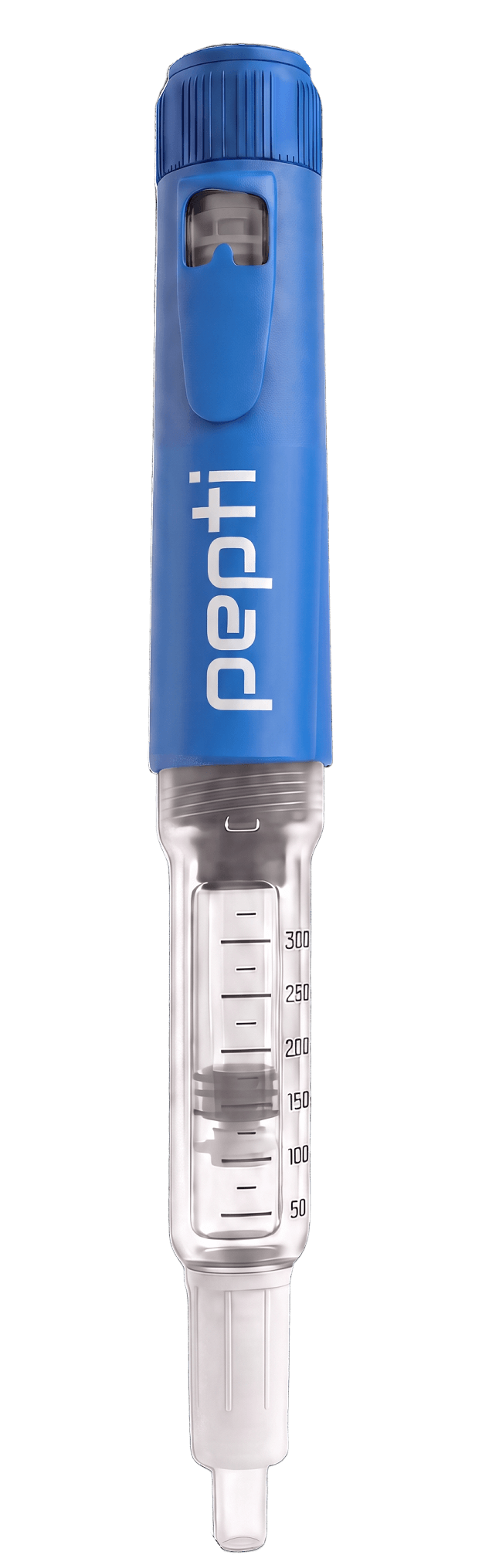
Treatments mentioned
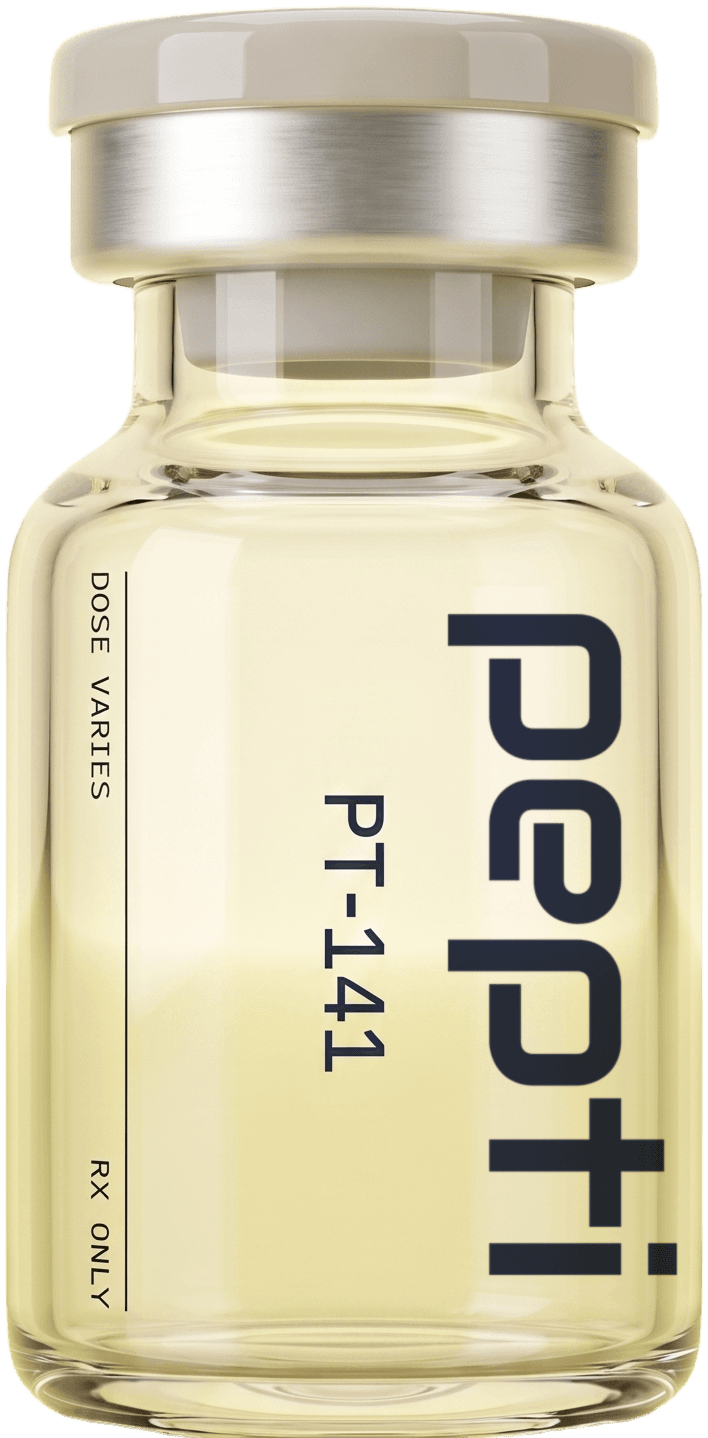
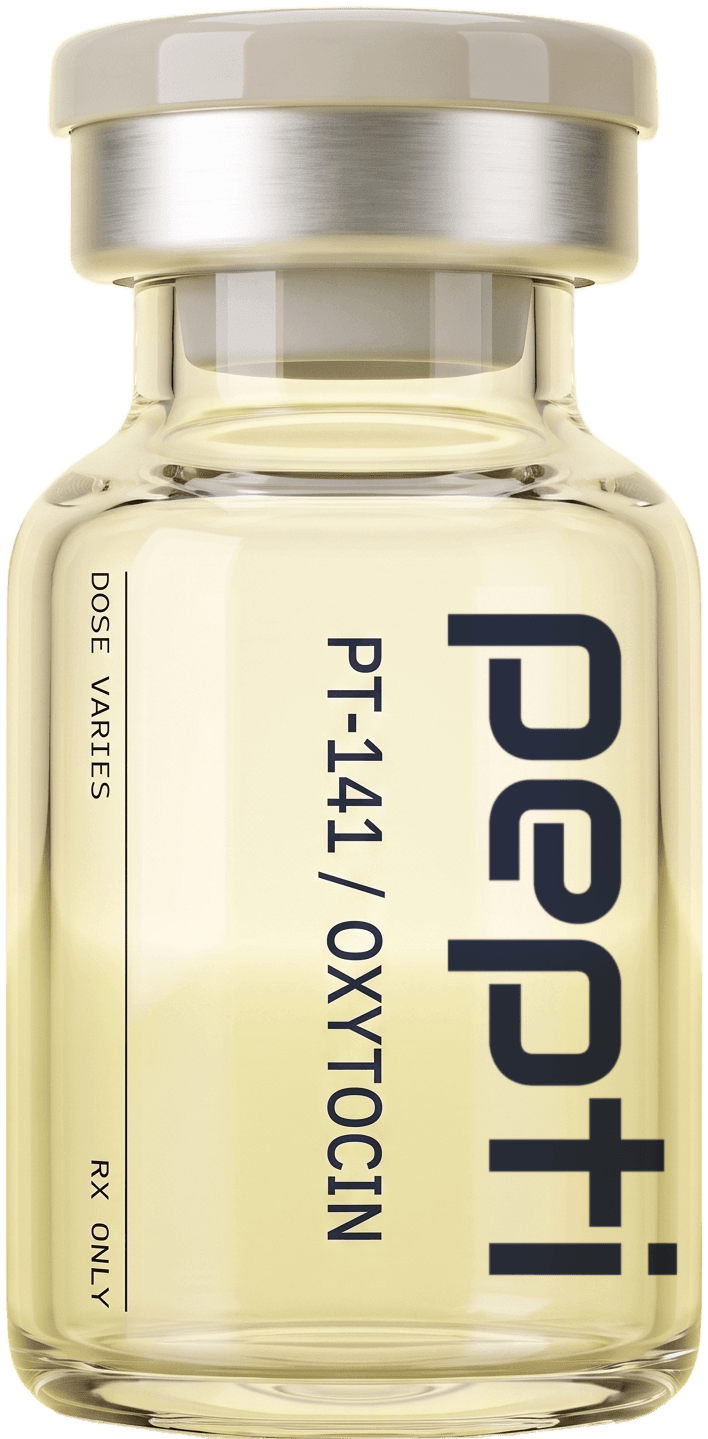
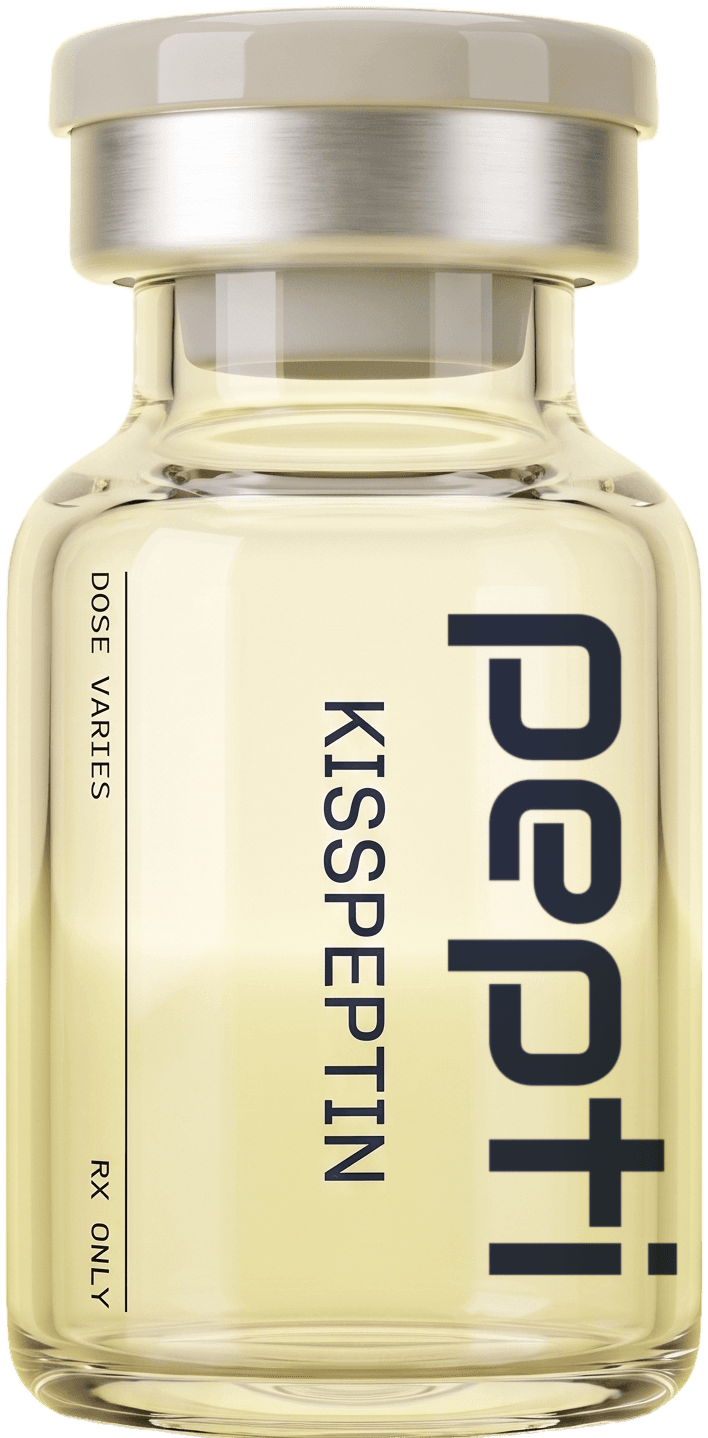
PT-141 (bremelanotide) has more research in women than any other peptide Pepti prescribes: two phase 3 randomized trials, together called RECONNECT, enrolled 1,267 premenopausal women with acquired, generalized hypoactive sexual desire disorder and reported modest but statistically significant improvements in desire and in desire-related distress compared with placebo. Those trials supported FDA approval of a bremelanotide product for premenopausal women only; use after menopause has not been studied. Nausea is the common side effect, each dose briefly raises blood pressure, and it is not used in pregnancy. Compounded PT-141 shares the molecule, not the approval, and is not FDA approved.
This page covers what PT-141 is, exactly what the women's research measured, what it does not cover, the considerations that matter for women, the PT-141 + Oxytocin blend, and how to get it prescribed. The full product reference is what is PT-141.
PT-141 for Women
The short answer
| Question | What the research shows | Strength of evidence |
|---|---|---|
| Low desire in premenopausal women | Two phase 3 RCTs (RECONNECT, Obstetrics and Gynecology, 2019), 1,267 women | Strong for that group; effects modest in absolute size |
| Dose finding | Phase 2b trial, Women's Health, 2016, 327 premenopausal women analysed | Randomized |
| Longer-term use | 52-week open-label extension, 684 women | No new safety signals; not placebo-controlled |
| Safety across the program | 2022 pooled analysis, Journal of Women's Health, roughly 3,500 subjects in 43 studies | Consistent pattern |
| After menopause | Not studied; the approved product is not indicated after menopause | None |
| Arousal disorder | One 2006 crossover study in 18 premenopausal women, intranasal | Historical data point |
| The compounded vial | Not trialled; the trials used a 1.75 mg autoinjector | Extrapolation from the same molecule |
PT-141 for Women
What PT-141 is, in one paragraph
PT-141 is the development code for bremelanotide, a cyclic peptide of seven amino acids and a synthetic analogue of alpha-melanocyte-stimulating hormone. It activates melanocortin receptors in the brain, mainly MC4R, the receptor implicated in sexual function. A 2007 paper in the Journal of Sexual Medicine and a 2022 review in CNS Spectrums describe it increasing dopamine release in the medial preoptic area of the hypothalamus in female rats, a region tied to sexual motivation; the model is that it raises the "wanting" side of desire rather than the physical response. The approved label says the mechanism for desire is unknown, so that is the leading explanation, not a settled one. It is not a PDE5 inhibitor, does not act on blood flow, and does not raise estrogen or testosterone.
PT-141 for Women
What research has looked at in women
The phase 2b dose-finding trial
A 2016 phase 2b trial in Women's Health randomized premenopausal women to placebo or 0.75, 1.25 or 1.75 mg bremelanotide as desired. In the 327 women analysed, the pooled 1.25 and 1.75 mg group reported more satisfying sexual events per month than placebo (+0.7 against +0.2).
RECONNECT: the two phase 3 trials
The pivotal program was two identical 24-week, randomized, double-blind, placebo-controlled trials published together in Obstetrics and Gynecology in 2019. Across them, 1,267 premenopausal women with acquired, generalized hypoactive sexual desire disorder (HSDD) self-injected 1.75 mg bremelanotide or placebo as needed.
Measure Result, compared with placebo Desire domain of the Female Sexual Function Index Improved 0.30 and 0.42 points more in the two trials Desire-related distress (Female Sexual Distress Scale, item 13) Improved 0.37 and 0.29 points more Statistical significance Met in both trials, on both co-primary endpoints Those are modest absolute differences. The FDA judged them meaningful enough to approve the product on 21 June 2019, and the fair description is real but not dramatic. The women enrolled had low desire that was not explained by a medical or psychiatric condition, a relationship problem or a medication; those were exclusions, which matters for who the results describe.
The extension and the pooled safety analysis
A 52-week open-label extension, also in Obstetrics and Gynecology in 2019, followed 684 women who chose to continue; no new safety signals emerged, though only 272 completed the full year. Most women used it two to three times a month. A 2022 pooled analysis in the Journal of Women's Health covered roughly 3,500 subjects across 43 studies and reported a safety pattern consistent with the trials.
Arousal
Before the desire program, a 2006 crossover study in the Journal of Sexual Medicine gave 18 premenopausal women with sexual arousal disorder a single 20 mg intranasal dose or placebo, and more reported moderate or high desire after bremelanotide. Intranasal delivery was later dropped, so this is a historical data point.
PT-141 for Women
What the women's research does not cover
- Postmenopausal women. Both RECONNECT trials enrolled premenopausal women only, and the approved label states it is not indicated for HSDD in postmenopausal women. Use after menopause is an extrapolation.
- The compounded vial. The trials used a fixed 1.75 mg autoinjector. Compounded PT-141 at Pepti is a 2 mg/mL multi-dose vial with physician-set directions, and it has not been trialled.
- Low desire with another cause. Pain with sex, a new medication, depression or a relationship problem were trial exclusions.
- An effect on arousal, lubrication or orgasm as the primary outcome. The trials measured desire and distress.
- Long-term safety beyond the one-year extension.
PT-141 for Women
What changes for women
Desire is rarely one thing
In women, low desire is usually multifactorial: sleep, pain with intercourse, relationship context, medications such as SSRIs, and the transition itself. SSRIs and SNRIs are among the commonest reversible causes; beta blockers, finasteride and oral contraceptives are each documented to affect libido in some people. If desire disappeared the month a new medication started, that is a conversation with the person who prescribed it, not a vial. Peptides for libido sets out what a physician looks at first.
Perimenopause and menopause
In perimenopause and menopause, vaginal dryness and pain with sex are often the actual problem, and no desire peptide addresses them. Genitourinary symptoms are treated locally, and treating them is often what restores comfort before desire is even in question. If sex is uncomfortable rather than undesired, local treatment comes first. Where desire itself has changed after menopause, PT-141 is an extrapolation from premenopausal evidence, and the blood-pressure cautions apply at any age. More in peptides for menopause and peptides for women.
Blood pressure and the heart
Each dose produces a transient mean rise of about 6 mmHg systolic and 3 mmHg diastolic, peaking two to four hours after the dose and usually back to baseline within about twelve, with a fall in heart rate. That is why the approved product is contraindicated in uncontrolled hypertension and known cardiovascular disease, and why the label directs that blood pressure be well controlled before starting.
Pigmentation
Bremelanotide binds MC1R, the melanocyte receptor, most strongly. Focal hyperpigmentation of the face, gums or breasts was reported in 1% of women dosing up to eight times a month, but in 38% of people dosed daily for eight days in a separate study, more likely with darker skin, and not always reversible. That is why dosing is capped and as needed, never daily. Report any new darkening.
Pregnancy, contraception and breastfeeding
The approved labeling reports 7 pregnancies among more than 1,057 patients treated for up to 12 months, with no major congenital anomalies reported among them. It also reports fetal harm in pregnant dogs at exposures at or above 16 times the maximum recommended human dose, and developmental effects in mouse offspring at or above 125 times. Because the lowest dose associated with fetal harm was not identified, the labeling directs women to use effective contraception while taking it, to stop if pregnancy is suspected, and states use in pregnancy is not recommended. Seven pregnancies is not a safety dataset. There is no human lactation data, and it is not used while breastfeeding. See can you take peptides while pregnant.
Interactions
Bremelanotide may slow gastric emptying and reduce absorption of oral medications taken around the same time, and it can significantly reduce exposure to oral naltrexone, so people taking naltrexone should not use it. The intake asks for every medication you take for that reason.
PT-141 for Women
PT-141 + Oxytocin
PT-141 + Oxytocin combines bremelanotide with oxytocin, the hormone with established roles in labor, lactation and bonding. The rationale prescribers give is that PT-141 covers desire while oxytocin is aimed at closeness and the orgasmic phase. That is a rationale, not a finding. A 2015 randomized crossover trial in Fertility and Sterility gave intranasal oxytocin or placebo to 30 pre- and postmenopausal women with sexual dysfunction: sexual function improved substantially in both arms, with no treatment effect. There are no trials of subcutaneous oxytocin for sexual function and none of the combination. Oxytocin contracts the uterus, which is one more reason pregnancy is an absolute exclusion. If desire is the whole problem, PT-141 alone is the more targeted prescription. See what is PT-141 + Oxytocin.
PT-141 is also compared with kisspeptin, which acts on the reproductive axis rather than melanocortin receptors and has much smaller desire trials; see kisspeptin vs PT-141.
PT-141 for Women
Side effects, from the women's trials
| What was reported | How often in the phase 3 trials | What to do |
|---|---|---|
| Nausea | 40% of women, against 1.3% on placebo; 13% needed an anti-nausea medication, 8% left because of it | Usually worst with the first dose and improved for most by the second; tell your care team if it is marked |
| Flushing | 20% | Usually brief |
| Injection-site reactions | 13% | Rotate sites |
| Headache | 11% | Report if it persists |
| Vomiting | 5% | Report it |
| A transient blood-pressure rise | Each dose | Blood pressure should be controlled before starting |
| New skin darkening | 1% at up to eight doses a month | Report it promptly |
| Chest pain, facial or throat swelling, difficulty breathing | Rare | Call 911, then tell your physician |
Overall, 18% of treated women discontinued for an adverse reaction, against 2% on placebo. The approved label instructs discontinuation after eight weeks if a woman does not report improvement. That is a useful benchmark: if nothing has changed after two months used as directed, tell your physician rather than reaching for more doses.
PT-141 for Women
Where PT-141 stands with the FDA
Bremelanotide is the active ingredient of a product the FDA approved on 21 June 2019 for premenopausal women with acquired, generalized HSDD. Because a component of an approved product may be used in 503A compounding, it does not depend on the bulks list and was never in Category 2. A compounded PT-141 vial is a different formulation, prepared by a licensed pharmacy to an individual prescription; it has not been reviewed by the FDA and is not FDA approved. Prescribing it after menopause, or to men, is off-label use of an approved active. Bremelanotide is not named on the 2026 WADA Prohibited List.
PT-141 for Women
How Pepti supplies PT-141
| Product | What is in it | Typical directions | Price |
|---|---|---|---|
| PT-141 | 5 mL multi-dose vial, 2 mg/mL (10 mg PT-141) | 0.50 mL (50 units) subcutaneously 2 to 4 hours before sexual activity, no more than 4 doses per month | $259/mo |
| PT-141 + Oxytocin | 5 mL multi-dose vial, PT-141 2 mg/mL + oxytocin 1 mg/mL (10 mg / 5 mg) | 0.10 mL (10 units) subcutaneously 2 to 4 hours before sexual activity, no more than 8 doses per month | $259/mo |
At 0.50 mL, each PT-141 dose is 1 mg and the vial holds 10 doses. Because it is used on occasions rather than on a calendar, the beyond-use date on the label, not the dose count, governs when a vial is replaced. Never more than one dose in 24 hours. Your physician sets your directions after reviewing your intake, and they are printed on the vial.
Every price is all-in, covering medication, physician review, refill management and shipping, with no membership fee. Pepti is cash-pay and does not bill insurance. Vials arrive ready to use with sterile syringes and alcohol prep pads, shipped refrigerated with ice packs. Lot test results are at /quality/lab-results.
PT-141 for Women
Where to get PT-141 prescribed
PT-141 cannot be bought legitimately without a prescription. Sites selling it "for research use only" are not accountable for identity, purity, sterility or concentration. The prescription route:
- Complete a free online intake covering your history, medications, blood pressure, pregnancy and contraception, and what has changed about desire.
- A physician licensed in your state reviews it, usually within 24 hours.
- If it is appropriate, a PCAB-accredited, FDA-registered US 503A compounding pharmacy prepares it to that prescription.
- It ships refrigerated with your directions printed on the vial.
- Your physician stays reachable for questions and side effects.
Step by step: how to get PT-141 prescribed online. What to check on any provider is in where to buy PT-141 online. Bloodwork is not required for any Pepti treatment. If your physician wants labs for your care, they'll ask through your account.
References
What this is based on.
References
- Simon JA, Kingsberg SA, Portman D, Williams LA, Krop J, Jordan R, Lucas J, Clayton AH. Long-Term Safety and Efficacy of Bremelanotide for Hypoactive Sexual Desire Disorder · Obstetrics & Gynecology (2019) · PMID 31599847
- Clayton AH, Althof SE, Kingsberg S, DeRogatis LR, Kroll R, Goldstein I, Kaminetsky J, Spana C, Lucas J, Jordan R, Portman DJ. Bremelanotide for female sexual dysfunctions in premenopausal women: a randomized, placebo-controlled dose-finding trial · Women's Health (London) (2016) · PMID 27181790
- Clayton AH, Kingsberg SA, Portman D, Sadiq A, Krop J, Jordan R, Lucas J, Simon JA. Safety Profile of Bremelanotide Across the Clinical Development Program · Journal of Women's Health (2022) · PMID 35147466
- Pfaus JG, Sadiq A, Spana C, Clayton AH. The neurobiology of bremelanotide for the treatment of hypoactive sexual desire disorder in premenopausal women · CNS Spectrums (2022) · PMID 33455598
- Diamond LE, Earle DC, Rosen RC, Willett MS, Molinoff PB. Double-blind, placebo-controlled evaluation of the safety, pharmacokinetic properties and pharmacodynamic effects of intranasal PT-141, a melanocortin receptor agonist, in healthy males and patients with mild-to-moderate erectile dysfunction · International Journal of Impotence Research (2004) · PMID 14963471
- Rosen RC, Diamond LE, Earle DC, Shadiack AM, Molinoff PB. Evaluation of the safety, pharmacokinetics and pharmacodynamic effects of subcutaneously administered PT-141, a melanocortin receptor agonist, in healthy male subjects and in patients with an inadequate response to Viagra · International Journal of Impotence Research (2004) · PMID 14999221
- Diamond LE, Earle DC, Garcia WD, Spana C. Co-administration of low doses of intranasal PT-141, a melanocortin receptor agonist, and sildenafil to men with erectile dysfunction results in an enhanced erectile response · Urology (2005) · PMID 15833522
- Molinoff PB, Shadiack AM, Earle D, Diamond LE, Quon CY. PT-141: a melanocortin agonist for the treatment of sexual dysfunction · Annals of the New York Academy of Sciences (2003) · PMID 12851303
- Kingsberg SA, Clayton AH, Portman D, et al.. Bremelanotide for the Treatment of Hypoactive Sexual Desire Disorder: Two Randomized Phase 3 Trials · Obstetrics & Gynecology (2019) · PMID 31599840
- Thompson IM, Tangen CM, Goodman PJ, Probstfield JL, Moinpour CM, Coltman CA. Erectile dysfunction and subsequent cardiovascular disease · JAMA (2005) · PMID 16414947
- Nehra A, Jackson G, Miner M, Billups KL et al.. The Princeton III Consensus recommendations for the management of erectile dysfunction and cardiovascular disease · Mayo Clin Proc (2012) · PMID 22862865
- Carani C, Isidori AM, Granata A, Carosa E, Maggi M, Lenzi A, Jannini EA. Multicenter study on the prevalence of sexual symptoms in male hypo- and hyperthyroid patients · J Clin Endocrinol Metab (2005) · PMID 16204360
Citations are provided for educational purposes. They do not constitute medical advice. Always discuss any peptide protocol with your prescribing physician.
Common questions
PT-141 for Women, answered.
It is the peptide with the strongest research in women. Two phase 3 trials in 1,267 premenopausal women with HSDD reported statistically significant improvements in desire and distress compared with placebo, modest in absolute size. Those trials used the approved autoinjector; the compounded vial has not been trialled.
It activates melanocortin receptors in the brain and is described around the wanting side of desire rather than blood flow or hormones. In the trials, it was taken as needed before sexual activity, not daily.
That has not been studied. Both phase 3 trials enrolled premenopausal women, and the approved product is not indicated after menopause. Use after menopause is an extrapolation, and pain or dryness, which are common after menopause, are not something PT-141 addresses.
Same active molecule, different product. The approved product is a 1.75 mg single-dose autoinjector. Compounded PT-141 is a multi-dose vial prepared by a licensed pharmacy to an individual prescription and is not FDA approved.
The typical directions are 2 to 4 hours before sexual activity, no more than one dose in 24 hours and no more than four a month. Your own directions are printed on the vial.
In the phase 3 trials, nausea in 40% of women, flushing in 20%, injection-site reactions in 13%, headache in 11% and vomiting in 5%. Each dose briefly raises blood pressure, and focal skin darkening was reported in 1% at capped dosing.
The approved labeling directs women to use effective contraception while taking it, because animal studies showed fetal harm. Bremelanotide can slow gastric emptying and reduce absorption of oral medications taken around the same time, so tell your physician which method you use.
No. Use in pregnancy is not recommended on the approved labeling, and there is no human lactation data. Stop and contact your physician the same day if you think you may be pregnant.
There is no evidence that it is. PT-141 carries the trial evidence; the one randomized oxytocin trial in women with sexual dysfunction found no difference from placebo, and the combination has never been studied.
Not if it is uncontrolled. Each dose raises systolic pressure by about 6 mmHg for a few hours, and the approved product is contraindicated in uncontrolled hypertension and known cardiovascular disease.
No interaction is established, but SSRIs and SNRIs are among the commonest causes of low desire, and the trials excluded low desire explained by a medication. Tell your physician and the person who prescribes your antidepressant.
At Pepti, PT-141 and PT-141 + Oxytocin are each $259 a month, all-in, covering medication, physician review, refill management and shipping. The free assessment goes to a physician licensed in your state. A consultation does not guarantee a prescription.
Next step
See what a physician recommends for you.
A licensed physician in your state reviews your intake and decides what is appropriate. A consultation does not guarantee a prescription.