Intimacy · Reference
Where to Buy PT-141 Online, and What Should Be Assessed First
This page covers what PT-141 is, the two very different products sold under that name, why the cause of the symptom matters more than the vial, how online prescribing works from intake to refill, what a legitimate provider should be able to show you, the red flags, what it costs, and where the molecule stands with the FDA as of September 2026.

Reviewed by Dr. Gene, MD · Board-certified Family Medicine
Every Pepti prescription is reviewed by a licensed U.S. physician before it's dispensed — and only provided if clinically appropriate.
Treatments mentioned
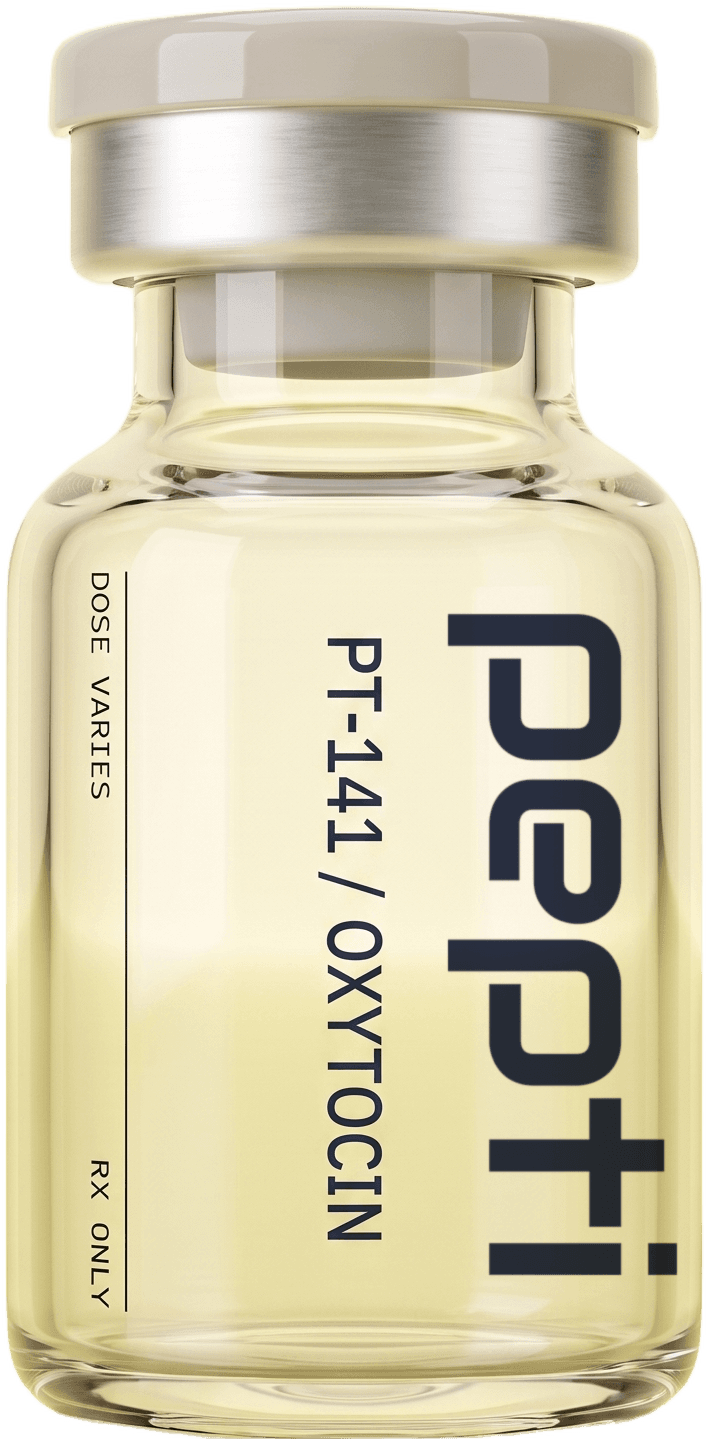
PT-141 requires a prescription, so buying it online legitimately means a telehealth provider where a physician licensed in your state reviews your history and a licensed US compounding pharmacy fills the prescription. Vials sold without a prescription are research chemicals, labelled by the seller as not for human use. Compounded PT-141 is not FDA approved. More important than either point: sexual symptoms are often the first visible sign of something else, including cardiovascular disease, low testosterone, thyroid problems, depression or a medication you are already taking, so a provider that prescribes without asking about any of that is not treating you.
This page covers what PT-141 is, the two very different products sold under that name, why the cause of the symptom matters more than the vial, how online prescribing works from intake to refill, what a legitimate provider should be able to show you, the red flags, what it costs, and where the molecule stands with the FDA as of September 2026.
Where to Buy PT-141 Online, and What Should Be Assessed First
The short answer
| If your situation is | The usual prescription | What is in it | Pricing |
|---|---|---|---|
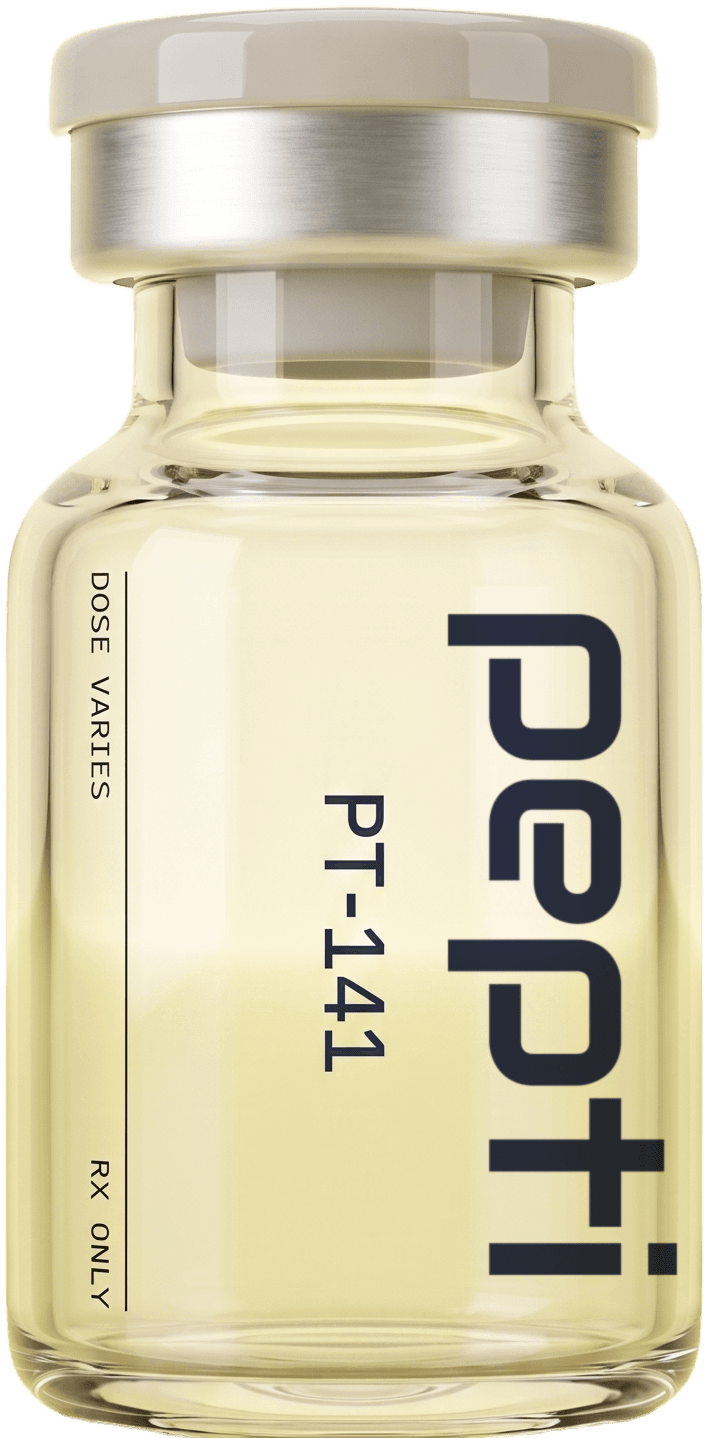
| Low desire, cause assessed | PT-141 | 10 mg PT-141 (bremelanotide) in 5 mL | /cost/pt-141 |
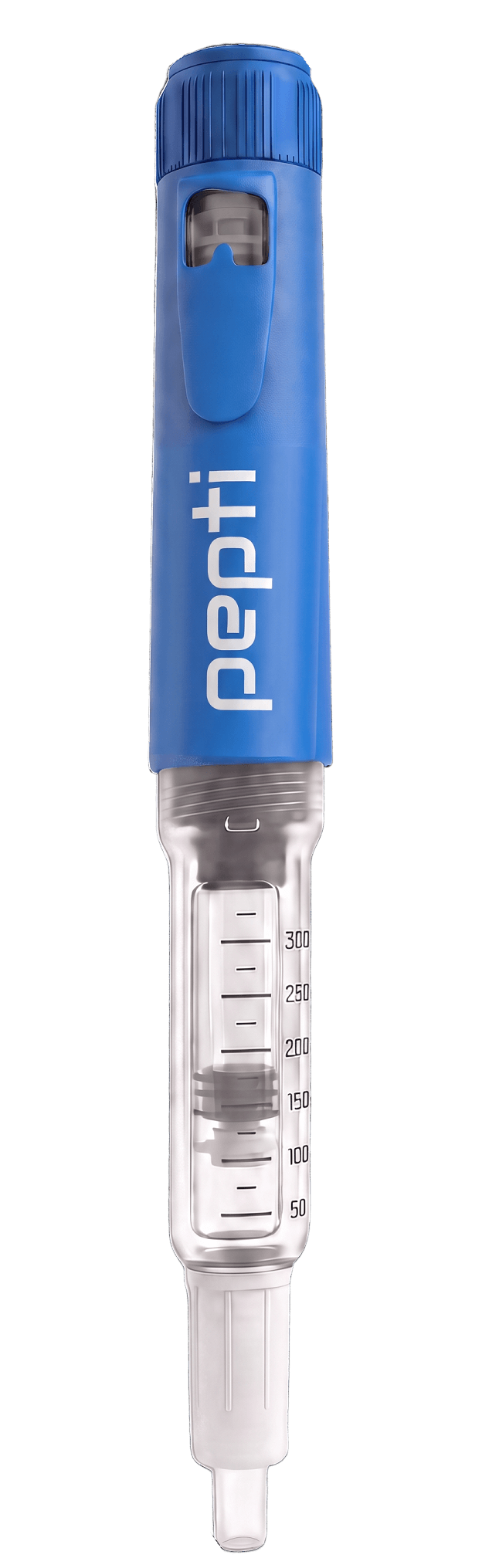
| Same, without a syringe | PT-141 as the Pen | 3 mL cartridge containing 10 mg PT-141 | /cost/pt-141 |
| Desire plus connection and mood emphasis | PT-141 + Oxytocin | 10 mg PT-141, 5 mg Oxytocin | /cost/pt-141-oxytocin |
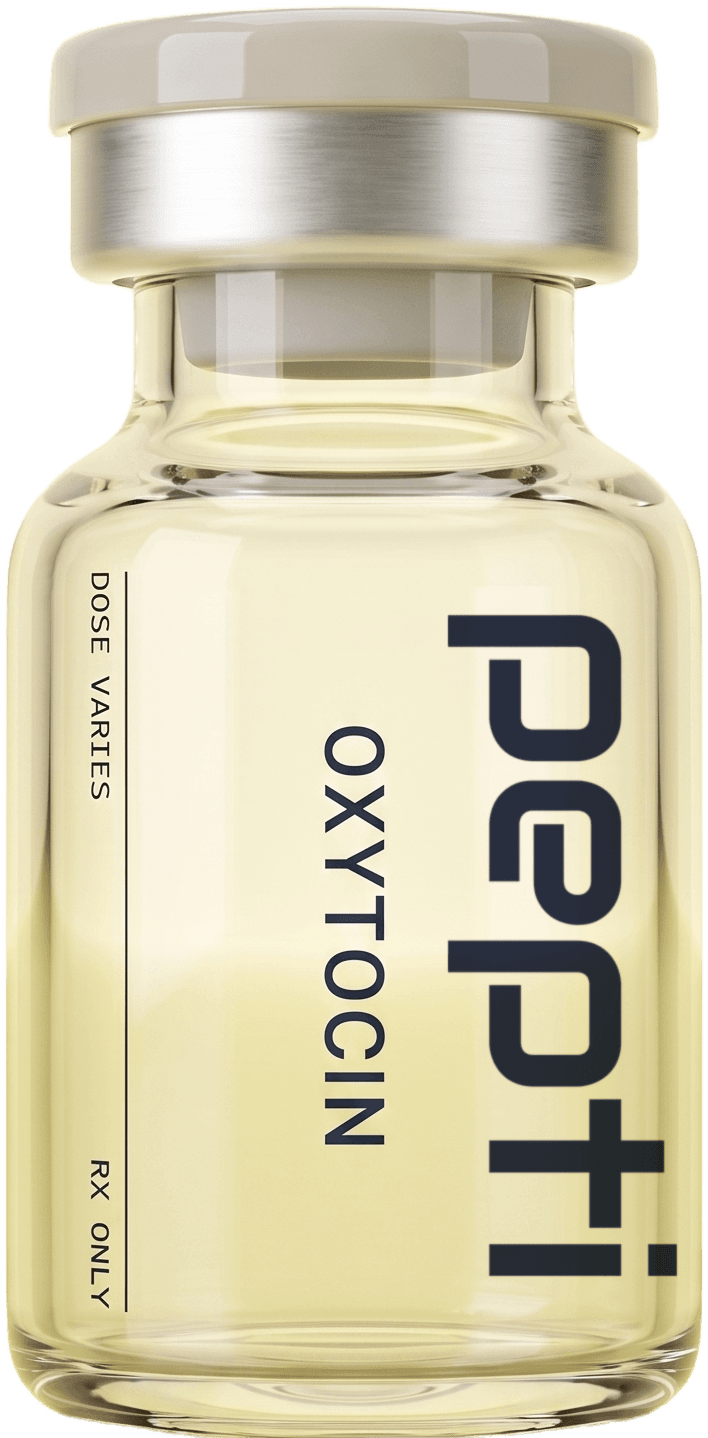
| Oxytocin on its own | Oxytocin | 10 mg Oxytocin in 5 mL | /cost/oxytocin |
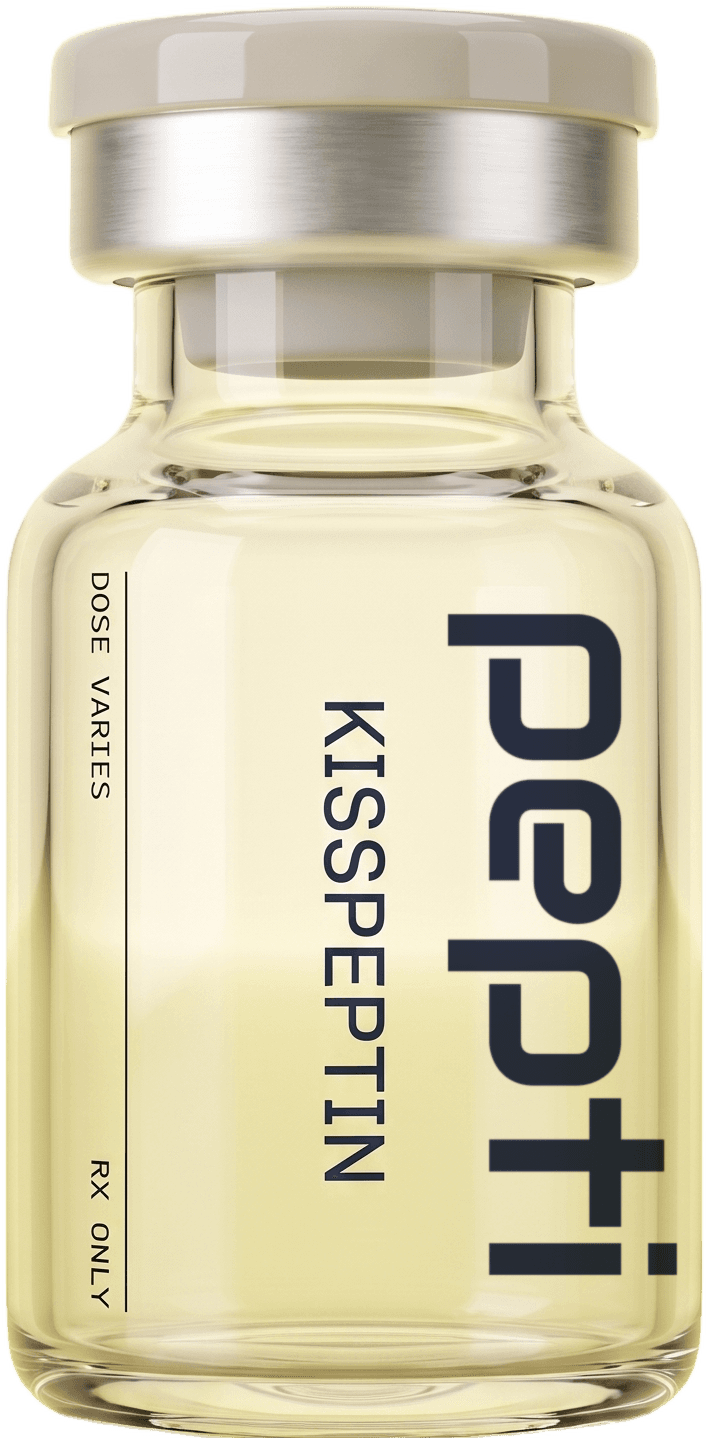
| Hormonal axis signalling | Kisspeptin | 10 mg Kisspeptin-10 in 5 mL | /cost/kisspeptin |
Each is priced on its product page as one all-in monthly figure covering medication, physician review, refill management and shipping, on a subscription you can cancel in your account. Which of them, if any, is appropriate is decided by the physician who reads your intake, and a consultation does not guarantee a prescription.
Where to Buy PT-141 Online, and What Should Be Assessed First
What PT-141 actually is
Bremelanotide, a melanocortin agonist
PT-141 is the development code for bremelanotide, a cyclic peptide of seven amino acids built as an analogue of alpha-melanocyte-stimulating hormone. It is a close relative of melanotan II, which is where it came from: in the 1990s the sexual effects observed in volunteers taking that tanning compound were separated out and developed on their own. A 2003 review in the Annals of the New York Academy of Sciences summarizes that early program. The same molecule is the active ingredient in Vyleesi, an FDA-approved prescription product, which is why PT-141 has a fuller regulatory and trial record than almost any other peptide sold for wellness.
Central, not vascular
The mechanism is the part most buyers get wrong. PT-141 acts on melanocortin receptors in the brain, chiefly MC4R, rather than on blood flow. That is the difference from PDE5 inhibitors such as sildenafil, which work on the vascular mechanics of an erection and do nothing without arousal already present. Two 2004 human studies in the International Journal of Impotence Research, one intranasal and one subcutaneous, reported erectile responses in men without visual sexual stimulation, the signature of a centrally acting agent. A 2022 review in CNS Spectrums describes the proposed downstream step: melanocortin signalling modulating dopamine in the medial preoptic area of the hypothalamus, the "wanting" side of sexual behaviour rather than the physical response.
As-needed, not daily
PT-141 is dosed before anticipated activity rather than on a schedule, which is unusual for this catalog. The reviewed directions on the PT-141 product page are to inject 0.50 mL (50 units) subcutaneously two to four hours before sexual activity, with no more than four doses a month. The approved product's label directs a single 1.75 mg dose at least 45 minutes before anticipated sexual activity, no more than one dose in any 24 hours, and states that more than eight doses a month is not recommended. Your own directions are set by your physician and printed on the medication. More on the molecule itself in what PT-141 is.
Two consequences follow. If the problem is purely mechanical, PT-141 may be the wrong tool and a physician may reasonably start with a conventional PDE5 inhibitor, which has far larger human trials for that job. And because the two act on different systems, a physician will ask what you have already tried and what happened. A seller that does not ask is not in a position to know whether PT-141 is the right answer.
Where to Buy PT-141 Online, and What Should Be Assessed First
The two products sold under the name
The prescription product
Compounded PT-141 is bremelanotide prepared by a state-licensed, FDA-registered compounding pharmacy to a physician's patient-specific prescription. It is labeled with your name, the strength, the directions and a beyond-use date, it ships cold, and a named pharmacist and a named prescriber are accountable for it. It is not an FDA-approved drug product; compounded medications never are. What it has is a chain of accountability and a physician who has read your history. It is also distinct from Vyleesi, the FDA-approved bremelanotide autoinjector approved on 21 June 2019 under NDA 210557 for one indication in premenopausal women; the compounded vial is the same active ingredient in a different presentation, and the FDA section below explains why that is permitted.
The "research use only" vial
The other product is a lyophilized powder sold online under a "not for human consumption" or "research use only" label. That label is not a technicality. It is the seller's statement that nothing about the product has been made, tested or labeled for a person to inject, and that no pharmacy, pharmacist or physician stands behind its identity, purity, sterility or concentration. Buying it is not "getting PT-141 cheaper"; it is buying a different product with a different set of unknowns, and the person reconstituting it, calculating the dose and deciding how often to use it is you. The wider comparison is in research peptides vs prescription peptides.
Prescription versus "research use only"
Prescription from a US compounding pharmacy "Research use only" vial Cardiovascular screening before use Yes None Dose and frequency limits set for you On the label You guess Sterility and concentration USP sterile-compounding standards, made to the prescription Unverified What happens when nausea hits You message your prescriber and the dose is reviewed Nothing Record of what you took In your chart None Price Higher, and it includes the above Lower
Where to Buy PT-141 Online, and What Should Be Assessed First
Why the cause of the symptom matters more than the vial
This is the part of the page that a storefront will never show you, and it is the reason a real intake exists. Low desire and erectile difficulty are symptoms. Sometimes they are the whole problem. Often they are the first thing a person notices about something else, and PT-141 taken over the top of that something else treats the notice and leaves the cause where it was.
Erectile difficulty as an early cardiovascular signal
The penile arteries are small, so they show endothelial disease before the coronary arteries do. In a 2005 analysis in JAMA of men in the Prostate Cancer Prevention Trial, incident erectile dysfunction was associated with a subsequent cardiovascular event at a magnitude the authors compared to smoking or a family history of heart disease. The Princeton III consensus, published in Mayo Clinic Proceedings in 2012, recommends that a man presenting with erectile dysfunction and no known heart disease be treated as a cardiovascular patient until proven otherwise, with risk assessed before any sexual-function treatment is started. That is the single most important reason the intake asks about blood pressure and heart history, and it is also why the approved bremelanotide product is contraindicated in uncontrolled hypertension and known cardiovascular disease. Treating the symptom without investigating is a missed diagnosis, and a seller who skips the question has skipped the one screen that matters most.
Hormonal and metabolic causes
Low desire is frequently hormonal, and hormonal causes are treatable in their own right. Low testosterone is the obvious one in men, and the question of combining PT-141 with testosterone therapy is covered in can you take peptides with testosterone. Thyroid disease is the less obvious one: a 2005 multicenter study in the Journal of Clinical Endocrinology and Metabolism reported that a majority of men with either hypothyroidism or hyperthyroidism had at least one sexual symptom, including low desire and erectile difficulty, and that treating the thyroid disorder resolved most of them. Iron status and glucose belong on the same list. None of these is found by a checkout form. At-home blood testing covers the hormonal and metabolic side without a lab visit, and if the labs point to a reproductive-axis problem, the more logical conversation may be kisspeptin or direct hormonal treatment rather than PT-141 at all.
A medication you already take
Sexual side effects from an existing prescription are common and are a different problem with a different solution. A 2002 study in the Journal of Clinical Psychiatry of more than 6,000 outpatients on newer antidepressants reported sexual dysfunction in roughly a third to a half of patients depending on the agent, with the serotonergic drugs at the higher end. Beta blockers, some diuretics, finasteride, opioids and hormonal contraceptives each carry their own literature. Adding PT-141 to a drug-induced problem may partly mask it, but the honest treatment is a conversation with the prescriber of the original medication about dose, timing or an alternative. That is why the intake asks for every medication you take, and why a physician reads the list rather than a form.
Mood, stress, sleep and the relationship
Desire is not purely pharmacological, and anyone who tells you it is has something to sell. Depression and anxiety suppress desire directly and through the drugs used to treat them. Poor sleep lowers testosterone and raises cortisol. A relationship in difficulty produces exactly the symptom this page is about. A physician who asks about these is not being intrusive; they are ruling out the causes PT-141 was never tested against.
What the approved label itself excludes
This is not a Pepti opinion. The FDA-approved indication for bremelanotide is limited to hypoactive sexual desire disorder that is "NOT due to" a co-existing medical or psychiatric condition, problems with the relationship, or the effects of a medication or drug substance, and the label states it is not indicated to enhance sexual performance. Those exclusions were written into the trials that got the molecule approved. A provider that prescribes PT-141 without asking about any of them is prescribing outside the only evidence base the molecule has.
Where to Buy PT-141 Online, and What Should Be Assessed First
What should be assessed before anyone prescribes it
| What a prescriber should ask about | Why |
|---|---|
| Blood pressure and cardiovascular history | Bremelanotide is described as producing transient increases in blood pressure, and uncontrolled hypertension or significant cardiovascular disease is a reason to stop and think |
| Erectile difficulty specifically | It can be an early signal of vascular disease. Treating the symptom without investigating is a missed diagnosis |
| Testosterone, thyroid, iron, glucose | Low desire is frequently hormonal or metabolic, and those causes are treatable |
| Antidepressants and other medications | Sexual side effects from an existing prescription are common and are a different problem with a different solution |
| Mood, stress, sleep, relationship context | Desire is not purely pharmacological, and anyone who tells you it is has something to sell |
| Nausea history and tolerance | Nausea is the most commonly described effect, and it can be marked |
A provider that asks none of this and ships a vial is a storefront. Peptides for men over 40 covers how these complaints usually cluster, and the same logic applies to women: the approved product's trials excluded every woman whose low desire had an identifiable other cause, so identifying the other cause is the first job.
Two further items on the intake exist because of this molecule's label. The first is naltrexone: the approved label states that bremelanotide can significantly decrease the systemic exposure of orally administered naltrexone, and that patients taking oral naltrexone for alcohol or opioid dependence should avoid it. The second is existing moles and pigmented lesions, because focal hyperpigmentation of the face, gums and breasts is a labeled warning. Neither question appears on a checkout form.
Where to Buy PT-141 Online, and What Should Be Assessed First
How the prescription route works, end to end
- Complete a medical intake covering history, medications, blood pressure, cardiovascular history and what you are experiencing.
- A physician licensed in your state reviews it, may request labs, and may decline or redirect you toward a cause rather than a prescription.
- A prescription is written with a strength and explicit directions, including how often it can be used. Labelling for the approved bremelanotide product limits use to one dose in a 24-hour period and caps monthly use, and your prescriber sets your own limits.
- A state-licensed, FDA-registered compounding pharmacy fills it and ships the vial or pen cold, labelled with your name, the strength and how often it may be used.
- You can message the prescriber afterwards, which matters here because the first dose is where nausea or flushing shows up and the dose may need revisiting.
What the intake actually asks
The free assessment is a structured history rather than a product selector. It asks what you are experiencing and for how long, whether the problem is desire, arousal, erection or all three, what you have tried, every current medication and supplement, blood pressure, cardiovascular and thyroid history, mood, whether you are on testosterone, and whether you are pregnant or breastfeeding, because PT-141 is not used in either. The honest answer to "why does an intimacy prescription need my heart history" is the cardiovascular section above.
What the physician can decide
Three outcomes are possible, and all three are treatment. The physician can prescribe PT-141 with directions written for you. The physician can decline, which is refunded, and say why: uncontrolled blood pressure, a cardiovascular history that needs a cardiologist first, a medication interaction, or a picture that points to a cause worth finding before anything is prescribed. Or the physician can redirect, asking for bloodwork first, or suggesting that oxytocin, prescribed around connection rather than arousal, the PT-141 + Oxytocin combination, or kisspeptin fits the history better than PT-141 alone; background on those is in what oxytocin is and what the combination is. Being redirected is not a failed purchase. It is the difference between a pharmacy and a shop.
What the prescription says
A prescription for compounded PT-141 names the patient, the strength, the volume per dose, the timing before activity and the maximum number of doses in a month. Those limits are on the label for a reason: the approved product's label reports a transient rise in blood pressure after every dose and states that dosing more than once in 24 hours has not been shown to add anything and may have additive effects on blood pressure. Because an FDA-approved bremelanotide product exists, the prescription also carries the prescriber's determination that the compounded preparation differs from it in a way that matters for you; what that means is in the FDA section.
What arrives, and refills
A multi-dose vial with syringes, or a pre-filled pepti Pen cartridge with a reusable injector, shipped refrigerated in insulated packaging with ice packs. The label carries your name, the pharmacy's name and address, the strength, the directions and a beyond-use date that runs from first puncture. Because PT-141 is used as needed, a vial may sit in the fridge for weeks between doses, so that date is the thing to watch. A vial holds ten doses at the directed volume; refills are timed to the beyond-use date and to what you have used rather than to a fixed calendar, and it is one vial per fill, never a stockpile. The physician remains reachable through your account between fills, which is where a question about nausea, timing or a change in your health belongs.
Where to Buy PT-141 Online, and What Should Be Assessed First
What a legitimate provider shows you
How to tell if a peptide seller is legitimate covers the general checks. These are the ones specific to PT-141.
A licensed physician and a named pharmacy
Telehealth prescribing is state-by-state. The prescriber must hold a license in the state you are in when you are seen, and you should be able to see the prescriber's name on your prescription and reach that person afterwards. A site that never names a prescriber, or that routes every state through the same person, has not met the basic condition for a valid prescription. The pharmacy is equally identifiable: compounded PT-141 comes from a specific state-licensed pharmacy that is registered with the FDA, its name and address are on the label because the law requires them to be, and a provider should tell you which pharmacy fills your prescription before you pay. The pharmacies Pepti works with, and what they are licensed to do, are on the quality page.
Certificates of analysis
A certificate of analysis is the pharmacy's or its supplier's test record for a specific lot: identity of the peptide, purity, potency against the labeled strength, sterility and endotoxin where relevant. A legitimate provider can show them. Pepti publishes them for each product, including PT-141, at quality/lab-results. A "research" seller may post a certificate too; the difference is that with a prescription product the certificate belongs to a licensed pharmacy that is accountable to a state board for what it says, and the lot it refers to is the lot that reaches you.
Directions on the label, and a way back to the prescriber
The label should say how much, how long before activity, and how often at most. If it says "as needed" with no ceiling, or carries no directions at all, the prescriber has not done the part of the job that the molecule's own label makes clear is necessary. And because the first dose is where nausea, flushing or a headache shows up, a provider with no channel back to the physician after shipping is not providing treatment; it is providing a delivery. Prescriber access after the sale is a structural feature of a legitimate service, not a bonus.
Where to Buy PT-141 Online, and What Should Be Assessed First
Red flags when buying PT-141
| What you see | What it tells you |
|---|---|
| No prescription needed | Research-chemical seller |
| No question about blood pressure or heart history | The one screening that matters most was skipped |
| "Female Viagra" or similar framing | Marketing shorthand that misdescribes the mechanism |
| Promises of performance, duration or results | Outcome claims no legitimate prescriber makes |
| "FDA approved" on compounded PT-141 | Untrue. An approved bremelanotide product exists for one narrow indication, and a compounded preparation is not that product |
| Nasal PT-141 sold as equivalent to injection | Different route, different exposure, sold as if identical |
| No mention of nausea anywhere | The most common effect is being hidden from you |
| Unlimited refills with no frequency limit | Dose limits exist for a reason |
Three of those flags, explained
The nasal spray. Intranasal PT-141 was studied early, including in the 2004 International Journal of Impotence Research work in men, and the route was later dropped from development in favor of subcutaneous injection. The approved product is an injection. A seller offering nasal PT-141 as interchangeable with the injectable is describing a route with different absorption and no approved counterpart as if it were the same thing. Pepti supplies PT-141 as an injection only.
Performance claims. The approved bremelanotide label says in plain words that it is not indicated to enhance sexual performance. A seller promising duration, hardness or results is promising something the molecule's own regulatory file disclaims, which is a sign the seller has not read the label.
No frequency limit. Focal hyperpigmentation was reported by 1% of women dosing up to eight times a month in the approved program, by a much larger share of people given the drug daily for eight days in a separate study, and it is not always reversible. Every dose also produces a transient rise in blood pressure. A monthly cap is the molecule's own safety architecture, and a seller that removes it has removed a safeguard, not a restriction.
Where to Buy PT-141 Online, and What Should Be Assessed First
What it costs
Pepti does not print prices in reference pages because they change; the current figure for PT-141 is on its product page and at /cost/pt-141, as one all-in monthly amount covering the medication, the physician review, refill management and shipping, with no separate membership fee. The combination and the alternatives are priced the same way at /cost/pt-141-oxytocin, /cost/oxytocin and /cost/kisspeptin.
Two things are worth understanding about the number. The research-chemical vial will always be cheaper, because none of the things in the prescription column of the table above are included in it. And because PT-141 is used as needed with a monthly ceiling, the monthly figure buys the physician, the pharmacy and the refill management as much as it buys the vial. The Pen costs more than the vial for the same medication because it removes the draw step; neither is clinically better.
Where to Buy PT-141 Online, and What Should Be Assessed First
Where PT-141 stands with the FDA right now
PT-141 is in a different regulatory position from almost every other peptide on this site, and a lot of what is written online about it is either out of date or confuses the approved product with the compounded one. Status verified September 2026.
The active ingredient is FDA approved
The FDA approved Vyleesi (bremelanotide injection) on 21 June 2019 under NDA 210557, as a 1.75 mg per 0.3 mL subcutaneous autoinjector, for premenopausal women with acquired, generalized hypoactive sexual desire disorder. The application is held by Cosette Pharmaceuticals, and its current prescribing information on DailyMed was updated in November 2025, so it remains a marketed prescription product. The label's limitations of use state that it is not indicated for postmenopausal women or men, and not indicated to enhance sexual performance.
Why compounded PT-141 does not depend on the 503A bulks list
Section 503A of the Food, Drug and Cosmetic Act allows a state-licensed pharmacy to compound from a bulk drug substance if the substance complies with a USP or NF monograph, or is a component of an FDA-approved drug product, or appears on the FDA's 503A bulks list. Bremelanotide qualifies by the second route, because it is the active ingredient of an approved product. It has never needed a place on the interim category list, and it does not appear in any category of that list as updated 14 May 2026. It was therefore not among the twelve peptides the FDA removed from Category 2 on 15 April 2026, and it was not on the agenda when the Pharmacy Compounding Advisory Committee met on 23–24 July 2026 to consider BPC-157, KPV, TB-500, MOTS-c, emideltide, Semax and epitalon.
The rule that does apply: "essentially a copy"
Because an approved bremelanotide product is commercially available, the restriction that applies to compounded PT-141 is the one in section 503A on copies. A 503A pharmacy may not compound "regularly or in inordinate amounts" a drug that is essentially a copy of a commercially available drug product. The statute and the FDA's January 2018 guidance carve out a compounded drug in which there is a change, made for an identified individual patient, that produces for that patient a significant difference as determined by the prescribing practitioner, and the guidance says the compounder should ensure that determination is documented on the prescription. Compounded PT-141 at Pepti is a 2 mg/mL multi-dose vial or a 10 mg Pen cartridge with physician-set directions rather than a fixed 1.75 mg autoinjector; whether that difference is warranted for you is the physician's determination, and it is part of what the prescription records. A seller with no prescriber has no one to make that determination, which is one more way the research-chemical vial sits outside the framework entirely.
The other products on this page
Oxytocin does not appear in any category of the 14 May 2026 list either. Kisspeptin is different: kisspeptin-10 was placed in Category 2 of the interim list on 29 September 2023 and remains there on the 14 May 2026 list, which names Category 2 as cesium chloride, domperidone, germanium sesquioxide, ibutamoren mesylate, kisspeptin-10 and quinacrine hydrochloride for intrauterine administration. That status and what it means are set out on the kisspeptin reference page; it is a reason the physician, not the buyer, decides whether kisspeptin is the right conversation.
What "not FDA approved" means for the vial in your fridge
The active ingredient carries a full FDA label. The compounded vial does not: it has not been reviewed by the FDA for safety or effectiveness as a product, and no compounded medication has. What stands behind it instead is the pharmacy's license, its compounding standards, its certificates of analysis and the prescription. That is the honest description, and any provider that shortens it to "FDA approved" is misdescribing what you are buying.
Where to Buy PT-141 Online, and What Should Be Assessed First
What the evidence shows, honestly
PT-141 has better human evidence than most of this catalogue on one specific point: an FDA-approved bremelanotide product exists for hypoactive sexual desire disorder in premenopausal women, supported by randomised trials. That is a real evidence base for a real indication.
In premenopausal women
After a phase 2b dose-finding trial in Women's Health in 2016, the pivotal program was RECONNECT: two identical 24-week, randomized, double-blind, placebo-controlled phase 3 trials published together in Obstetrics & Gynecology in 2019, enrolling 1,267 premenopausal women with acquired, generalized hypoactive sexual desire disorder. Both trials met both co-primary endpoints, with desire scores on the Female Sexual Function Index improving 0.30 and 0.42 points more than placebo and distress scores improving 0.37 and 0.29 points more than placebo. Those differences are statistically robust and modest in absolute size, and it is fair to say both things. A 52-week open-label extension, also in Obstetrics & Gynecology in 2019, reported no new safety signals in the women who continued.
In men
The men's program is where PT-141 started and where the compounded product is now most often prescribed. The two 2004 papers in the International Journal of Impotence Research reported, in double-blind placebo-controlled designs, erectile responses to intranasal and subcutaneous PT-141 in healthy men and in men with mild-to-moderate erectile dysfunction, including men who had responded inadequately to sildenafil. A 2005 paper in Urology reported a larger erectile response from low-dose intranasal PT-141 with sildenafil than from either alone. These are real randomized human studies, but early-phase: small, clinic-based, and measuring erectile response over hours rather than satisfaction over months. There is no phase 3 trial in men and no approved indication for men, so prescribing in men is a physician's off-label judgment.
Side effects, as the label reports them
Because the same active ingredient carries an FDA label, the side-effect profile is better characterized than for any other peptide in this category. In the phase 3 trials nausea was reported by 40% of women on bremelanotide against 1.3% on placebo, followed by flushing (20%), injection-site reactions (13%) and headache (11%). A 2022 pooled analysis in the Journal of Women's Health across the whole clinical development program reported the same pattern. The two warnings that shape prescribing are the transient rise in blood pressure and fall in heart rate after each dose, usually resolved within twelve hours, and focal hyperpigmentation. Nausea is common rather than rare and often dose-related, which is exactly why having a prescriber you can message matters more for PT-141 than for a peptide taken daily.
What it does not establish
Everything past the approved indication is extrapolation. Compounded use in men, in postmenopausal women, and for any purpose other than acquired, generalized hypoactive sexual desire disorder sits off the approved evidence base. The trials excluded low desire caused by a medication, a relationship problem or another medical or psychiatric condition, so the evidence says nothing about those cases, which is the point of the assessment section above. And nothing has been trialed about a compounded 2 mg/mL vial specifically. Compounded PT-141 is not FDA approved. Patients commonly describe an effect in the hours after a dose, and some describe nothing at all.
The most honest framing: PT-141 treats a symptom. If the symptom has a cause that can be found, finding it is worth more than the prescription.
References
What this is based on.
References
- Simon JA, Kingsberg SA, Portman D, Williams LA, Krop J, Jordan R, Lucas J, Clayton AH. Long-Term Safety and Efficacy of Bremelanotide for Hypoactive Sexual Desire Disorder · Obstetrics & Gynecology (2019) · PMID 31599847
- Clayton AH, Althof SE, Kingsberg S, DeRogatis LR, Kroll R, Goldstein I, Kaminetsky J, Spana C, Lucas J, Jordan R, Portman DJ. Bremelanotide for female sexual dysfunctions in premenopausal women: a randomized, placebo-controlled dose-finding trial · Women's Health (London) (2016) · PMID 27181790
- Clayton AH, Kingsberg SA, Portman D, Sadiq A, Krop J, Jordan R, Lucas J, Simon JA. Safety Profile of Bremelanotide Across the Clinical Development Program · Journal of Women's Health (2022) · PMID 35147466
- Pfaus JG, Sadiq A, Spana C, Clayton AH. The neurobiology of bremelanotide for the treatment of hypoactive sexual desire disorder in premenopausal women · CNS Spectrums (2022) · PMID 33455598
- Diamond LE, Earle DC, Rosen RC, Willett MS, Molinoff PB. Double-blind, placebo-controlled evaluation of the safety, pharmacokinetic properties and pharmacodynamic effects of intranasal PT-141, a melanocortin receptor agonist, in healthy males and patients with mild-to-moderate erectile dysfunction · International Journal of Impotence Research (2004) · PMID 14963471
- Rosen RC, Diamond LE, Earle DC, Shadiack AM, Molinoff PB. Evaluation of the safety, pharmacokinetics and pharmacodynamic effects of subcutaneously administered PT-141, a melanocortin receptor agonist, in healthy male subjects and in patients with an inadequate response to Viagra · International Journal of Impotence Research (2004) · PMID 14999221
- Diamond LE, Earle DC, Garcia WD, Spana C. Co-administration of low doses of intranasal PT-141, a melanocortin receptor agonist, and sildenafil to men with erectile dysfunction results in an enhanced erectile response · Urology (2005) · PMID 15833522
- Molinoff PB, Shadiack AM, Earle D, Diamond LE, Quon CY. PT-141: a melanocortin agonist for the treatment of sexual dysfunction · Annals of the New York Academy of Sciences (2003) · PMID 12851303
- Kingsberg SA, Clayton AH, Portman D, et al.. Bremelanotide for the Treatment of Hypoactive Sexual Desire Disorder: Two Randomized Phase 3 Trials · Obstetrics & Gynecology (2019) · PMID 31599840
- Thompson IM, Tangen CM, Goodman PJ, Probstfield JL, Moinpour CM, Coltman CA. Erectile dysfunction and subsequent cardiovascular disease · JAMA (2005) · PMID 16414947
- Nehra A, Jackson G, Miner M, Billups KL et al.. The Princeton III Consensus recommendations for the management of erectile dysfunction and cardiovascular disease · Mayo Clin Proc (2012) · PMID 22862865
- Carani C, Isidori AM, Granata A, Carosa E, Maggi M, Lenzi A, Jannini EA. Multicenter study on the prevalence of sexual symptoms in male hypo- and hyperthyroid patients · J Clin Endocrinol Metab (2005) · PMID 16204360
Citations are provided for educational purposes. They do not constitute medical advice. Always discuss any peptide protocol with your prescribing physician.
Common questions
Where to Buy PT-141 Online, and What Should Be Assessed First, answered.
Only as a research chemical, sold under a label stating it is not for human use. The medication requires a prescription from a physician licensed in your state. A research-chemical vial carries no pharmacy accountability for identity, purity, sterility or concentration, no directions, no dose ceiling and no prescriber to contact when the first dose produces nausea or flushing. The prescription route starts with the free assessment.
Pricing for PT-141 as a vial or a pen is published on its product page and at /cost/pt-141 as one all-in monthly figure covering medication, physician review, refills and shipping, with no separate membership fee. The combination with oxytocin is priced at /cost/pt-141-oxytocin. Prices are not printed on this page because they change.
No. PDE5 inhibitors act on blood flow. PT-141 acts centrally on melanocortin receptors and is aimed at desire and arousal. They address different parts of the problem and are sometimes discussed together for that reason; a 2005 study in Urology reported a larger erectile response from low-dose intranasal PT-141 with sildenafil than from either alone. Whether the combination suits you depends on your blood pressure and cardiovascular history, which is your physician's call.
The approved bremelanotide product is indicated for low sexual desire in premenopausal women, which is the strongest evidence this molecule has: two randomized phase 3 trials in 1,267 women published in Obstetrics & Gynecology in 2019. It is not indicated for postmenopausal women, who were not studied. Compounded prescribing is a clinical decision made individually, and a consultation does not guarantee one.
It is a melanocortin agonist and nausea is a described effect of that receptor activity. It is common, it is often dose-related, and it is a reason to have a prescriber you can message rather than a vial you bought anonymously. In the phase 3 trials 40% of women on bremelanotide reported nausea against 1.3% on placebo, and the approved label notes it improved for most by the second dose. Tell your physician rather than pushing through, and do not take a second dose in the same 24 hours.
It is related to melanotan II, and skin darkening has been described with melanocortin agonists, more so with melanotan II than with PT-141. Existing moles and pigmented lesions are worth mentioning at intake. On the approved label, focal hyperpigmentation of the face, gums and breasts was reported by 1% of women dosing up to eight times a month, was more frequent with daily dosing, and is not always reversible, which is one reason the monthly ceiling exists.
That is a question for your prescriber, who needs to know about it either way. Background is in can you take peptides with testosterone. Low testosterone is also one of the causes a physician rules out before prescribing PT-141, because a hormonal problem has its own treatment.
The active ingredient is: Vyleesi (bremelanotide injection) was approved on 21 June 2019 under NDA 210557 for premenopausal women with acquired, generalized hypoactive sexual desire disorder. Compounded PT-141 is not an FDA-approved product; it is the same molecule prepared by a licensed pharmacy to a physician's patient-specific prescription. Any seller that puts "FDA approved" on a compounded vial is describing the wrong product.
With a valid prescription from a physician licensed in your state, filled by a state-licensed US compounding pharmacy, yes. Bremelanotide is the active ingredient of an FDA-approved drug, which is one of the three routes under section 503A by which a pharmacy may compound with it, and it does not appear in any category of the FDA's 503A interim list as updated 14 May 2026. Buying a "research use only" vial for personal use is buying a product that no pharmacy or physician stands behind.
The prescribing physician's name and state license, the compounding pharmacy's name and address on the label, certificates of analysis for the lot you receive, directions with a timing window and a monthly ceiling, and a way to reach the prescriber after shipping. Pepti's are at quality and quality/lab-results.
No. Pepti supplies PT-141 as a subcutaneous injection, as a vial with syringes or a pre-filled pepti Pen cartridge. Intranasal PT-141 was studied early and dropped from development; the approved product is an injection, and a seller presenting nasal spray as equivalent to the injectable is describing a different route as if it were the same.
Every dose produces a transient rise in blood pressure, and frequent dosing raises the risk of focal hyperpigmentation, which is not always reversible. The approved label states that more than eight doses a month is not recommended and that no more than one dose should be taken in 24 hours; the reviewed directions on the Pepti product page cap use at four doses a month. Your own limit is set by your physician and printed on your medication.
Many peptides are prohibited in competition by anti-doping bodies, and the lists change yearly. If you are a tested athlete, check the current prohibited list for your sport before starting anything, and tell your physician.
Being declined is refunded, and the physician will say why. The common reasons are uncontrolled blood pressure or a cardiovascular history that needs assessing first, a medication interaction such as oral naltrexone, or a history that points to a hormonal, thyroid, drug-induced or mood-related cause that has its own treatment. The physician may also suggest oxytocin, the PT-141 + Oxytocin combination or kisspeptin as a better fit, or ask for bloodwork before deciding. The free assessment goes to a physician licensed in your state. A consultation does not guarantee a prescription.
Next step
See what a physician recommends for you.
A licensed physician in your state reviews your intake and decides what is appropriate. A consultation does not guarantee a prescription.