Supplements · Reference
L-Carnitine Injection Dosage: How Pepti Prescribes It, in Units and mL
This page explains the L-carnitine injection dosage Pepti prescribes, what the units on the syringe mean, how a vial maps onto refills, where and when it is injected, how the published study doses differ, what can change your directions, and the side effects to know about. It covers how Pepti prescribes L-carnitine, not online protocols. Nothing here is a reason to change your own dose.
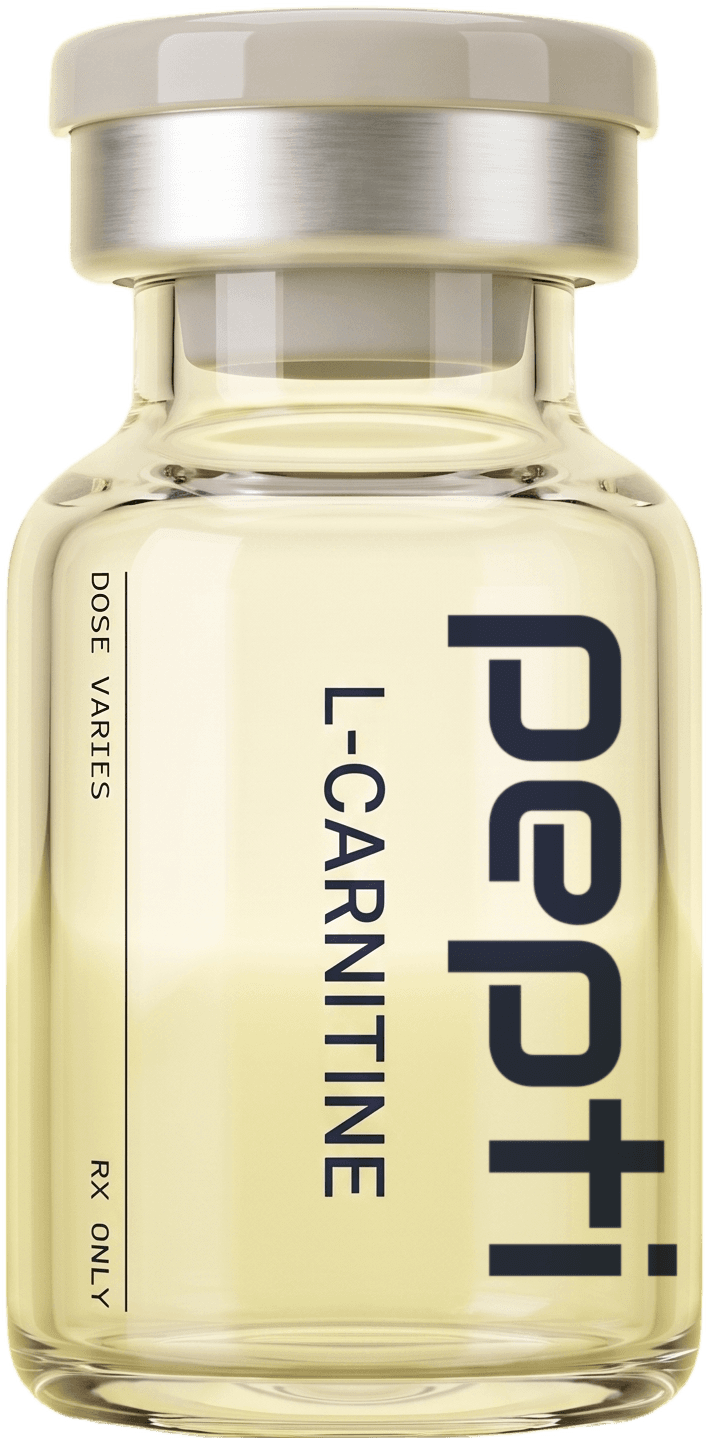
Treatments mentioned
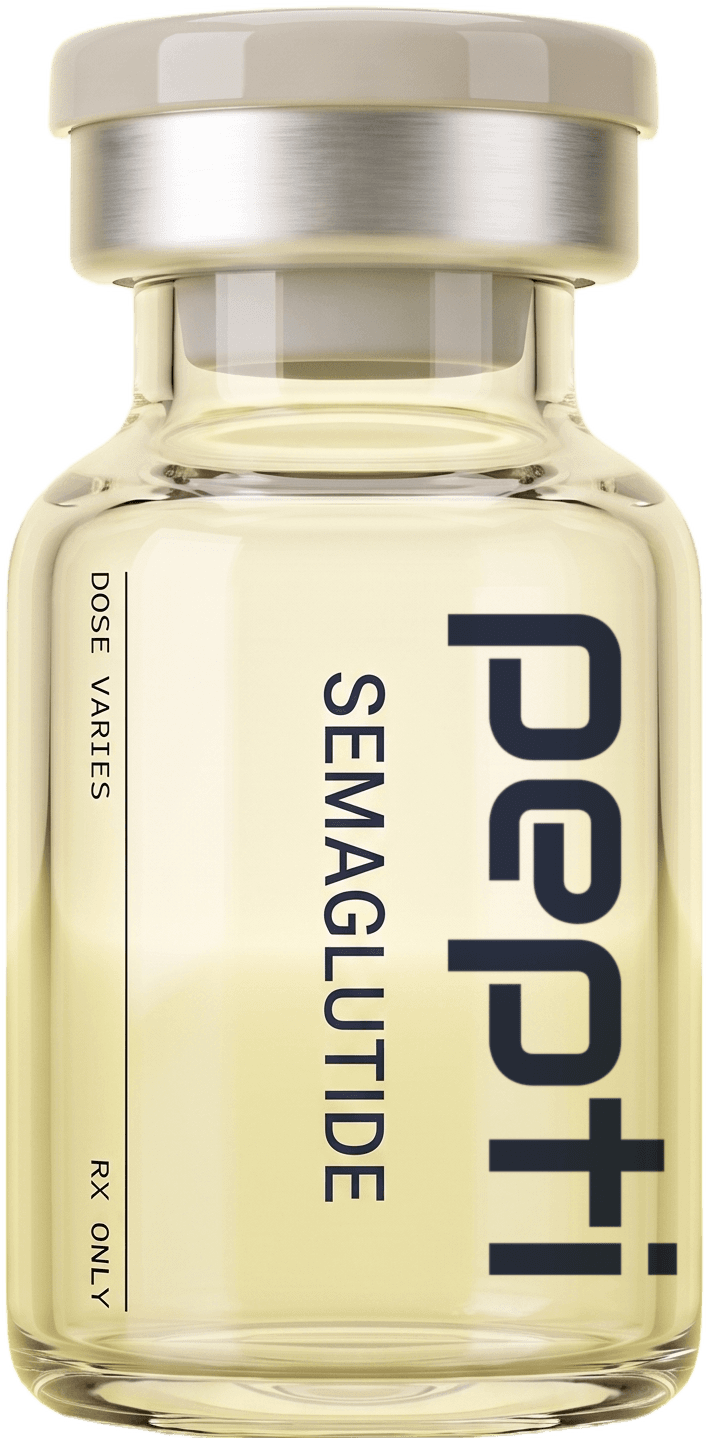
At Pepti, L-carnitine injection is prescribed as 0.50 mL, which is 50 units on a U-100 insulin syringe, injected into the muscle once daily Monday through Friday. The vial is 10 mL, so it holds 20 doses at that volume, about four weeks at five doses a week, which lines up with a 28-day refill. Your physician sets your directions after reviewing your intake, and your exact volume, and the concentration of your vial, are printed on the label. The doses quoted in most L-carnitine research are oral supplement doses taken by mouth every day, and they do not translate to an injection.
This page explains the L-carnitine injection dosage Pepti prescribes, what the units on the syringe mean, how a vial maps onto refills, where and when it is injected, how the published study doses differ, what can change your directions, and the side effects to know about. It covers how Pepti prescribes L-carnitine, not online protocols. Nothing here is a reason to change your own dose.
L-Carnitine Injection Dosage
The short answer
| Question | Answer |
|---|---|
| Product | L-Carnitine Injection |
| Vial | 10 mL multi-dose vial, ready to use |
| Typical printed direction | Inject 0.50 mL (50 units) intramuscularly once daily Monday through Friday |
| On a U-100 insulin syringe | 50 units |
| Route | Into the muscle: deltoid, upper outer thigh or upper outer buttock, rotated |
| Doses per vial | 20 |
| One vial lasts | About four weeks at five doses a week |
| Refills | Every 28 days, one vial per fill |
| Price | $219/mo, all-in |
The price covers medication, physician review, refill management and shipping, with no separate membership fee. Pepti is cash-pay and does not bill insurance. Your own directions are the ones printed on your vial.
L-Carnitine Injection Dosage
L-carnitine dosage in units and mL
Pepti's directions are written in two forms, millilitres and units, because prescriptions are written in millilitres and insulin syringes are marked in units. On a U-100 insulin syringe, 1 unit is 0.01 mL, so 100 units is 1 mL and 50 units is 0.50 mL. A unit is a volume mark on the barrel, not a measure of how strong the medication is.
| What you read | Value | Where it comes from |
|---|---|---|
| Dose volume | 0.50 mL | Printed on the vial |
| On a U-100 insulin syringe | 50 units | 0.50 mL x 100 units per mL |
| Vial volume | 10 mL | Printed on the vial |
| Doses per vial | 20 | 10 mL divided by 0.50 mL |
| Doses per week | 5 | Monday through Friday |
| Weeks per vial | 4 | 20 doses divided by 5 a week |
Units-to-mL conversion chart (math only)
This chart is arithmetic for a U-100 insulin syringe, for reading a label. It is not a dosing guide, and the only line that applies to you is the one printed on your vial.
| Units on a U-100 syringe | Volume |
|---|---|
| 10 units | 0.10 mL |
| 20 units | 0.20 mL |
| 25 units | 0.25 mL |
| 40 units | 0.40 mL |
| 50 units (Pepti's typical printed direction) | 0.50 mL |
| 75 units | 0.75 mL |
| 100 units | 1.00 mL |
What about milligrams?
The amount of L-carnitine in each dose is the concentration printed on your vial label multiplied by the volume you draw. Read the concentration from your own label rather than from a chart or a website, including this one, because it is the label that describes the vial in your hand. If your label and your syringe seem to disagree, do not dose; message your care team. How long does a peptide vial last explains every number on a vial label in more detail.
L-Carnitine Injection Dosage
How the injection is given
Into the muscle
Intramuscular means into the muscle, not the fat layer under the skin. This is different from most products Pepti prescribes, which go under the skin. The usual sites are the deltoid, the upper outer thigh, or the upper outer quadrant of the buttock, rotated between doses. An intramuscular injection uses a longer needle than a subcutaneous one, and the pharmacy supplies the right one. Do not switch to a subcutaneous injection on your own; ask your care team.
Monday through Friday
Once daily on weekdays gives 20 doses per vial and about four weeks of coverage. Two days off is a practical schedule rather than a pharmacological one. Plasma levels rise quickly after an intramuscular dose and fall back within a day or two as the kidneys clear the excess, so there is no accumulation to manage, and the weekday schedule is what keeps a steady rhythm.
Time of day
Pepti's typical printed direction does not name a time of day. Follow what your label says; if it names a time, use that time.
Directions say What it means in practice 0.50 mL (50 units) Draw to the 50 mark on a U-100 insulin syringe Intramuscularly Into the muscle, rotating deltoid, outer thigh and upper outer buttock Once daily Monday through Friday Five doses a week, weekends off 20 doses per vial About four weeks, then the next refill Technique is in how to inject peptides safely.
L-Carnitine Injection Dosage
How a vial maps onto refills
Each vial is sized to last about four weeks at the printed directions, which is why refills run every 28 days, one vial per fill. Vials are multi-dose solutions shipped ready to use, refrigerated with ice packs, with sterile syringes and alcohol prep pads. Nothing is mixed at home. Keep the vial in the refrigerator, do not freeze it, and follow the beyond-use date printed on the label, which runs from first puncture. How to store peptides covers storage.
If a vial runs short before the refill, message your care team rather than adjusting anything yourself. If you miss a weekday dose, follow your directions and do not take two doses to make up for one.
L-Carnitine Injection Dosage
How the published study doses differ
Most numbers you will find online for "L-carnitine dosage" come from oral supplement trials, and they describe a different product and route.
| What was studied | Route | How it was given | What it tells you about an injection |
|---|---|---|---|
| Weight meta-analyses (Obesity Reviews 2016; Pharmacological Research 2020; Clinical Nutrition ESPEN 2020) | By mouth | Mostly 1 to 3 g a day for 8 to 24 weeks; the ESPEN analysis placed the maximum oral dose response at 2 g a day | Nothing directly; the trials were oral |
| 2011 muscle-loading study, Journal of Physiology | By mouth | 2 g of L-carnitine tartrate with 80 g of carbohydrate, twice a day for 24 weeks | Loading needed insulin from carbohydrate and months of use |
| 2007 fatigue trial in centenarians, American Journal of Clinical Nutrition | By mouth | 2 g daily for six months | A specific population |
| CHIEF trials in dialysis patients, American Journal of Kidney Diseases 2001 | Intravenous | After each dialysis session for 24 weeks | A specialist setting with carnitine loss |
Two reasons the oral figures do not carry over. First, absorption: large oral doses are absorbed at roughly 14 to 18 percent, because active transport in the gut saturates and the rest is broken down by gut bacteria, whereas an injection delivers the full dose. Second, there are no randomised trials of low-dose intramuscular L-carnitine in healthy adults, so there is no trial dose for the injection to copy. In kidney disease and diagnosed metabolic disorders, the population the approved drug is for, dosing is weight-based and intravenous with plasma monitoring; that is a different use entirely. More on the evidence is in L-carnitine benefits.
L-Carnitine Injection Dosage
What changes the directions
Your physician sets your directions after reviewing your intake. Things that can lead to different directions, or a different product, include:
| What can change | How it shows up |
|---|---|
| Your medical history | A seizure disorder, kidney impairment or established cardiovascular disease changes the conversation; see the cautions below |
| Your other medications | Warfarin matters: the approved product's label reports INR increases |
| What you want help with | Weight, training or energy lead to different conversations, and for some another product fits better |
| How you respond | Side effects you report go to your physician, who may revise your directions |
When directions change, the new numbers are printed on the new label. Never carry a number over from a previous fill. Bloodwork is not required for any Pepti treatment. If your physician wants labs for your care, they'll ask through your account.
L-Carnitine Injection Dosage
Side effects, in summary
The full picture is in L-carnitine injection side effects.
| What is reported | What it usually means | What to do |
|---|---|---|
| Soreness or bruising at the injection site | The usual intramuscular site reaction | Rotate sites |
| Transient nausea, vomiting or gastritis | Listed on the approved label | Message your care team if it persists |
| A fishy body odour | Trimethylamine from carnitine breakdown; more common with large oral doses than with injection | Mention it; it is dose-related and harmless |
| Seizures, including in people with no prior history | Reported after marketing of the approved product | Raise any seizure disorder at intake; seek emergency care for a seizure |
| Facial or throat swelling, widespread rash, difficulty breathing | Hypersensitivity | Call 911, then tell your physician |
Who should not take it, or should discuss it first: anyone with a seizure disorder, anyone on warfarin, anyone with severe kidney impairment or established cardiovascular disease, and anyone pregnant or breastfeeding. People with diagnosed carnitine deficiency or on dialysis belong with specialist care and the approved product. L-carnitine is not named on the 2026 WADA Prohibited List, according to the live pages, but some anti-doping bodies restrict injections above a certain volume regardless of contents.
L-Carnitine Injection Dosage
Where L-carnitine stands with the FDA
Levocarnitine is an FDA-approved active ingredient, available as an approved injection, tablets and oral solution, for inborn errors of metabolism causing secondary carnitine deficiency and for carnitine deficiency in end-stage renal disease patients on dialysis. Pepti's product is not that approved drug. It is compounded by a licensed pharmacy to an individual prescription, for intramuscular use, and compounded medications are not FDA approved. Because levocarnitine is a component of approved drug products and has a USP monograph, it can be compounded under section 503A without appearing on the 503A bulks list, and it is not in Category 1, 2 or 3 of the nominated-substances list.
L-Carnitine Injection Dosage
Where to get L-carnitine prescribed
L-carnitine injection cannot be bought legitimately without a prescription. Sites selling injectable carnitine "for research use only" are not accountable for what is in the vial: identity, purity, sterility and concentration are untested. The prescription route:
- Complete a free online intake covering your history, medications and what you want help with.
- A physician licensed in your state reviews it, usually within 24 hours.
- If it is appropriate, a PCAB-accredited, FDA-registered US 503A compounding pharmacy prepares it to that prescription. Lot test results are published at /quality/lab-results.
- It ships refrigerated with your directions printed on the vial.
- Your physician stays reachable for questions and dose changes.
Step by step: how to get L-carnitine prescribed online. The product reference is what is L-carnitine, and how it sits beside a weight medication is in L-carnitine vs GLP-1.
References
What this is based on.
References
- Fielding R, Riede L, Lugo JP et al.. l-Carnitine Supplementation in Recovery after Exercise · Nutrients (2018) · PMID 29534031
- Rebouche CJ. Kinetics, pharmacokinetics, and regulation of L-carnitine and acetyl-L-carnitine metabolism · Ann N Y Acad Sci (2004) · PMID 15591001
- Pooyandjoo M, Nouhi M, Shab-Bidar S et al.. The effect of (L-)carnitine on weight loss in adults: a systematic review and meta-analysis of randomized controlled trials · Obes Rev (2016) · PMID 27335245
- Askarpour M, Hadi A, Miraghajani M et al.. Beneficial effects of l-carnitine supplementation for weight management in overweight and obese adults: An updated systematic review and dose-response meta-analysis of randomized controlled trials · Pharmacol Res (2020) · PMID 31743774
- Talenezhad N, Mohammadi M, Ramezani-Jolfaie N et al.. Effects of l-carnitine supplementation on weight loss and body composition: A systematic review and meta-analysis of 37 randomized controlled clinical trials with dose-response analysis · Clin Nutr ESPEN (2020) · PMID 32359762
- Wall BT, Stephens FB, Constantin-Teodosiu D et al.. Chronic oral ingestion of L-carnitine and carbohydrate increases muscle carnitine content and alters muscle fuel metabolism during exercise in humans · J Physiol (2011) · PMID 21224234
- Stephens FB, Constantin-Teodosiu D, Greenhaff PL. New insights concerning the role of carnitine in the regulation of fuel metabolism in skeletal muscle · J Physiol (2007) · PMID 17331998
- Malaguarnera M, Cammalleri L, Gargante MP et al.. L-Carnitine treatment reduces severity of physical and mental fatigue and increases cognitive functions in centenarians: a randomized and controlled clinical trial · Am J Clin Nutr (2007) · PMID 18065594
- Brass EP, Adler S, Sietsema KE et al.. Intravenous L-carnitine increases plasma carnitine, reduces fatigue, and may preserve exercise capacity in hemodialysis patients · Am J Kidney Dis (2001) · PMID 11325685
- Koeth RA, Wang Z, Levison BS et al.. Intestinal microbiota metabolism of L-carnitine, a nutrient in red meat, promotes atherosclerosis · Nat Med (2013) · PMID 23563705
Citations are provided for educational purposes. They do not constitute medical advice. Always discuss any peptide protocol with your prescribing physician.
Common questions
L-Carnitine Injection Dosage, answered.
At Pepti, 0.50 mL, which is 50 units on a U-100 insulin syringe, injected into the muscle once daily Monday through Friday. Your physician sets your directions after reviewing your intake, and your exact dose is printed on the vial.
The number printed on your vial. Pepti's typical printed direction is 50 units, which is 0.50 mL on a U-100 insulin syringe, where 1 unit is 0.01 mL.
Multiply the concentration printed on your vial label by the volume you draw. Use your own label, because it describes the vial you have.
On Pepti's typical printed direction, once daily Monday through Friday, five doses a week. Follow the schedule on your label.
Twenty. A 10 mL vial divided by 0.50 mL per dose is 20 doses, about four weeks at five a week.
Into the muscle: the deltoid, the upper outer thigh or the upper outer buttock, rotated between doses. It is not injected under the skin on Pepti's directions.
Supplement doses are taken by mouth, and large oral doses are absorbed at roughly 14 to 18 percent. The trial doses of 1 to 3 g a day describe oral supplements, not an injection.
No. Take the dose printed on your vial, on the schedule printed on your vial. If you have questions about your dose, message your care team.
Follow your directions and do not take two doses to make up for one. If you are unsure, message your care team.
No. Pepti vials are multi-dose solutions shipped ready to use, with sterile syringes and alcohol prep pads. Nothing is reconstituted at home.
It is a common adjunct, prescribed on a separate syringe. No trial has tested the combination or shown that L-carnitine adds weight loss to a GLP-1. See L-carnitine vs GLP-1.
Bloodwork is not required for any Pepti treatment. If your physician wants labs for your care, they'll ask through your account. The free assessment goes to a physician licensed in your state. A consultation does not guarantee a prescription.
Next step
See what a physician recommends for you.
A licensed physician in your state reviews your intake and decides what is appropriate. A consultation does not guarantee a prescription.