Anti-Aging · Reference
FUSION Blend Benefits: What the Research on Tesamorelin, MOTS-c, 5-Amino-1MQ and BPC-157 Shows
This page goes benefit by benefit: what each claim is, which component it comes from, what was studied, in what, and how strong it is. It also gives the dosage printed on the vial.
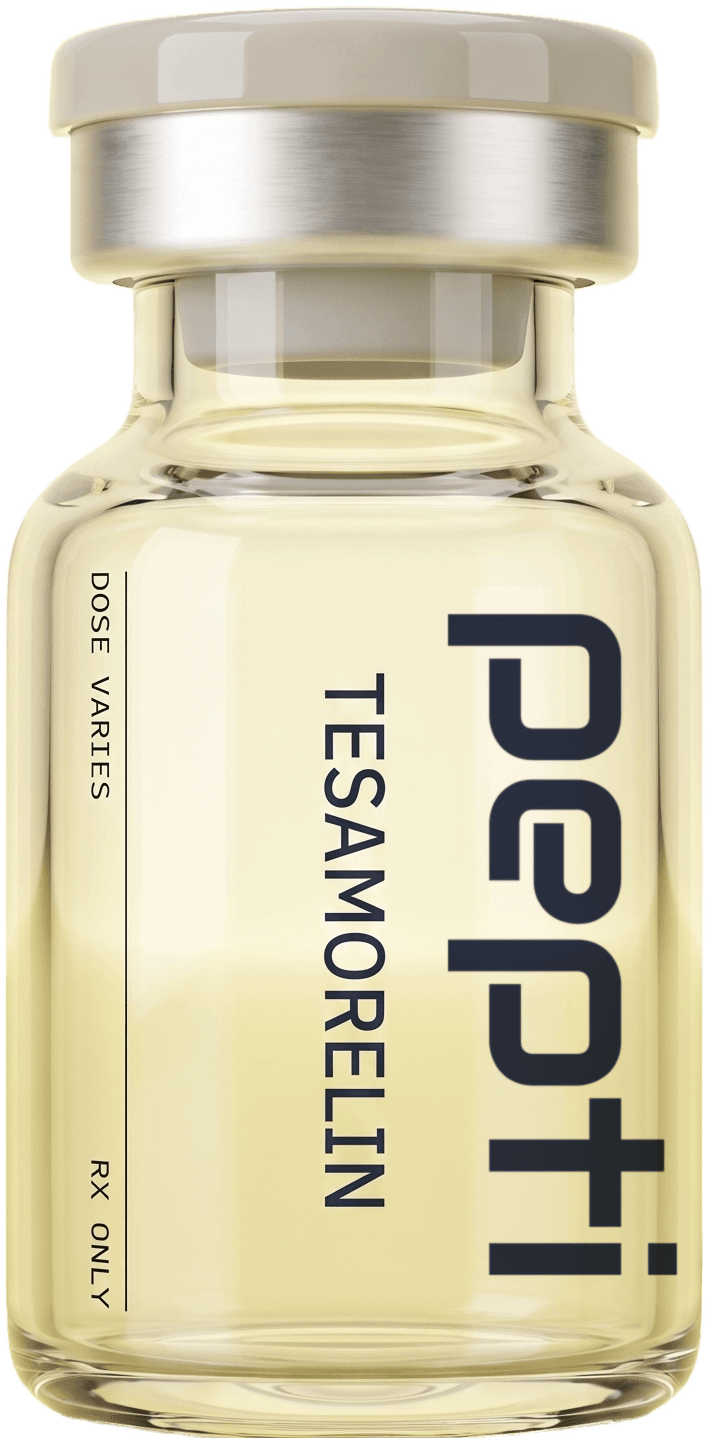
Treatments mentioned
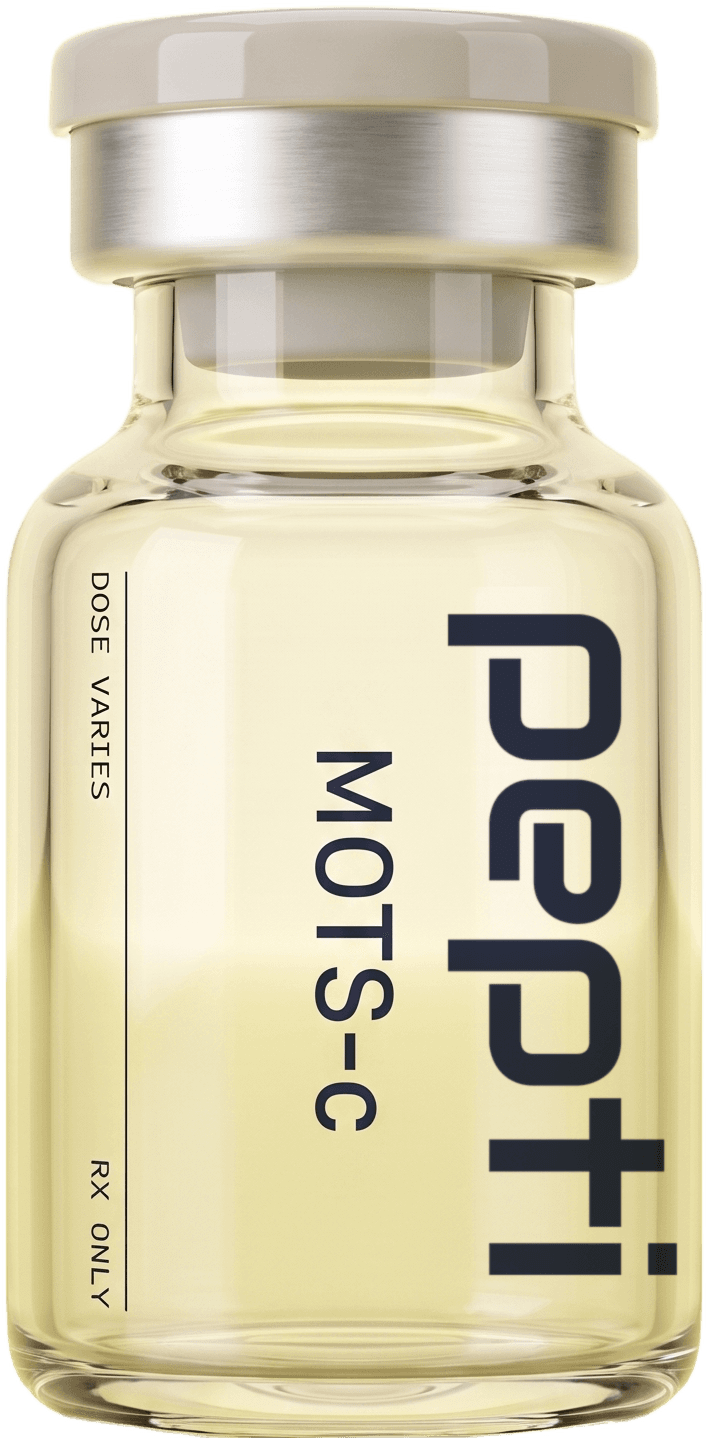
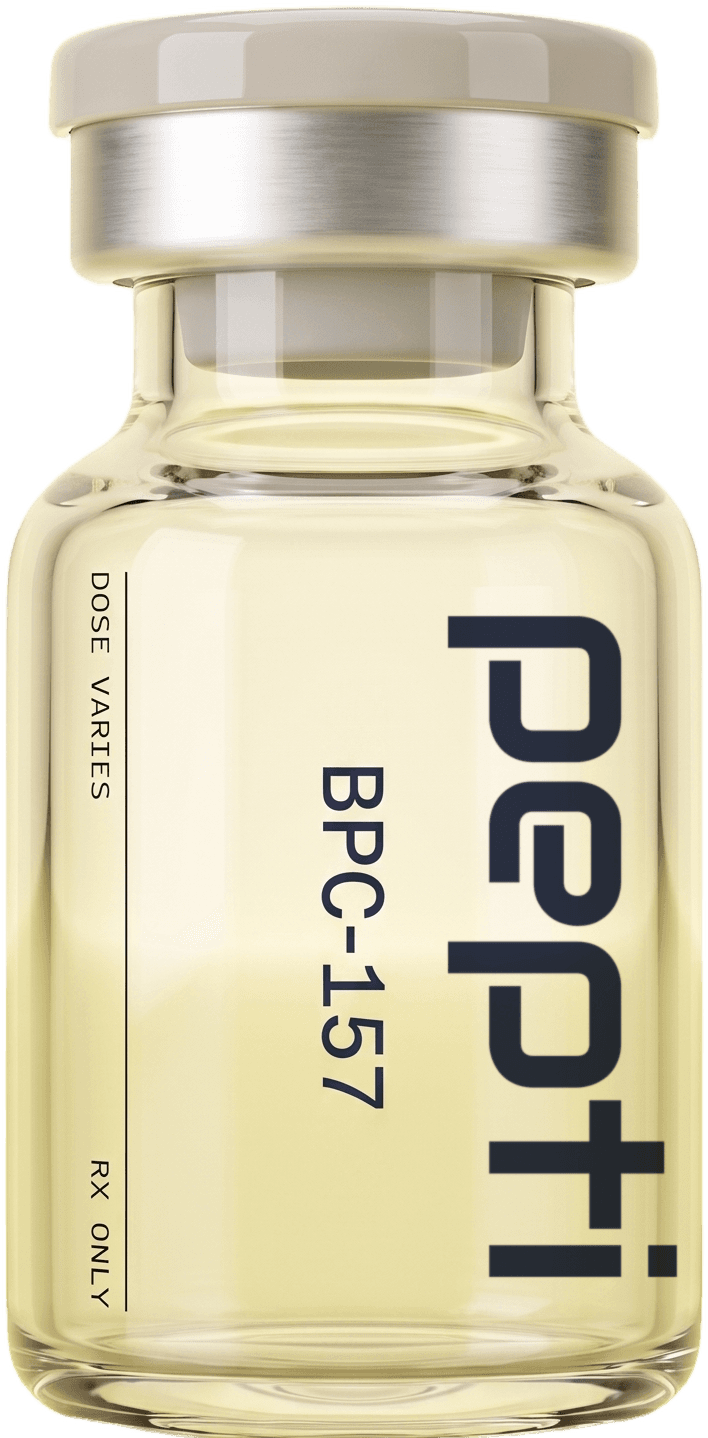
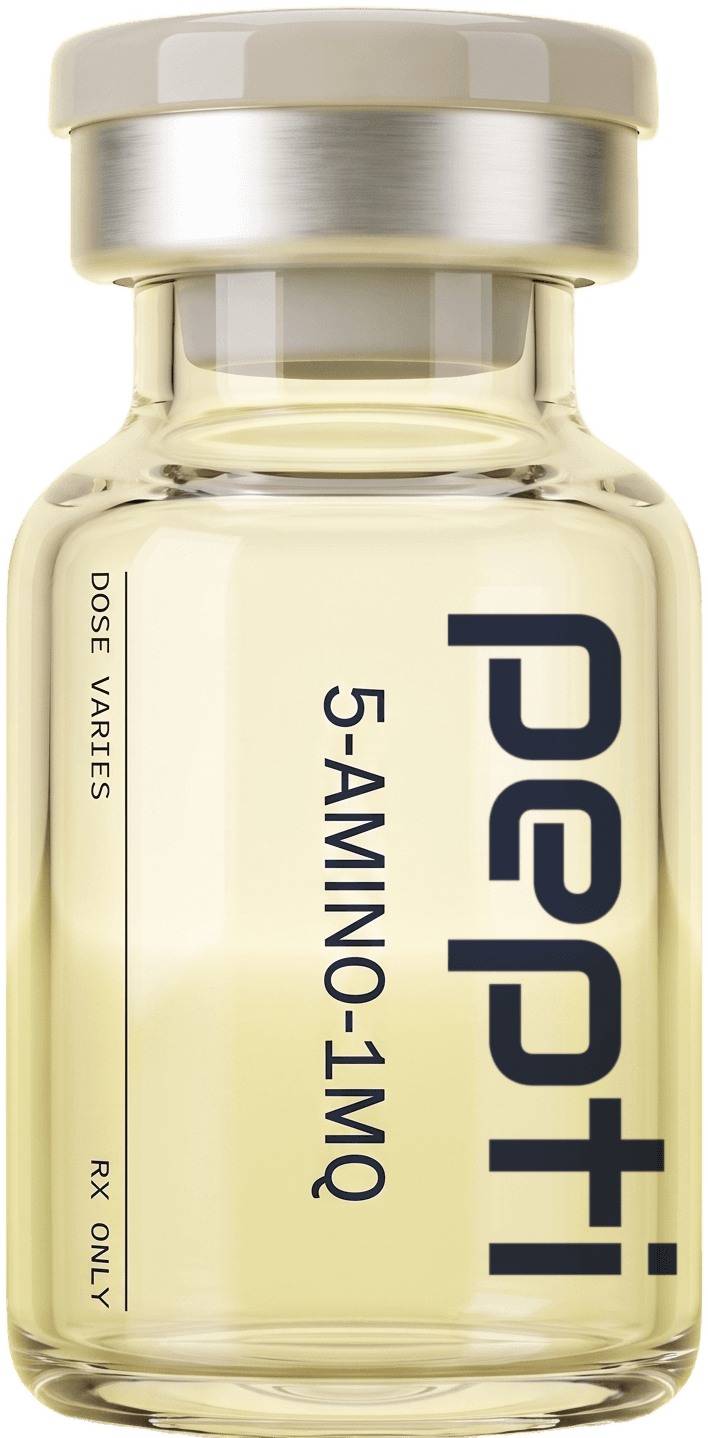
FUSION is four agents in one vial, 15 mg tesamorelin, 10 mg MOTS-c, 10 mg 5-Amino-1MQ and 10 mg BPC-157, and every benefit claimed for it is really a benefit described for one of those four components. Tesamorelin is the only one with human trials: two phase 3 randomised trials in adults with HIV and abdominal fat accumulation reported reductions in visceral fat on CT against placebo. MOTS-c and 5-Amino-1MQ rest on mouse and cell studies, BPC-157's research concerns the gut lining rather than metabolism, and the blend itself has never been studied as a blend. FUSION is a compounded prescription injection; compounded medications are not FDA approved, and no component of it has a human trial for weight in the general population.
For the full specification and how the four components are described to fit together, read what is FUSION Blend.
FUSION Blend Benefits
The short answer
| Claimed benefit | Component it comes from | What the evidence is | Strength of evidence |
|---|---|---|---|
| Less visceral (deep abdominal) fat | Tesamorelin | Human: two phase 3 randomised trials in HIV-infected adults (NEJM 2007, 412 patients); JAMA 2014 (50 patients, visceral and liver fat) | Real human endpoints, in one specific population, with the approved product at a higher dose |
| A larger growth hormone pulse | Tesamorelin | Human: IGF-1 rose in the trials | Established mechanism |
| Better glucose handling and insulin sensitivity | MOTS-c | Mouse (Cell Metabolism, 2015) | Preclinical only |
| Exercise capacity | MOTS-c | Mouse treadmill work; human levels rose after exercise (Nature Communications, 2021) | Preclinical, plus observational human measurement |
| Fat-cell energy use | 5-Amino-1MQ | Mouse (Nature 2014 knockdown; Biochemical Pharmacology 2018 inhibitor) | Preclinical only; never given to people in a published trial |
| Gut-lining protection | BPC-157 | Animal; early-phase human work for inflammatory bowel indications | Mostly preclinical; nothing on metabolism |
| Weight loss in the general population | The blend | None for any component | No evidence |
| The four together doing more than one alone | The blend | None; never studied as a combination | No evidence either way |
Read the last two rows first. "FUSION benefits" is shorthand for four separate literatures, and none of them tested the four together or tested any of them for weight in the general population.
FUSION Blend Benefits
What is in FUSION
| Component | Per vial | Per 0.25 mL dose | What it is |
|---|---|---|---|
| Tesamorelin | 15 mg | 0.75 mg | Stabilised synthetic analogue of growth-hormone-releasing hormone |
| MOTS-c | 10 mg | 0.5 mg | 16-amino-acid peptide encoded in mitochondrial DNA |
| 5-Amino-1MQ | 10 mg | 0.5 mg | Small-molecule inhibitor of the enzyme NNMT, not a peptide |
| BPC-157 | 10 mg | 0.5 mg | 15-amino-acid fragment of a protein from human gastric juice |
The proportions are fixed by the pharmacy's formulation. The rationale prescribers give is that body composition is governed by several systems at once, how fat cells store and release energy, how muscle handles glucose, how much growth hormone the pituitary releases, and whether the gut is inflamed, and each component is described as acting on a different one. That is a rationale, not a finding.
FUSION Blend Benefits
Benefit 1: Visceral fat (tesamorelin)
What the research describes. Tesamorelin binds the GHRH receptor on the pituitary and prompts a pulse of your own growth hormone, acting downstream largely through IGF-1 made in the liver. Because it works through the pituitary, normal feedback loops stay in place. Growth hormone promotes the breakdown of stored fat, and visceral fat is particularly responsive to it.
The human data. Two phase 3 randomised, placebo-controlled trials in HIV-infected adults with abdominal fat accumulation are the basis of the approved product. The first, in the New England Journal of Medicine in 2007, randomised 412 patients to tesamorelin 2 mg daily or placebo for 26 weeks and reported a reduction in visceral adipose tissue on CT against a small increase on placebo, with IGF-1 rising as expected. A 2014 randomised trial in JAMA, in 50 HIV-infected patients, reported reductions in visceral fat and liver fat over six months against placebo. In the approved product's trials, visceral fat was reported to return toward baseline in patients who stopped.
Evidence type. Human randomised trials.
What it means for FUSION. This is the strongest evidence anywhere in the blend, and it is narrow: a defined population, the approved product, 2 mg daily, and an imaging endpoint. It is not evidence for the general population, for a compounded combination, or for FUSION's 0.75 mg on weekdays. The single peptide is covered in tesamorelin benefits and compared with GLP-1 medication in tesamorelin vs semaglutide.
FUSION Blend Benefits
Benefit 2: Glucose handling and insulin sensitivity (MOTS-c)
What the research describes. MOTS-c is unusual because its gene sits inside the mitochondrial genome rather than the cell nucleus. A 2015 paper in Cell Metabolism described it acting on skeletal muscle, where it was reported to inhibit the folate and methionine cycle, raise levels of the AMPK activator AICAR and increase glucose uptake in muscle cells. In that paper, mice on a high-fat diet given MOTS-c gained less weight than untreated mice and handled glucose better, and the peptide was reported to improve insulin sensitivity in older mice.
Evidence type. Mouse and cell.
What it means for FUSION. The human evidence is observational: MOTS-c levels reported to change with exercise and with age. No trial has given MOTS-c to people. One practical consequence of the mouse findings is a caution, not a benefit: anyone on glucose-lowering medication should say so at intake. The single peptide is covered in MOTS-c benefits.
FUSION Blend Benefits
Benefit 3: Exercise capacity (MOTS-c)
What the research describes. A 2021 paper in Nature Communications reported that MOTS-c levels in muscle and plasma rose after a bout of exercise in a small group of healthy young men, and that mice given the peptide late in life performed better on treadmill tests than untreated animals.
Evidence type. Mouse treatment, plus observational human measurement.
Strength. Preclinical. The human part measured the body's own MOTS-c after exercise; it did not give MOTS-c to anyone.
FUSION Blend Benefits
Benefit 4: Fat-cell metabolism (5-Amino-1MQ)
What the research describes. Nicotinamide N-methyltransferase (NNMT) consumes nicotinamide, the precursor of NAD+, and is reported to be upregulated in fat tissue and liver in obesity. A 2014 paper in Nature reported that knocking down NNMT in mice, with an antisense oligonucleotide rather than a drug, protected them against diet-induced obesity and was associated with higher energy expenditure in fat cells. 5-Amino-1MQ is a small molecule designed to inhibit that enzyme inside the cell. A 2018 paper in Biochemical Pharmacology reported that diet-induced obese mice given the inhibitor for a short course had lower body weight, less white fat and smaller fat cells than untreated obese mice, without a change in food intake, alongside higher NAD+ in fat tissue.
Evidence type. Mouse and cell.
Strength. Consistent and mechanistically coherent in mice, and that is the whole of it. 5-Amino-1MQ has never been given to people in a published trial. It is also not a peptide; see is 5-Amino-1MQ a peptide. The three metabolic agents are compared in MOTS-c vs SLU-PP-332 vs 5-Amino-1MQ.
FUSION Blend Benefits
Benefit 5: The gut lining (BPC-157)
What the research describes. BPC-157's original and largest literature is gastrointestinal: animal work describing protection of the stomach and intestinal lining against NSAID- and alcohol-induced damage and effects in inflammatory bowel models. Animal work also describes it activating the VEGFR2 receptor and nitric-oxide signalling, and a 2011 Journal of Applied Physiology paper reported increased growth hormone receptor expression in cultured tendon fibroblasts, which describes those cells becoming more responsive to growth hormone already present, not more growth hormone.
The human data. Early-phase human work for inflammatory bowel indications, and substantial prescribing experience. Nothing in the BPC-157 literature concerns weight or metabolism directly.
What it means for FUSION. BPC-157 is in a metabolic blend for the gut, and prescribers describe some people using FUSION alongside a GLP-1 reporting less of the gut discomfort they associate with that medication. That is a clinical impression, not a trial finding. The single peptide is covered in BPC-157 benefits.
FUSION Blend Benefits
Benefit 6: Four agents doing more than one
This is the benefit the blend exists to deliver, and it is the one with the least evidence. No study has compared FUSION with its components or given the four together. A blend is a convenience: one injection, one schedule, one refill. It is not a stronger version of its parts, and it makes it harder to tell which component did what.
FUSION Blend Benefits
What the evidence does not establish
- That four agents together do more than any one alone. No study has compared the blend with its components.
- Any effect on body weight, waist size or body composition in the general population. Tesamorelin's endpoints were visceral fat on CT in HIV-infected adults; the other three have no human endpoints.
- An effect size or a timeline in humans for the blend. Timelines given by prescribers are clinical experience, not trial endpoints.
- Long-term safety of the combination. The approved tesamorelin label itself notes that long-term cardiovascular safety has not been established.
- Efficacy for any condition as an FDA-approved treatment. The one approved active in it is approved for a different population, at a different strength, as a different product.
The accurate framing, the same one the live reference page uses: one component with human trials in a specific population, three described in preclinical research, all used clinically. Not proven in people, and not proven for weight loss.
Where the components stand with the FDA
FUSION has no regulatory status of its own. Tesamorelin is the active ingredient in an FDA-approved product, first approved on 10 November 2010, for excess abdominal fat in HIV-infected adults with lipodystrophy; compounded tesamorelin is not that product and is not FDA approved. BPC-157 and MOTS-c were removed from Category 2 on 15 April 2026, and on 23 July 2026 the advisory committee voted to recommend adding both to the 503A Bulks List, BPC-157 by 8 to 6 with one abstention and MOTS-c by 7 to 5 with two abstentions; the FDA's final determinations are pending. 5-Amino-1MQ has never been on the Category 2 list and has not been reviewed by the committee.
FUSION Blend Benefits
Side effects, in brief
| What is reported | What it means |
|---|---|
| Injection-site redness, mild soreness, occasional bruising | The most common reports; rotate sites |
| Mild puffiness in hands or ankles, joint aches, tingling | Fluid-related growth hormone effects of tesamorelin; message your care team |
| Jitteriness, a faster pulse or light-headedness after a dose | Described for MOTS-c; usually settles |
| Thirst and frequent urination | A possible glucose effect; message your care team |
| A reaction that is severe, spreading, or involves difficulty breathing | Stop and contact your physician; call 911 for breathing difficulty |
The approved tesamorelin products carry warnings for elevated IGF-1, fluid retention, glucose intolerance or diabetes, hypersensitivity and injection-site reactions, and are contraindicated in active malignancy, disruption of the hypothalamic-pituitary axis, and pregnancy. 5-Amino-1MQ has no published human safety data. Tested athletes should know that tesamorelin and MOTS-c are prohibited at all times on the 2026 WADA Prohibited List. The full list is in FUSION Blend side effects.
FUSION Blend Benefits
FUSION dosage, and how Pepti supplies it
| FUSION vial | |
|---|---|
| What is in it | 5 mL multi-dose vial: BPC-157 2 mg/mL, MOTS-c 2 mg/mL, 5-Amino-1MQ 2 mg/mL, tesamorelin 3 mg/mL |
| Directions printed on it | Inject 0.25 mL (25 units) subcutaneously once daily Monday through Friday |
| Per dose | 0.5 mg BPC-157, 0.5 mg MOTS-c, 0.5 mg 5-Amino-1MQ, 0.75 mg tesamorelin |
| Doses | 20, about 4 weeks |
| Price | $279/mo |
Your physician sets your directions after reviewing your intake, and the directions printed on your vial are the ones that apply. The units, mL and mg conversion is in FUSION Blend dosage. The price is all-in, covering medication, physician review, refill management and shipping, with no separate membership fee. Pepti is cash-pay and does not bill insurance. Vials are multi-dose solutions shipped ready to use, refrigerated with ice packs, with sterile syringes and alcohol prep pads. Refills run every 28 days, one vial per fill.
When a narrower prescription makes more sense
| Situation | What makes more sense |
|---|---|
| Weight is the goal and you have not tried a GLP-1 | Semaglutide, from $99/mo, or tirzepatide, from $159/mo, which have large randomised trials for weight |
| Visceral fat is the specific goal | Tesamorelin, $249/mo, or Tesamorelin + Ipamorelin, $259/mo |
| The growth hormone axis without the gut and NNMT components | PHYSIQ, $289/mo, or SHRED, $279/mo |
| Energy and metabolism, not weight | MOTS-c, $259/mo, or NAD+, $249/mo |
| The gut is the actual complaint | BPC-157, $209/mo |
How GLP-1 medication works is covered in what is a GLP-1.
FUSION Blend Benefits
Where to get FUSION prescribed
FUSION cannot be bought legitimately without a prescription. Sites selling it "for research use only" are not accountable for identity, purity, sterility or concentration; see research peptides vs prescription peptides. The prescription route:
- Complete a free online intake covering your history, medications and what you want help with.
- A physician licensed in your state reviews it, usually within 24 hours.
- If it is appropriate, a PCAB-accredited, FDA-registered US 503A compounding pharmacy prepares it to that prescription. Lot test results are published at /quality/lab-results.
- It ships refrigerated with your directions printed on the vial.
- Your physician stays reachable for questions and side effects.
Pepti prescribes FUSION in every state except Oklahoma, plus DC Related step-by-step pages: how to get tesamorelin prescribed online and how to get MOTS-c prescribed online.
References
What this is based on.
References
- Chang CH, Tsai WC, Hsu YH, Pang JH. Pentadecapeptide BPC 157 enhances the growth hormone receptor expression in tendon fibroblasts · Molecules (2014) · PMID 25415472
- Krivic A, Anic T, Seiwerth S, et al.. Achilles detachment of rat and stable gastric pentadecapeptide BPC 157 · Journal of Orthopaedic Research (2006) · PMID 16583442
- Sikiric P, Seiwerth S, Rucman R, et al.. Stable gastric pentadecapeptide BPC 157: novel therapy in gastrointestinal tract · Current Pharmaceutical Design (2011) · PMID 21548867
- Cerovecki T, Bojanic I, Brcic L, Radic B, et al.. Pentadecapeptide BPC 157 (PL 14736) improves ligament healing in the rat · J Orthop Res (2010) · PMID 20225319
- Sikiric P, Seiwerth S, Rucman R, Turkovic B, et al.. Stable gastric pentadecapeptide BPC 157-NO-system relation · Curr Pharm Des (2014) · PMID 23755725
- Cox HD, Miller GD, Eichner D. Detection and in vitro metabolism of the confiscated peptides BPC 157 and MGF R23H · Drug Test Anal (2017) · PMID 28035768
- Thomas A, Görgens C, Guddat S et al.. Simplifying and expanding the screening for peptides <2 kDa by direct urine injection, liquid chromatography, and ion mobility mass spectrometry · J Sep Sci (2016) · PMID 26578461
- Farrar JT, Young JP Jr, LaMoreaux L, Werth JL et al.. Clinical importance of changes in chronic pain intensity measured on an 11-point numerical pain rating scale · Pain (2001) · PMID 11690728
- Meyer JD, Ho B, Manning MC. Effects of conformation on the chemical stability of pharmaceutically relevant polypeptides · Pharm Biotechnol (2002) · PMID 11987755
- Xu C, Sun L, Ren F, Huang P, et al.. Preclinical Safety Evaluation of Body Protective Compound-157, a Potential Drug for Treating Various Wounds · Regul Toxicol Pharmacol (2020) · PMID 32334036
- He L, Feng D, Guo H, et al.. Pharmacokinetics, distribution, metabolism, and excretion of body-protective compound 157, a potential drug for treating various wounds, in rats and dogs · Front Pharmacol (2022) · PMID 36588717
- Lee E, Padgett B. Intra-Articular Injection of BPC 157 for Multiple Types of Knee Pain · Altern Ther Health Med (2021) · PMID 34324435
Citations are provided for educational purposes. They do not constitute medical advice. Always discuss any peptide protocol with your prescribing physician.
Common questions
FUSION Blend Benefits, answered.
FUSION's claimed benefits come from its four components: tesamorelin for visceral fat, MOTS-c for glucose handling and exercise response, 5-Amino-1MQ for fat-cell metabolism, and BPC-157 for the gut lining. Only tesamorelin has human trials, in HIV-infected adults with abdominal fat accumulation; the other three rest on animal and cell work; and the blend has never been studied as a combination.
No component of FUSION has a randomised human trial for weight in the general population, and the blend has not been studied. Tesamorelin's trials measured visceral fat in a specific population. If weight is the main goal, GLP-1 medications have the trial evidence FUSION does not.
Its tesamorelin component reduced visceral fat on CT in two phase 3 trials in HIV-infected adults, using the approved product at 2 mg daily. That is not evidence for FUSION, its lower weekday dose, or the general population.
No. None of its components is an appetite-regulating hormone analogue. It is a different class from semaglutide and tirzepatide; what is a GLP-1 explains that class.
People do, and FUSION is positioned for use with or without a GLP-1. Tell your physician and care team everything you take, because tesamorelin can affect glucose control. Do not change the dose of either medication on your own.
Its tesamorelin does, indirectly: it prompts a pulse of your own growth hormone from the pituitary, with IGF-1 rising as a result. The other three components do not act on growth hormone release.
There is no trial-established timeline for the blend. Tesamorelin's trials measured visceral fat at 26 weeks. Prescribers describe little beyond injection-site tenderness early on, and any change in waist measurement as a matter of months alongside diet and training. Those are clinical patterns, not endpoints, and nobody can promise a timeline.
The directions printed on the vial are: inject 0.25 mL (25 units on a U-100 insulin syringe) subcutaneously once daily Monday through Friday. Each dose delivers 0.5 mg BPC-157, 0.5 mg MOTS-c, 0.5 mg 5-Amino-1MQ and 0.75 mg tesamorelin.
No. Compounded medications are not FDA approved. Tesamorelin is the active ingredient in an approved product for one indication, but the compounded tesamorelin in FUSION is not that product.
At Pepti, FUSION is $279 a month, all-in, covering medication, physician review, refill management and shipping.
No. Bloodwork is not required for any Pepti treatment. If your physician wants labs for your care, they'll ask through your account. The free assessment goes to a physician licensed in your state. A consultation does not guarantee a prescription.
Related answers
Keep reading.
- FUSION Blend (BPC-157 / MOTS-c / 5-Amino-1MQ / Tesamorelin): What It Is, Where to Get It Prescribed, and What It Costs
- FUSION Blend Dosage: How Pepti Prescribes BPC-157, MOTS-c, 5-Amino-1MQ and Tesamorelin
- FUSION Blend for Men: Visceral Fat, Testosterone, Sport and What the Research Covers
- FUSION Blend for Women: Visceral Fat, Menopause, Glucose and the Pregnancy Rule
- GLOW Peptide Benefits: What the Research Actually Shows
Next step
See what a physician recommends for you.
A licensed physician in your state reviews your intake to see whether treatment fits your history. A consultation does not guarantee a prescription.