Anti-Aging · Reference
FOXO4-DRI vs MOTS-c: A Senolytic vs a Mitochondrial Signal
This page explains each on its own terms, puts them side by side, covers what the research does and does not show, where each stands with the FDA, how each is dosed, what each costs at Pepti, and who tends to suit which.
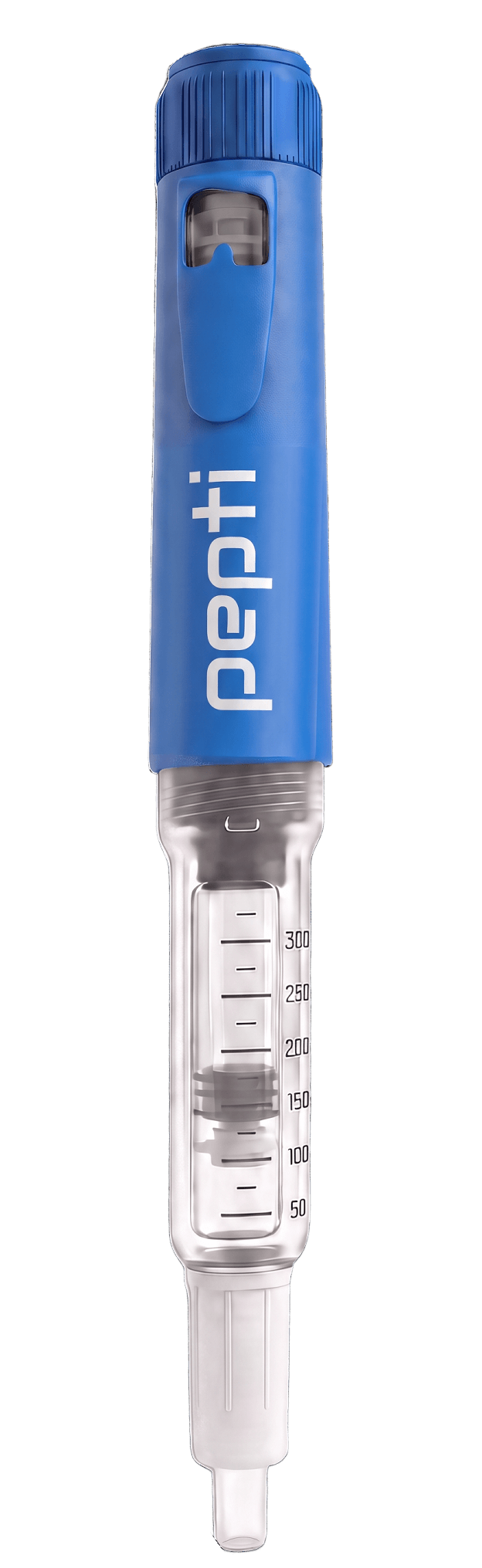
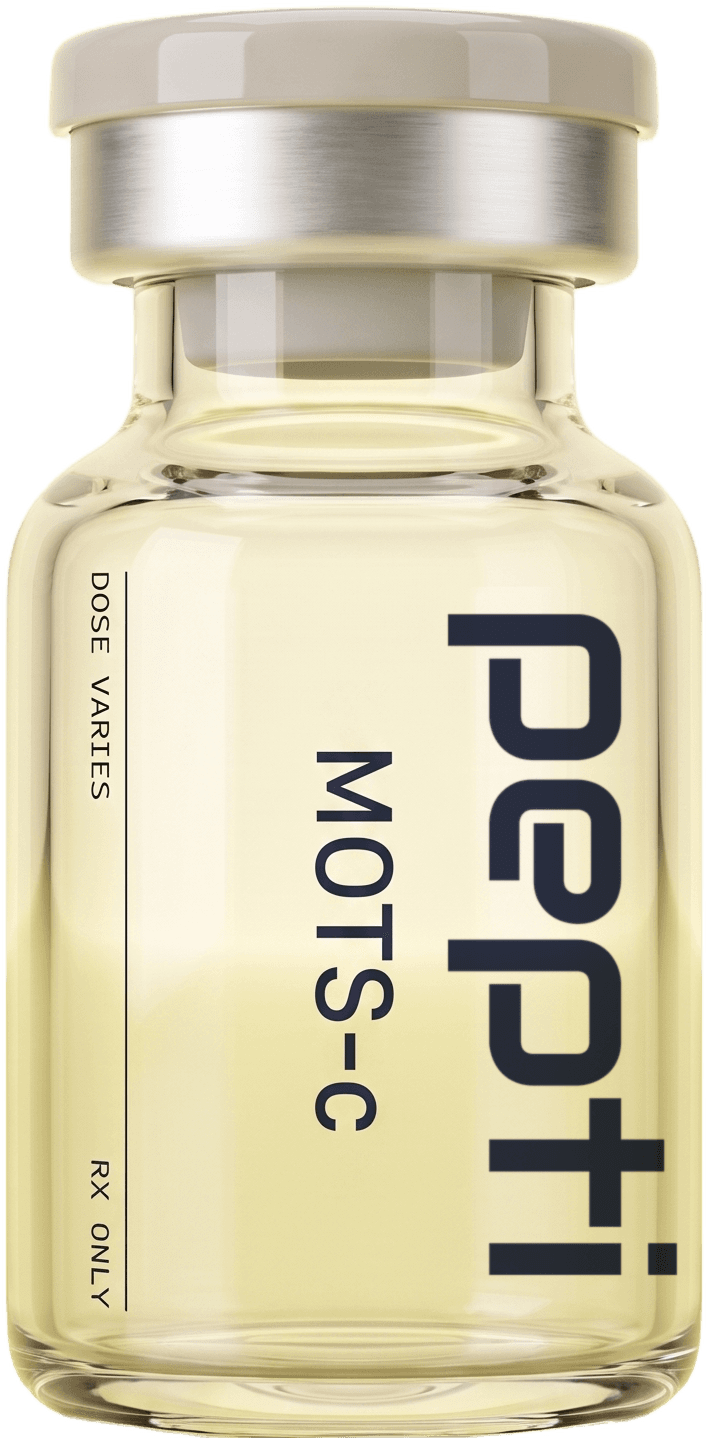
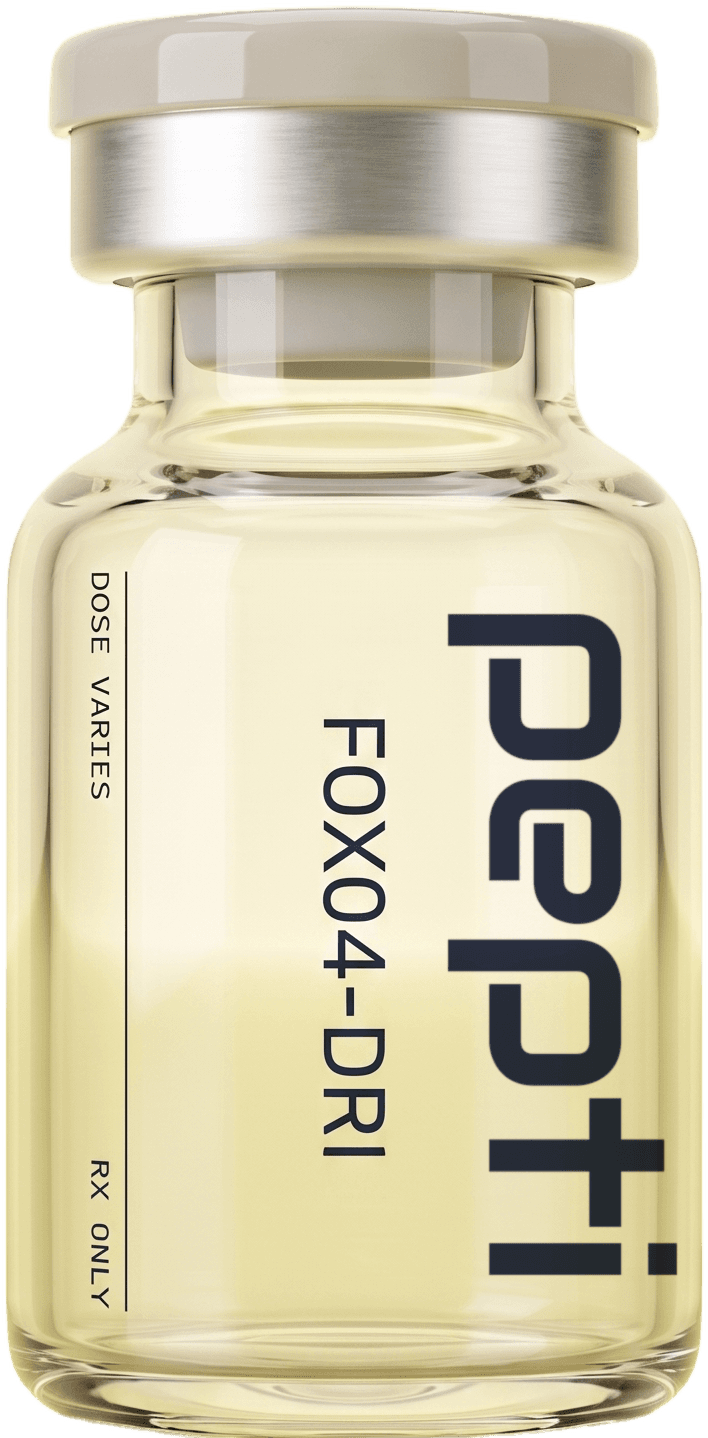
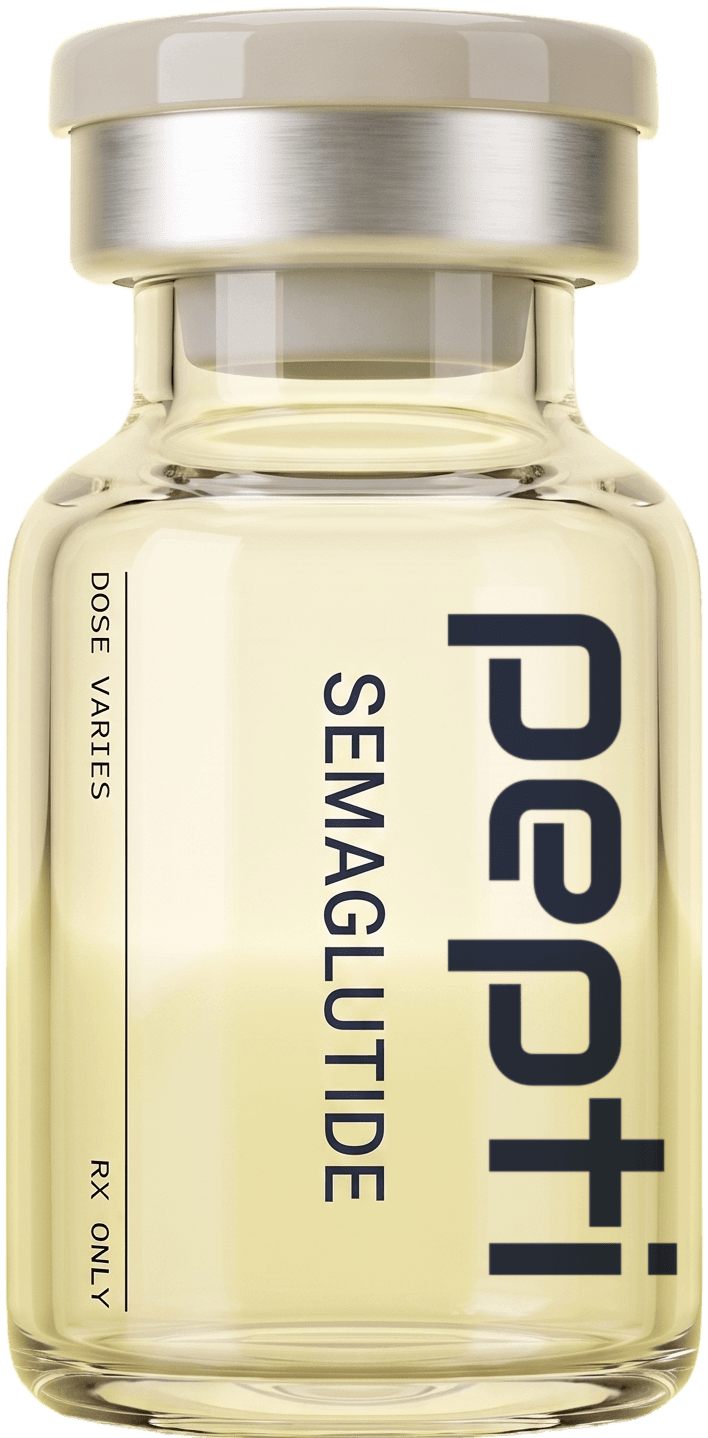
FOXO4-DRI and MOTS-c are both anti-aging peptides built on mouse research, but they ask different questions. FOXO4-DRI is a laboratory-designed senolytic, meant to make senescent cells (cells that have stopped dividing but not died) trigger their own death, with no human data of any kind. MOTS-c is a 16-amino-acid peptide the body itself encodes in mitochondrial DNA, described around AMPK and fuel use in muscle, with human observational data on natural levels and one small early-phase study of a related analogue, but no randomized trial of the peptide. Both are prescription-only, compounded by a licensed US pharmacy, and neither is FDA approved.
This page explains each on its own terms, puts them side by side, covers what the research does and does not show, where each stands with the FDA, how each is dosed, what each costs at Pepti, and who tends to suit which.
FOXO4-DRI vs MOTS-c
The short answer
| If your main question is | The usual prescription | What is in it | Price |
|---|---|---|---|
| Clearing senescent cells (experimental) | FOXO4-DRI | 10 mg FOXO4-DRI in a 5 mL vial | $229/mo |
| Metabolic signalling, alongside training | MOTS-c | 10 mg MOTS-c in a 5 mL vial | $259/mo |
| MOTS-c inside a body-composition blend | PHYSIQ, SHRED or FUSION | MOTS-c with other peptides | $279 to $289/mo |
| Mitochondrial structure | SS-31 (Elamipretide) | 10 mg SS-31 in a 5 mL vial | $249/mo |
Every figure is an all-in monthly price covering the medication, physician review, refill management and shipping. There is no separate membership fee, and Pepti is cash-pay and does not bill insurance. Current pricing always lives on each product page.
FOXO4-DRI vs MOTS-c
FOXO4-DRI on its own terms
What it is
FOXO4-DRI was designed in Peter de Keizer's laboratory at Erasmus University Medical Center in Rotterdam and described in a 2017 paper in Cell. In senescent cells, the transcription factor FOXO4 holds p53 in the nucleus and stops it from triggering the cell's death programme. FOXO4-DRI copies a stretch of FOXO4 and acts as a decoy. It is built from mirror-image D-amino acids in reverse order (D-retro-inverso), so enzymes do not break it down quickly, and it carries a cell-penetrating tag borrowed from the HIV TAT protein. The full reference is at what is FOXO4-DRI.
How it is described to work
- Blocking FOXO4 and p53. The peptide competes for the interaction; a 2025 Nature Communications structural study confirmed the binding site on p53.
- Self-destruct in senescent cells. p53 leaves the nucleus and the cell undergoes programmed death through its own machinery.
- Selectivity. In culture, senescent cells died and dividing cells did not.
What the research shows
In mice: reduced chemotherapy toxicity, and restored fitness, fur density and kidney function in fast-aging and naturally old animals (Cell, 2017); cleared senescent Leydig cells with improved testosterone secretion and sperm quality in aged mice (2020 and 2024); milder lung fibrosis (2023); better aortic markers (2026). Human cartilage and keloid cells have been studied in a dish. There are no human trials of any kind.
FOXO4-DRI vs MOTS-c
MOTS-c on its own terms
What it is
MOTS-c is a 16-amino-acid peptide whose gene sits in the mitochondrial genome rather than the nucleus, inside the gene for the 12S ribosomal RNA. It was identified in a 2015 paper in Cell Metabolism from the University of Southern California, and it belongs to a small family of mitochondrial-derived peptides. It is not a hormone in the classical sense, not a growth hormone secretagogue, not a GLP-1 medication and not a stimulant. The full reference is at what is MOTS-c.
How it is described to work
- The folate cycle and AMPK. In cells, MOTS-c was reported to slow the folate cycle, causing AICAR to build up and activate AMPK, the cell's low-fuel sensor that exercise also switches on.
- Signalling to the nucleus. A 2018 Cell Metabolism paper reported MOTS-c moving into the nucleus under metabolic stress and changing which genes are switched on.
- Muscle and exercise. A 2021 Nature Communications paper reported better physical performance in mice of all ages, and that exercise raised people's own MOTS-c in muscle and blood, an observational finding, not an injection result.
What human data exists
There are no randomized controlled trials of MOTS-c in humans. What exists is observational work measuring the body's own MOTS-c (exercise raises it; levels in diabetes and obesity are mixed across studies), a genetic study across 27,527 people linking a MOTS-c variant with type 2 diabetes in men, and a company-reported Phase 1 study of a modified analogue, CB4211, which is a different molecule and did not advance beyond Phase 1.
FOXO4-DRI vs MOTS-c
Head to head
| FOXO4-DRI | MOTS-c | |
|---|---|---|
| Origin | Designed in a laboratory, 2017 | Encoded in human mitochondrial DNA, identified 2015 |
| Body already makes it | No | Yes, in small amounts |
| Basic idea | Remove senescent cells | Shift how cells handle fuel |
| Main described mechanism | Disrupting FOXO4 and p53 so senescent cells undergo apoptosis | Folate cycle, AICAR and AMPK activation; nuclear gene regulation |
| Main target tissue in research | Senescent cells in many tissues | Skeletal muscle |
| Human data | None of any kind | Observational data on natural levels; one company-reported analogue study |
| Randomized trials of the peptide | None | None |
| FDA status | Never nominated or evaluated | Removed from Category 2 in April 2026; advisory committee voted 7 to 5 in favour in July 2026 |
| Prohibited in sport | Not stated in the live references; check | Yes, WADA S4.4 at all times |
| Vial at Pepti | 5 mL, 2 mg/mL (10 mg) | 5 mL, 2 mg/mL (10 mg) |
| Typical directions | 0.25 mL (25 units) once daily, Monday to Friday | 0.25 mL (25 units) Monday to Friday mornings |
| Per dose (math) | 0.5 mg | 0.5 mg |
| Doses per vial | 20, about 4 weeks | 20, about 4 weeks |
| Formats | Vial only | Vial, or a pre-filled Pen |
| Price at Pepti | $229 a month | $259 a month |
| In a Pepti blend | No | PHYSIQ, SHRED, FUSION, EUPHORIA, SYNAPSE |
Subtract versus tune
The cleanest way to hold the difference: FOXO4-DRI aims to subtract cells that no longer function, while MOTS-c aims to change how functioning cells use fuel. They are not alternatives so much as answers to different questions about ageing. No study has compared them or combined them.
Both are mostly mouse science
Neither has a randomized trial of the peptide in people. MOTS-c is a step further along: people make it, its natural levels have been measured in human studies, a related analogue has been dosed in people, and the FDA's advisory committee has reviewed it. FOXO4-DRI has a more precisely defined target and no human exposure at all.
FOXO4-DRI vs MOTS-c
Who suits which
MOTS-c
MOTS-c is the one discussed when the goal is metabolic: training tolerance, fuel use, body composition. Its mechanism is an exercise-signalling pathway, and prescribers describe it as something taken alongside a training and nutrition plan, not instead of one. It is often prescribed inside a blend rather than alone. It is not an option for tested athletes, because it is prohibited at all times.
FOXO4-DRI
FOXO4-DRI is for someone who specifically wants to trial a senolytic and accepts that there is no human data and no observable sign of whether it is doing anything. It is the only senolytic in Pepti's catalogue. Cancer history and lung disease need a careful conversation first.
Can you take FOXO4-DRI and MOTS-c together?
They act through different described mechanisms, and no study has tested the pairing. Your physician weighs any combination after reviewing your intake.
FOXO4-DRI vs MOTS-c
When neither is the right first step
| Situation | What makes more sense |
|---|---|
| Weight loss is the actual goal | Semaglutide or tirzepatide, which have large randomized trials with weight as the primary endpoint |
| You want something with human trial data | NAD+, tesamorelin or sermorelin |
| Mitochondrial structure is the concern | SS-31, which has a human trial programme |
| Testosterone is the concern | A physician conversation; neither peptide is a hormone |
| A broad longevity stack | The ETERNAL Blend or Epithalon |
FOXO4-DRI vs MOTS-c
Where each stands with the FDA
As of the FDA pages checked in September 2026:
| FOXO4-DRI | MOTS-c | |
|---|---|---|
| 2023 | Not nominated | Placed in Category 2 |
| 15 April 2026 | Not involved | Removed from Category 2 after nominations were withdrawn |
| Advisory committee | Not on any agenda | 23 July 2026: voted 7 to 5, two abstentions, to recommend the 503A Bulks List for obesity and osteoporosis, against FDA staff advice |
| Final FDA determination | None, not reviewed | Pending |
MOTS-c's vote was the narrowest of the six peptides the committee recommended. A committee vote is a recommendation, not a decision. Neither peptide is banned; both remain legal to prescribe and dispense as compounded medications. Compounded medications are not FDA approved. See are peptides FDA approved.
FOXO4-DRI vs MOTS-c
Dosing, side by side
Both vials are 5 mL at 2 mg/mL, drawn to 0.25 mL, which is 25 units on a U-100 insulin syringe, under the skin into the abdomen or thigh, rotating sites. FOXO4-DRI is once daily Monday through Friday; MOTS-c is Monday through Friday mornings.
| What you read | FOXO4-DRI | MOTS-c |
|---|---|---|
| Dose volume | 0.25 mL (25 units) | 0.25 mL (25 units) |
| Per dose (math only) | 0.5 mg | 0.5 mg |
| Doses per week | 5 | 5 |
| Doses per vial | 20 | 20 |
| Time per vial | About 4 weeks | About 4 weeks |
You do not need to calculate anything: your directions are printed on the vial, and your physician sets them after reviewing your intake. Refills run every 28 days, one vial per fill. Both ship refrigerated with ice packs, ready to use, with sterile syringes and alcohol prep pads. The mouse work for FOXO4-DRI used short intermittent courses by a route not used in people, and prescribers treat it as an intermittent course. MOTS-c is also available as a pre-filled Pen. The MOTS-c detail is in MOTS-c dosage.
FOXO4-DRI vs MOTS-c
Side effects
FOXO4-DRI. No published human safety data. Clinically, mostly injection-site redness, mild soreness and occasional bruising. Because it acts on p53, the central tumour-suppressor protein, and uses unusual D-amino acid chemistry, long-term effects in people are unknown. A 2023 mouse study in Circulation reported senolytic interventions worsening pulmonary hypertension.
MOTS-c. Mostly injection-site redness, mild soreness and occasional bruising. Some people describe transient jitteriness, a faster pulse or mild light-headedness in the hour or two after a morning dose, particularly early in a course. Anyone taking a medicine that lowers blood glucose should say so on the intake.
For either, swelling of the face or throat or difficulty breathing needs emergency care first (call 911), then tell your physician.
FOXO4-DRI vs MOTS-c
Who should not take either, or should discuss it first
| Situation | Why |
|---|---|
| Pregnancy or breastfeeding | Not used; safety data is absent |
| Personal or family history of cancer | Especially for FOXO4-DRI, which acts on the p53 pathway |
| Pulmonary hypertension or significant lung disease | Especially for FOXO4-DRI |
| Glucose-lowering medication | Especially for MOTS-c, which acts on an energy-sensing pathway |
| Tested athletes | MOTS-c is on the WADA Prohibited List at all times; check the list for FOXO4-DRI too |
FOXO4-DRI vs MOTS-c
What the evidence shows, honestly
Neither peptide has been shown to do anything in people. FOXO4-DRI has a precisely engineered mechanism and a small set of consistent mouse and cell studies. MOTS-c has a coherent preclinical story, human data on its natural levels and an analogue study, and an advisory committee that recommended it against its own staff's advice. Any provider claiming either has been shown to work for ageing, weight or energy in people is overstating it. The claim-by-claim read on MOTS-c is in MOTS-c benefits.
FOXO4-DRI vs MOTS-c
Where to get FOXO4-DRI or MOTS-c prescribed
Neither can be bought legitimately without a prescription. Sites selling them "for research use only" are not accountable for what is in the vial: identity, purity, sterility and concentration are untested. The prescription route:
- Complete a free online intake covering your history, medications and what you want help with.
- A physician licensed in your state reviews it, usually within 24 hours.
- If it is appropriate, a PCAB-accredited, FDA-registered US 503A compounding pharmacy prepares it to that prescription. Lot test results are published at /quality/lab-results.
- It ships refrigerated with your directions printed on the vial.
- Your physician stays reachable for questions and dose changes.
Pepti prescribes both in every state except Oklahoma, plus DC For MOTS-c, the step-by-step page is how to get MOTS-c prescribed online; FOXO4-DRI starts from its product page.
References
What this is based on.
References
- Baar MP, Brandt RMC, Putavet DA et al.. Targeted Apoptosis of Senescent Cells Restores Tissue Homeostasis in Response to Chemotoxicity and Aging · Cell (2017) · PMID 28340339
- Bourgeois B, Spreitzer E, Platero-Rochart D et al.. The disordered p53 transactivation domain is the target of FOXO4 and the senolytic compound FOXO4-DRI · Nature Communications (2025) · PMID 40593617
- Zhang C, Xie Y, Chen H et al.. FOXO4-DRI alleviates age-related testosterone secretion insufficiency by targeting senescent Leydig cells in aged mice · Aging (Albany NY) (2020) · PMID 31959736
- Huang Y, He Y, Makarcyzk MJ et al.. Senolytic Peptide FOXO4-DRI Selectively Removes Senescent Cells From in vitro Expanded Human Chondrocytes · Frontiers in Bioengineering and Biotechnology (2021) · PMID 33996787
- Liu Y, Hou Q, Wang R et al.. FOXO4-D-Retro-Inverso targets extracellular matrix production in fibroblasts and ameliorates bleomycin-induced pulmonary fibrosis in mice · Naunyn-Schmiedeberg's Archives of Pharmacology (2023) · PMID 37074394
- Li Y, Zhang C, Cheng H et al.. FOXO4-DRI improves spermatogenesis in aged mice through reducing senescence-associated secretory phenotype secretion from Leydig cells · Experimental Gerontology (2024) · PMID 39025385
- Hu Z, Li F, Hu C et al.. FOXO4-DRI regulates endothelial cell senescence via the P53 signaling pathway · Frontiers in Bioengineering and Biotechnology (2026) · PMID 41625068
- Kong YX, Li ZS, Liu YB et al.. FOXO4-DRI induces keloid senescent fibroblast apoptosis by promoting nuclear exclusion of upregulated p53-serine 15 phosphorylation · Communications Biology (2025) · PMID 39994346
- Born E, Lipskaia L, Breau M et al.. Eliminating Senescent Cells Can Promote Pulmonary Hypertension Development and Progression · Circulation (2023) · PMID 36515093
- Lee C, Zeng J, Drew BG et al.. The mitochondrial-derived peptide MOTS-c promotes metabolic homeostasis and reduces obesity and insulin resistance · Cell Metab (2015) · PMID 25738459
- Reynolds JC, Lai RW, Woodhead JST et al.. MOTS-c is an exercise-induced mitochondrial-encoded regulator of age-dependent physical decline and muscle homeostasis · Nat Commun (2021) · PMID 33473109
- Kim KH, Son JM, Benayoun BA et al.. The Mitochondrial-Encoded Peptide MOTS-c Translocates to the Nucleus to Regulate Nuclear Gene Expression in Response to Metabolic Stress · Cell Metab (2018) · PMID 29983246
Citations are provided for educational purposes. They do not constitute medical advice. Always discuss any peptide protocol with your prescribing physician.
Common questions
FOXO4-DRI vs MOTS-c, answered.
FOXO4-DRI is a designed senolytic meant to make senescent cells die. MOTS-c is a peptide the body encodes in mitochondrial DNA, described around AMPK and fuel use in muscle. One removes cells; the other changes how cells behave.
Neither has human evidence for ageing, and no study has compared them. MOTS-c has more human context, including measured natural levels and an FDA advisory review; FOXO4-DRI has none.
No. MOTS-c is mitochondrial-derived. FOXO4-DRI acts on p53 in the cell nucleus and has no described action on mitochondria.
No study has tested the combination. They act through different mechanisms, and your physician reviews any combination with your intake.
Mouse studies reported less diet-induced weight gain and better insulin sensitivity. There is no human trial of MOTS-c with weight as an endpoint. For weight loss, GLP-1 medications have the trial evidence.
Not in any human study, because there are none. A 2020 mouse study reported improved testosterone secretion after clearing senescent Leydig cells in aged mice.
Yes. MOTS-c is on the WADA Prohibited List at all times under S4.4 metabolic modulators, and USADA has said it is not eligible for a therapeutic use exemption.
There is no human timeline for either. The mouse studies measured over days to weeks in animals, and there is no established way to translate that to people.
At Pepti, FOXO4-DRI is $229 a month and MOTS-c is $259 a month, all-in, including the medication, physician review, refill management and shipping.
Bloodwork is not required for any Pepti treatment. If your physician wants labs for your care, they'll ask through your account. The free assessment goes to a physician licensed in your state. A consultation does not guarantee a prescription.
Next step
See what a physician recommends for you.
A licensed physician in your state reviews your intake and decides what is appropriate. A consultation does not guarantee a prescription.