Anti-Aging · Reference
Epithalon vs FOXO4-DRI: Two Opposite Ideas About Ageing Cells, Compared
This page explains each on its own terms, puts them side by side, covers what the research does and does not show, where each stands with the FDA, how each is dosed at Pepti, what each costs, and who tends to suit which.
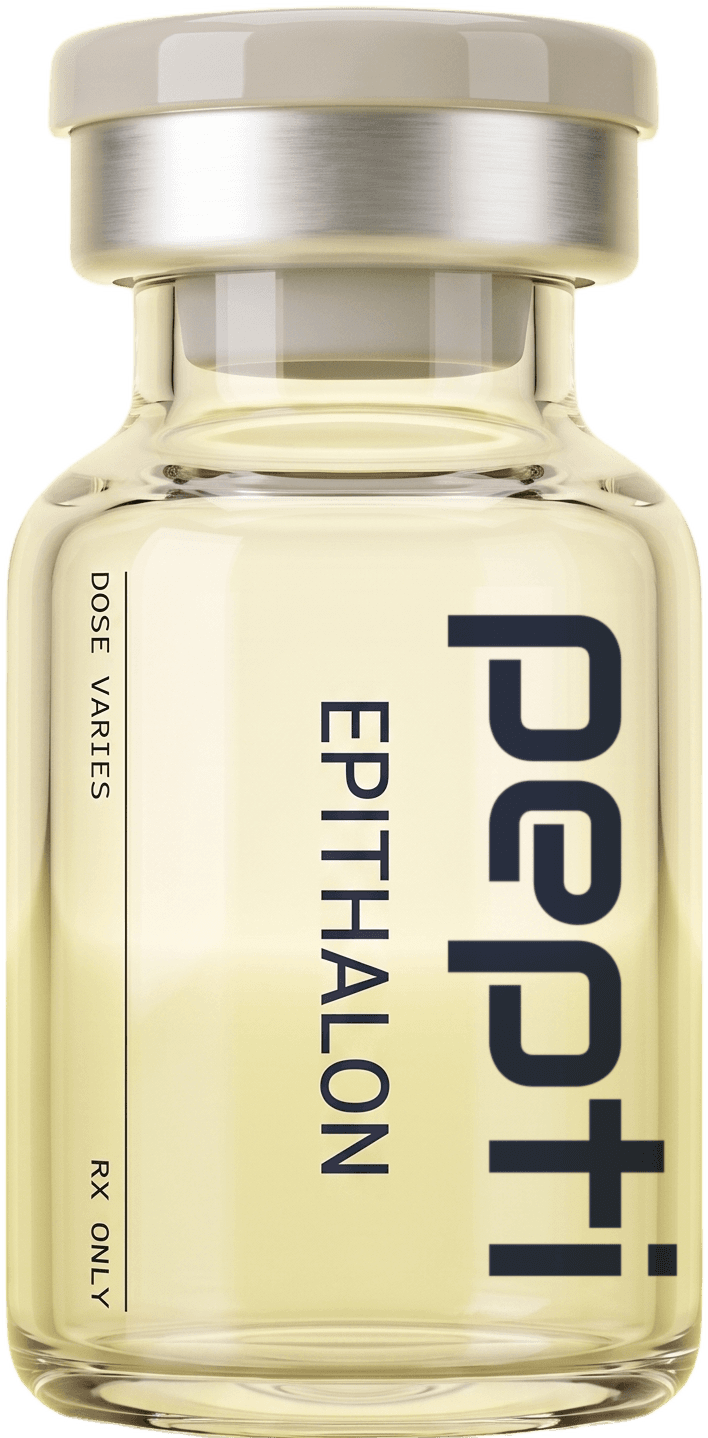
Treatments mentioned
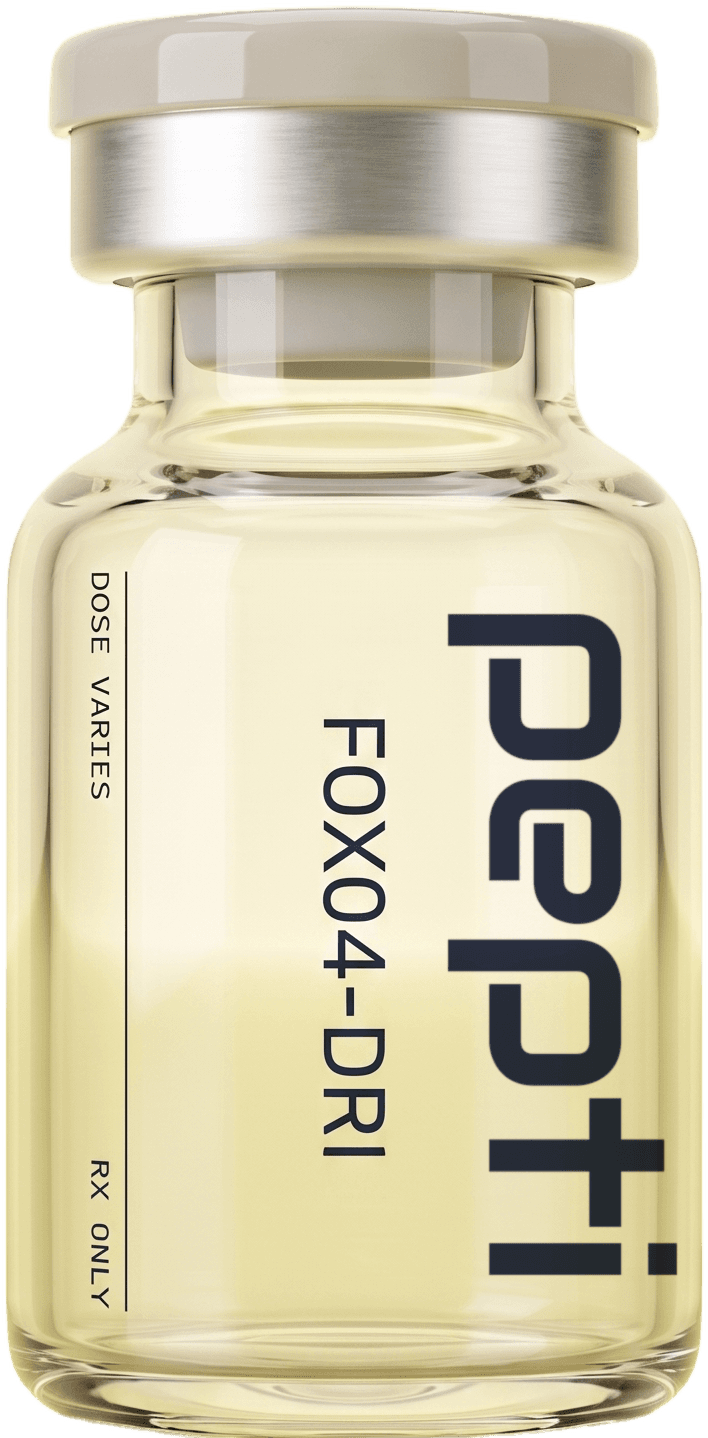
Epithalon and FOXO4-DRI are both prescribed as anti-aging peptides, but they rest on two different, almost opposite ideas about ageing cells. Epithalon is a four-amino-acid peptide from Russian pineal research, described in cell work as switching on telomerase so cells keep dividing past their usual limit, and in animals and older people around evening melatonin. FOXO4-DRI is a laboratory-designed D-amino-acid peptide, first described in 2017, built to make senescent cells, the ones that have stopped dividing for good, die through their own p53 pathway. Epithalon has a small, old human record, mostly with its parent extract; FOXO4-DRI has none. Both are compounded prescriptions, and neither is FDA approved.
This page explains each on its own terms, puts them side by side, covers what the research does and does not show, where each stands with the FDA, how each is dosed at Pepti, what each costs, and who tends to suit which.
Epithalon vs FOXO4-DRI
The short answer
| If your main interest is | The usual prescription | What is in it | Price |
|---|---|---|---|
| The pineal, melatonin-rhythm and telomerase hypothesis | Epithalon | 10 mg Epithalon in a 5 mL vial | $249/mo |
| The senolytic hypothesis: clearing senescent cells | FOXO4-DRI | 10 mg FOXO4-DRI in a 5 mL vial | $229/mo |
| Epithalon inside a repair and skin stack | ETERNAL Blend | GHK-Cu, BPC-157, TB-500, Epithalon | $279/mo |
| The immune side of the same Russian research | Thymalin | 5 mg Thymalin in a 5 mL vial | $209/mo |
| Cellular energy rather than either hypothesis | NAD+ injection | 1,000 mg NAD+ in a 10 mL vial | $249/mo |
Every figure is an all-in monthly price covering the medication, physician review, refill management and shipping. There is no separate membership fee, and Pepti is cash-pay and does not bill insurance. Current pricing always lives on each product page.
Epithalon vs FOXO4-DRI
Epithalon on its own terms
What it is
Epithalon is a tetrapeptide, Ala-Glu-Asp-Gly (AEDG). It was designed in the 1990s at the St Petersburg Institute of Bioregulation and Gerontology, led by Vladimir Khavinson, to reproduce the amino-acid composition of Epithalamin, a crude bovine pineal extract the group had given to elderly patients for years. That lineage matters: much of the "human data" quoted online was generated with the extract, not the peptide. The FDA spells it Epitalon. It is not melatonin, not a sedative and not a hormone. The full reference is at what is Epithalon.
How Epithalon is described to work
- Telomerase in cultured cells. A 2003 Bulletin of Experimental Biology and Medicine paper reported Epithalon inducing telomerase and lengthening telomeres in cultured human fetal fibroblasts; a companion paper reported the cells dividing past their usual limit. In 2025 a Brunel University London group published the first independent replication in normal human cell lines, and also reported telomere extension in breast cancer cell lines.
- Evening melatonin. A 2001 study in old rhesus monkeys reported evening melatonin rising more than fourfold and evening cortisol falling; a 2004 paper reported the parent extract raising night-time melatonin in elderly people with low pineal output. The effect appears where output is already low.
- Antioxidant activity. 2022 cell papers describe protection from oxidative damage and effects on inflammatory signalling.
What human data exists for Epithalon
There are no randomized, placebo-controlled trials of injectable Epithalon in humans for any indication. The human work is the Khavinson elderly cohorts, open-label and with the Epithalamin extract; a small Russian randomized study of a sublingual spray in women working night shifts that measured a melatonin metabolite, not sleep; and an uncontrolled retinitis pigmentosa series. The FDA found no study of the subcutaneous route at all.
Epithalon vs FOXO4-DRI
FOXO4-DRI on its own terms
What it is
FOXO4-DRI is not a fragment of anything the body makes. It was designed in Peter de Keizer's laboratory at Erasmus University Medical Center in Rotterdam and described in a 2017 Cell paper. It copies a stretch of FOXO4, a protein senescent cells use to stay alive, and is built from mirror-image D-amino acids in reverse order ("D-retro-inverso") so enzymes do not break it down. A short tail borrowed from the HIV TAT protein lets it cross cell membranes. It is not a hormone and does not change IGF-1. The full reference is at what is FOXO4-DRI.
How FOXO4-DRI is described to work
- A decoy for FOXO4. In senescent cells, FOXO4 holds p53 in the nucleus and stops it triggering the cell's own death programme. FOXO4-DRI is described as occupying p53 so FOXO4 cannot. A 2025 Nature Communications paper solved structural models of that binding.
- Cell-intrinsic apoptosis. Freed p53 moves out of the nucleus and triggers the cell's normal apoptosis machinery, described in later cell work in endothelial cells and keloid fibroblasts.
- Selectivity. The 2017 paper reported apoptosis in senescent cells but not proliferating cells in culture, and a 2021 study in expanded human chondrocytes reported the senescent fraction being removed while the rest were spared.
What human data exists for FOXO4-DRI
None. There are no randomized or non-randomized human trials, and no dose-finding, pharmacokinetic or safety study in people. The 2017 paper reported restored fitness, fur density and kidney function in aged and fast-ageing mice after a short course of intraperitoneal injections. Later independent work covers aged mouse testis, lung fibrosis and aorta, plus human cells and keloid tissue studied in a dish.
Epithalon vs FOXO4-DRI
Head to head
| Epithalon | FOXO4-DRI | |
|---|---|---|
| Origin | Designed to match a bovine pineal extract, 1990s, St Petersburg | Designed from scratch, 2017, Rotterdam |
| Size and chemistry | 4 natural amino acids | D-retro-inverso FOXO4 sequence with a cell-penetrating tail |
| Core hypothesis | Restore pineal rhythm; activate telomerase so cells keep dividing | Remove senescent cells by triggering their own apoptosis |
| Direction relative to senescence | Described as helping cells escape it | Described as clearing cells that are in it |
| Strongest evidence | Rodent lifespan work; telomerase in two independent cell studies | One foundational mouse paper plus a few independent mouse and cell studies |
| Human data | Small, old, mostly open-label, mostly the parent extract | None |
| Key safety question | Continuous telomerase activation and cancer | Acting on p53, the central tumour-suppressor; a mouse senolytic finding in pulmonary vessels |
| FDA history | Category 2, removed April 2026; committee voted 7 to 4 in favour in July 2026 | Never categorised or reviewed |
| Vial at Pepti | 5 mL, 2 mg/mL (10 mg) | 5 mL, 2 mg/mL (10 mg) |
| Typical directions | 0.25 mL (25 units) once daily, Monday through Friday | 0.25 mL (25 units) once daily, Monday through Friday |
| Per dose | 0.5 mg | 0.5 mg |
| Doses per vial | 20, about 4 weeks | 20, about 4 weeks |
| In a Pepti blend | Yes, ETERNAL | No |
| Price at Pepti | $249 a month | $229 a month |
The real difference is the hypothesis
Neither is "stronger," and no study has compared them. They answer different questions about why tissue ages. Epithalon's telomerase story is about keeping cells dividing; that is also, as the FDA pointed out in July 2026, the mechanism by which cells escape senescence. FOXO4-DRI's story is that senescent cells are the problem, and that removing them, rather than keeping them going, improves the tissue around them. Both hypotheses meet cancer biology from opposite sides, which is why a cancer history matters for both.
Identical vials, different evidence
By coincidence, Pepti's vials are the same strength and drawn the same way, so each dose delivers 0.5 mg of either peptide. That does not make them interchangeable. Epithalon has about thirty years of Russian research behind it, much of it with the extract and from one network. FOXO4-DRI has about nine years of well-defined mechanism work, all in mice and cells.
Epithalon vs FOXO4-DRI
Who suits which
Epithalon
Epithalon suits a person interested in the pineal and circadian side of ageing, particularly where evening melatonin output is likely to be low, as the research effect appeared mainly there. It is also the one with a human research history, however limited. If the interest is sleep itself, DSIP is the peptide studied for sleep directly; Epithalon's data concern the timing signal, with no sleep endpoint measured.
FOXO4-DRI
FOXO4-DRI suits a person, and a physician, who specifically want to trial a senolytic and understand that the human evidence is blank. It is the only senolytic in Pepti's catalogue. There is no signal a person can feel that would show it is clearing senescent cells, so it is reasonable to agree in advance with your physician what, if anything, you will watch.
ETERNAL, for Epithalon in a stack
The ETERNAL Blend holds the same 10 mg of Epithalon per 5 mL vial with GHK-Cu, BPC-157 and TB-500, at the same 0.25 mL weekday direction. It suits someone who wants the repair and skin agents too; the single vial suits testing one variable at a time.
Can you take Epithalon and FOXO4-DRI together?
No study has tested the combination, and their hypotheses pull in different directions: one described as helping cells keep dividing, the other as removing cells that have stopped. A physician might reasonably prefer one at a time, or a course of one followed by the other, rather than both at once. Whether anything is combined is set by your physician after reviewing your intake.
Epithalon vs FOXO4-DRI
When neither is the right first step
| Situation | What makes more sense |
|---|---|
| You want an intervention with human data | NAD+ injection, which has been given to people in clinical studies |
| Energy or metabolism is the goal | MOTS-c or SS-31, aimed at mitochondrial function |
| Skin, hair and connective tissue are the goal | GHK-Cu or the RADIANCE Blend |
| A diagnosed sleep problem | The treatments with human trial evidence for it; Epithalon has none for insomnia |
| Pulmonary hypertension or significant lung disease | Raise it before either; see the FOXO4-DRI safety note below |
Epithalon vs FOXO4-DRI
Where each stands with the FDA
| Epithalon (Epitalon) | FOXO4-DRI | |
|---|---|---|
| 503A Category 2 | Placed there in 2023; removed 15 April 2026 | Never listed in any category |
| Advisory committee | 24 July 2026: voted 7 to 4, one abstention, to recommend the 503A Bulks List for insomnia, against the FDA staff position | Not on the July 2026 agenda or the meeting announced for early 2027 |
| Final FDA determination | Pending; no proposed rule published as of September 2026 | None; not evaluated |
A committee vote is a recommendation, not a decision. FOXO4-DRI has simply not been through the process; the FDA notes that substances nominated on or after 7 January 2025 are no longer placed in the interim categories. Both remain legal to prescribe and dispense as compounded medications. Compounded medications are not FDA approved, and neither Epithalon nor FOXO4-DRI is an FDA-approved drug. Are peptides FDA approved explains the difference.
Epithalon vs FOXO4-DRI
Dosing, side by side
| Epithalon | FOXO4-DRI | |
|---|---|---|
| Printed direction | Inject 0.25 mL (25 units) subcutaneously once daily Monday through Friday | Inject 0.25 mL (25 units) subcutaneously once daily Monday through Friday |
| Concentration | 2 mg/mL | 2 mg/mL |
| Per dose (math from the label) | 0.5 mg | 0.5 mg |
| Doses per vial | 20 | 20 |
| Time per vial | 4 weeks | 4 weeks |
Both are injected under the skin (subcutaneously) into the abdomen or thigh, rotating sites, with weekends off. In both cases the schedule is a prescribing convention, not a trial result. The Epithalon protocols in the Russian work were intermittent courses; the FOXO4-DRI mouse work used a short course of intraperitoneal injections, not weeks of subcutaneous dosing. You do not need to calculate anything: your directions are printed on the vial, and your physician sets them after reviewing your intake. Refills run every 28 days, one vial per fill. Vials are multi-dose solutions shipped ready to use, refrigerated with ice packs, with sterile syringes and alcohol prep pads. The Epithalon unit chart is in Epithalon dosage.
Bloodwork is not required for any Pepti treatment. If your physician wants labs for your care, they'll ask through your account.
Epithalon vs FOXO4-DRI
Side effects
Epithalon. Generally described as well tolerated in the animal work and in the Russian clinical reports, which give no details. Reported clinically: injection-site redness, mild soreness, occasional bruising, and some early drowsiness or vivid dreams. The FDA's July 2026 review found no human pharmacokinetic data, no clinical safety study and no adverse-event reports, which is an absence of data, not evidence of safety. Its specific concern was continuous, long-term telomerase activation.
FOXO4-DRI. The safety record is a mouse record: the 2017 paper reported it well tolerated at the doses used. Reported clinically: mostly injection-site reactions. Its unusual chemistry, D-amino acids plus a cell-penetrating tail, makes immune reactions a theoretical concern that has not been studied in people. A 2023 Circulation study reported that removing senescent cells in mouse pulmonary vessels worsened pulmonary hypertension, a class finding in mice that anyone with lung disease should raise.
For both, there is no established interaction list. Stop and contact your physician for any reaction that is severe or spreading. Swelling of the face, lips or throat, a widespread rash or difficulty breathing needs emergency care first: call 911, then tell your care team.
Epithalon vs FOXO4-DRI
Who should not take either, or should discuss it first
| Situation | Why |
|---|---|
| Personal or strong family history of cancer | Epithalon activates telomerase; FOXO4-DRI acts on p53 |
| Pulmonary hypertension or significant lung disease | Especially for FOXO4-DRI, given the mouse senolytic finding |
| Pregnancy or breastfeeding | Not used; safety data is absent |
| Tested athletes | Check your sport's current prohibited list before starting |
Epithalon vs FOXO4-DRI
What the evidence shows, honestly
Neither has been shown in a human trial to slow ageing or improve any outcome a person would notice. Epithalon has telomerase findings in cultured cells from two independent labs, rodent lifespan work, a melatonin effect in old monkeys, and a human record that is small, old, open-label and mostly with the parent extract. FOXO4-DRI has a precisely defined mechanism, consistent mouse and cell studies, and no human data at all. Any provider claiming either reverses ageing in people is describing something that has not been studied. The evidence in more detail is in Epithalon benefits.
Epithalon vs FOXO4-DRI
Where to get Epithalon or FOXO4-DRI prescribed
Neither can be bought legitimately without a prescription. Sites selling them "for research use only" are not accountable for what is in the vial: identity, purity, sterility and concentration are untested. The prescription route:
- Complete a free online intake covering your history, medications and what you want help with.
- A physician licensed in your state reviews it, usually within 24 hours.
- If it is appropriate, a PCAB-accredited, FDA-registered US 503A compounding pharmacy prepares it to that prescription. Lot test results are published at /quality/lab-results.
- It ships refrigerated with your directions printed on the vial.
- Your physician stays reachable for questions and dose changes.
Pepti prescribes both in every state except Oklahoma, plus DC Step by step: how to get Epithalon prescribed online.
References
What this is based on.
References
- Baar MP, Brandt RMC, Putavet DA et al.. Targeted Apoptosis of Senescent Cells Restores Tissue Homeostasis in Response to Chemotoxicity and Aging · Cell (2017) · PMID 28340339
- Bourgeois B, Spreitzer E, Platero-Rochart D et al.. The disordered p53 transactivation domain is the target of FOXO4 and the senolytic compound FOXO4-DRI · Nature Communications (2025) · PMID 40593617
- Zhang C, Xie Y, Chen H et al.. FOXO4-DRI alleviates age-related testosterone secretion insufficiency by targeting senescent Leydig cells in aged mice · Aging (Albany NY) (2020) · PMID 31959736
- Huang Y, He Y, Makarcyzk MJ et al.. Senolytic Peptide FOXO4-DRI Selectively Removes Senescent Cells From in vitro Expanded Human Chondrocytes · Frontiers in Bioengineering and Biotechnology (2021) · PMID 33996787
- Liu Y, Hou Q, Wang R et al.. FOXO4-D-Retro-Inverso targets extracellular matrix production in fibroblasts and ameliorates bleomycin-induced pulmonary fibrosis in mice · Naunyn-Schmiedeberg's Archives of Pharmacology (2023) · PMID 37074394
- Li Y, Zhang C, Cheng H et al.. FOXO4-DRI improves spermatogenesis in aged mice through reducing senescence-associated secretory phenotype secretion from Leydig cells · Experimental Gerontology (2024) · PMID 39025385
- Hu Z, Li F, Hu C et al.. FOXO4-DRI regulates endothelial cell senescence via the P53 signaling pathway · Frontiers in Bioengineering and Biotechnology (2026) · PMID 41625068
- Kong YX, Li ZS, Liu YB et al.. FOXO4-DRI induces keloid senescent fibroblast apoptosis by promoting nuclear exclusion of upregulated p53-serine 15 phosphorylation · Communications Biology (2025) · PMID 39994346
- Born E, Lipskaia L, Breau M et al.. Eliminating Senescent Cells Can Promote Pulmonary Hypertension Development and Progression · Circulation (2023) · PMID 36515093
- Khavinson VKh, Bondarev IE, Butyugov AA. Epithalon peptide induces telomerase activity and telomere elongation in human somatic cells · Bull Exp Biol Med (2003) · PMID 12937682
- Anisimov VN, Khavinson VKh, Popovich IG et al.. Effect of Epitalon on biomarkers of aging, life span and spontaneous tumor incidence in female Swiss-derived SHR mice · Biogerontology (2003) · PMID 14501183
- Al-Dulaimi S, Thomas R, Matta S, Roberts T. Epitalon increases telomere length in human cell lines through telomerase upregulation or ALT activity · Biogerontology (2025) · PMID 40908429
Citations are provided for educational purposes. They do not constitute medical advice. Always discuss any peptide protocol with your prescribing physician.
Common questions
Epithalon vs FOXO4-DRI, answered.
No study has compared them, and neither has a human trial showing an anti-aging effect. Epithalon has a longer, if limited, human research history; FOXO4-DRI has a more precisely defined mechanism and no human data. They test different hypotheses.
Epithalon is a four-amino-acid pineal-derived peptide described around telomerase and melatonin rhythm. FOXO4-DRI is a designed D-peptide described as making senescent cells die through p53. One is about keeping cells going; the other is about removing cells that have stopped.
No study has tested the combination, and their hypotheses point in different directions. Some physicians prefer one at a time or in sequence. Raise it with your physician.
Yes. It is designed to remove senescent cells and is the only senolytic in Pepti's catalogue. Epithalon is not a senolytic.
In cultured human cells, two independent labs report it does. In a living person nobody knows, because no study has measured it.
There is no evidence either way: no human trial of any kind has been published. Every finding is from mice or cells.
Neither has a human safety study. Epithalon has decades of Russian reports describing it as well tolerated, without details. FOXO4-DRI has mouse tolerability data only. Both raise a cancer-biology question, from opposite directions.
At Pepti, Epithalon is $249 a month and FOXO4-DRI is $229 a month, all-in, covering medication, physician review, refill management and shipping. The ETERNAL Blend, which contains Epithalon, is $279 a month.
There is no trial-established timeline for either, so no one can tell you when, or whether, you will notice anything. The Epithalon rodent work ran from three months of age to natural death; the FOXO4-DRI mouse work measured outcomes over days to a few weeks after a short course. Neither telomere length nor senescent-cell clearance is something you can feel.
Yes, with a valid prescription, as compounded medications from a licensed US pharmacy. Neither is FDA approved and neither is banned. Epithalon was recommended for the 503A Bulks List by the advisory committee in July 2026, with the final determination pending; FOXO4-DRI has not been evaluated.
No. Bloodwork is not required for any Pepti treatment. If your physician wants labs for your care, they'll ask through your account. The free assessment goes to a physician licensed in your state. A consultation does not guarantee a prescription.
Next step
See what a physician recommends for you.
A licensed physician in your state reviews your intake and decides what is appropriate. A consultation does not guarantee a prescription.