Recovery · Reference
Best Online Peptide Provider: The Criteria to Judge Any Provider By
This page goes further than the list. For each criterion it says what to look at, where the public record that answers it lives (state medical boards, state boards of pharmacy, the federal NPI registry, the FDA's own compounding pages), and how to read what you find. None of that requires an account with anyone, and most of it takes a few minutes.

Reviewed by Dr. Gene, MD · Board-certified Family Medicine
Every Pepti prescription is reviewed by a licensed U.S. physician before it's dispensed — and only provided if clinically appropriate.
Treatments mentioned
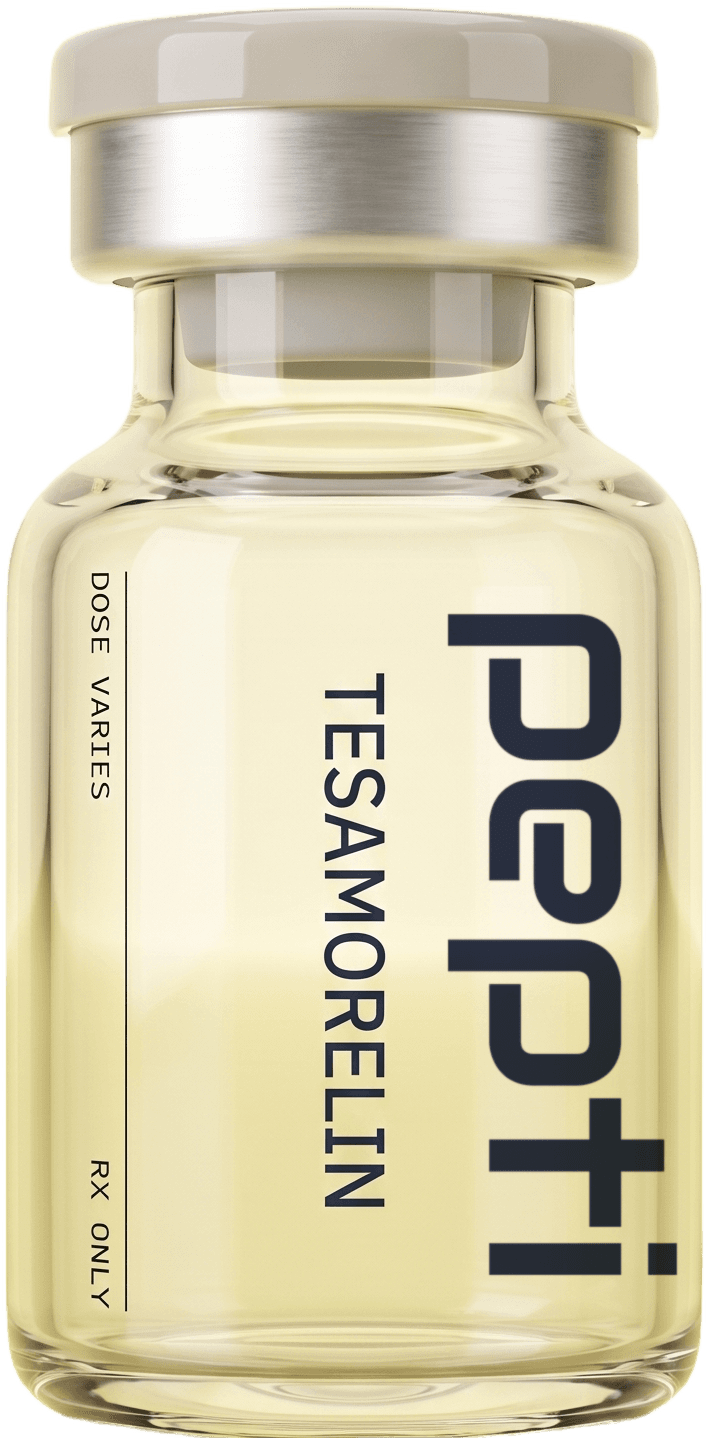
There is no single best online peptide provider, and any site that claims the title is advertising rather than informing you. What exists is a short list of criteria that separate a medical practice from a storefront: a real intake, a prescriber licensed in your state, a named licensed compounding pharmacy, labs when the molecule warrants them, all-in pricing, reachable clinical support, honest claims, cancellation you control, and a willingness to decline. Run those nine against any provider, including this one. Below, each criterion is stated first as something to check, then answered plainly for Pepti so you can see where we land rather than being told where.
This page goes further than the list. For each criterion it says what to look at, where the public record that answers it lives (state medical boards, state boards of pharmacy, the federal NPI registry, the FDA's own compounding pages), and how to read what you find. None of that requires an account with anyone, and most of it takes a few minutes.
Best Online Peptide Provider
The short answer
| What you want to compare | What to look at | Pepti, for reference |
|---|---|---|
| Entry cost | The all-in monthly price, not a headline | Priced on each product page, for example semaglutide and BPC-157 |
| Mid-range treatments | Whether the figure includes consultation and shipping | GHK-Cu and CJC-1295 / Ipamorelin, one figure each |
| Blends | Exactly what is in the vial, in milligrams, stated on the product page | KLOW lists every component and its amount |
| The top of the range | Whether a pen or a vial is included | CJC-1295 / Ipamorelin / Sermorelin, pen only |
| Billing | Subscription terms and how to stop them | Monthly subscription, cancelled in your account |
Each Pepti figure is one all-in monthly price covering medication, physician review, refill management and shipping. The figures themselves live on the product and cost pages, because they change and a reference page that types them goes stale.
Best Online Peptide Provider
Why "best" is the wrong question
A provider is not a product. It is a chain of accountable parties: the physician who writes the prescription, the pharmacy that compounds it, the laboratory that tests the lot, and the company that connects them and bills you. "Best" collapses that chain into a single ranking and hides which links are missing. The useful question is whether each link exists, whether it can be named, and whether you can verify it on a public record the provider does not control.
That framing is also how the FDA tells consumers to evaluate any online pharmacy. Its BeSafeRx program lists four signs of a likely-safe online pharmacy: it "always requires a doctor's prescription," it "provides a physical address and telephone number in the United States," it "has a licensed pharmacist on staff to answer your questions," and it "is licensed with a state board of pharmacy." Every one of those is a checkable fact rather than a claim, and the nine criteria below are that same logic extended to the prescriber, the labs, the pricing and the exit.
Best Online Peptide Provider
The nine criteria, and how we answer each
1. Is there a real medical intake?
What to check. It should ask about current conditions, current medications and supplements, allergies (especially to medications), cancer history, pregnancy or breastfeeding, height and weight, and what you have already tried, and it should take several minutes. Three questions and a card form is a checkout. A real intake also collects identity, because a prescription is written for a named, identified person and a pharmacy will not fill one for "customer 4471."
Where to check. Start the intake and stop before paying. Count the questions. Look for whether it asks about the things that would make a physician say no: a history of hormone-sensitive cancer for a growth-hormone secretagogue, a personal or family history of medullary thyroid carcinoma for a GLP-1, pregnancy for anything. If those questions are absent, nobody is planning to decline anyone.
Pepti. A full medical intake, which is what the assessment is. It asks about conditions, current medications and supplements, allergies, height and weight, what you are treating and your history with it, and it captures identity for the prescription. It is free, and completing it does not commit you to anything.
2. Is the prescriber licensed in your state?
What to check. Licensure follows your location, not the clinician's. A physician licensed only in Delaware cannot prescribe to a patient sitting in Texas, however good the video call is. It is a legal requirement rather than a feature, and it is the single most verifiable thing about any provider.
Where to check. Two public records. First, your state medical board's license lookup, which every state and DC runs and which shows license status, expiry and disciplinary history. Second, the federal NPI Registry at npiregistry.cms.hhs.gov, run by CMS, which lists every US clinician who bills or prescribes under a National Provider Identifier, with their credential, specialty taxonomy and state license numbers. The section "Verifying a prescriber yourself" below walks through both with a worked example.
Pepti. Every intake is reviewed by a physician licensed in the state where you are, and the service is open in all 50 states and DC because the physician footprint covers them. The physicians who review protocols and appear on the medically-reviewed bylines across the learn library are named, with their credentials and specialty, on those pages: Dr. Gene Lee, MD, Medical Director, board-certified in Family Medicine, and Dr. Laeeq Butt, MD, MBA, Chief Medical Officer, board-certified in Internal Medicine. Both are searchable in the NPI Registry by name.
3. Can the pharmacy be named?
What to check. The pharmacy carries legal responsibility for sterility, strength, labeling and beyond-use dating. You should be able to find out which one made what you are injecting, and then check it against that state's board of pharmacy license database, which is exactly what the FDA tells consumers to do: "Checking a pharmacy's license through your state board of pharmacy is an important step in knowing whether you are using a safe online pharmacy."
Where to check. The pharmacy label on your vial or cartridge carries the pharmacy's name and state. That name goes into the state board lookup. Before you have a vial, ask the provider directly and see whether the answer is a name or a deflection.
Pepti. Medication is compounded by independent, state-licensed, US FDA-registered, PCAB-accredited pharmacies, and we will tell you which one fills your prescription if you ask. The sourcing chain is described on the quality page, and every published lot report on /quality/lab-results states which pharmacy compounded that lot and which laboratory tested it.
4. Are labs available when they matter?
What to check. Growth-hormone secretagogues such as CJC-1295 / Ipamorelin and tesamorelin, hormonal complaints, and metabolic treatment usually warrant baseline markers. Repair peptides such as BPC-157 often do not. A provider that never orders labs for anything is not distinguishing between them, and a provider that demands a full panel for everything is charging you for a rule rather than a judgment.
Where to check. Ask what markers are drawn for the treatment you are considering and who reads them. The answer should be a physician, and it should differ by molecule.
Pepti. At-home blood testing covers hormonal, metabolic and thyroid markers without a lab visit, and physicians request it where it is warranted rather than as a blanket condition. Results are read by the reviewing physician and land in your account.
5. Is the pricing genuinely all-in?
What to check. Ask what the monthly total includes: medication, consultation, shipping, refills. Cheap headlines commonly exclude three of those four. Ask separately whether there is a membership fee, an intake fee, a "provider fee" at approval, or a shipping charge on refills, because those are the four places a low number hides its remainder.
Where to check. The provider's own pricing page, then the checkout screen before you enter a card. If the two numbers differ, the difference is the answer.
Pepti. One price per treatment covering medication, physician review, refill management and shipping, published on each product page and on its cost page (for example /cost/semaglutide, /cost/bpc-157, /cost/ghk-cu) rather than quoted on request. There is no separate membership charge on top of the treatment price. What drives peptide pricing generally is in how much do peptides cost.
6. Can you reach a clinician after you buy?
What to check. Care that ends at checkout was a sale. The realistic test is whether you can get a clinical answer on a Tuesday when something feels wrong: an injection-site reaction that is spreading, nausea on a GLP-1 that is not settling, a missed dose and what to do about it. A support inbox that answers billing questions is not that.
Where to check. Ask, before paying, how you reach the prescriber after the prescription is written, and whether it is the prescriber or a general queue.
Pepti. Messaging with your physician in your account, not only a support inbox. The same physician who reviewed your intake stays reachable for dose questions and side effects, and refills are reviewed rather than auto-approved.
7. Are the claims honest?
What to check. No compounded peptide is FDA approved. The FDA's own wording: "Compounded drugs are not FDA-approved. This means that FDA does not verify the safety, effectiveness or quality of compounded drugs before they are marketed." Outcome promises, timelines, pound figures and before-and-after images tied to a named medication are all things a legitimate provider does not do, and "FDA approved" on a compounded product is disqualifying on its own.
Where to check. Read the product page for the molecule you want and look for three things: the words "not FDA approved," an honest statement of whether human trials exist, and the absence of a promised result.
Pepti. Compounded medication is not FDA approved, most of these molecules are supported by preclinical research, and we do not promise outcomes. The learn library states that rather than working around it, and each product's reference page says in plain words whether randomized human trials exist for it.
8. Can you cancel without a phone call?
What to check. Look at the exit before the entrance. Pausing should be as easy as starting. A subscription that can be opened with three taps and closed only by a retention call is designed around the call.
Where to check. The provider's cancellation policy page, and then the account screen itself once you are in. If the only route is "contact us," that is the answer.
Pepti. Cancellation in your account, without a retention call. Refills run every 28 days, one vial per fill, and the subscription can be paused or cancelled from the same screen that shows your orders.
9. Can they say no?
What to check. A provider whose physicians approve everything is not reviewing anything, and being declined is evidence the review was real. Ask what proportion of intakes are declined, or what would cause one to be. A provider with no answer has no process.
Where to check. The intake itself. If it asks the questions that would justify a no (criterion 1), a no is possible. If it does not, it is not.
Pepti. A consultation does not guarantee a prescription, and physicians decline when the history warrants it. Where the peptide asked for is the wrong tool, the physician may suggest a different one from the catalog, or none.
Best Online Peptide Provider
Verifying a prescriber yourself
The state medical board lookup
Every state medical board publishes a free license search. Enter the physician's name and the state you live in. The record should show an active license, its expiry date, and any public disciplinary action. A physician who is "licensed in 40 states" will appear in 40 separate state databases; the one that matters is yours. If the provider will not tell you which physician reviewed your intake, you cannot run this check, and that is itself a result.
The NPI Registry, with a worked example
The NPI Registry (npiregistry.cms.hhs.gov) is the public face of the National Plan and Provider Enumeration System run by CMS. It is free, requires no login, and can be searched by NPI number or by name and state. Each individual record shows the clinician's name, credential, enumeration type (NPI-1 is an individual, NPI-2 an organization), primary taxonomy (their specialty), practice locations, and the state license numbers they have registered.
A worked example. Searching the registry for last name "Butt," first name "Laeeq" returns one individual record: credential M.D., primary taxonomy Internal Medicine, with state license numbers listed against the states where he practices. That record matches what the Pepti learn pages say about Dr. Laeeq Butt (board-certified Internal Medicine). The same search for Dr. Gene Lee returns a Family Medicine record, matching his stated specialty. Neither lookup took more than a minute, and neither depended on anything Pepti published.
What to do when the names do not match
If the physician named on your prescription is not the one the provider advertises, that is not automatically a problem; larger practices have several reviewing physicians. It is a problem if the physician on the prescription cannot be found in your state's medical board database at all, or if the provider names no physician anywhere. In either case, stop and ask.
Best Online Peptide Provider
Verifying a pharmacy yourself
State-licensed versus FDA-registered
These are two different things and a legitimate provider will describe both accurately. State licensure is the license to operate as a pharmacy in a given state, issued and policed by that state's board of pharmacy. FDA registration is a federal establishment registration. Compounding pharmacies operating under section 503A are overseen day to day by state boards, not the FDA: "State boards of pharmacy have primary responsibility for the day-to-day oversight of state-licensed pharmacies that are not registered with FDA as outsourcing facilities." The pharmacies Pepti works with are state-licensed and FDA-registered, and the quality page describes them in those terms.
The state board of pharmacy lookup
The FDA's BeSafeRx program links to the board of pharmacy license database for every state, DC and the territories, and tells consumers that a pharmacy not listed in that database should not be used. Many compounding pharmacies ship into states other than the one they are physically in; for that they hold a non-resident pharmacy license in the destination state, which also appears in that state's database. So the check is: pharmacy name from the label, looked up in the board database for the state where you live, and separately in its home state.
503A and 503B, in plain terms
Section 503A of the Federal Food, Drug, and Cosmetic Act describes the conditions under which a compounded drug is exempt from FDA pre-market approval, current good manufacturing practice requirements, and the usual labeling rules. The core condition is that the drug "must be compounded based on the receipt of valid patient-specific prescriptions" by a licensed pharmacist in a state-licensed pharmacy or by a licensed physician. Section 503B, added by the Drug Quality and Security Act, created outsourcing facilities, which are subject to CGMP, inspected by the FDA on a risk-based schedule, and may compound without a patient-specific prescription. A telehealth peptide provider prescribing to individual patients is, almost always, a 503A arrangement: your named prescription, filled by a state-licensed pharmacy. That is the model Pepti uses.
What a certificate of analysis shows, and what it does not
A certificate of analysis (COA) is the testing laboratory's report on one specific lot. A real one names the laboratory, the lot number, the test date, and each test with its method, acceptance criterion and result. The tests that matter for an injectable are sterility (USP <71>), bacterial endotoxins (USP <85>), potency against the labeled strength, purity, and identity; pH, particulate matter and container-closure integrity are also reported on some lots. A COA applies to the lot on the certificate and to nothing else, and a laboratory does not always run every test on every lot, so a blank is "not tested on this lot," not "failed."
Pepti publishes lot-by-lot third-party results as text on /quality/lab-results, transcribed from the signed certificates with the original PDF attached where available and the pharmacy and laboratory named on every entry. For the specific lot in your hand, batch-specific certificates and applicable potency, sterility and endotoxin reports are available to patients on request with the medication name and lot number from the label. The lot number is printed on the pharmacy label next to the medication name, strength and beyond-use date.
PCAB accreditation
PCAB, the Pharmacy Compounding Accreditation Board, is a voluntary accreditation for compounding pharmacies covering quality and safety processes, sterile compounding procedures, ingredient sourcing and documentation, and staff training. It is not a license and not a substitute for the state board lookup, but it is an independent inspection layer on top of licensure. Every Pepti order is dispensed by a PCAB-accredited pharmacy, and the accreditation is described on the quality page.
Best Online Peptide Provider
What the law actually requires of a compounded peptide
Compounded means not FDA approved, by definition
This is not a criticism of compounding. It is what the category is. Compounding exists for patients whose needs are not met by an approved product, and the trade-off is that the FDA does not review the compounded product before it is dispensed. A provider that says its compounded semaglutide or BPC-157 is "FDA approved" is either confused about its own product or lying, and either disqualifies it under criterion 7.
Where the active ingredient may come from
A 503A pharmacy may compound only with bulk drug substances that meet one of three conditions: the substance complies with an applicable USP or NF monograph; it is a component of an FDA-approved drug; or it appears on the FDA's 503A bulks list. Bulk substances must also come with a valid certificate of analysis and from an FDA-registered manufacturer. Semaglutide and tirzepatide satisfy the second condition because each is the active ingredient of approved products. Most research peptides are neither monographed nor components of approved drugs, which is why their status depends on the bulks-list process.
The interim categories, and why 2026 matters
While nominated substances await a final bulks-list decision, the FDA has sorted them into three interim categories. Category 1 substances may be used under stated conditions without the agency intending enforcement; Category 2 substances have "identified safety concerns" and the FDA "would consider taking action against a compounder" using them; Category 3 substances lack sufficient nomination data. Those placements moved during 2026, and the FDA's Pharmacy Compounding Advisory Committee, which advises on 503A and 503B compounding questions, met on July 23–24, 2026. The practical consequence for choosing a provider: a page written in 2023 about which peptides are "restricted" is unreliable now, and a provider that cannot tell you the current status of a molecule it sells is not tracking it. The current position for each product is on its reference page and summarized in are peptides FDA approved.
Best Online Peptide Provider
What "best" depends on, for you specifically
| Your situation | What it changes |
|---|---|
| Where you live | Physician licensure and pharmacy licensure both vary, so availability differs by location and honest providers tell you |
| What you are treating | Not every provider carries every category, and a metabolic service is not a repair service |
| Whether you want care or a transaction | Some people want a prescriber they can message; some want the cheapest compliant route |
| Your tolerance for needles | Whether pens or nasal options exist matters more than any marketing claim. See vial vs pen, which should I choose |
| Whether you have labs already | Bringing recent results speeds a real review and is wasted on a fake one |
| What you are already taking | Continuing an existing GLP-1 dose, or stacking with testosterone therapy, changes who can help you |
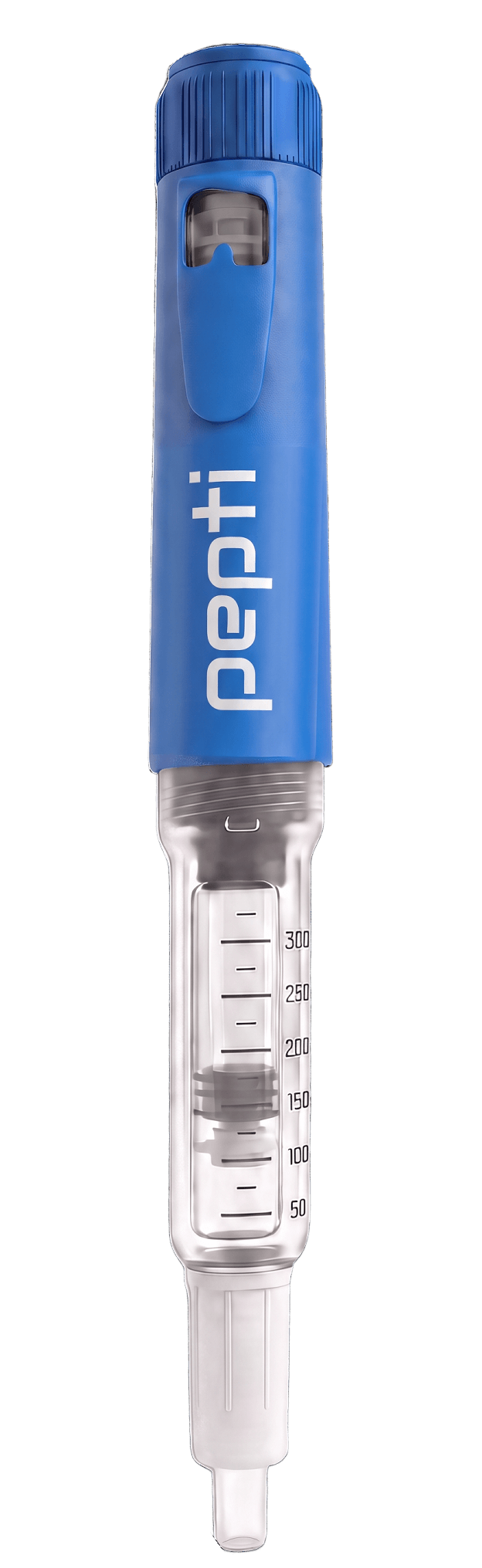
Pepti serves all 50 states and DC, a statement about physician licensure and pharmacy reach together that is generated from the same state-availability data that runs the checkout. A provider built around GLP-1 weight management will have semaglutide and tirzepatide and little else; one built around recovery will have BPC-157 and TB-500 and no metabolic depth. Pepti's catalog runs across weight, recovery, anti-aging, cognitive, sleep, immune and intimacy categories, with a physician deciding which, if any, fits; the pepti Pen is offered for some treatments and nasal sprays for a few. Breadth is only useful if the review is real, which is why it sits after the nine criteria rather than among them.
Best Online Peptide Provider
Providers versus the grey market
| A licensed provider | A research-chemical storefront | |
|---|---|---|
| Requires a prescription | Yes | No, and their terms say the product is not for human use |
| What arrives | A labelled medication with your directions | Powder or a vial with a sticker |
| Sterility and strength | Compounded to USP standards under state board oversight | Unverified |
| If something goes wrong | A prescriber and a reportable event | Nobody |
| Price | Higher, and it buys the column above | Lower |
The full comparison is in research peptides vs prescription peptides.
Why "not for human use" is the whole story
A research-chemical vendor's terms of sale state the product is not for human consumption. That sentence is the legal basis on which the vendor operates, and it means no pharmacist, no pharmacy license, no prescriber, no sterility standard and no accountable party stand behind what arrives. The FDA's first warning sign for an unsafe online pharmacy is that it "does not require a doctor's prescription." The comparison table is not close, and it is not meant to be.
Best Online Peptide Provider
Red flags that should end the comparison
| What you see | What it means |
|---|---|
| "Best" or "number one" with no criteria attached | Advertising |
| "No prescription needed" | Not a provider. A chemical seller |
| "FDA approved" on a compounded peptide | False, and disqualifying on its own |
| Guaranteed approval | Nobody is reading your intake |
| No named clinician or pharmacy | The two accountable parties are hidden |
| Results promised in a set number of weeks | Not something any honest prescriber says |
| Affiliate-heavy ranking articles with no methodology | The ranking is paid placement in most cases |
| Cancellation by phone only | Check it before you subscribe |
The verification steps are in how to tell if a peptide seller is legitimate.
The FDA's own list of warning signs
The BeSafeRx page adds several that belong here: a pharmacy "not licensed in the United States and by your state board of pharmacy," one that "does not have a licensed pharmacist on staff to answer your questions," medication that arrives with altered appearance, damaged packaging, foreign-language labels or missing expiration dates, prices that "seem too good to be true," charges for products never ordered, and no clear written protection of your personal and financial information. Every one of those maps onto a criterion above.
Best Online Peptide Provider
Running the nine criteria in twenty minutes
Minutes one to five: the intake. Start the provider's intake without paying. Count the questions. Confirm it asks about conditions, medications, allergies, cancer history and pregnancy, and that it captures identity. Note whether it asks anything that could produce a no.
Minutes five to ten: the prescriber. Find a named physician anywhere on the site. Search your state medical board for that name. Search the NPI Registry for the same name and confirm credential and specialty match. If no physician is named, write "fails criterion 2" and move on.
Minutes ten to fifteen: the pharmacy and the labs. Ask, by message or from the quality page, which pharmacy compounds the medication. Look it up in your state's board of pharmacy database. Look for published lot results, and check that they name the laboratory and lot, not just "third-party tested."
Minutes fifteen to twenty: the money and the exit. Compare the pricing page to the checkout total. Find the cancellation policy and confirm it can be done in the account. Send one clinical question through whatever channel the provider offers and see who answers, and how fast.
For Pepti, the corresponding answers are: the assessment; the named physicians on the learn pages; the quality page and lab results; the cost pages such as /cost/semaglutide and /cost/bpc-157; and cancellation in the account.
Best Online Peptide Provider
What the evidence shows, honestly
No provider can change the underlying evidence, and choosing well does not make a preclinical molecule into a proven one.
GLP-1s: real trials behind the branded products
Semaglutide and tirzepatide have large randomized controlled trials behind the branded, FDA-approved products (the STEP program for semaglutide in adults with obesity or overweight; the SURMOUNT program for tirzepatide in the same population). Compounded semaglutide and compounded tirzepatide share the active ingredient with those products without sharing the approval, and the trial evidence describes the approved products, not the compounded preparations. A provider should say both halves of that sentence. The details are on what is semaglutide and what is tirzepatide.
Tesamorelin: an approved product for one indication
Tesamorelin has an FDA-approved product for a specific indication, reduction of excess abdominal fat in HIV-associated lipodystrophy, supported by randomized trials reported in the New England Journal of Medicine in 2007. Compounded tesamorelin is not that product, and use outside that indication is a physician's decision on the basis of that evidence, not an extension of the approval.
GHK-Cu: the deepest literature among the repair peptides
GHK-Cu has the largest published body of work among the repair and skin peptides, including human skin studies, reviewed in Biomedical Research International in 2015. That is more than most peptides on any provider's list can claim, and it is still not a randomized trial program of the GLP-1 kind.
BPC-157 and the rest: animal and cell studies plus prescriber experience
BPC-157, TB-500, KPV, epithalon and most of the remaining catalog are supported by animal and cell studies and by clinical experience among prescribers. There are no large randomized human trials of BPC-157 for tendon or soft-tissue injury; the case for it rests on rodent tendon, muscle and gastrointestinal work such as the Achilles studies in the Journal of Orthopaedic Research in 2003 and 2006. A provider that presents that as settled human efficacy has failed criterion 7.
The best a provider can do with the evidence is describe it accurately, prescribe conservatively, and tell you when something is not working so you can stop. A provider that presents preclinical findings as settled outcomes has failed the criterion that matters most, whatever its pricing looks like.
References
What this is based on.
References
- Chang CH, Tsai WC, Hsu YH, Pang JH. Pentadecapeptide BPC 157 enhances the growth hormone receptor expression in tendon fibroblasts · Molecules (2014) · PMID 25415472
- Krivic A, Anic T, Seiwerth S, et al.. Achilles detachment of rat and stable gastric pentadecapeptide BPC 157 · Journal of Orthopaedic Research (2006) · PMID 16583442
- Sikiric P, Seiwerth S, Rucman R, et al.. Stable gastric pentadecapeptide BPC 157: novel therapy in gastrointestinal tract · Current Pharmaceutical Design (2011) · PMID 21548867
- Cerovecki T, Bojanic I, Brcic L, Radic B, et al.. Pentadecapeptide BPC 157 (PL 14736) improves ligament healing in the rat · J Orthop Res (2010) · PMID 20225319
- Sikiric P, Seiwerth S, Rucman R, Turkovic B, et al.. Stable gastric pentadecapeptide BPC 157-NO-system relation · Curr Pharm Des (2014) · PMID 23755725
- Cox HD, Miller GD, Eichner D. Detection and in vitro metabolism of the confiscated peptides BPC 157 and MGF R23H · Drug Test Anal (2017) · PMID 28035768
- Thomas A, Görgens C, Guddat S et al.. Simplifying and expanding the screening for peptides <2 kDa by direct urine injection, liquid chromatography, and ion mobility mass spectrometry · J Sep Sci (2016) · PMID 26578461
- Farrar JT, Young JP Jr, LaMoreaux L, Werth JL et al.. Clinical importance of changes in chronic pain intensity measured on an 11-point numerical pain rating scale · Pain (2001) · PMID 11690728
- Meyer JD, Ho B, Manning MC. Effects of conformation on the chemical stability of pharmaceutically relevant polypeptides · Pharm Biotechnol (2002) · PMID 11987755
- Xu C, Sun L, Ren F, Huang P, et al.. Preclinical Safety Evaluation of Body Protective Compound-157, a Potential Drug for Treating Various Wounds · Regul Toxicol Pharmacol (2020) · PMID 32334036
- He L, Feng D, Guo H, et al.. Pharmacokinetics, distribution, metabolism, and excretion of body-protective compound 157, a potential drug for treating various wounds, in rats and dogs · Front Pharmacol (2022) · PMID 36588717
- Lee E, Padgett B. Intra-Articular Injection of BPC 157 for Multiple Types of Knee Pain · Altern Ther Health Med (2021) · PMID 34324435
Citations are provided for educational purposes. They do not constitute medical advice. Always discuss any peptide protocol with your prescribing physician.
Common questions
Best Online Peptide Provider, answered.
Nobody can answer that for you honestly, because it depends on your location, what you are treating and whether you want ongoing care or the cheapest compliant route. The nine criteria above are a comparison you can run yourself on any provider, and the twenty-minute sequence shows how.
All-in monthly price, whether the prescriber is licensed in your state, whether the pharmacy can be named, whether labs are available, whether you can message a clinician afterwards, and how you cancel. Each of those is checkable on a public record or on the provider's own account screen rather than on its marketing page.
Treat them carefully. Most are affiliate placements with no stated methodology. An article that never mentions licensure, pharmacy accountability or FDA approval status is not evaluating medicine.
It depends on the molecule, on the format, and for GLP-1s on the dose rung, and a legitimate figure is one that includes medication, physician review, refills and shipping. Pepti's figures are published on each product's cost page, for example /cost/semaglutide and /cost/bpc-157. What drives that is in how much do peptides cost.
There is no rule forcing an answer, which is exactly why asking is useful. A provider that will not say is telling you something about how it handles the rest. Once you have a vial, the pharmacy's name and state are on the label regardless, and the FDA tells consumers to look that name up in the state board of pharmacy database.
Compounded peptides are generally not covered, though an approved product for an approved indication may be. Check before paying cash, using does insurance cover peptide therapy.
Usually, if you disclose it. A prescriber can often continue an existing GLP-1 rung rather than restarting at the bottom, but only if they know what you have been taking and for how long. Bring the medication name, strength and the date of your last dose to the intake.
Two lookups. Your state medical board's public license search shows status, expiry and any discipline for a license in your state. The federal NPI Registry at npiregistry.cms.hhs.gov shows the clinician's credential, specialty and registered state license numbers, free and without a login. A physician who cannot be found in either has no business prescribing to you.
A 503A pharmacy compounds for an identified patient on a valid, patient-specific prescription and is overseen day to day by its state board of pharmacy. A 503B outsourcing facility is registered with the FDA, subject to current good manufacturing practice, inspected by the FDA on a risk-based schedule, and may compound without a patient-specific prescription. Telehealth peptide prescriptions to individuals are almost always 503A.
No. FDA registration is an establishment registration of the pharmacy; it says nothing about approval of any product. Compounded drugs are not FDA approved, in the FDA's own words. A provider that blurs the two is failing criterion 7.
The laboratory's name, the lot number, the test date, and each test with its method, acceptance criterion and result. For an injectable, sterility, bacterial endotoxins, potency, purity and identity are the tests that matter. It applies only to the lot named on it. Pepti's published certificates are on /quality/lab-results and are transcribed as text with the original attached.
Pepti serves all 50 states and DC, with a physician licensed in your state reviewing every intake. Availability of an individual product can still depend on the compounding pharmacy's licensure for that state, and the product page states it.
Because something in the history makes the requested peptide inappropriate: a relevant cancer history for a growth-hormone secretagogue, pregnancy or breastfeeding, an interacting medication, or a problem the peptide does not address. A decline can come with a suggestion of a different treatment, or none. A consultation does not guarantee a prescription. The free assessment goes to a physician licensed in your state. A consultation does not guarantee a prescription.
Next step
See what a physician recommends for you.
A licensed physician in your state reviews your intake and decides what is appropriate. A consultation does not guarantee a prescription.