Weight Loss · Reference
Adipotide Benefits: What the Mouse and Monkey Research Looked At
This page takes each claimed benefit in turn and says what was studied, in what, and how much weight it can bear. It is organised by benefit rather than by paper.
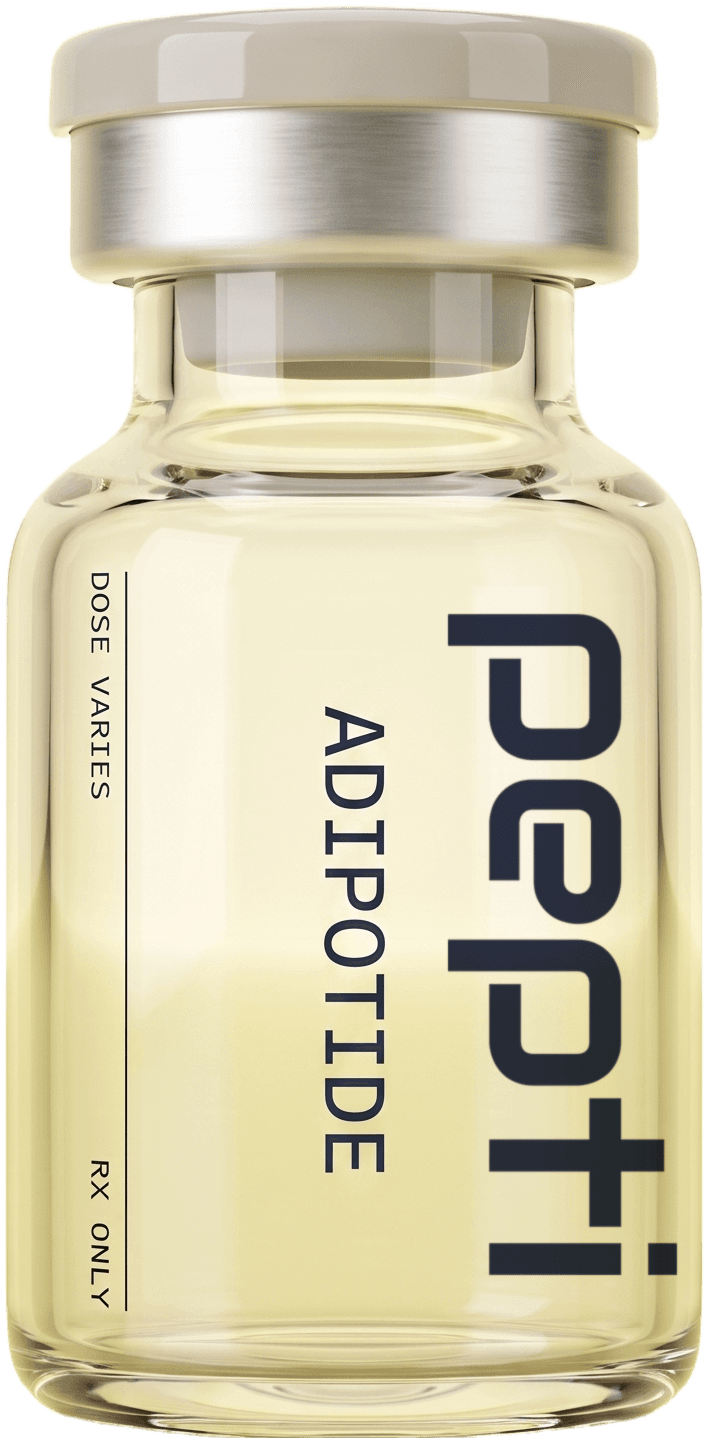
Treatments mentioned
Every benefit claimed for adipotide comes from mouse and monkey studies: loss of white fat tissue in obese mice (Nature Medicine, 2004), loss of white fat with improved insulin resistance in spontaneously obese monkeys (Science Translational Medicine, 2011), and faster glucose clearance in obese mice before their weight changed (Diabetes, 2012). There is no published human efficacy data of any kind. The only registered human study, a phase 1 dose-finding trial, enrolled four men and was terminated without reporting results. The same monkey study that reported the fat loss also reported dose-related changes in kidney tubule function. Adipotide is a compounded prescription injection at Pepti, and compounded medications are not FDA approved.
For the biology, the FDA position and the full product reference, read what is adipotide; for the units and milligrams on the vial, read adipotide dosage.
Adipotide Benefits
The short answer
| Claimed benefit | What the evidence is | Strength of evidence |
|---|---|---|
| Loss of white fat tissue | Mice (Nature Medicine, 2004); spontaneously obese monkeys (Science Translational Medicine, 2011) | Preclinical only; the monkey study is the strongest piece |
| Fat lost rather than lean mass or water | Monkeys, measured by MRI and DEXA (2011) | Preclinical only |
| Improved insulin resistance | Monkeys (2011) | Preclinical only |
| Faster glucose clearance, independent of weight | Obese mice (Diabetes, 2012) | Preclinical only |
| Shifts in fat-tissue metabolism toward a lean pattern | Mouse microarray work (2012) | Preclinical only; a laboratory measure |
| Any of the above in people | One phase 1 trial, four participants, terminated, no results posted | None |
The honest summary of the table: a well-designed primate study, two mouse papers, an organ-toxicity signal in the same primate study, and no human data at all.
Adipotide Benefits
What adipotide is, in one paragraph
Adipotide is a synthetic two-part peptide, written in the literature as CKGGRAKDC-GG-(D)(KLAKLAK)2. The first segment is a homing sequence that binds prohibitin, a protein reported on the surface of the blood vessels that supply white fat. The last segment is a pro-apoptotic motif that disrupts mitochondrial membranes and triggers programmed cell death in whatever cell it enters. The design is an address plus a payload, and the described effect is loss of the small blood vessels feeding white fat, after which the fat tissue, cut off from its supply, is resorbed. It came out of the laboratories of Wadih Arap and Renata Pasqualini at the University of Texas MD Anderson Cancer Center, it is also called prohibitin-targeting peptide-1, and it is not a GLP-1 medication, an appetite drug or a hormone. Every benefit below hangs off that anti-vascular design.
Adipotide Benefits
Benefit 1: Loss of white fat tissue
What the research describes. The founding 2004 paper in Nature Medicine reported that targeting the pro-apoptotic motif to prohibitin in fat-tissue blood vessels caused ablation of white fat in obese mice, with resorption of established fat tissue and normalisation of metabolic measures. The authors described it as obesity reversal in the animals without detectable adverse effects at the doses they used.
The 2011 paper in Science Translational Medicine, by Barnhart, Christianson, Hanley and colleagues, took the compound into spontaneously obese Old World monkeys. It reported targeted cell death within the blood vessels of white fat and rapid weight loss.
Evidence type. Animal: mice, then monkeys.
Strength. This is the core claim and the best-supported one, and it is still entirely preclinical. Mouse fat biology is one of the areas where rodent results have most often failed to carry over to people, which is a point the same group made when it moved to primates. The monkey study is fifteen years old and remains the high-water mark of the evidence. No study has measured fat loss from adipotide in a person.
Adipotide Benefits
Benefit 2: Fat lost rather than muscle or water
What the research describes. The 2011 monkey study used magnetic resonance imaging and dual-energy x-ray absorptiometry (DEXA) to confirm that what the animals lost was white adipose tissue specifically, rather than lean mass or water.
Evidence type. Animal, with imaging endpoints.
What it means. This is the design feature that makes the monkey paper stronger than most of the preclinical work behind compounded peptides: a spontaneously obese primate model rather than an engineered rodent, and imaging rather than scale weight alone. It says something about what was lost in those monkeys. It says nothing about what would happen in a person, at a compounded dose, by subcutaneous injection, because none of that has been measured.
Adipotide Benefits
Benefit 3: Improved insulin resistance
What the research describes. The same 2011 monkey study reported improved insulin resistance alongside the loss of white fat.
Evidence type. Animal.
Strength. One primate study. Nothing in people. If you take insulin or any other medication that lowers blood glucose, it belongs on your intake regardless, because there is no established interaction list for adipotide.
Adipotide Benefits
Benefit 4: Faster glucose handling, before weight changed
What the research describes. A 2012 paper in Diabetes reported a finding the designers had not predicted. In obese mice, the pro-apoptotic peptide improved glucose tolerance within two to three days, before meaningful weight change and independently of food intake. The paper reported changes in serum insulin, triglycerides, fatty acids and acylcarnitines.
Evidence type. Animal.
What it means. The paper argues that whatever adipotide is doing, it is doing something to how fat tissue works and not only to how much of it there is. Its authors framed it as evidence about the role of fat-tissue blood vessels in glucose control, not as a case for the compound as a treatment. It was a mouse study, run at doses and by routes that do not map onto a compounded vial.
Adipotide Benefits
Benefit 5: Fat-tissue metabolism shifting toward a lean pattern
What the research describes. Microarray work in the 2012 Diabetes paper described pathways of mitochondrial function and branched-chain amino acid breakdown in fat tissue shifting back toward the pattern seen in lean animals.
Evidence type. Animal, laboratory measure.
Strength. This is a gene-expression readout in mouse tissue. It is interesting biology and the furthest of these claims from anything a person would notice.
Adipotide Benefits
The finding that sits beside every benefit: the kidney signal
A benefits page that leaves this out is selling something. The 2011 monkey study reported that, at the doses the investigators determined to be optimal, monkeys from three different species showed changes in renal proximal tubule function. The authors described those changes as predictable, meaning dose-related rather than random, and reversible on stopping treatment.
| What was reported | What it means | What it does not mean |
|---|---|---|
| Dose-related changes in kidney tubule function, in three monkey species | A genuine organ signal in the most relevant animal model available | Not a report of irreversible kidney injury |
| Changes reversed after treatment stopped | The signal resolved in those animals | Not evidence that it would be as reversible in people |
| Seen at doses judged optimal for the fat effect | The benefit and the signal came at the same doses | No safe human dose has been established |
The structural reason is that prohibitin is not exclusive to fat vasculature. The proximal tubule of the kidney is dense with mitochondria and handles heavy reabsorptive traffic, and it is where peptide constructs of this size tend to be taken up. That is why kidney health belongs on the intake, why courses are short and supervised, and why the refill is the point at which a physician reviews whether continuing is appropriate. The practical detail is in adipotide side effects.
Adipotide Benefits
The mechanism was disputed
In 2012, Science Translational Medicine published a comment by Criscione arguing that the weight loss in the monkey study might reflect a direct effect of adipotide on food consumption rather than the vascular-ablation mechanism the authors proposed. The original group published a reply. The headline finding is not disputed, but how it happened was contested in the literature within months of publication and was never settled by further primate work. When you read that adipotide "kills the blood supply to fat," that is the designers' proposed mechanism, not a settled one.
Adipotide Benefits
What human research exists
There are no randomised controlled trials of adipotide in humans and no published human efficacy data of any kind.
| Human study | What happened |
|---|---|
| NCT01262664, registered December 2010 at MD Anderson | A first-in-man phase 1 trial of Prohibitin-TP01 in men with metastatic or otherwise incurable prostate cancer and a BMI over 30 |
| Goal | Dose-finding: to find the highest tolerable dose, with safety as the object |
| Enrolment | First patient enrolled 24 May 2012; four participants in total |
| Outcome | Terminated per the principal investigator's request; completion date 2 January 2019; no results posted, none published |
| What came next | No phase 2 study has ever been registered |
So the human evidence is not "limited" or "early." There is none. Four men with advanced cancer were dosed in a study that stopped without reporting, and that is the whole human record.
Adipotide Benefits
What the evidence does not establish
- That the mechanism works in people. Prohibitin is present in the blood vessels of human white fat; whether targeting it produces the monkey result in a person has never been tested.
- An effect size, a timeline or a dose-response relationship in humans, because no human study reported outcomes.
- Kidney safety in humans at any dose. The only organ signal in the best animal model is a kidney one.
- What happens beyond a few weeks of treatment. There is no long-term data in any species.
- Efficacy for any condition as an approved treatment. Adipotide is not approved for anything, anywhere.
Adipotide Benefits
How it compares with options that have human trials
If the reason you are reading about adipotide is weight, the evidence gap with other options is wide, and a physician will usually say so.
| Option | Human evidence | Mechanism |
|---|---|---|
| Adipotide | None | Targets blood vessels supplying white fat (proposed) |
| Semaglutide, tirzepatide | Large randomised human trials | Gut-hormone receptors; appetite |
| AOD-9604 | Six randomised trials of oral and intravenous dosing; the largest found no significant weight loss over placebo | Growth hormone fragment acting on fat-cell signalling (animal work) |
| 5-Amino-1MQ | Animal work | Inhibits an enzyme inside fat cells |
The comparison pages are best peptides for weight loss, what is AOD-9604 and what is 5-Amino-1MQ.
Adipotide Benefits
How Pepti supplies adipotide
| Product | What is in it | Typical directions | Price |
|---|---|---|---|
| Adipotide | 5 mL vial, 1 mg/mL (5 mg adipotide per vial) | 0.25 mL (25 units) subcutaneously once daily Monday through Friday; 20 doses, about 4 weeks | $239/mo |
The price is all-in, covering medication, physician review, refill management and shipping, with no separate membership fee. Pepti is cash-pay and does not bill insurance. Vials are multi-dose solutions shipped ready to use, refrigerated with ice packs, with sterile syringes and alcohol prep pads. Refills run every 28 days, one vial per fill. Adipotide is supplied as a vial and syringe only. Your physician sets your directions after reviewing your intake, and they are printed on the vial.
Adipotide Benefits
Where to get adipotide prescribed
Adipotide cannot be bought legitimately without a prescription. Sites selling it "for research use only" are not accountable for identity, purity, sterility or concentration. The prescription route:
- Complete a free online intake covering your history, medications, kidney health and what you want help with.
- A physician licensed in your state reviews it, usually within 24 hours.
- If it is appropriate, a PCAB-accredited, FDA-registered US 503A compounding pharmacy prepares it to that prescription. Lot test results are published at /quality/lab-results.
- It ships refrigerated with your directions printed on the vial.
- Your physician stays reachable for questions, side effects and the review at each refill.
Pepti prescribes adipotide in every state except Oklahoma, plus DC For many people asking about fat loss, the physician's answer is that adipotide is not the right first conversation, and a consultation does not guarantee a prescription.
References
What this is based on.
References
- Barnhart KF, Christianson DR, Hanley PW et al.. A peptidomimetic targeting white fat causes weight loss and improved insulin resistance in obese monkeys · Sci Transl Med (2011) · PMID 22072637
- Kolonin MG, Saha PK, Chan L, Pasqualini R, Arap W. Reversal of obesity by targeted ablation of adipose tissue · Nat Med (2004) · PMID 15133506
- Kim DH, Sartor MA, Bain JR et al.. Rapid and weight-independent improvement of glucose tolerance induced by a peptide designed to elicit apoptosis in adipose tissue endothelium · Diabetes (2012) · PMID 22733798
- Criscione L. Comment on "A peptidomimetic targeting white fat causes weight loss and improved insulin resistance in obese monkeys" · Sci Transl Med (2012) · PMID 22539771
- Barbu EM, Shirazi F, McGrath DM et al.. An antimicrobial peptidomimetic induces Mucorales cell death through mitochondria-mediated apoptosis · PLoS One (2013) · PMID 24098573
- Hossen N, Kajimoto K, Akita H, Hyodo M, Harashima H. A comparative study between nanoparticle-targeted therapeutics and bioconjugates as obesity medication · J Control Release (2013) · PMID 23871959
Citations are provided for educational purposes. They do not constitute medical advice. Always discuss any peptide protocol with your prescribing physician.
Common questions
Adipotide Benefits, answered.
In obese mice, adipotide was reported to ablate white fat and improve glucose tolerance. In spontaneously obese monkeys, it was reported to cause loss of white fat, confirmed by imaging, with improved insulin resistance. None of these has been tested in a human study that reported results.
Nobody knows. There is no published human efficacy data. The only human study, a phase 1 dose-finding trial in four men with advanced prostate cancer and obesity, was terminated at the investigator's request and never reported results.
The proposed mechanism is that it binds prohibitin on the blood vessels supplying white fat and kills the cells lining those vessels, after which the fat tissue is resorbed. A 2012 published comment argued the monkey weight loss might instead reflect reduced food intake, and that question was never settled.
No study has shown that. The described mechanism is systemic: the peptide travels in the blood to a protein found on fat-tissue vessels throughout the body. Injecting at a particular site is not a way to direct it at fat in that area.
The 2011 monkey study reported improved insulin resistance, and a 2012 mouse study reported faster glucose clearance within two to three days, before weight changed. Neither has been tested in people.
There is no basis for saying so. Semaglutide and tirzepatide have large randomised human trials; adipotide has none. For most people whose goal is weight, the GLP-1 medications are the first conversation.
The main one is the kidney signal: the 2011 monkey study reported dose-related, reversible changes in kidney tubule function in three species. There is no human data on whether that happens in people. The other is the absence of any human efficacy data.
The registry records it as terminated per the principal investigator's request, with four participants enrolled. No results were posted and none have been published, so the reason behind the request is not on the public record.
There is no human answer. The 2012 mouse study reported glucose changes within two to three days and the monkey dosing ran for weeks, but no human study measured any outcome, so no one can say when or whether a person would notice anything.
No. It does not appear in any category of the FDA's 503A nominations list, so the FDA has not evaluated it either way. It is not approved for anything, and compounded medications are not FDA approved.
At Pepti, $239 a month, all-in, covering medication, physician review, refill management and shipping.
Bloodwork is not required for any Pepti treatment. If your physician wants labs for your care, they'll ask through your account. The free assessment goes to a physician licensed in your state. A consultation does not guarantee a prescription.
Related answers
Keep reading.
- Adipotide: What It Is, Where to Get It Prescribed, and What It Costs
- Adipotide Dosage: How Pepti Prescribes It, in Units, mL and mg
- Adipotide for Men: What Research Has Looked At, and What to Weigh First
- Adipotide for Women: What Research Has Looked At, and What Rules It Out
- AOD-9604 Benefits: What the Research Actually Shows
Next step
See what a physician recommends for you.
A licensed physician in your state reviews your intake to see whether treatment fits your history. A consultation does not guarantee a prescription.