Weight Loss · Reference
Adipotide: What It Is, Where to Get It Prescribed, and What It Costs
This page covers what Adipotide is, the mechanism its designers described, what the mouse and monkey research does and does not establish, the renal finding in primates and what came of the one human program, where it currently stands with the FDA, how it is dosed, and how to get it prescribed.

Reviewed by Dr. Gene, MD · Board-certified Family Medicine
Every Pepti prescription is reviewed by a licensed U.S. physician before it's dispensed — and only provided if clinically appropriate.
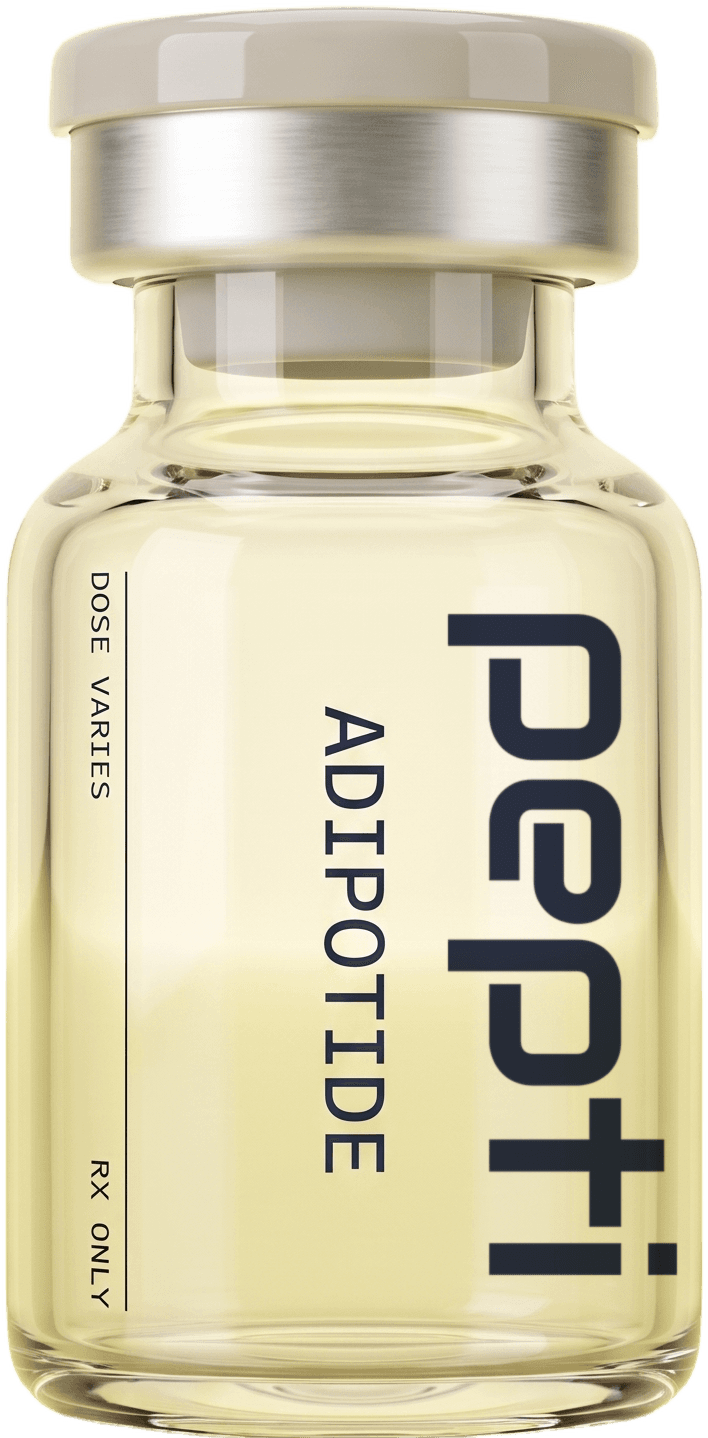
Treatments mentioned
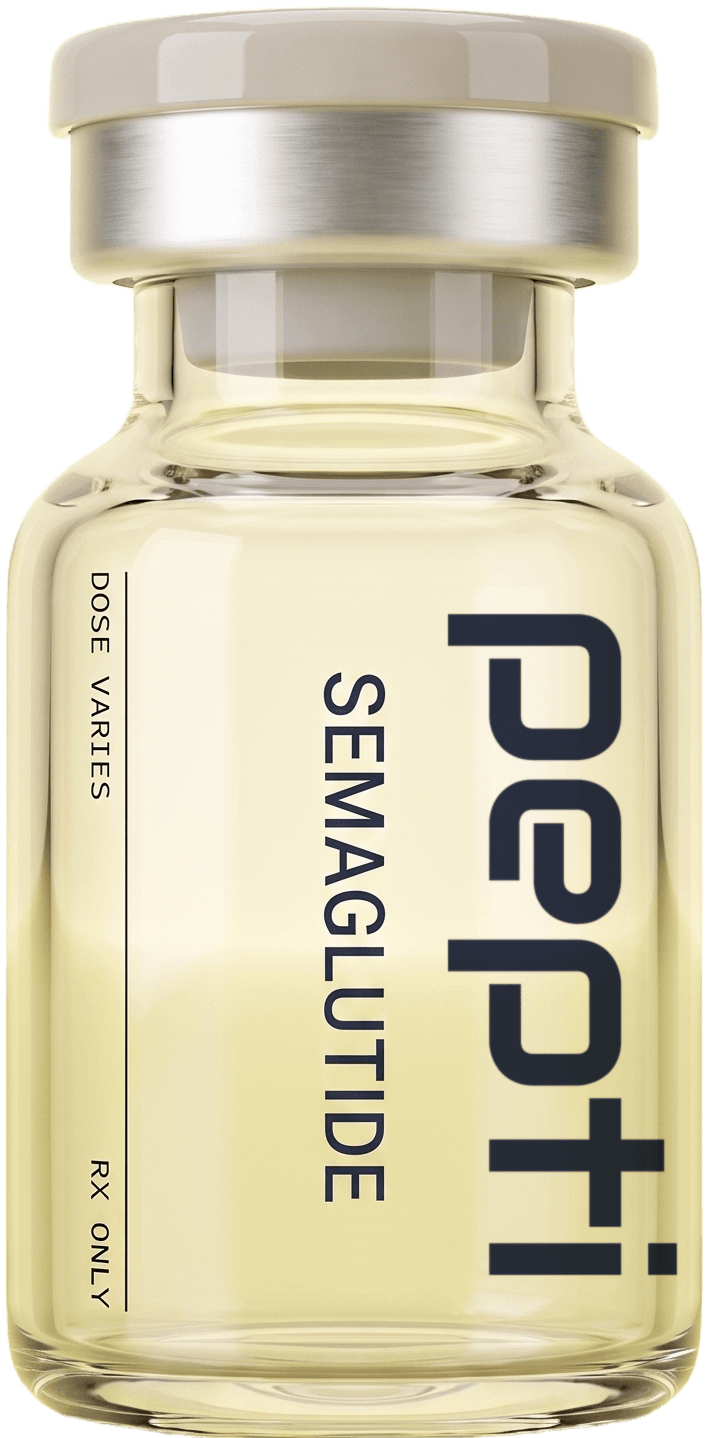
Adipotide is a prescription injection supplied as vial — Adipotide 5mg/5mL 1mg/mL (5mL). The reviewed directions are: Inject 0.25 mL (25 units) subcutaneously once daily Monday through Friday. That is 20 doses per vial, about 4 weeks at Monday through Friday. It requires a prescription from a physician licensed in your state, is compounded by a state-licensed US pharmacy, and is not FDA approved.
This page covers what Adipotide is, the mechanism its designers described, what the mouse and monkey research does and does not establish, the renal finding in primates and what came of the one human program, where it currently stands with the FDA, how it is dosed, and how to get it prescribed.
Adipotide
What Adipotide actually is
Two peptides joined end to end, each with one job
Adipotide is not a naturally occurring peptide and it is not a hormone. It is a peptidomimetic — a synthetic construct built to do a job the body has no equivalent for. Its full designation in the literature is CKGGRAKDC-GG-(D)(KLAKLAK)₂, and reading that string left to right tells you most of what it does.
The first segment, CKGGRAKDC, is a homing sequence: nine amino acids that bind to a particular protein on the surface of certain blood vessels. The middle, GG, is a hinge. The final segment, (D)(KLAKLAK)₂, is a pro-apoptotic motif — a short synthetic sequence that disrupts mitochondrial membranes and triggers programmed cell death in whatever cell it gets inside. On its own the killing motif is indiscriminate but cannot cross cell membranes efficiently; on its own the homing sequence does nothing but stick. Bolted together, the design is an address plus a payload.
That architecture is the single most important thing to understand about this compound. Adipotide is not a metabolic signal, an appetite drug or a hormone analogue. It is a targeting device, and every question about it — including the safety questions — is really a question about how precise the address is.
Where it came from, and the name
The targeting sequence was found by in vivo phage display at the University of Texas MD Anderson Cancer Center by the laboratories of Wadih Arap and Renata Pasqualini, a group whose main work is mapping the molecular "zip codes" of blood vessels in different organs. Their 2004 paper in Nature Medicine reported that CKGGRAKDC homes to the vasculature of white fat, that it binds a membrane protein called prohibitin, and that prohibitin is a marker of adipose blood vessels. Coupling it to the pro-apoptotic motif gave the construct that was later named adipotide.
"Adipotide" is a coined name, not a generic drug name. The same construct appears in the literature as prohibitin-targeting peptide-1, and in the one human study it was registered as Prohibitin-TP01. It has never had an approved brand name because it has never been an approved drug anywhere.
What it is not
It is not a GLP-1 medication and shares nothing with one mechanically. It does not act on appetite centres in the brain, it does not slow gastric emptying, and it is not related to semaglutide or tirzepatide except that all three end up categorised under weight loss.
It is not a fat-burner in the metabolic sense. Nothing in the research describes it raising metabolic rate, mobilising fatty acids for oxidation, or acting on thyroid or adrenergic pathways.
And it is not a compound with human efficacy data. That point is developed below, but it belongs here too, because it is the difference between this product and most of the catalogue.
Adipotide
How Adipotide is described to work
Everything in this section is from mouse and monkey studies. None of it has been demonstrated in people.
Prohibitin as an address on fat-tissue blood vessels
Prohibitin is a multifunctional protein found mainly on the inner mitochondrial membrane, but the 2004 Nature Medicine work reported it also appearing on the surface of endothelial cells lining the blood vessels of white adipose tissue — and, importantly, being relatively enriched there compared with the vessels of other organs. That relative enrichment is the entire basis for calling the compound "targeted". The same paper reported prohibitin expression in the vessels of human white fat, which is why the group argued the finding might translate.
The (D)(KLAKLAK)₂ motif and mitochondrial disruption
The payload half is a well-characterised synthetic motif built from D-amino acids, which makes it resistant to being chewed up by proteases. Work from the same group, including a 2013 paper in PLoS One using the motif on its own against fungal cells, describes its mechanism as mitochondrial membrane depolarisation, reactive oxygen species accumulation and caspase-like activity — in plain terms, it destabilises mitochondria until the cell initiates apoptosis. It is not selective in itself. Selectivity is supposed to come entirely from where the homing sequence delivers it.
Ablating the vessels, not the fat cells
The mechanism is not that adipotide kills fat cells. It is described as killing the endothelial cells of the capillaries feeding white fat, after which the fat tissue — cut off from its supply — is resorbed. The distinction matters for expectations: this is an anti-vascular strategy borrowed from cancer research and pointed at adipose tissue, which is why the same laboratory that developed it also works on tumour vasculature.
Metabolic changes reported ahead of weight changes
A 2012 paper in Diabetes reported something the designers did not predict: in obese mice, the proapoptotic peptide improved glucose tolerance within two to three days, before meaningful weight change and independently of food intake, with changes in serum insulin, triglycerides, fatty acids and acylcarnitines. Microarray work in that paper described pathways of mitochondrial function and branched-chain amino acid degradation shifting back toward the pattern seen in lean animals. Whatever this compound is doing, that paper argues it is doing something to adipose tissue function and not only to adipose tissue quantity.
Why the kidney comes into it
Prohibitin is not exclusive to fat vasculature. The proximal tubule of the kidney is a mitochondria-dense tissue with heavy reabsorptive traffic, and it is where peptide constructs of this size tend to be taken up and processed. That is the structural reason a compound designed against fat vessels produced a renal signal in primates, and it is the reason renal function is the monitoring question with this product rather than an afterthought.
Adipotide
What the research actually shows
The 2004 mouse work
The founding study, in Nature Medicine, reported that targeting the proapoptotic motif to prohibitin in the adipose vasculature caused ablation of white fat in obese mice, with resorption of established fat tissue and normalisation of metabolic measures. The authors described the effect as obesity reversal in the animals without detectable adverse effects at the doses used. This was a mouse study, and mouse fat biology is one of the areas where rodent-to-human translation has historically failed most often — a point the same group made explicitly when they moved to primates.
The 2011 monkey study
This is the central paper and the reason the compound is known outside its field. Published in Science Translational Medicine in 2011 by Barnhart, Christianson, Hanley and colleagues, it evaluated adipotide in spontaneously obese Old World monkeys. The reported findings were targeted apoptosis within the blood vessels of white adipose tissue, rapid weight loss and improved insulin resistance, with magnetic resonance imaging and dual-energy x-ray absorptiometry used to confirm that what was lost was white adipose tissue specifically rather than lean mass or water.
The design is stronger than most preclinical work behind compounded peptides: a spontaneously obese primate model rather than an engineered rodent, with imaging endpoints rather than scale weight alone. It is also fifteen years old, and it remains the high-water mark of the evidence.
The renal finding in monkeys
The same paper reported, at the doses the investigators determined to be optimal, that monkeys from three different species showed changes in renal proximal tubule function. The authors characterised those changes as predictable — dose-related rather than idiosyncratic — and reversible on stopping treatment.
That sentence is worth reading carefully in both directions. It is a genuine organ-toxicity signal in the most relevant animal model available, in the tissue you would predict from the biology, and it is the reason this compound is described as experimental rather than promising. It is also not a report of irreversible kidney injury, and it was observed at deliberately dose-escalated levels in animals dosed to effect. Both halves of that are true, and a page that gives you only one of them is selling you something.
Glucose handling in mice
The 2012 Diabetes paper described above is the most mechanistically interesting follow-up: rapid, weight-independent improvement in glucose tolerance in obese mice. It is also a mouse study, run at doses and by routes that do not map onto a compounded vial, and its authors framed it as evidence about the role of adipose vasculature in glucose homeostasis rather than as a case for the compound as a treatment.
The published disagreement about the mechanism
In 2012, Science Translational Medicine published a comment by Criscione arguing that the weight loss in the monkey study might reflect a direct effect of adipotide on food consumption rather than the vascular-ablation mechanism the authors proposed, with a reply from the original group. That exchange is part of the record and is worth knowing: the headline finding is not disputed, but the mechanism behind it was contested in the literature within months of publication and was never settled by further primate work.
What human data exists
There are no randomised controlled trials of adipotide in humans, and no published human efficacy data of any kind.
There was one registered human study. In December 2010, MD Anderson registered a first-in-man phase 1 trial, NCT01262664, of Prohibitin-TP01 in men who had metastatic or otherwise incurable prostate cancer and a BMI over 30. It was a dose-finding study: the stated goal was to find the highest tolerable dose, with safety as the object. The first patient was enrolled on 24 May 2012.
The trial was terminated. The registry records the reason as "terminated per PI's request", with four participants enrolled in total and a completion date of 2 January 2019. No results were posted to the registry, and no phase 1 results have been published. No phase 2 study has ever been registered. In the fourteen years since the monkey paper, the compound has not advanced.
So the honest summary of the human evidence is not "limited" or "early" — it is that there is none. Four men with advanced cancer were dosed in a study that stopped without reporting, and that is the whole of the human record.
What the evidence does not establish
- It does not establish that the mechanism works in humans. Prohibitin is present in human fat vasculature; whether targeting it produces the monkey result in a person has never been tested.
- It does not establish an effect size, a timeline, or a dose-response relationship in humans, because no human study reported outcomes.
- It does not establish renal safety in humans at any dose. The only organ signal in the best animal model is a renal one.
- It does not establish what happens beyond a few weeks of treatment. There is no long-term animal or human safety data.
- It does not establish efficacy for any condition as an approved treatment. It is not approved for anything, anywhere.
Adipotide
Where Adipotide stands with the FDA right now
Most of what circulates online about peptide regulation — Category 2 listings, advisory committee votes, the April 2026 removals — does not apply to this compound, because it has never entered that process.
As of 24 September 2026, adipotide does not appear in any category of the FDA's list of bulk drug substances nominated for use in compounding under section 503A. The current version of that document, updated 14 May 2026, has no entry for it in Category 1 (under evaluation), Category 2 (raises significant safety concerns) or Category 3 (nominated without adequate support). It is likewise absent from the FDA's page listing bulk substances flagged as presenting significant safety risks, current as of 22 April 2026, both from the Category 2 table itself and from the separate list of substances previously in Category 2 whose nominations were withdrawn. It does not appear on the parallel 503B nominations list.
It was not on the agenda when the Pharmacy Compounding Advisory Committee met on 23 and 24 July 2026 to consider BPC-157, KPV, TB-500, MOTS-c, emideltide (DSIP), Semax and epitalon. It is not among the substances announced for the committee's next meeting, to be held before the end of February 2027. It is not on the final 503A bulks list codified at 21 CFR 216.23, which contains six substances, and it is not on the list of drug products withdrawn or removed from the market for safety or effectiveness reasons at 21 CFR 216.24.
In plain terms: the FDA has never evaluated adipotide in either direction. It has not been flagged as a safety concern and it has not been reviewed for any positive list — this is a blank page rather than a verdict, and a blank page is not an endorsement. It is not an FDA-approved drug product; compounded medications never are. They are prepared by a state-licensed pharmacy against an individual prescription. If the FDA acts on this substance in either direction, this page will change.
Adipotide
Realistic expectations
There is less to go on here than for anything else on this site, because there are no human endpoints at all. What follows is how prescribers describe structuring a course, not trial endpoints and not predictions. A physician decides whether treatment is appropriate at all, and for many people the answer will be that it is not.
The first week
Nothing in the animal work suggests a person should expect to notice anything in the first several days, and the injection-site redness or mild soreness some people report says nothing about whether the compound is doing anything. This is also the window in which a physician is most likely to want a baseline picture of renal function in hand.
Weeks two to four
This is the window a single vial covers, and it is where any change in body composition would be expected to show if the animal timelines have any human analogue — which is exactly the thing nobody has measured. Anyone who tells you what you will weigh at week four is guessing, because the study that would let them say it has never been run in humans.
Why courses are short
The animal studies were short. The primate dosing was weeks, not months, and the renal signal was dose-related. There is no long-duration data in any species. That combination is why this is prescribed, when it is prescribed at all, as a defined short course under supervision rather than as an ongoing therapy, and why the vial is sized to four weeks with one vial per fill.
After a course
No withdrawal syndrome and no rebound has been described, because nothing about stopping it has been studied in humans. In the monkey study, the renal changes were reported to resolve after treatment stopped. Whether any change in body composition would persist depends on everything that determines that in the first place — diet, activity, and whether anything about the underlying picture changed.
Adipotide
When something else makes more sense
A reference that only recommends its own product is not a reference. Adipotide is one of the more experimental products in the catalogue, and for most people asking about fat loss it is not the right first conversation.
- Weight loss is the main goal and you have not tried an evidence-based option. Semaglutide and tirzepatide have large randomised human trials, published outcomes, known safety profiles and years of prescribing behind them. Adipotide has none of that. For most people this is the conversation to have first, and a physician will usually say so.
- You want a peptide aimed at fat with a longer human track record. AOD-9604 and 5-Amino-1MQ work through entirely different mechanisms and neither is an anti-vascular agent.
- Your kidneys are the open question. Any history of renal impairment, any medication that stresses the kidney, or a family picture that worries you makes this the wrong compound and makes that a conversation to have before anything else.
- You want a broader body-composition protocol rather than a single targeted agent. The SHRED blend and the PHYSIQ blend combine agents aimed at fat and growth-hormone pathways, and L-carnitine, which does have human data, is the conventional choice for fatty-acid transport.
- Metabolic health rather than fat mass is the actual goal. MOTS-c is described around mitochondrial and metabolic signalling, and Lipo-B is a conventional lipotropic injection.
- You are a tested athlete. Check the current prohibited list for your sport before starting anything and tell your physician.
Your physician will tell you if Adipotide is not the right tool for what you have described, and with this compound that answer is common. A consultation does not guarantee a prescription, and being declined is refunded.
Adipotide
Dosing, and how a vial is actually used
Why the dose is measured in units
The directions are written in millilitres and in insulin-syringe units because that is what you can read off the barrel. 0.25 mL is 25 units on a U-100 syringe. You are not calculating anything — the number is printed on your medication, and your physician sets it.
Subcutaneous, and where
Subcutaneous means into the fat layer, not the muscle. Abdomen and thigh are the usual sites, rotated so the same spot is not used repeatedly. Injecting at a particular body site is not a way to direct the compound at fat in that area; the described mechanism is systemic delivery to a receptor that happens to be enriched in adipose vasculature everywhere.
Why the directions skip the weekend
Monday through Friday is part of the prescription, not an omission. Five days on and two off is how the course is structured, and it is also what makes 20 doses land at four weeks rather than three.
Why a vial covers about four weeks
20 doses at once daily Monday through Friday is four weeks, which is why refills run on a 28-day cycle. One vial per fill, always — not a stockpile. With this compound in particular, the refill cycle is the point at which a physician reviews whether continuing is appropriate.
Storage
Refrigerated, and it ships that way in insulated packaging with ice packs. Beyond-use dating runs from first puncture and is printed on the label. Do not freeze it. How medication is prepared, tested and shipped is covered on quality.
Adipotide
Safety and side effects
The renal signal, stated plainly
The primate study reported dose-related, reversible changes in proximal tubule function in monkeys of three species. There is no human data showing whether the same thing happens in people, at what dose, or whether it would be as reversible. This is the defining safety consideration for the compound and the reason it is prescribed cautiously, in short courses, with attention to kidney function — not an incidental footnote.
What that means for monitoring
The Specification above says bloodwork is not routinely required and that your physician decides. With this compound specifically, many prescribers do want a baseline picture of renal function and a check during or after a course, and hydration is usually part of the instructions. At-home blood testing covers metabolic markers without a lab visit if your physician asks for them. Anyone with known kidney disease, reduced renal function, or medications that load the kidney should raise it at intake; that row is in the table below for a reason.
What is reported clinically
Beyond the renal question, what gets reported is mostly injection-site: redness, mild soreness, occasional bruising. Some people report nausea, light-headedness or fatigue early in a course. Dehydration is worth avoiding for the same reason as above.
No established interaction list
There is no established interaction list for adipotide, because the trials that would produce one were never completed. That is precisely why the intake asks for every medication and supplement you take, including anything that affects the kidney, and why a physician reviews it rather than a form.
Stop and contact your physician for any reaction that is severe, spreading, or involves difficulty breathing, and for any change in how much you are urinating, swelling, or unusual fatigue during a course.
Adipotide
How Adipotide compares
Adipotide vs semaglutide and tirzepatide
These are not alternatives in any meaningful sense. Semaglutide and tirzepatide act on gut-hormone receptors to reduce appetite, are approved drugs in their branded forms, and have large randomised human trials behind them. Adipotide is an anti-vascular construct with no human efficacy data and a renal signal in primates. If the question is which one has evidence, there is no contest, and most physicians will start there.
Adipotide vs AOD-9604 and 5-Amino-1MQ
All three are animal-evidence products categorised under weight loss, and that is where the similarity ends. AOD-9604 is a fragment of human growth hormone studied for effects on fat metabolism; 5-Amino-1MQ inhibits an enzyme inside fat cells. Both act on the biology of the fat cell. Adipotide acts on the blood vessels supplying it, and is the only one of the three whose mechanism is cytotoxic by design.
Why there is no pen
Adipotide is supplied as a vial drawn with an insulin syringe, and there is no pepti Pen cartridge for it. Pen cartridges exist for products with settled, widely prescribed dosing; a compound prescribed as a short, supervised, individually judged course is not one of them.
Adipotide
Availability and formats
| Question | Answer |
|---|---|
| Can I get it by telehealth? | Yes, where a physician licensed in your state prescribes it |
| Which states? | All 50 states and DC |
| Does it come as a pen? | No, this one is a vial and syringe only |
| Does it come as a capsule? | No |
| Does it come as a nasal spray? | No |
| Is bloodwork required first? | Not routinely; your physician decides |
Adipotide
Where to get Adipotide prescribed
Adipotide cannot be bought legitimately without a prescription. Sites shipping it with no prescription are selling a research-use-only product, where no pharmacy is accountable for identity, purity, sterility or concentration.
The prescription route works like this:
- Complete a medical intake covering your history, medications, allergies and what you are treating.
- A physician licensed in your state reviews it.
- If appropriate, a state-licensed, FDA-registered pharmacy compounds it to that prescription.
- It ships refrigerated with your directions printed on the vial.
- Your physician stays reachable afterwards for dose questions and side effects.
Current all-in pricing for Adipotide is published: medication, physician review, refill management and shipping in one figure, with no separate membership fee. What to check on any provider is in how to tell if a peptide seller is legitimate.
Adipotide
Who should not take it, or should discuss it first
| Situation | Why |
|---|---|
| Kidney disease or impaired renal function | Raised at intake |
| Pregnancy or breastfeeding | Not used; safety data is absent |
| Tested athletes | Many peptides are prohibited in competition; check the current list |
Full specification
Everything on the label.
Product
Adipotide (Injectable)
How supplied
vial — Adipotide 5mg/5mL 1mg/mL (5mL)
Typical directions
Inject 0.25 mL (25 units) subcutaneously once daily Monday through Friday.
Dose volume
0.25 mL (25 units on a U-100 insulin syringe)
Doses per vial
20
Coverage per vial
about 4 weeks at Monday through Friday
Formats
Vial and syringe
Available in
All 50 states and DC
Bloodwork
Not routinely required; your physician decides
Legal status
Prescription-only, compounded, not FDA approved
Category
Weight Loss
References
What this is based on.
References
- Barnhart KF, Christianson DR, Hanley PW et al.. A peptidomimetic targeting white fat causes weight loss and improved insulin resistance in obese monkeys · Sci Transl Med (2011) · PMID 22072637
- Kolonin MG, Saha PK, Chan L, Pasqualini R, Arap W. Reversal of obesity by targeted ablation of adipose tissue · Nat Med (2004) · PMID 15133506
- Kim DH, Sartor MA, Bain JR et al.. Rapid and weight-independent improvement of glucose tolerance induced by a peptide designed to elicit apoptosis in adipose tissue endothelium · Diabetes (2012) · PMID 22733798
- Criscione L. Comment on "A peptidomimetic targeting white fat causes weight loss and improved insulin resistance in obese monkeys" · Sci Transl Med (2012) · PMID 22539771
- Barbu EM, Shirazi F, McGrath DM et al.. An antimicrobial peptidomimetic induces Mucorales cell death through mitochondria-mediated apoptosis · PLoS One (2013) · PMID 24098573
- Hossen N, Kajimoto K, Akita H, Hyodo M, Harashima H. A comparative study between nanoparticle-targeted therapeutics and bioconjugates as obesity medication · J Control Release (2013) · PMID 23871959
Citations are provided for educational purposes. They do not constitute medical advice. Always discuss any peptide protocol with your prescribing physician.
Common questions
Adipotide, answered.
Through a telehealth provider where a physician licensed in your state reviews a medical intake and a licensed US pharmacy compounds the prescription. Pepti prescribes Adipotide in all 50 states and DC; start with the free assessment.
vial — Adipotide 5mg/5mL 1mg/mL (5mL)
Inject 0.25 mL (25 units) subcutaneously once daily Monday through Friday. Your physician sets your own dose and it is printed on your medication.
20 at the standard volume, about 4 weeks at Monday through Friday.
Adipotide is supplied as a vial, drawn with an insulin syringe. It is not available as a pen or capsule.
Not routinely, though your physician may want labs depending on your history. at-home blood testing covers hormone, metabolic and thyroid markers without a lab visit.
It is legal to prescribe and dispense in the United States with a valid prescription. It is not FDA approved: compounded medications are prepared by licensed pharmacies pursuant to a prescription rather than approved as manufactured products. See are peptides FDA approved.
Pricing is published on the Adipotide page as one all-in figure covering medication, physician review, refill management and shipping. What drives peptide pricing generally is in how much do peptides cost.
No. There are no randomised controlled trials in humans and no published human efficacy data of any kind. One phase 1 dose-finding study was registered at MD Anderson in men with advanced prostate cancer and obesity; it enrolled four participants, was terminated at the investigator's request, and never reported results. Every efficacy finding on this page is from mice or monkeys.
The only registered human study, a first-in-man phase 1 evaluation of a single cycle of Prohibitin Targeting Peptide 1, opened in 2012 and was terminated per the principal investigator's request with four participants enrolled and no results posted. No phase 2 trial was ever registered and the programme did not advance.
The primate study reported dose-related changes in renal proximal tubule function in monkeys of three species, which the authors described as predictable and reversible after treatment stopped. There is no human data on this. It is the defining safety question for the compound, it is why courses are short and supervised, and it is why kidney disease or reduced renal function belongs on your intake.
It is described as a two-part construct: a homing sequence that binds prohibitin, a protein enriched on the blood vessels of white fat, joined to a pro-apoptotic sequence that destabilises mitochondria in whatever cell it enters. The proposed effect is loss of the capillaries supplying white adipose tissue rather than any action on appetite or metabolic rate. That mechanism has been demonstrated in mice and monkeys only.
No, and they are not comparable. Semaglutide and tirzepatide are gut-hormone receptor medications with large randomised human trials and approved branded forms. Adipotide is an experimental anti-vascular construct with no human efficacy data.
No. As of September 2026 it does not appear in any category of the FDA's 503A nominated-substances list, is not on the FDA's significant-safety-risks page or the withdrawn-nominations list beside it, is not on the 503B list, and has never been considered by the Pharmacy Compounding Advisory Committee. The FDA has not evaluated it in either direction. It remains a prescription-only compounded medication that is not FDA approved.
One vial is 20 doses, about four weeks at Monday through Friday, and refills run on a 28-day cycle with a physician reviewing each one. There is no long-duration data in any species, which is why it is not framed as an ongoing therapy.
In humans, largely unknown, because it was never studied to completion in people. The signal from the animal work is renal, as described above. What prescribers report clinically is mostly injection-site reactions — redness, mild soreness, occasional bruising — with some reports of early nausea, light-headedness or fatigue. There is no established interaction list, which is why your physician reviews every medication you take.
Many peptides are prohibited in competition by anti-doping bodies. If you are a tested athlete, check the current prohibited list for your sport before starting anything, and tell your physician.
Next step
See what a physician recommends for you.
A licensed physician in your state reviews your intake and decides what is appropriate. A consultation does not guarantee a prescription.