Weight Loss · Reference
Liraglutide vs Semaglutide: Daily vs Weekly GLP-1, Evidence, Side Effects and Cost
Liraglutide and semaglutide are both GLP-1 receptor agonists: modified versions of the gut hormone GLP-1 that act on the same receptor to reduce appetite, slow stomach emptying and release insulin when blood glucose is high.
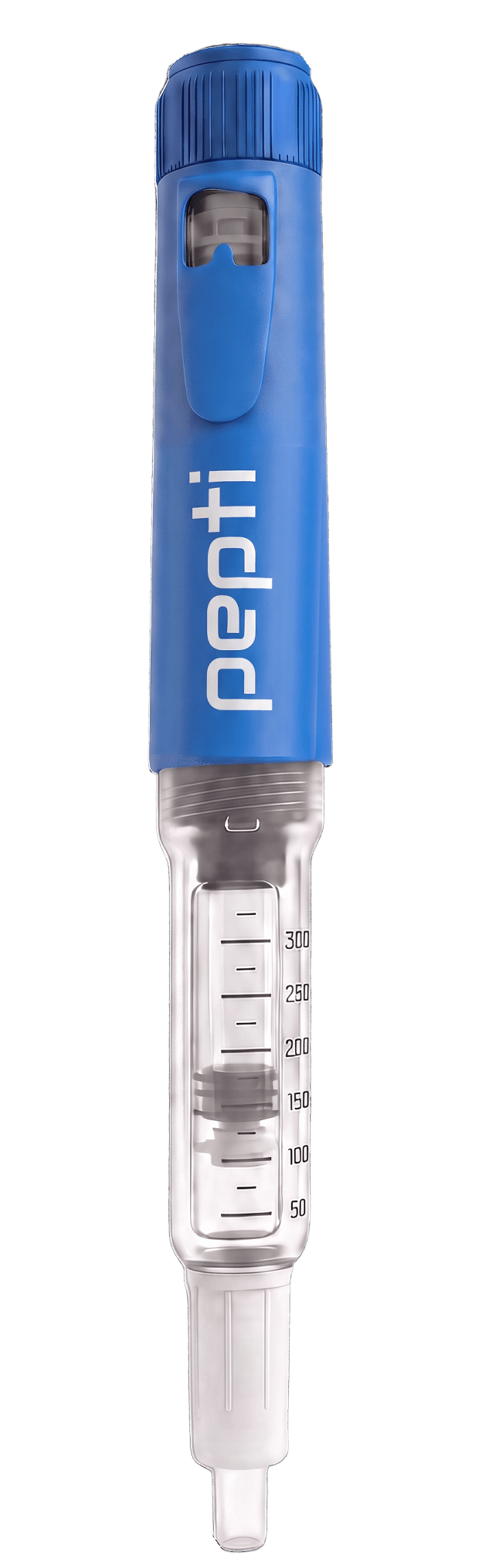
Treatments mentioned
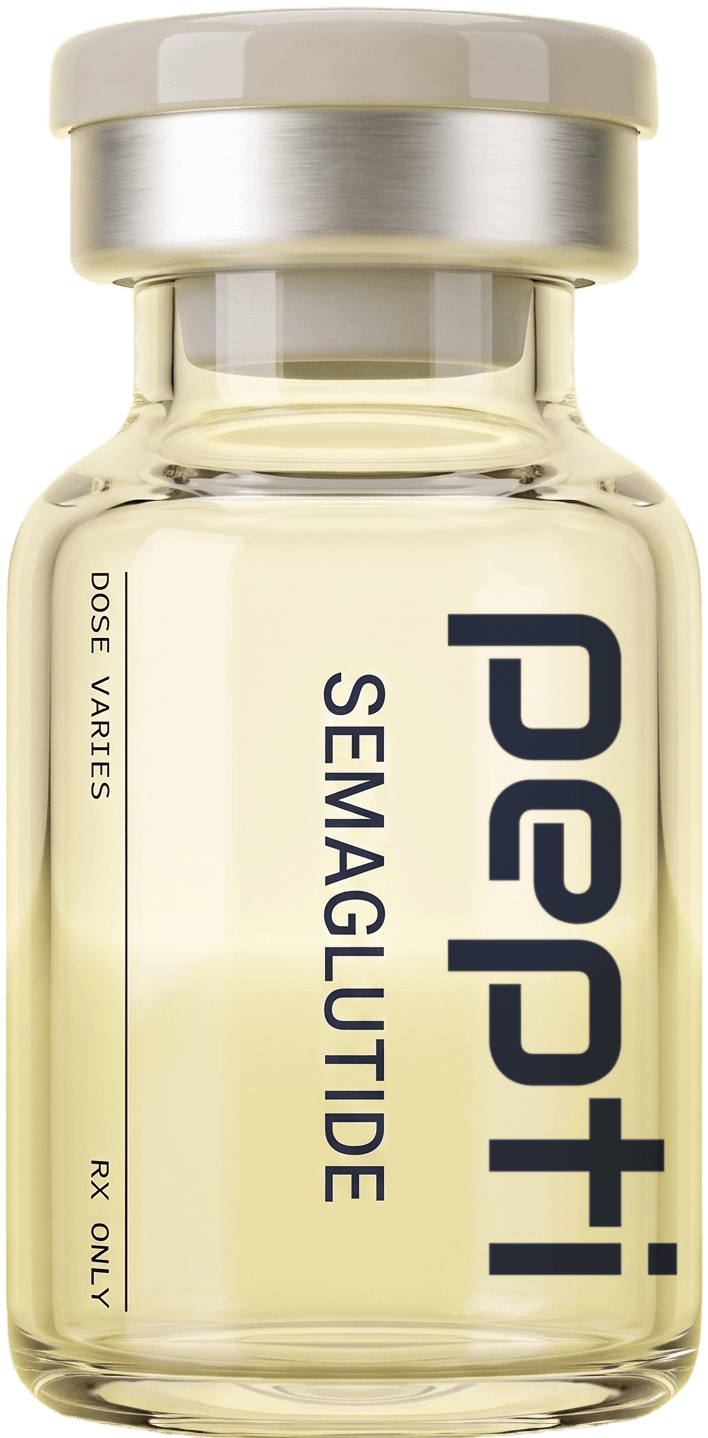
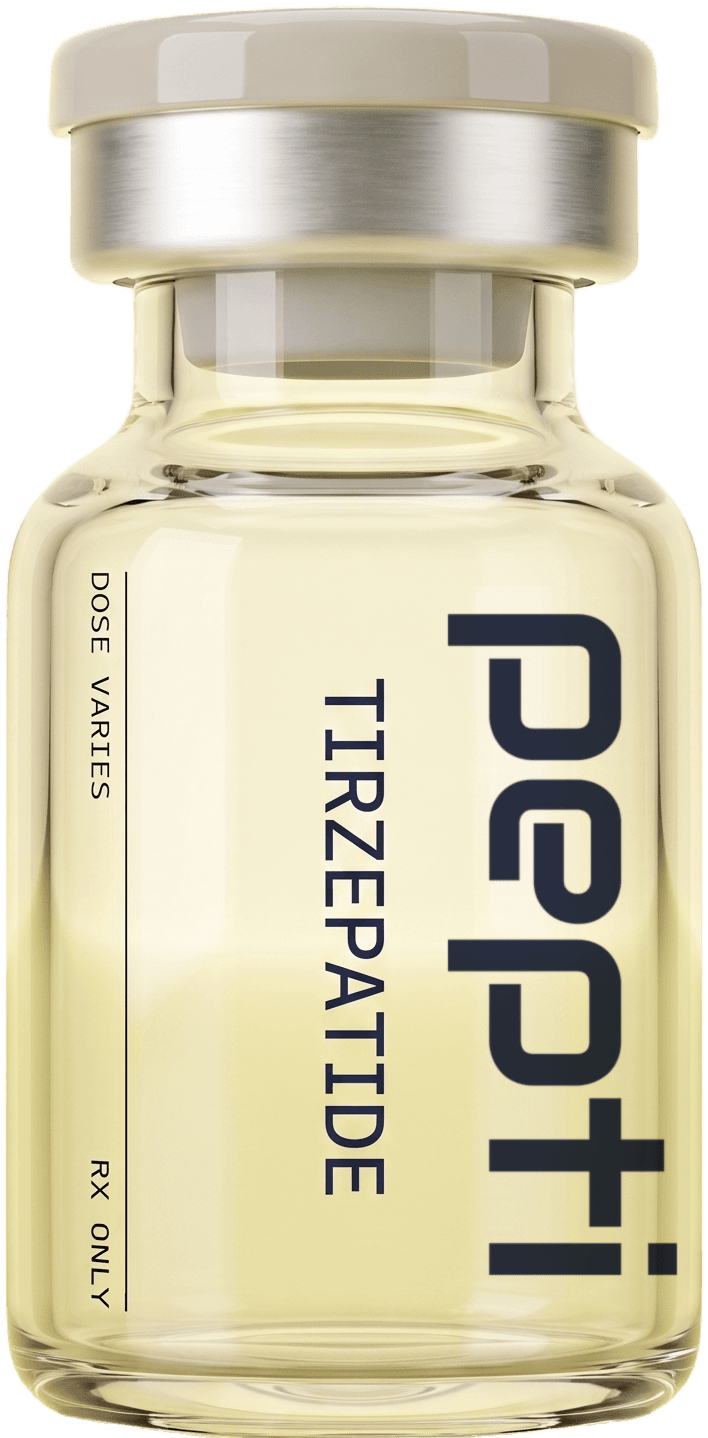
The practical difference is how long each lasts: liraglutide is injected once a day, semaglutide once a week. In STEP 8, a 2022 head-to-head trial in JAMA, weekly semaglutide produced greater weight loss than daily liraglutide. Pepti prescribes compounded semaglutide in dose-specific vials, not liraglutide, and compounded medications are not FDA approved.
This page explains each molecule on its own terms, puts them side by side, covers the head-to-head evidence, side effects, where each stands with the FDA, how semaglutide is dosed at Pepti, and what to do if you are currently on liraglutide.
Liraglutide vs Semaglutide
The short answer
| Question | Liraglutide | Semaglutide |
|---|---|---|
| What is it? | A GLP-1 receptor agonist | A GLP-1 receptor agonist |
| How often is it injected? | Once daily | Once weekly |
| Receptor | GLP-1 only | GLP-1 only |
| Head-to-head result | Less weight loss in STEP 8 | Greater weight loss in STEP 8 |
| Prescribed by Pepti? | No | Yes, as compounded dose-specific vials |
| Price at Pepti | Not offered | Semaglutide from $99/mo |
The semaglutide figure is a "from" price, because GLP-1 vials are dose-specific and the price moves with the strength. Every Pepti price is all-in, covering the medication, physician review, refill management and shipping, with no separate membership fee. Current pricing always lives on the product page.
Liraglutide vs Semaglutide
What the two have in common
Both start from the same hormone. GLP-1, glucagon-like peptide-1, is a peptide hormone the small intestine releases when food arrives. It tells the pancreas to release insulin only when glucose is elevated, lowers glucagon, slows how fast the stomach empties, and acts on receptors in the hypothalamus and brainstem that register fullness. The natural hormone is broken down by the enzyme DPP-4 within minutes, so it was never a practical medicine. Every GLP-1 medication is an engineered answer to that problem, and liraglutide and semaglutide are two generations of the same answer. The background is in what is a GLP-1.
| Action | Where it happens | Shared by both? |
|---|---|---|
| Glucose-dependent insulin release | Beta cells in the pancreas | Yes |
| Less glucagon | Alpha cells in the pancreas | Yes |
| Slower gastric emptying | The stomach | Yes |
| Appetite signalling | Hypothalamus and brainstem | Yes |
Neither is a stimulant. Both work through receptors the body already uses to register that a meal has been eaten, and in the weight-management trials the appetite pathway carries most of the effect.
Liraglutide vs Semaglutide
Liraglutide on its own terms
What it is
Liraglutide is an older GLP-1 receptor agonist. Like semaglutide it keeps most of the native GLP-1 sequence and carries a fatty-acid chain that lets it bind albumin in the blood, which protects it from rapid clearance. The protection is shorter-lived than semaglutide's: its half-life is measured in hours rather than days, which is why it is injected once a day under the skin.
Where it sits
Liraglutide is an FDA-approved active ingredient, sold by its manufacturer as approved products for type 2 diabetes and for chronic weight management. The approved label for chronic weight management carries an explicit, pre-specified stopping rule: weight is evaluated 16 weeks after starting, and the label directs stopping if the response falls short of a stated threshold, on the grounds that a meaningful long-term response is then unlikely. Semaglutide's label carries a related note: cases of medullary thyroid carcinoma reported in people taking liraglutide are described as insufficient to establish or exclude a causal link.
What Pepti does with it
Nothing. Pepti does not prescribe or compound liraglutide. It appears on this page because people ask how the daily medication compares with the weekly one, and because some people arrive having already taken it.
Liraglutide vs Semaglutide
Semaglutide on its own terms
What it is
Semaglutide keeps most of the native GLP-1 sequence and changes three things: an unnatural amino acid at position 8 that blocks DPP-4, a substitution at position 34, and a fatty-acid chain at position 26 that binds the molecule to albumin. Those changes stretch its half-life to roughly a week, which is what makes once-weekly injection possible. The full reference is at what is semaglutide.
What human data exists
Semaglutide has one of the largest human evidence bases of any medicine in this category. The STEP programme studied weight management, SUSTAIN-6 and SELECT studied cardiovascular outcomes, and ESSENCE studied liver disease. SELECT, in the New England Journal of Medicine in 2023, enrolled 17,604 adults with established cardiovascular disease and overweight or obesity, without diabetes, and reported a 20% relative reduction in cardiovascular death, heart attack or stroke. Every one of those trials used the manufacturer's product. Compounded semaglutide shares the active ingredient, not the trials and not the approval.
Liraglutide vs Semaglutide
Head to head
| Liraglutide | Semaglutide | |
|---|---|---|
| Class | GLP-1 receptor agonist | GLP-1 receptor agonist |
| How it lasts | Albumin-binding fatty-acid chain; half-life in hours | Albumin-binding chain plus a DPP-4 block; half-life about a week |
| Injection schedule | Once daily | Once weekly |
| Injections in four weeks | About 28 | 4 |
| Direct comparison | STEP 8: less weight loss | STEP 8: greater weight loss |
| Cardiovascular outcome trial on this page | Not covered here | SUSTAIN-6 and SELECT |
| Common side effects | Gastrointestinal | Gastrointestinal |
| Class contraindication | Personal or family history of medullary thyroid carcinoma or MEN 2 | The same |
| FDA-approved active ingredient? | Yes | Yes |
| 30 April 2026 FDA proposal | Named | Named |
| Available from Pepti | No | Yes, compounded, from $99/mo |
STEP 8: the trial that answers the question
STEP 8, published in JAMA in 2022, randomised adults with overweight or obesity to weekly semaglutide or daily liraglutide, both at their weight-management doses and alongside lifestyle support. Weekly semaglutide produced greater average weight loss than daily liraglutide. It is the most direct evidence available on this comparison.
Two qualifications apply. The trial compared the manufacturers' products, not compounded preparations. And trial averages describe groups, not any one person; a provider who quotes you an expected number is inventing it.
The real difference is duration, not the receptor
Both molecules act on exactly the same receptor. The difference that matters to a person taking one is the schedule: one injection a week rather than seven, and a steadier level between doses. Liraglutide's shorter half-life is the reason it is daily, and semaglutide's longer one is the reason it is weekly. The receptor biology and the side-effect pattern are close cousins.
What about tirzepatide?
Tirzepatide is a different molecule again: a 39-amino-acid peptide that activates both the GIP and GLP-1 receptors. In SURMOUNT-5, in the New England Journal of Medicine in 2025, it produced greater average weight reduction than semaglutide over 72 weeks in adults with obesity and no diabetes, in an open-label trial. Pepti prescribes it from $159 a month. The full comparison is in semaglutide vs tirzepatide, and best GLP-1 for weight loss puts the options in one place.
Liraglutide vs Semaglutide
If you are on liraglutide now
People sometimes arrive at a semaglutide intake already taking daily liraglutide, or having taken it in the past. Three points apply.
| Question | Answer |
|---|---|
| Can I take liraglutide and semaglutide together? | No. Both act at the GLP-1 receptor, so combining them adds side effects without adding a mechanism |
| Do I carry my liraglutide dose over? | No. Your physician sets your semaglutide strength and directions after reviewing your intake, and they are printed on the vial |
| What goes on the intake? | Your current liraglutide dose, how long you have taken it, how you tolerated it, and when your last dose was |
Switching between GLP-1 medications is a decision made with your physician, not something to work out from a chart. Never take both, and never stack a semaglutide dose on top of a daily liraglutide dose while you wait.
Liraglutide vs Semaglutide
Where each stands with the FDA
Both are FDA-approved active ingredients, which puts them in a different position from most peptides on this site. As of September 2026:
| Liraglutide | Semaglutide | |
|---|---|---|
| Approved active ingredient | Yes | Yes |
| Shortage history | Not covered on this page | On the FDA shortage list from 2022; declared resolved 21 February 2025 |
| Shortage-based compounding | Not applicable here | Ended for 503A pharmacies on 22 April 2025 |
| 30 April 2026 proposal | Named in the proposal to exclude from the 503B bulks list | Named in the same proposal |
| Compounded by Pepti's pharmacies | No | Yes, patient-specific under 503A |
On 30 April 2026 the FDA proposed to exclude semaglutide, tirzepatide and liraglutide from the 503B bulks list, having not identified a clinical need for outsourcing facilities to compound them from bulk substances. That is a proposal about 503B outsourcing facilities, which make large batches without patient-specific prescriptions; it does not by itself change the 503A framework under which a pharmacy compounds a named patient's vial on a physician's prescription.
Compounded semaglutide is not FDA approved. It contains the same active ingredient as the approved products, prepared by a state-licensed pharmacy for an identified patient, and the approval of a branded product does not transfer to a compounded vial. Are peptides FDA approved explains the difference between not approved and not legal.
Liraglutide vs Semaglutide
Semaglutide dosing at Pepti
Pepti's semaglutide comes in dose-specific vials. Each strength is a separate vial concentrated so that one weekly dose is a single draw under the skin.
| Strength | Vial | Directions |
|---|---|---|
| 0.25 mg weekly | 1 mg in 1 mL (1 mg/mL) | 0.25 mL (25 units) once weekly |
| 0.5 mg weekly | 2 mg in 2 mL (1 mg/mL) | 0.50 mL (50 units) once weekly |
| 1 mg weekly | 4 mg in 2 mL (2 mg/mL) | 0.50 mL (50 units) once weekly |
| 1.7 mg weekly | 7.5 mg in 3 mL (2.5 mg/mL) | 0.68 mL (68 units) once weekly |
| 2 mg weekly | 10 mg in 2 mL (5 mg/mL) | 0.40 mL (40 units) once weekly |
| 2.5 mg weekly | 10 mg in 2 mL (5 mg/mL) | 0.50 mL (50 units) once weekly |
Each vial holds about four weekly doses, which is why refills run every 28 days, one vial per fill. Because the concentration differs between vials, the units for one strength are not the units for another; never carry a number over from an earlier fill. Your physician sets your strength and directions after reviewing your intake, and a change arrives as a new vial with new directions printed on it. Semaglutide ships refrigerated with ice packs, sterile syringes and alcohol prep pads. Pepti's semaglutide vials contain semaglutide and no B12. The full chart is in semaglutide dosing chart.
Liraglutide vs Semaglutide
Side effects
Because both act on the same receptor, the side-effect pattern is shared across the class. The most common effects are gastrointestinal: nausea, diarrhoea, vomiting, constipation and abdominal pain, most often in the days after a dose increase. Less common but important: acute pancreatitis, gallbladder disease, and dehydration that can affect the kidneys. Low blood sugar is uncommon on a GLP-1 alone and more likely alongside insulin or a sulfonylurea. Slower gastric emptying can change how oral medications are absorbed, and any anaesthesia team should know you take one.
The approved labels carry a warning about thyroid C-cell tumours seen in rodent studies, the basis for the contraindication in anyone with a personal or family history of medullary thyroid carcinoma or MEN 2. The details for semaglutide are in semaglutide side effects, and managing nausea is in GLP-1 nausea: how to manage it.
Stop and contact your physician for severe or persistent abdominal pain, persistent vomiting, or any reaction that is severe, spreading or involves difficulty breathing. For trouble breathing, swelling of the face or throat, or chest pain, call 911.
Liraglutide vs Semaglutide
Who should not take either, or should discuss it first
| Situation | Why |
|---|---|
| Personal or family history of medullary thyroid carcinoma or MEN 2 | A contraindication for the class |
| History of pancreatitis | Needs careful discussion before any GLP-1 medication |
| Pregnancy, planning pregnancy, or breastfeeding | Not used |
| Type 1 diabetes | Not a GLP-1 indication |
| Taking insulin or a sulfonylurea | Raises the risk of low blood sugar |
| Already on another GLP-1 or on tirzepatide | Never combined |
Liraglutide vs Semaglutide
What the evidence shows, honestly
Liraglutide and semaglutide are among the best-studied medicines in this area, and they were compared directly: in STEP 8, weekly semaglutide produced greater weight loss than daily liraglutide. That is a real, randomised result, not an inference. The caveat is the same one that applies to every GLP-1 trial: they used the manufacturers' products. A compounded semaglutide vial shares the active ingredient, not the trials and not the approval, and no provider should present one as if it were the approved product. The withdrawal trials also matter: STEP 4 reported most of the weight returning after people switched to placebo, which is why GLP-1 treatment is planned as long-term with 28-day refills rather than as a short course.
Liraglutide vs Semaglutide
Where to get semaglutide prescribed
Neither medication can be bought legitimately without a prescription. GLP-1 vials sold "for research use only" are not accountable for what is in them: identity, purity, sterility and concentration are untested. The prescription route:
- Complete a free online intake covering your history, medications, any previous GLP-1 use and what you want help with.
- A physician licensed in your state reviews it, usually within 24 hours.
- If it is appropriate, a PCAB-accredited, FDA-registered US 503A pharmacy compounds it to that prescription. Lot test results are published at /quality/lab-results.
- It ships refrigerated with ice packs, sterile syringes and alcohol prep pads, with your directions printed on the vial.
- Your physician stays reachable for questions and dose changes, and refills run every 28 days, one vial per fill.
Pepti is cash-pay and does not bill insurance. Step by step: how to get semaglutide prescribed online.
References
What this is based on.
References
- Wilding JPH, Batterham RL, Calanna S, et al.. Once-Weekly Semaglutide in Adults with Overweight or Obesity (STEP 1) · New England Journal of Medicine (2021) · PMID 33567185
- Lincoff AM, Brown-Frandsen K, Colhoun HM, et al.. Semaglutide and Cardiovascular Outcomes in Obesity without Diabetes (SELECT) · New England Journal of Medicine (2023) · PMID 37952131
- Wadden TA, Bailey TS, Billings LK, et al.. Effect of subcutaneous semaglutide vs placebo as an adjunct to intensive behavioral therapy on body weight in adults with overweight or obesity (STEP 3) · JAMA (2021) · PMID 33625476
- Rubino D, Abrahamsson N, Davies M, et al.. Effect of Continued Weekly Subcutaneous Semaglutide vs Placebo on Weight Loss Maintenance in Adults With Overweight or Obesity: The STEP 4 Randomized Clinical Trial · JAMA (2021) · PMID 33755728
- Marso SP, Bain SC, Consoli A, et al.. Semaglutide and Cardiovascular Outcomes in Patients with Type 2 Diabetes (SUSTAIN-6) · New England Journal of Medicine (2016) · PMID 27633186
- Davies M, Færch L, Jeppesen OK, et al.. Semaglutide 2.4 mg once a week in adults with overweight or obesity, and type 2 diabetes (STEP 2): a randomised, double-blind, double-dummy, placebo-controlled, phase 3 trial · The Lancet (2021) · PMID 33667417
- Garvey WT, Batterham RL, Bhatta M, et al.. Two-year effects of semaglutide in adults with overweight or obesity: the STEP 5 trial · Nature Medicine (2022) · PMID 36216945
- Rubino DM, Greenway FL, Khalid U, et al.. Effect of Weekly Subcutaneous Semaglutide vs Daily Liraglutide on Body Weight in Adults With Overweight or Obesity Without Diabetes: The STEP 8 Randomized Clinical Trial · JAMA (2022) · PMID 35015037
- Aronne LJ, Horn DB, le Roux CW, et al.. Tirzepatide as Compared with Semaglutide for the Treatment of Obesity (SURMOUNT-5) · New England Journal of Medicine (2025) · PMID 40353578
- Sanyal AJ, Newsome PN, Kliers I, et al.. Phase 3 Trial of Semaglutide in Metabolic Dysfunction-Associated Steatohepatitis (ESSENCE) · New England Journal of Medicine (2025) · PMID 40305708
- Wilding JPH, Batterham RL, Davies M, Van Gaal LF, Kandler K et al.. Weight regain and cardiometabolic effects after withdrawal of semaglutide: The STEP 1 trial extension · Diabetes Obes Metab (2022) · PMID 35441470
- Batsis JA, Gavras A, Gross DC, Cheever CR, Da Silva BR et al.. Effect of Incretin-Based and Nonpharmacologic Weight Loss on Body Composition: A Systematic Review · Ann Intern Med (2026) · PMID 41996180
Citations are provided for educational purposes. They do not constitute medical advice. Always discuss any peptide protocol with your prescribing physician.
Common questions
Liraglutide vs Semaglutide, answered.
No. Both are GLP-1 receptor agonists acting on the same receptor, but they are different molecules. Liraglutide lasts hours and is injected daily; semaglutide lasts about a week and is injected weekly.
In the one head-to-head trial, STEP 8 in JAMA in 2022, weekly semaglutide produced greater average weight loss than daily liraglutide. "Stronger" is less precise than that: they act on the same receptor, and the difference reflects how each molecule is built and dosed.
Yes. It is an older GLP-1 receptor agonist, injected once a day. Semaglutide and tirzepatide are the newer, once-weekly options.
People do switch between GLP-1 medications, and it is done with a physician. List your current liraglutide dose and your last dose on the intake. Your physician sets your semaglutide strength and directions after reviewing it, and they are printed on the vial.
No. Both act at the GLP-1 receptor, so combining them adds side effects without adding a mechanism.
No. Pepti prescribes compounded semaglutide, from $99 a month, and compounded tirzepatide, from $159 a month, both as once-weekly injections from dose-specific vials.
Broadly, yes. Both cause mainly gastrointestinal effects, especially around dose increases, and both carry the class warnings on pancreatitis, gallbladder disease and thyroid C-cell tumours in rodents.
Because of how long each survives in the body. Semaglutide combines a DPP-4 block with an albumin-binding chain that stretches its half-life to about a week. Liraglutide's protection is shorter, with a half-life measured in hours.
No. Semaglutide is an approved active ingredient, but compounded preparations are made by a state-licensed pharmacy for an individual prescription and are not FDA approved. Every large trial used the manufacturer's product.
From $99 a month, rising with the strength. The price is all-in, covering medication, physician review, refill management and shipping, with no membership fee.
No. Bloodwork is not required for any Pepti treatment. If your physician wants labs for your care, they'll ask through your account. The free assessment goes to a physician licensed in your state. A consultation does not guarantee a prescription.
Related answers
Keep reading.
- Semaglutide: What It Is, Where to Get It Prescribed, and What It Costs
- Semaglutide Side Effects: Common, Serious, and What to Report
- Semaglutide Dosing Chart: Every Dose Step, Units to Draw, and Price
- Semaglutide vs Tirzepatide: Mechanism, Dosing, Side Effects and Cost
- Melanotan II vs Oxytocin: Two Different Molecules, Two Different Jobs
Next step
See what a physician recommends for you.
A licensed physician in your state reviews your intake to see whether treatment fits your history. A consultation does not guarantee a prescription.