Anti-Aging · Reference
How Long Does ASCEND Blend Take to Work? What Was Measured for Its Four Peptides
This page sets out what was measured for each component and for how long, why those clocks do not combine into an ASCEND timeline, and how to judge ASCEND honestly on the 28-day vial it is supplied in. For the blend itself, see what is ASCEND; for each claimed benefit, see ASCEND blend benefits.

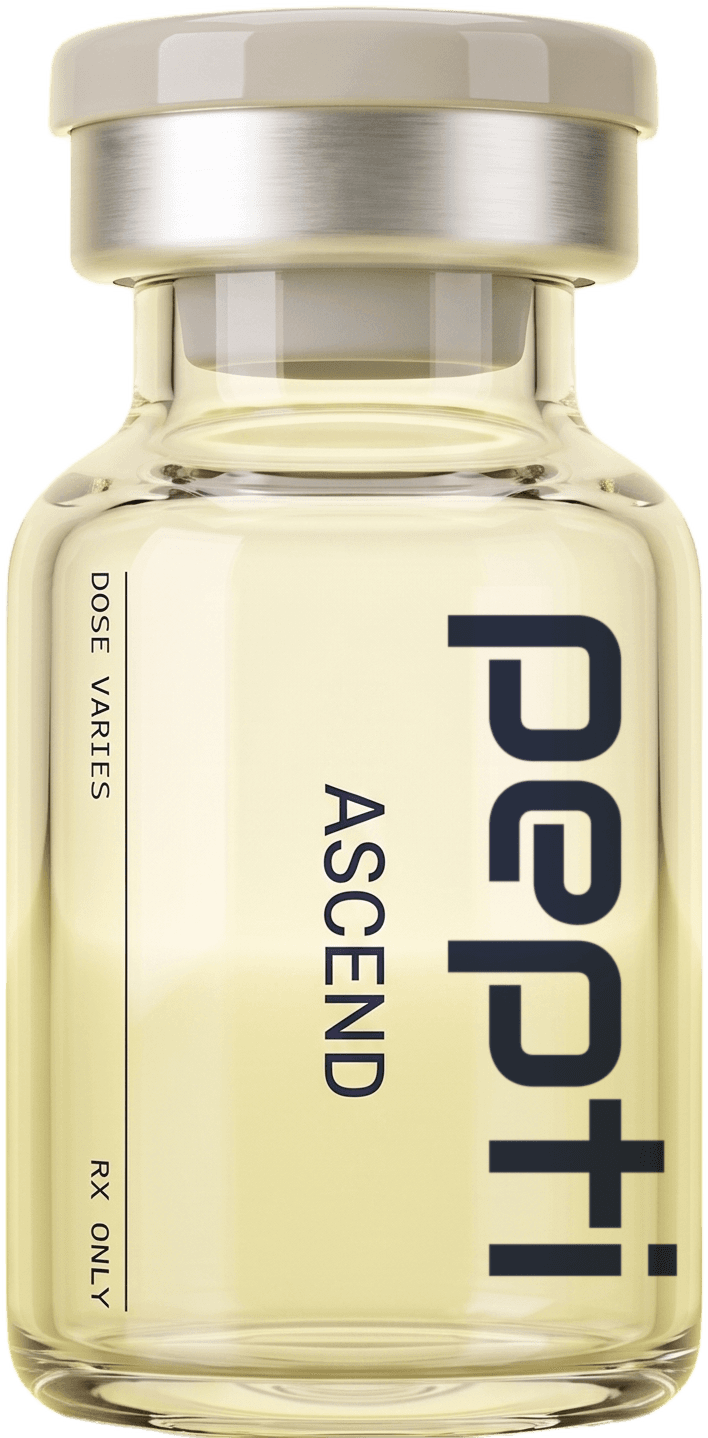
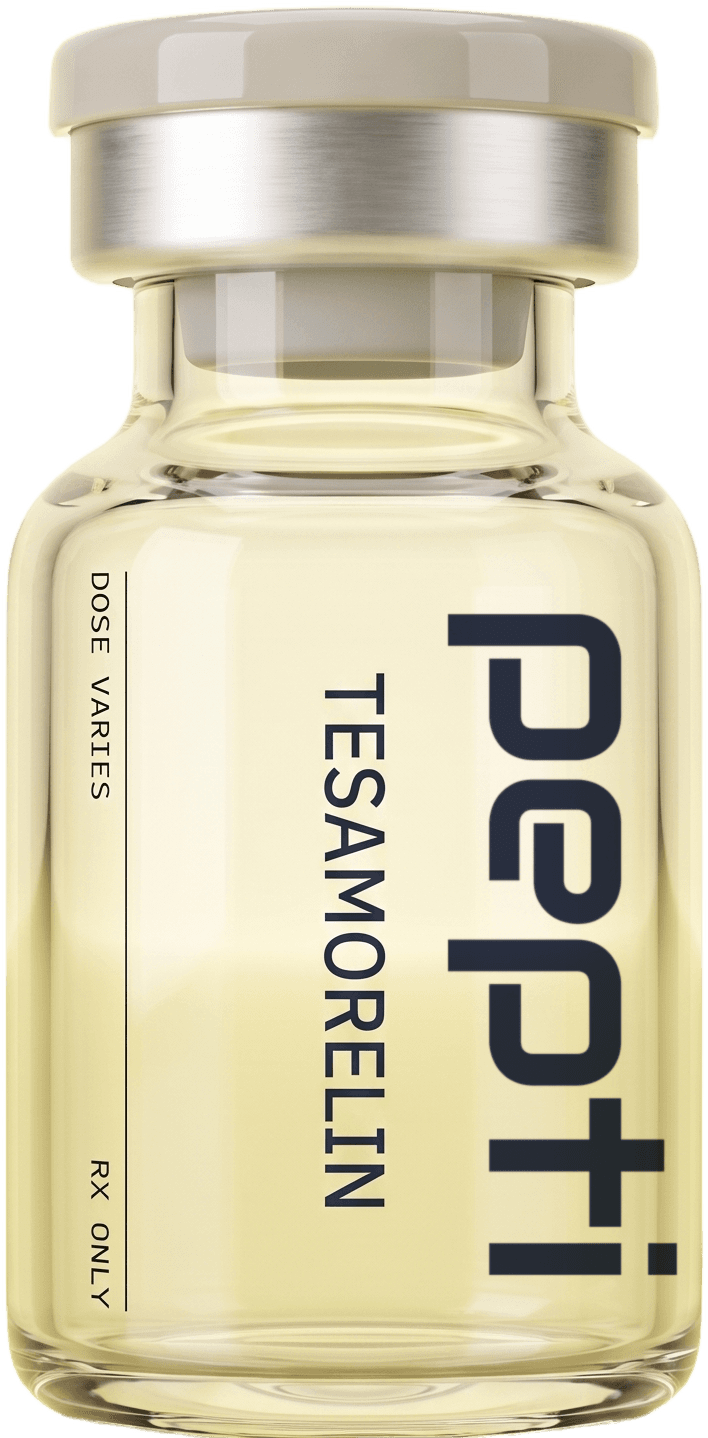
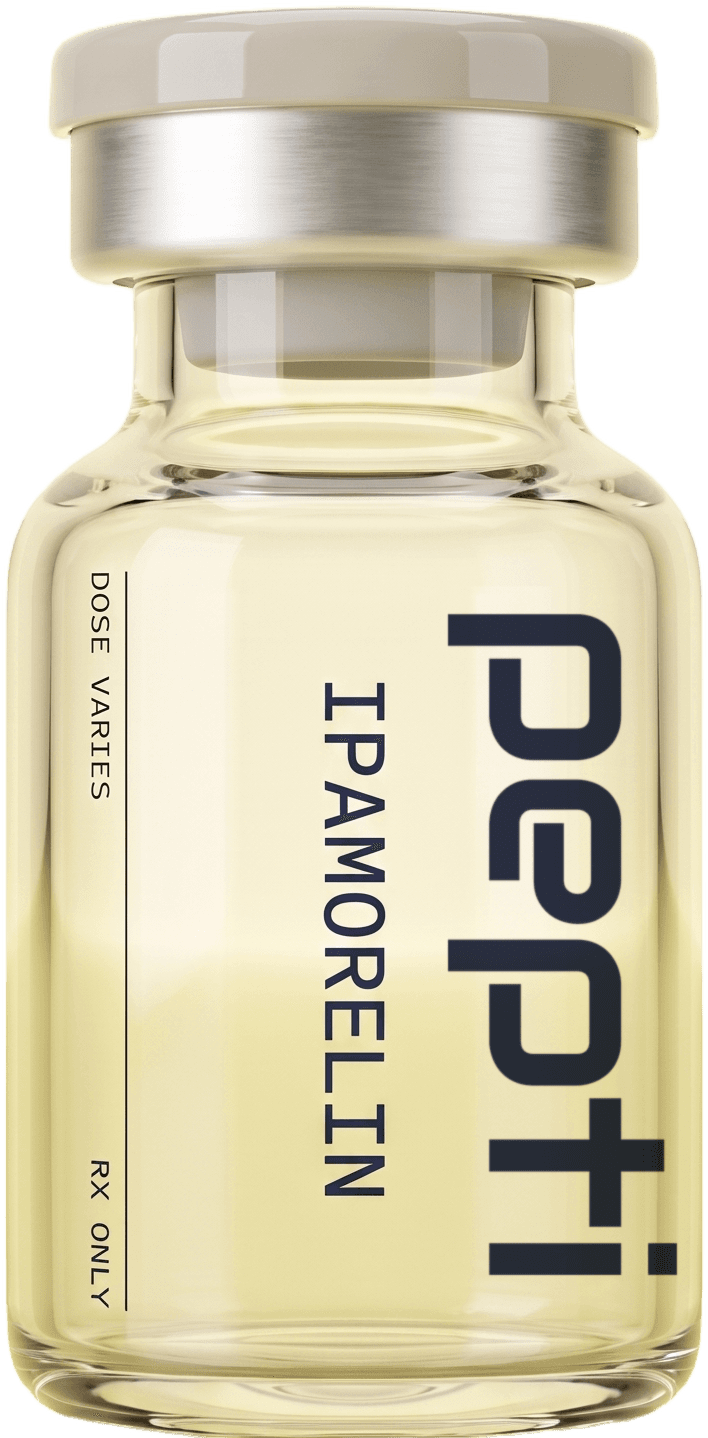
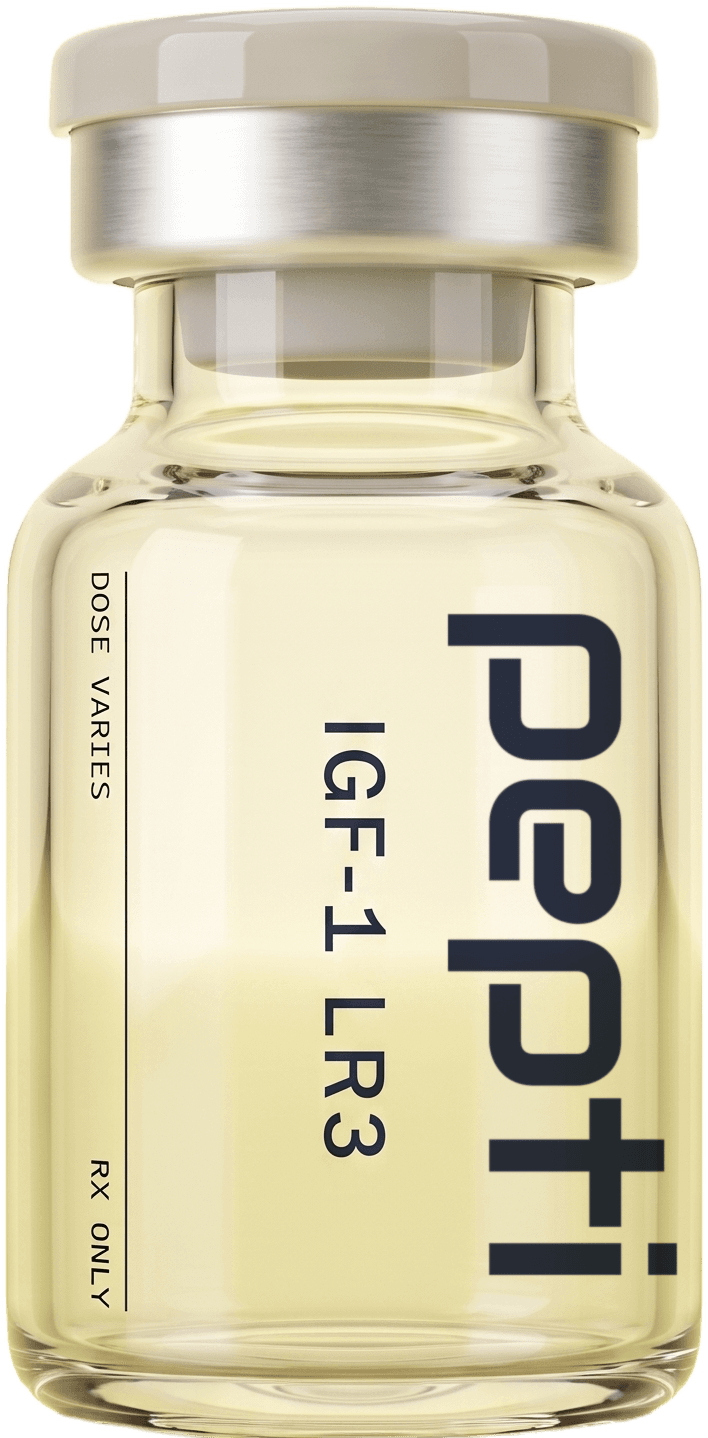
ASCEND has no measured timeline, because the blend of CJC-1295, ipamorelin, tesamorelin and IGF-1 LR3 has never been studied as a blend, in people or in animals. The time frames that exist belong to its components: tesamorelin trials that measured visceral fat on CT at 26 weeks and at 12 months, single-injection studies of CJC-1295 that measured growth hormone and IGF-1 over the following days, an intravenous ipamorelin study that timed a growth hormone pulse in minutes, and rat studies of IGF-1 LR3. None of those used ASCEND's doses or schedule, and none is a forecast of when a person on the blend will notice anything.
This page sets out what was measured for each component and for how long, why those clocks do not combine into an ASCEND timeline, and how to judge ASCEND honestly on the 28-day vial it is supplied in. For the blend itself, see what is ASCEND; for each claimed benefit, see ASCEND blend benefits.
How Long Does ASCEND Blend Take to Work? What Was Measured for Its Four Peptides
The short answer
| Component | Study | How long it ran | What it measured | Dose and route |
|---|---|---|---|---|
| Tesamorelin | New England Journal of Medicine, 2007, 412 people with HIV | 26 weeks | Visceral fat on CT; IGF-1 rose 81% | 2 mg daily, injection |
| Tesamorelin | Pooled phase 3 analysis, 2010, 806 patients | 26 weeks, extension to 52 | Visceral fat maintained on treatment, returning toward baseline on placebo | 2 mg daily |
| Tesamorelin | Journal of Clinical Endocrinology and Metabolism, 2012, 60 abdominally obese adults | 12 months | Visceral fat | 2 mg daily |
| Tesamorelin | Archives of Neurology, 2012, 152 adults aged 55 to 87 | 20 weeks | Cognitive testing at weeks 10 and 20 | 1 mg at bedtime |
| CJC-1295 | Journal of Clinical Endocrinology and Metabolism, 2006, healthy adults | Days after a single injection | Growth hormone and IGF-1 | The DAC form, not the form in ASCEND |
| Ipamorelin | Pharmaceutical Research, 1999, healthy male volunteers | Hours after each dose | Growth hormone pulse, peaking about 40 minutes; half-life about two hours | Intravenous |
| Ipamorelin | 2014 phase 2, 114 adults after bowel resection | Up to seven days | Time to tolerating a solid meal; not significant | Intravenous |
| IGF-1 LR3 | Biochemical Journal, 1992; Journal of Endocrinology, 1995 | Animal experiments | Nitrogen balance in catabolic rats; organ growth in guinea pigs | Animals only |
| ASCEND, as a blend | None | Never studied | Nothing | Not applicable |
Read the last row first. Pepti supplies ASCEND as a 5 mL vial holding 6 mg CJC-1295, 12 mg ipamorelin, 10 mg tesamorelin and 1 mg IGF-1 LR3 for $289/mo, all-in.
How Long Does ASCEND Blend Take to Work? What Was Measured for Its Four Peptides
Why the component clocks do not add up to an ASCEND timeline
It is tempting to take the shortest component timeline, or the longest, and call it the answer. Neither works.
| Assumption | Why it does not hold |
|---|---|
| "ASCEND works in 40 minutes" | That was the peak of a growth hormone pulse after intravenous ipamorelin in volunteers, a blood measurement, not an experience |
| "ASCEND reduces belly fat in 26 weeks" | That was tesamorelin at 2 mg daily in people with HIV; ASCEND carries 0.5 mg tesamorelin five nights a week |
| "CJC-1295 keeps working for days" | That was the DAC form, built to last; ASCEND contains the form without DAC, dosed nightly |
| "Four peptides work faster than one" | No study has compared ASCEND with its components; a blend is a convenience, not a faster version of its parts |
| "IGF-1 LR3 acts directly, so it is quick" | IGF-1 LR3 has essentially no published human clinical studies, so nothing about its timing in people has been measured |
The general how long do peptides take to work guide makes the same point for every peptide: a marker moving quickly in a study is not the same as a person noticing a change, and stacking more peptides does not compress biology.
How Long Does ASCEND Blend Take to Work? What Was Measured for Its Four Peptides
What was measured for each component
Tesamorelin: the only component with long trials
Tesamorelin has the timed human data, and every trial was long. The 2007 phase 3 trial measured visceral fat on CT at 26 weeks: it fell 15.2 percent on treatment and rose 5.0 percent on placebo. The pooled analysis of two phase 3 trials followed 806 patients to 26 weeks with an extension to 52, and reported the reduction maintained in those who continued and returning toward baseline in those switched to placebo. The 2012 trial outside HIV ran for 12 months. The 2012 Archives of Neurology trial tested cognition at weeks 10 and 20 at 1 mg at bedtime.
What it tells you about timing. That the measured effect on visceral fat was assessed in months, on imaging, at four times the tesamorelin in an ASCEND dose. It does not say when anything began, and the extension data show the measured effect did not persist once treatment stopped. More is in how long does tesamorelin take to work.
CJC-1295: days, for a different form
The two 2006 studies in the Journal of Clinical Endocrinology and Metabolism gave single injections of CJC-1295 with DAC to healthy adults and reported dose-dependent rises in growth hormone and IGF-1 that persisted for days. The second, which sampled blood every ten minutes, reported that the pituitary's pulsatile pattern was preserved. In mice engineered to lack GHRH, a 2006 study reported that once-daily CJC-1295 normalised growth. None of this measured body composition, recovery or sleep, and none used the form without DAC at a nightly dose.
Ipamorelin: a pulse in minutes, nothing longer in people
The 1999 Pharmaceutical Research study gave intravenous ipamorelin to healthy male volunteers at five dose levels and reported a growth hormone pulse peaking about 40 minutes after the dose, with a half-life of about two hours. That is the timing of a hormone in blood, not of anything a person feels. The longest human study, the 2014 phase 2 trial in 114 adults after bowel resection, gave it intravenously twice daily for up to seven days and did not show a significant difference from placebo on time to tolerating a solid meal. Animal work ran for 15 days to three months on bone and muscle measures. See how long does ipamorelin take to work.
IGF-1 LR3: animal experiments only
The classic IGF-1 LR3 studies are in rats made catabolic with dexamethasone, where a 1992 Biochemical Journal paper reported improved nitrogen balance and body-weight gain, and in guinea pigs, where a 1995 Journal of Endocrinology paper reported organ growth alongside suppression of the animals' own IGF-1. There are essentially no published human clinical studies of IGF-1 LR3, so there is no human timeline at all. See what is IGF-1 LR3.
Sleep: a rationale, not a measurement
ASCEND is taken at bedtime because the body's largest growth hormone pulse occurs during slow-wave sleep, and a 2000 study in JAMA found slow-wave sleep and growth hormone secretion declining together in healthy men from early adulthood. No published trial of any component, or of the blend, has sleep or recovery as an endpoint, so there is no measured timeline for sleep either.
How Long Does ASCEND Blend Take to Work? What Was Measured for Its Four Peptides
How to judge ASCEND on a 28-day vial
| Detail | ASCEND |
|---|---|
| Vial | 5 mL: 6 mg CJC-1295, 12 mg ipamorelin, 10 mg tesamorelin, 1 mg IGF-1 LR3 |
| Typical directions | 0.25 mL (25 units) subcutaneously Monday through Friday nights at bedtime |
| Per dose | 0.3 mg CJC-1295, 0.6 mg ipamorelin, 0.5 mg tesamorelin, 0.05 mg IGF-1 LR3 |
| Doses per vial | 20 |
| How long a vial lasts | About four weeks |
| Price | $289/mo, all-in |
The per-dose figures are arithmetic from the vial's concentrations on a U-100 insulin syringe. Your physician sets your directions after reviewing your intake, and they are printed on the vial. The four are in fixed proportion, so every dose delivers the same split. ASCEND blend dosage explains the label.
Because nobody has measured when ASCEND does anything, the useful approach is to decide what you are watching before the first dose:
- Write down the goal. Body composition, sleep and recovery are different questions, and the evidence for each is different.
- Record a baseline. For body composition, a waist measurement taken the same way each time; for sleep, a simple log of bedtime, waking and how rested you feel.
- Keep everything else steady. Training, protein intake, alcohol and sleep habits change body composition and sleep more than any vial, so changing several things at once makes it impossible to tell what did what.
- Take the dose on your vial, on the schedule on your vial. Weekends off are part of the schedule. Taking more does not make anything happen sooner, and IGF-1 LR3 brings a low blood sugar risk.
- Report what happens, including nothing. That is what your physician needs at the review point they set.
If visceral fat is the whole goal, tesamorelin on its own is the component with the trial evidence. If sleep and recovery are the goal without the IGF-1 question, CJC-1295 / Ipamorelin is the secretagogue pair alone. TITAN swaps IGF-1 LR3 for BPC-157. PHYSIQ vs SHRED vs TITAN compares the neighbouring blends.
How Long Does ASCEND Blend Take to Work? What Was Measured for Its Four Peptides
When waiting is the wrong answer
Some things should not be waited out on any peptide. Unexplained tiredness, thirst and frequent urination can be blood sugar rising, which growth hormone can do over time. Snoring with exhaustion can be sleep apnoea. A soft middle with low energy can be sleep apnoea, early diabetes or alcohol. Each has its own assessment, and a longer course of ASCEND does not change it.
How Long Does ASCEND Blend Take to Work? What Was Measured for Its Four Peptides
When to message your care team
- Any episode of shakiness, sweating, sudden hunger or light-headedness after a dose, even if it passed.
- Puffiness, joint aches, or tingling or numbness in the hands, which usually mean more growth hormone than a person needs.
- Thirst, frequent urination or unexplained tiredness.
- Nothing at all by the review point your physician described.
- A new symptom you did not have before starting.
Confusion that does not resolve, a seizure, facial or throat swelling or difficulty breathing is an emergency: call 911, then contact your physician. Who should not take ASCEND includes anyone with a personal or family history of cancer, diabetes or a tendency to low blood sugar, anyone pregnant or breastfeeding, and tested athletes. The full list is in ASCEND blend side effects.
How Long Does ASCEND Blend Take to Work? What Was Measured for Its Four Peptides
What the evidence shows, honestly
ASCEND is four literatures in one vial. One component, tesamorelin, has randomised trials that measured visceral fat over 26 weeks to 12 months at doses four times ASCEND's. Two, CJC-1295 and ipamorelin, have short studies that timed growth hormone in blood. One, IGF-1 LR3, has animal work only. The blend has never been tested, so it has no timeline, no effect size and no evidence that the four together do more than one alone.
On regulation: CJC-1295 and ipamorelin were reviewed by the FDA's Pharmacy Compounding Advisory Committee in late 2024, which voted against recommending them for the 503A Bulks List for the uses evaluated; both have since left 503A Category 2 as withdrawn nominations, with no final FDA determination. Tesamorelin is the active ingredient of an approved product. IGF-1 LR3 has never been nominated or reviewed. Compounded medications are not FDA approved.
How Long Does ASCEND Blend Take to Work? What Was Measured for Its Four Peptides
Where to get ASCEND prescribed
ASCEND cannot be bought legitimately without a prescription. Sites selling it "for research use only" are not accountable for identity, purity, sterility or concentration. The prescription route:
- Complete a free online intake covering your history, medications, blood sugar, cancer and family history, and what you want help with.
- A physician licensed in your state reviews it, usually within 24 hours.
- If it is appropriate, a PCAB-accredited, FDA-registered US 503A compounding pharmacy prepares it to that prescription. Lot test results are published at /quality/lab-results.
- It ships refrigerated with ice packs, ready to use, with sterile syringes, alcohol prep pads and your directions printed on the vial.
- Your physician stays reachable for questions and side effects. Refills run every 28 days, one vial per fill.
Pepti is cash-pay and does not bill insurance; the price covers medication, physician review, refill management and shipping, with no membership fee. Bloodwork is not required for any Pepti treatment. If your physician wants labs for your care, they'll ask through your account.
References
What this is based on.
References
- Falutz J, Allas S, Blot K et al.. Metabolic effects of a growth hormone-releasing factor in patients with HIV · N Engl J Med (2007) · PMID 18057338
- Raun K, Hansen BS, Johansen NL et al.. Ipamorelin, the first selective growth hormone secretagogue · Eur J Endocrinol (1998) · PMID 9849822
- Teichman SL, Neale A, Lawrence B et al.. Prolonged stimulation of growth hormone (GH) and insulin-like growth factor I secretion by CJC-1295, a long-acting analog of GH-releasing hormone, in healthy adults · J Clin Endocrinol Metab (2006) · PMID 16352683
Citations are provided for educational purposes. They do not constitute medical advice. Always discuss any peptide protocol with your prescribing physician.
Common questions
How Long Does ASCEND Blend Take to Work? What Was Measured for Its Four Peptides, answered.
No study has measured it, because ASCEND has never been studied as a blend. The time frames that exist belong to its components, at different doses, and none is a forecast for the blend.
Tesamorelin trials ran 20 weeks to 12 months, with visceral fat measured at 26 weeks in the main phase 3 trial. CJC-1295 studies followed growth hormone for days after single injections. The longest ipamorelin human study ran up to seven days. IGF-1 LR3 has animal studies only.
The closest measurement is the 1999 volunteer study of intravenous ipamorelin, which reported a growth hormone pulse peaking about 40 minutes after the dose. That is a blood measurement of one component given by a different route, not an ASCEND timeline.
There is no study of ASCEND for that. Tesamorelin's trials measured visceral fat at 26 weeks and 12 months at 2 mg daily, four times the tesamorelin in an ASCEND dose.
No trial of any component has sleep as an endpoint. ASCEND is taken at bedtime because the largest growth hormone pulse occurs in slow-wave sleep, which is a rationale rather than a measured timeline.
That has not been shown. No study has compared ASCEND with its components or with the two-peptide pair.
No. Take the dose printed on your vial, on the schedule printed on your vial. Report what you notice, including nothing, to your care team.
No withdrawal is described for any component. In the tesamorelin extension data, visceral fat returned toward baseline in those switched to placebo, so the measured effect did not persist on its own.
No. Compounded medications are not FDA approved, and ASCEND is not approved for anything. An approved tesamorelin product exists for one indication at a different dose.
At Pepti, ASCEND is $289 a month, all-in, covering medication, physician review, refill management and shipping. The free assessment goes to a physician licensed in your state. A consultation does not guarantee a prescription.
Next step
See what a physician recommends for you.
A licensed physician in your state reviews your intake and decides what is appropriate. A consultation does not guarantee a prescription.