Anti-Aging · Reference
FOXO4-DRI vs Thymalin: Two Ways to Think About an Ageing Immune System
FOXO4-DRI and thymalin both get discussed for age-related decline, but they approach it from opposite directions and with different kinds of evidence.
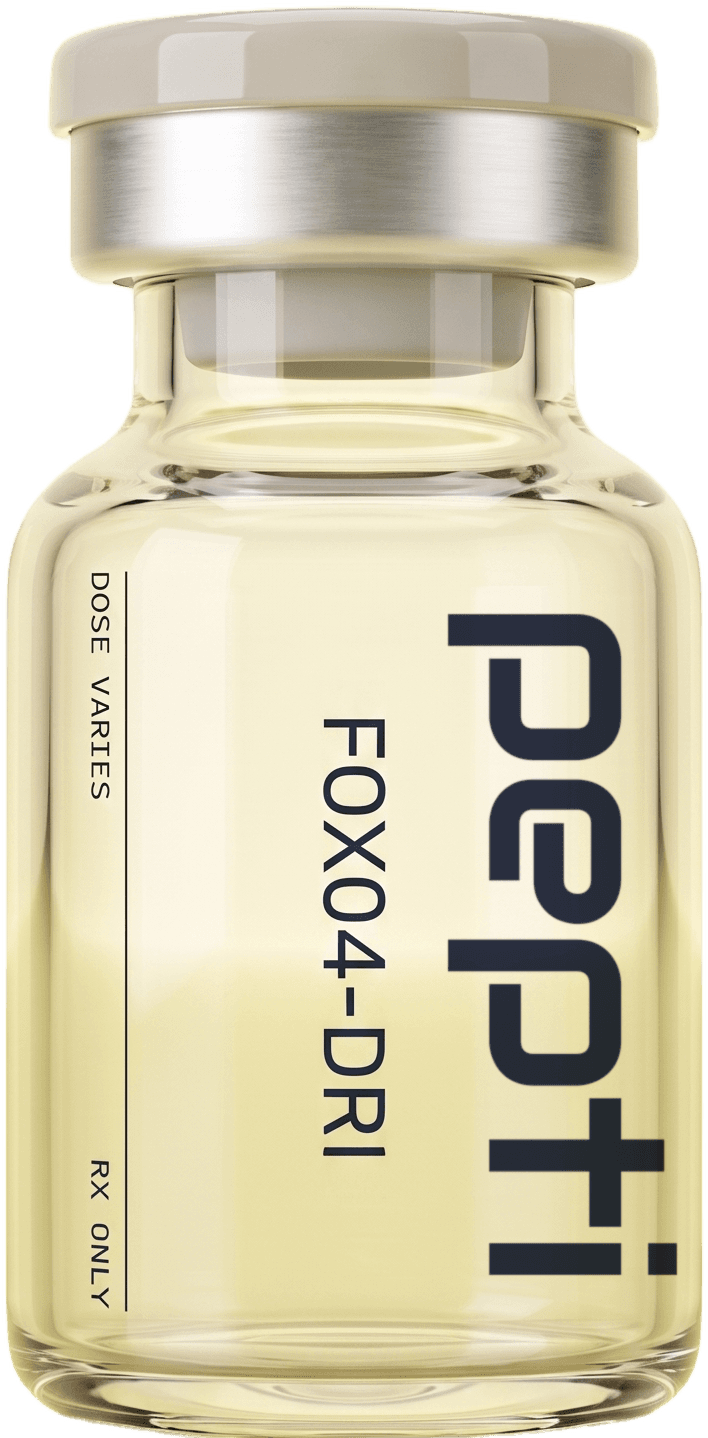
Treatments mentioned
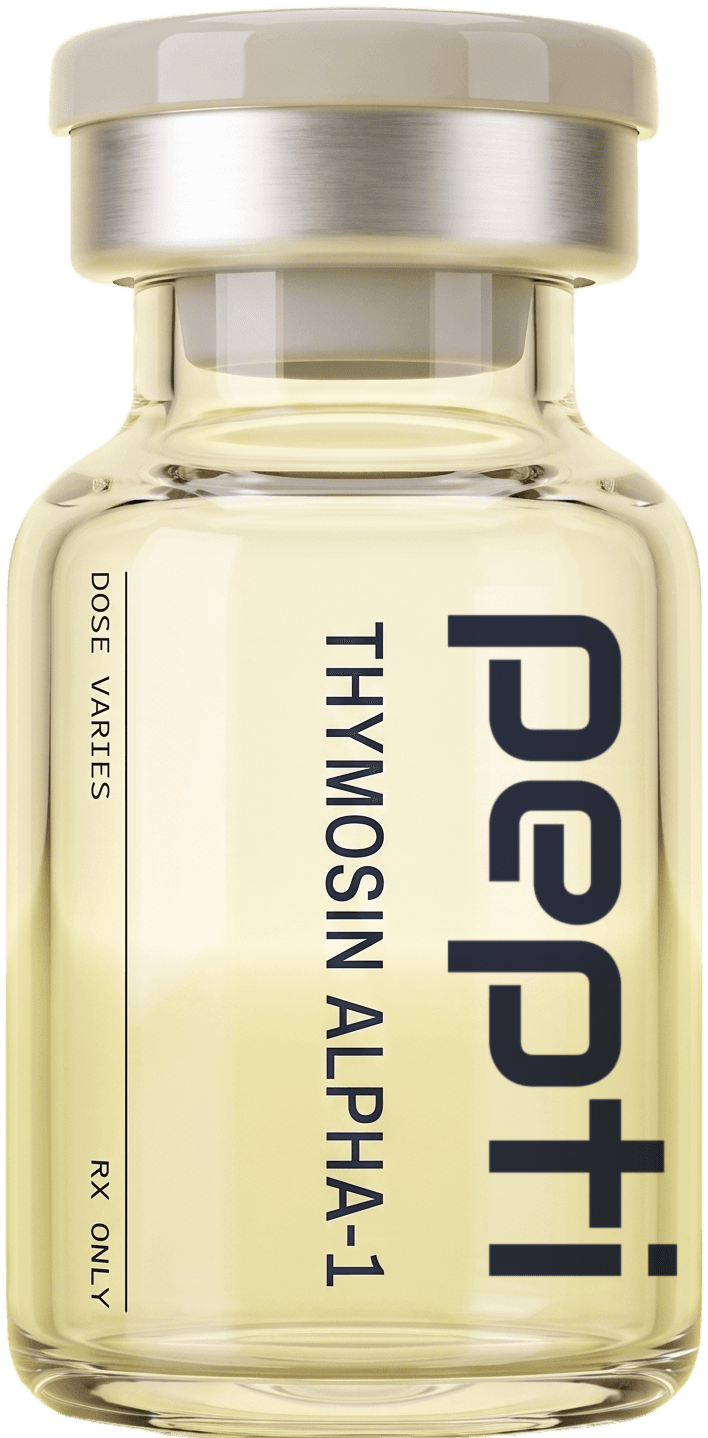
FOXO4-DRI is a designed peptide that aims to remove senescent cells, the cells that stop dividing, linger in tissue and secrete inflammatory signals; every finding is from mice or cells, and no person has been treated in a published study. Thymalin is an extract of calf thymus, used clinically in Russia for decades and described around T-cell maturation and calmer inflammatory signalling, with long-running observational human data but no randomized controlled trial. Both are prescription-only, compounded, and not FDA approved, and neither has ever been reviewed by the FDA.
This page explains each on its own terms, puts them side by side, covers what the research does and does not show, where each stands with the FDA, how each is dosed, what each costs at Pepti, and who tends to suit which.
FOXO4-DRI vs Thymalin
The short answer
| If your main question is | The usual prescription | What is in it | Price |
|---|---|---|---|
| Clearing senescent cells (experimental) | FOXO4-DRI | 10 mg FOXO4-DRI in a 5 mL vial | $229/mo |
| Immune ageing and T-cell function | Thymalin | 5 mg thymalin in a 5 mL vial | $209/mo |
| An immune peptide with randomized trials | Thymosin Alpha-1 | 10 mg thymosin alpha-1 in a 5 mL vial | $249/mo |
| Immune support inside a broader blend | FORTIFY Blend | Thymosin alpha-1, BPC-157, KPV and LL-37 | $289/mo |
Every figure is an all-in monthly price covering the medication, physician review, refill management and shipping. There is no separate membership fee, and Pepti is cash-pay and does not bill insurance. Current pricing always lives on each product page.
FOXO4-DRI vs Thymalin
Why these two get compared
Both touch the same biology from different ends. As people age, the thymus shrinks and produces fewer new T-cells, and at the same time senescent cells build up in tissues and release a mix of inflammatory signals known as the senescence-associated secretory phenotype. Thymalin's rationale is to support the immune side: supply thymic signalling peptides to a body whose thymus has largely stopped. FOXO4-DRI's rationale is to remove the senescent cells themselves. Neither has been tested against the other, and neither has a controlled human trial.
FOXO4-DRI vs Thymalin
FOXO4-DRI on its own terms
What it is
FOXO4-DRI was designed in Peter de Keizer's laboratory at Erasmus University Medical Center in Rotterdam and described in a 2017 paper in Cell. Senescent cells use the protein FOXO4 to hold p53 in the nucleus and avoid their own death programme. The peptide copies a stretch of FOXO4 and acts as a decoy. It is built from D-amino acids in reverse order (D-retro-inverso), which protects it from enzymes, and carries a cell-penetrating tag. The full reference is at what is FOXO4-DRI.
How it is described to work
- Disrupting FOXO4 and p53, confirmed structurally in a 2025 Nature Communications study.
- Cell-intrinsic apoptosis: p53 leaves the nucleus and the senescent cell triggers its own programmed death.
- Lower inflammatory secretions: a 2024 Experimental Gerontology mouse study described reduced secretory-phenotype output from aged Leydig cells after senescent cells were cleared.
What the research shows
Mouse studies report reduced chemotherapy toxicity and restored fitness, fur density and kidney function in old and fast-aging mice (2017), plus work in aged testis, lung fibrosis and aorta. Human cartilage and keloid cells have been studied in a dish. There are no human trials of FOXO4-DRI of any kind.
FOXO4-DRI vs Thymalin
Thymalin on its own terms
What it is
Thymalin is a polypeptide complex extracted from the thymus of young cattle, not a single defined sequence. The developers describe two dipeptides inside it, Lys-Glu (KE) and Glu-Trp (EW), as the active components. It was developed from 1973 by Vladimir Khavinson and Vyacheslav Morozov at what became the St Petersburg Institute of Bioregulation and Gerontology, and it is not a hormone, a steroid, a vaccine or an antiviral. The full reference is at what is Thymalin.
How it is described to work
- T-cell maturation. A 2020 paper reported human blood stem cells in culture shifting toward mature CD28-positive T-lymphocytes.
- Inflammatory cytokines. A 2023 paper reported thymalin and its dipeptides reducing IL-1 beta, IL-6 and TNF-alpha in stimulated human immune cells; a 2022 study reported similar effects in a monocyte line.
- Hospital markers. Two Russian COVID-19 studies (2021 and 2022) reported faster falls in IL-6, C-reactive protein and D-dimer with thymalin added to standard care.
What human data exists
A long observational programme followed 266 older adults in St Petersburg and Kiev for six to eight years and reported fewer respiratory infections and lower mortality in thymalin-treated groups. Two Russian hospital studies in COVID-19 patients reported changes in inflammatory and clotting markers. None of the published abstracts describes randomization, blinding or placebo, and no independent group has replicated the work. There are no randomized controlled trials of thymalin.
FOXO4-DRI vs Thymalin
Head to head
| FOXO4-DRI | Thymalin | |
|---|---|---|
| What it is | Designed D-peptide with a cell-penetrating tag | Calf-thymus polypeptide extract |
| Origin | Rotterdam, 2017 | Leningrad, from 1973 |
| Basic idea | Remove senescent cells | Support T-cell maturation and immune regulation |
| Main described mechanism | Disrupting FOXO4 and p53 | Shifting progenitors toward mature T-cells; lowering inflammatory cytokines |
| Human data | None | Russian observational cohort and hospital studies |
| Randomized controlled trials | None | None |
| Clinical use history | None on record | Decades in Russia |
| Allergy consideration | Unusual peptide chemistry, untested in people | Animal-derived extract, a theoretical allergy risk |
| FDA status | Never nominated or reviewed | Never nominated or reviewed |
| Vial at Pepti | 5 mL, 2 mg/mL (10 mg) | 5 mL, 1 mg/mL (5 mg) |
| Typical directions | 0.25 mL (25 units) once daily, Monday to Friday | 0.25 mL (25 units) once daily, Monday to Friday |
| Per dose (math) | 0.5 mg | 0.25 mg |
| Doses per vial | 20, about 4 weeks | 20, about 4 weeks |
| Price at Pepti | $229 a month | $209 a month |
Two different kinds of uncertainty
Both have thin evidence, but the thinness is different. FOXO4-DRI has modern, precise molecular work, published in leading journals, all in mice and cells. Thymalin has decades of human use and a large observational cohort, from one research network, without the trial designs that would let anyone separate its effect from everything else going on. One is a defined mechanism without people; the other is people without a controlled design.
FOXO4-DRI vs Thymalin
Who suits which
Thymalin
Thymalin is the one discussed when the concern is immune ageing specifically, and when a physician and patient are interested in the Russian geroprotective programme. If controlled evidence matters most for an immune goal, thymosin alpha-1 has the stronger file. Thymalin is a cautious conversation for anyone with an autoimmune condition or on immunosuppressive therapy.
FOXO4-DRI
FOXO4-DRI is for someone who specifically wants to trial a senolytic and accepts that there is no human data, no established human dose and no observable marker of whether it is doing anything. A cancer history or lung disease needs a careful conversation first.
Can you take FOXO4-DRI and thymalin together?
No study has tested the pairing. They act on different systems, and your physician weighs any combination after reviewing your intake. Starting one at a time makes it easier to tell what is doing what.
FOXO4-DRI vs Thymalin
When neither is the right first step
| Situation | What makes more sense |
|---|---|
| An active infection | Your physician; neither peptide treats an infection directly |
| A diagnosed immunodeficiency or autoimmune condition | A specialist; neither is a substitute for established therapy |
| You want something with human trial data | Thymosin Alpha-1 for immune goals, NAD+ for broader ageing goals |
| Inflammation that will not settle | KPV, described around inflammatory pathways |
| The pineal and telomere side of ageing | Epithalon, thymalin's sister compound |
FOXO4-DRI vs Thymalin
Where each stands with the FDA
These two share an unusual position: the FDA has expressed no view on either. As of the FDA pages checked in September 2026:
| FOXO4-DRI | Thymalin | |
|---|---|---|
| 503A interim categories (document of 14 May 2026) | In none of Category 1, 2 or 3 | In none of Category 1, 2 or 3 |
| Category 2 safety listing | Never | Never |
| April 2026 removals | Not involved | Not involved |
| Advisory committee | Not on the July 2026 agenda or the meeting announced for early 2027 | Not on any agenda; no review announced |
| On the 503A Bulks List | No | No |
"Thymulin acetate," a different thymic peptide, sits in Category 3; it is not thymalin. Neither compound has been flagged, reviewed or recommended. That is different from a substance that has been through the process. Both remain legal to prescribe and dispense as compounded medications, and compounded medications are not FDA approved. See are peptides FDA approved.
FOXO4-DRI vs Thymalin
Dosing, side by side
Both are drawn to 0.25 mL, which is 25 units on a U-100 insulin syringe, and injected under the skin once daily Monday through Friday, abdomen or thigh, rotating sites.
| What you read | FOXO4-DRI | Thymalin |
|---|---|---|
| Concentration | 2 mg/mL | 1 mg/mL |
| Dose volume | 0.25 mL (25 units) | 0.25 mL (25 units) |
| Per dose (math only) | 0.5 mg | 0.25 mg |
| Doses per vial | 20 | 20 |
| Time per vial | About 4 weeks | About 4 weeks |
You do not need to calculate anything: your directions are printed on the vial, and your physician sets them after reviewing your intake. Refills run every 28 days, one vial per fill. Both ship refrigerated with ice packs, ready to use, with sterile syringes and alcohol prep pads. Both are generally used as courses rather than open-ended daily medicines: the thymalin programme repeated courses annually in older adults, and prescribers treat FOXO4-DRI as an intermittent course. Whether another vial follows is set by your physician.
FOXO4-DRI vs Thymalin
Side effects
FOXO4-DRI. No published human safety data. Clinically, mostly injection-site redness, mild soreness and occasional bruising. It acts on p53, the central tumour-suppressor protein, and a 2023 mouse study in Circulation reported senolytic interventions worsening pulmonary hypertension.
Thymalin. Mostly injection-site redness, mild soreness, occasional bruising or itching. As an animal-derived extract it carries a theoretical allergy risk, so a rash, hives or swelling beyond the injection site should be reported to your physician promptly. Anything else that acts on the immune system belongs on the intake.
For either, swelling of the face or throat or difficulty breathing needs emergency care first (call 911), then tell your physician.
FOXO4-DRI vs Thymalin
Who should not take either, or should discuss it first
| Situation | Why |
|---|---|
| Pregnancy or breastfeeding | Not used; safety data is absent |
| Personal or family history of cancer | Especially for FOXO4-DRI, which acts on the p53 pathway |
| Pulmonary hypertension or significant lung disease | Especially for FOXO4-DRI |
| Autoimmune disease or immunosuppressive therapy | Especially for thymalin |
| Past allergy to animal-derived products | Especially for thymalin |
| Tested athletes | Check your sport's current prohibited list before starting |
FOXO4-DRI vs Thymalin
What the evidence shows, honestly
Neither has been shown in a controlled trial to do anything for ageing or immunity in people. FOXO4-DRI has a precise target and a small, consistent set of mouse and cell studies. Thymalin has cell work, decades of Russian clinical use and an observational cohort with striking reported numbers that have not been tested in a controlled design. Any source describing either as proven is overstating it. The claim-by-claim read on thymalin is in thymalin benefits.
FOXO4-DRI vs Thymalin
Where to get FOXO4-DRI or thymalin prescribed
Neither can be bought legitimately without a prescription. Sites selling them "for research use only" are not accountable for what is in the vial: identity, purity, sterility and concentration are untested. The prescription route:
- Complete a free online intake covering your history, medications and what you want help with.
- A physician licensed in your state reviews it, usually within 24 hours.
- If it is appropriate, a PCAB-accredited, FDA-registered US 503A compounding pharmacy prepares it to that prescription. Lot test results are published at /quality/lab-results.
- It ships refrigerated with your directions printed on the vial.
- Your physician stays reachable for questions and dose changes.
Pepti prescribes both in every state except Oklahoma, plus DC For thymalin, the step-by-step page is how to get thymalin prescribed online; FOXO4-DRI starts from its product page.
References
What this is based on.
References
- Baar MP, Brandt RMC, Putavet DA et al.. Targeted Apoptosis of Senescent Cells Restores Tissue Homeostasis in Response to Chemotoxicity and Aging · Cell (2017) · PMID 28340339
- Bourgeois B, Spreitzer E, Platero-Rochart D et al.. The disordered p53 transactivation domain is the target of FOXO4 and the senolytic compound FOXO4-DRI · Nature Communications (2025) · PMID 40593617
- Zhang C, Xie Y, Chen H et al.. FOXO4-DRI alleviates age-related testosterone secretion insufficiency by targeting senescent Leydig cells in aged mice · Aging (Albany NY) (2020) · PMID 31959736
- Huang Y, He Y, Makarcyzk MJ et al.. Senolytic Peptide FOXO4-DRI Selectively Removes Senescent Cells From in vitro Expanded Human Chondrocytes · Frontiers in Bioengineering and Biotechnology (2021) · PMID 33996787
- Liu Y, Hou Q, Wang R et al.. FOXO4-D-Retro-Inverso targets extracellular matrix production in fibroblasts and ameliorates bleomycin-induced pulmonary fibrosis in mice · Naunyn-Schmiedeberg's Archives of Pharmacology (2023) · PMID 37074394
- Li Y, Zhang C, Cheng H et al.. FOXO4-DRI improves spermatogenesis in aged mice through reducing senescence-associated secretory phenotype secretion from Leydig cells · Experimental Gerontology (2024) · PMID 39025385
- Hu Z, Li F, Hu C et al.. FOXO4-DRI regulates endothelial cell senescence via the P53 signaling pathway · Frontiers in Bioengineering and Biotechnology (2026) · PMID 41625068
- Kong YX, Li ZS, Liu YB et al.. FOXO4-DRI induces keloid senescent fibroblast apoptosis by promoting nuclear exclusion of upregulated p53-serine 15 phosphorylation · Communications Biology (2025) · PMID 39994346
- Born E, Lipskaia L, Breau M et al.. Eliminating Senescent Cells Can Promote Pulmonary Hypertension Development and Progression · Circulation (2023) · PMID 36515093
Citations are provided for educational purposes. They do not constitute medical advice. Always discuss any peptide protocol with your prescribing physician.
Common questions
FOXO4-DRI vs Thymalin, answered.
FOXO4-DRI is a designed senolytic peptide meant to remove senescent cells. Thymalin is a calf-thymus extract described around T-cell maturation and immune regulation. One subtracts a category of cell; the other aims to support the immune system.
Thymalin, though not from controlled trials. It has a Russian observational cohort and hospital studies. FOXO4-DRI has no human data at all.
No. It has no described action on T-cells. The overlap is that senescent cells secrete inflammatory signals, and clearing them reduced those signals in mice.
No study has tested the pairing. Your physician reviews any combination with your intake.
No. Thymosin alpha-1 is a single synthetic 28-amino-acid sequence with randomized trials. Thymalin is an animal-derived extract with no randomized trials.
No. Neither has been nominated for the 503A bulks list, neither appears in any interim category, and neither has been on an advisory committee agenda.
Thymalin has decades of clinical use without a characteristic toxicity described in the published reports, though not under modern pharmacovigilance. FOXO4-DRI has only mouse safety data and acts on the p53 pathway.
There is no trial-established timeline for either in people. Neither the mouse studies nor the Russian cohort tells you when or whether you would notice anything.
At Pepti, FOXO4-DRI is $229 a month and thymalin is $209 a month, all-in, including the medication, physician review, refill management and shipping.
Bloodwork is not required for any Pepti treatment. If your physician wants labs for your care, they'll ask through your account. The free assessment goes to a physician licensed in your state. A consultation does not guarantee a prescription.
Related answers
Keep reading.
- FOXO4-DRI: What It Is, Where to Get It Prescribed, and What It Costs
- Thymalin: What It Is, Where to Get It Prescribed, and What It Costs
- How Long Does FOXO4-DRI Take to Work? What the Mouse Studies Measured, and When
- How to Get FOXO4-DRI Prescribed Online: Step by Step
- Topical GHK-Cu vs Injectable GHK-Cu: Evidence, Safety, Cost and Which Fits
Next step
See what a physician recommends for you.
A licensed physician in your state reviews your intake to see whether treatment fits your history. A consultation does not guarantee a prescription.