Recovery · Reference
Where to Buy TB-500 Online: Prescription Route, Costs and Red Flags
This page covers what TB-500 is, the two products that share its name, how the prescription route works, what a legitimate provider shows you, the red flags, where TB-500 stands with the FDA and anti-doping authorities as of September 2026, and what the evidence does and does not support.

Reviewed by Dr. Gene, MD · Board-certified Family Medicine
Every Pepti prescription is reviewed by a licensed U.S. physician before it's dispensed — and only provided if clinically appropriate.
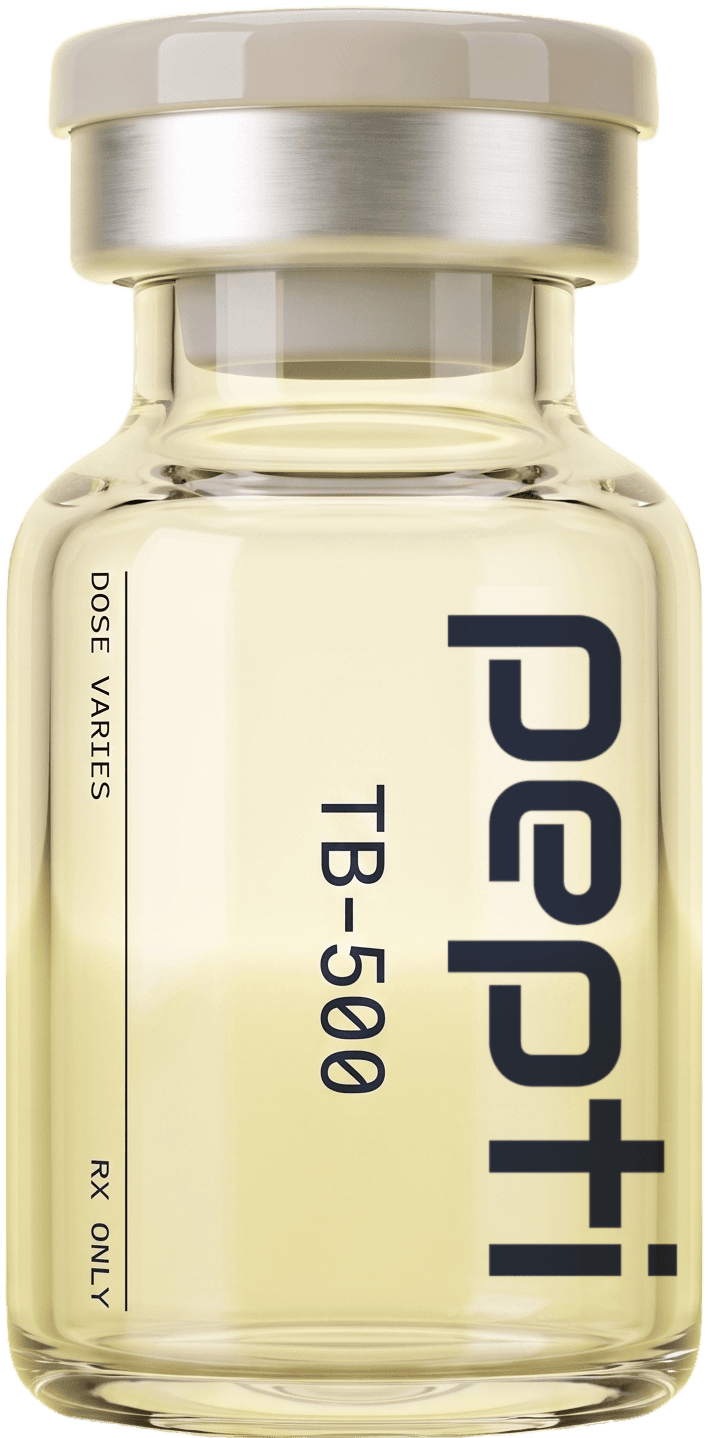
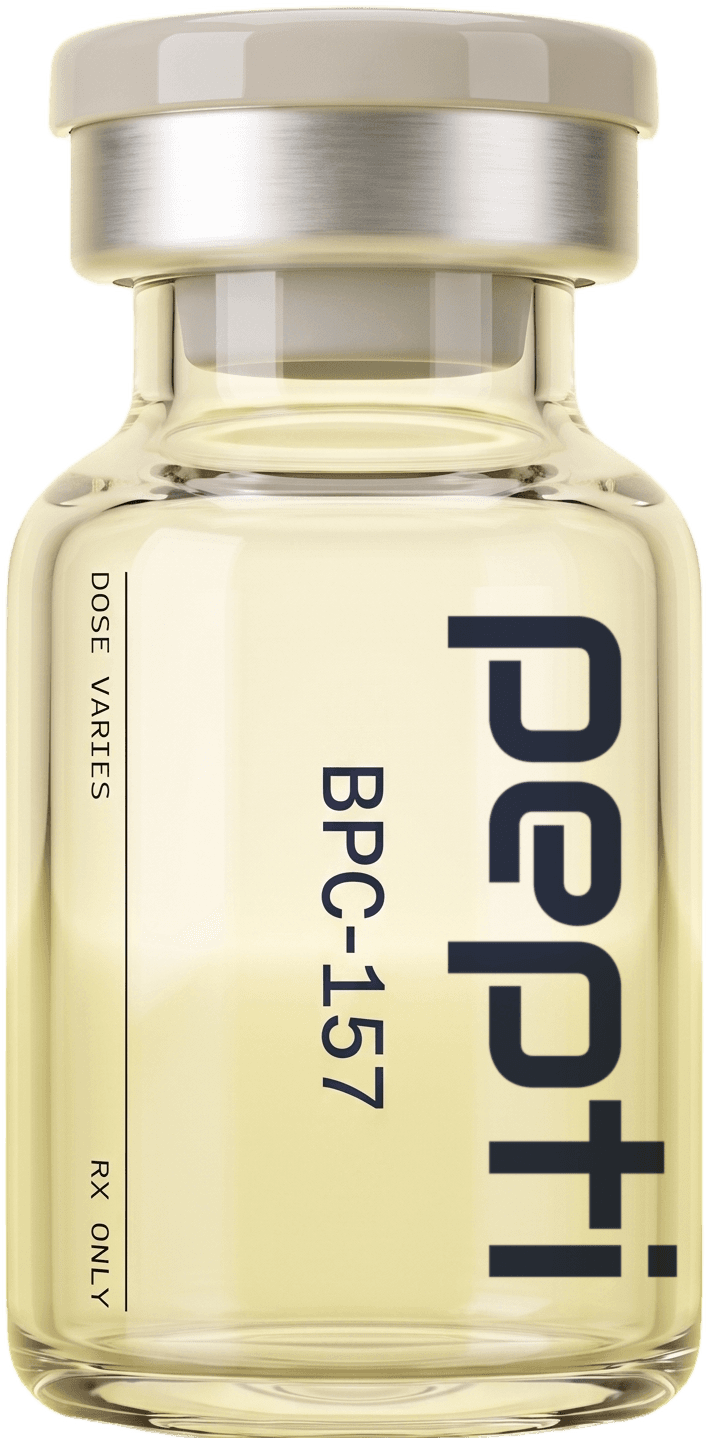
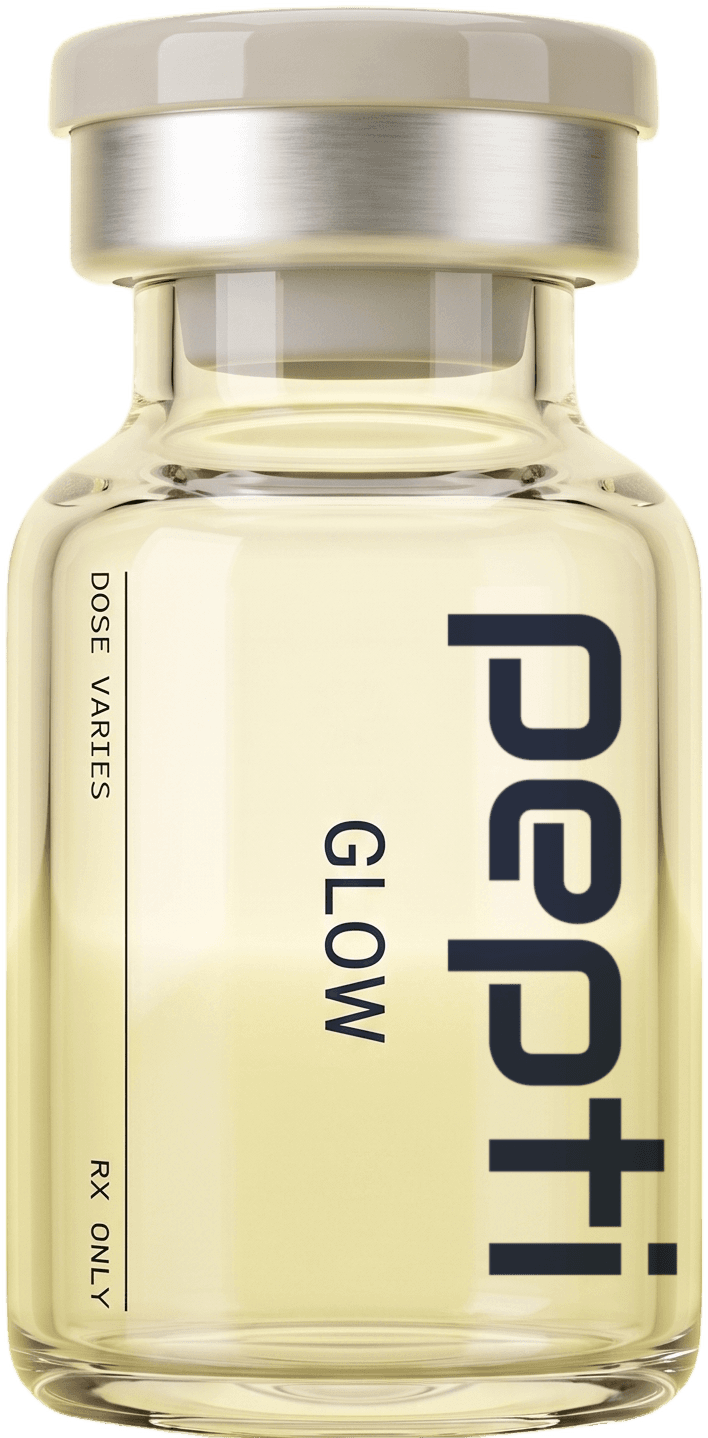
TB-500 is prescription-only as a medication, so buying it online legitimately means a telehealth provider with a physician licensed in your state and a licensed US compounding pharmacy that fills the prescription. Most TB-500 for sale online is not that. It is sold as a research chemical under a not-for-human-use label, which is how those sites ship without a prescription. Compounded TB-500 is not FDA approved, and the difference that matters is oversight: a prescriber who assessed you, a pharmacy held to sterile-compounding standards, and a record in your chart.
This page covers what TB-500 is, the two products that share its name, how the prescription route works, what a legitimate provider shows you, the red flags, where TB-500 stands with the FDA and anti-doping authorities as of September 2026, and what the evidence does and does not support.
Where to Buy TB-500 Online
The short answer
| If you are treating | The usual prescription | What is in it | Price |
|---|---|---|---|
| A soft-tissue injury, in the standard pairing | BPC-157 + TB-500 | 5 mg BPC-157 and 5 mg TB-500 in 5 mL | $259 |
| TB-500 on its own | TB-500 | 5 mg TB-500 in 5 mL | $209 |
| Repair plus skin and collagen | GLOW | 50 mg GHK-Cu, 10 mg BPC-157, 10 mg TB-500 | $259 |
| Repair plus inflammation plus skin | KLOW | 50 mg GHK-Cu, 10 mg KPV, 10 mg BPC-157, 10 mg TB-500 | $259 |
| Recovery alongside growth signalling | REVIVE | 50 mg GHK-Cu, 6 mg CJC-1295, 12 mg Ipamorelin, 2 mg TB-500 | $279 |
Each price is all-in per month: medication, physician review, refill management and shipping. It is a subscription that continues until you cancel it in your account.
Which of those, if any, is appropriate is the physician's decision after reviewing your intake. Current figures for the single-agent product are always on the TB-500 cost page; the table is a guide to which product is usually prescribed for which situation, not a menu.
Where to Buy TB-500 Online
What TB-500 actually is
A seven-amino-acid fragment, not the whole protein
TB-500 is a synthetic fragment related to thymosin beta-4, one of the most abundant proteins inside many human cells. Its central described action is binding actin, the protein that gives a cell its structure and lets it move. The practical consequence in the research literature is cell migration: repair cells physically reaching damaged tissue instead of sitting at the edge of it.
The FDA's own description is more precise than most of what is written online: TB-500 is understood to be a seven-amino-acid synthetic fragment of thymosin beta-4, amino acids 17 to 23, with an acetyl group on the N-terminal leucine (Ac-Leu-Lys-Lys-Thr-Glu-Thr-Gln-OH). Thymosin beta-4 itself is 43 amino acids long. The fragment carries the six-residue segment (LKKTET) that is the actin-binding region of the parent protein, which is the whole basis for the argument that a short piece might do part of what the full protein does. That distinction is not academic: almost all of the published biology, and all of the human data, concerns the full protein. A fuller account is in what TB-500 is.
What the research describes it doing
Published work on thymosin beta-4 reports promotion of new blood vessels, downregulation of inflammatory mediators, upregulation of laminin-5 in wound repair, and reduced scar formation in some injury models. Most of that comes from corneal, cardiac and dermal wound studies. The 2005 review in Trends in Molecular Medicine describes the protein as an actin-sequestering molecule that "moonlights" in tissue repair, and the 2010 paper in the FASEB Journal matters most for TB-500 specifically, because it mapped which activities of thymosin beta-4 survive in short peptide sequences. All of it is animal and cell work; none of it describes what a vial of TB-500 will do in a person.
What it is not
It is injected subcutaneously; it is a peptide, so an oral version is not the same thing; and it is prohibited in tested sport. If you compete under an anti-doping code, that is the end of the conversation.
It is not a painkiller and has no described analgesic mechanism. It is not a substitute for surgery where a structure has failed. It is not a hormone and does not suppress anything of your own. And it is not, in any form, an FDA-approved drug.
Where to Buy TB-500 Online
Why it is usually prescribed with BPC-157
TB-500 and BPC-157 are not competitors. They sit at different points of the same repair sequence, which is why most prescriptions for an injury end up as one combined vial rather than two separate ones.
| Stage of repair | What has to happen | Which of the two acts here |
|---|---|---|
| Inflammation settling | Immune cells clear debris and the area stops being reactive | BPC-157 |
| Cell migration | Fibroblasts and repair cells move into the damage | TB-500 |
| New blood supply | Vessels reach tissue that is poorly vascularised to begin with | Both |
| Matrix and remodelling | Collagen is laid down and realigns under load | TB-500, and GHK-Cu where a blend is used |
One vial, one injection, one price. The clinical comparison is in BPC-157 vs TB-500.
For years the pairing rested on two separate literatures. A 2026 paper in Joint Diseases and Related Surgery is the first to examine BPC-157 and TB-500 together in one animal model, reporting histopathological and biomechanical findings in rat Achilles tendon healing. It is a rat study and does not change the human-evidence picture, but the combination is no longer purely an inference from two different sets of experiments.
Where to Buy TB-500 Online
The two products sold under the name "TB-500"
Search for TB-500 and you will find two things that look identical in a photograph: a small vial of white powder with a rubber stopper. They are not the same product.
The prescription product
A compounded TB-500 prescription is a specific strength of a specific substance, prepared by a state-licensed pharmacy to a physician's order for a named patient. The pharmacy sources the bulk substance from a registered supplier with a certificate of analysis, prepares it under sterile-compounding standards, and answers to its state board for what is in the vial. The prescriber answers to theirs for the decision to prescribe it.
The research-use-only product
A research-use-only vial is sold with a label stating it is not for human consumption. That label is what lets the seller ship without a prescription: they are not, on paper, supplying a medication. There is no prescriber, no pharmacy, no patient-specific label, and no regulator whose job it is to check that the powder is what the listing says, at the purity the listing says, in a sterile container. The FDA's review of the TB-500 market found several websites offering 2 mg to 15 mg powders for reconstitution, all stating the products are intended for research use only.
The naming problem the FDA documented
The FDA's May 2026 briefing to its advisory committee spends a striking amount of space on a problem most buyers never think about. "TB-500" is a common name, not a United States Adopted Name, and the agency reports having encountered multiple salts and derivatives, including different active moieties, sold commercially under the same common name. The briefing states that inconsistent naming "represent[s] a safety risk for patients as they may be dosed with a different [substance] than the physician ordered," and that several websites describe TB-500 as a synthetic version of thymosin beta-4 and use the terms interchangeably, when "thymosin beta-4 and TB-500 are not the same substance."
TB-500 exists as a free base and as an acetate salt, which the FDA treats as different bulk drug substances; the original nomination was unclear about which was being nominated, and the agency found supplier websites using the CAS registry number for the free base on listings for the acetate. A pharmacy compounding to a prescription knows which one it is using because its supplier's certificate of analysis says so. A research listing usually does not say. If a seller cannot keep its chemical identifiers straight on its own product page, the question of what is in the vial is open.
Where to Buy TB-500 Online
Prescription versus "research use only"
| Prescription from a US compounding pharmacy | "Research use only" vial | |
|---|---|---|
| Prescriber | A physician licensed in your state | None |
| Label | Your name, the drug, the strength, your directions | "Not for human consumption" |
| Sterility and accuracy | USP sterile-compounding standards, state board oversight | No requirement |
| What is in the vial | Made to the prescription, with batch records | Whatever the seller says |
| Accountability | Pharmacy and prescriber answer to their boards | Nobody |
| Adverse reaction | Message the prescriber, reportable event | No pathway |
| Your medical record | Documented | Absent |
| Cost | Higher, and it buys the column above | Lower |
The full comparison is in research peptides vs prescription peptides. The short version is that one column is a course of care and the other is a chemical.
Where to Buy TB-500 Online
The process, step by step
- Medical intake. History, medications, allergies, the injury itself, imaging if you have had any, and what rehabilitation you are doing. Several minutes, not three questions.
- Physician review by someone licensed in your state. They may ask follow-ups, request labs, or decline. Declining is what review looks like when the answer is no.
- Prescription written for a specific strength, volume and set of directions.
- A state-licensed, FDA-registered compounding pharmacy prepares it and ships it refrigerated, with your directions printed on the vial.
- Ongoing access to the prescriber for dose and side-effect questions, with refills managed for you.
Bloodwork is not routine for repair-focused treatment, though your history may prompt it. See do you need bloodwork before peptides.
What the intake actually asks
A real intake asks what you injured, when, how, whether it has been imaged, and what you have already tried. It asks about every medication and supplement you take, because there is no established interaction list for TB-500 and the physician is the only filter. It asks about personal cancer history, because a molecule described as promoting cell migration and new blood vessels is a real discussion to have with anyone who has one. It asks whether you compete in tested sport. A form that does not ask those things is not an intake.
What the physician is deciding
Three things: whether a repair peptide is a reasonable tool for the problem you describe, whether anything in your history argues against it, and which product fits. For a tendon or ligament problem that is usually the BPC-157 + TB-500 stack rather than TB-500 alone; where skin or connective-tissue goals are part of the picture it may be GLOW or KLOW.
What the pharmacy does, and what arrives
The pharmacy receives a prescription for a named substance, strength and volume, sources it from a supplier that ships it with a certificate of analysis, prepares it under sterile-compounding conditions, labels it for you, assigns a beyond-use date and ships it cold with ice packs. That is what "compounded" means: prepared for one patient to one order, not manufactured in advance and warehoused. If it arrives warm, you have someone to message and the pharmacy has a process for it. That sentence has no equivalent on the research side.
Refills, the 28-day rhythm and ongoing access
Treatment is long-term with 28-day refills. One vial per fill: a refill arrives as the previous vial runs out, which keeps the medication inside its beyond-use dating and keeps the physician in the loop. Nothing is stockpiled, and pausing or cancelling is done from your account. After the first fill you can message the prescriber about dosing, injection technique and side effects; dose changes go through the physician and appear on the next label. That relationship is the product. The vial is what it produces.
Where to Buy TB-500 Online
What a legitimate provider shows you
You should be able to establish everything below in about ten minutes, and a provider that makes any of it hard to find is telling you something.
The physician's license
A prescription for TB-500 is written by a physician licensed in the state you live in. The provider should say who its physicians are, and every state medical board runs a free public license lookup you can use to check a name. A site that names no prescriber anywhere has no prescriber.
The pharmacy's identity
The pharmacy that fills your prescription is state-licensed and FDA-registered, and it is named on your label. You can check a pharmacy license with the board of pharmacy in its home state. Pepti's quality page explains which pharmacies compound its medications and under what standards.
Certificates of analysis, and how to read one
A certificate of analysis is a laboratory document that identifies a specific lot, names the laboratory that ran the tests, and reports what the tests found: identity, purity, and for a sterile injectable, sterility and endotoxin. Pepti publishes lab results by product at /quality/lab-results#tb-500. What a real one looks like, and what a decorative one looks like, is in how to read a certificate of analysis.
The FDA's briefing makes a point buyers should borrow: because TB-500 has no USP or National Formulary monograph and no consistent nomenclature, it is not even clear from the outside which substance a given "reference standard" refers to. A certificate that does not say what was tested against is a graphic.
The label, the beyond-use date and the record
A prescription label carries your name, the drug and strength, the directions, the pharmacy's name and contact, the prescriber's name and a beyond-use date; the vial is stored refrigerated. A research label carries a product name and a disclaimer. Which one you receive is the whole answer to whether you bought a medication. Behind the label sits a record of what was prescribed, by whom, when and at what dose, which is what a future physician reads and what makes an adverse reaction reportable. It exists on the prescription side and is absent on the research side.
Where to Buy TB-500 Online
Red flags on any TB-500 seller
| What you see | What it tells you |
|---|---|
| Ships with no prescription | Research-chemical seller. Search their terms for "research use only" |
| "FDA approved" attached to TB-500 | Untrue in any form, compounded or otherwise |
| Peptide sold as a capsule or an oral spray for systemic repair | Different product, different absorption, not the injectable prescription |
| No prescriber named anywhere | There is no prescriber |
| Certificate of analysis with no laboratory name, no chromatogram, or the same purity on every product | A marketing graphic. See how to read a certificate of analysis |
| Bulk discounts by the gram | Laboratory supply pricing, not medication |
| Promises about how fast an injury will heal | Nobody can make that promise |
| Support that is a contact form and nothing else | No one to reach when a shipment arrives warm |
More checks, including verifying a licence with your state board, are in how to tell if a peptide seller is legitimate.
"TB-500 is thymosin beta-4," and "clinical trials"
This is the most common claim on seller pages, and the FDA has now put in writing that it is wrong. A page that describes the two as the same thing is either careless about chemistry or is borrowing the human trial record of the full protein for a fragment that has none. There are no published studies in which TB-500 was administered to humans; the FDA's literature search found none. A seller quoting "clinical trials" of TB-500 is quoting trials of thymosin beta-4, or nothing.
Performance language
The FDA's briefing lists the claims made for TB-500 online: tissue repair, muscle growth and tone, endurance, stamina and performance, hair growth, immune support, and more. None has human evidence behind it, and the performance ones describe something prohibited in tested sport. A seller leading with them is describing a product for a market, not a medication for a patient.
Where to Buy TB-500 Online
What it costs, and what the figure covers
Prescription TB-500 is priced on its product page and on the TB-500 cost page, as one all-in monthly figure. That figure covers the medication, the physician's review, refill management and refrigerated shipping. There is no separate membership fee and no separate consultation fee.
Why it is a subscription
Because treatment is long-term and refills arrive every 28 days, the charge is monthly and continues until you cancel it in your account. There is no minimum term. The BPC-157 + TB-500 stack, GLOW, KLOW and REVIVE are priced the same way on their own pages.
Why the research vial is cheaper
A research vial is cheaper because it does not include a physician, a licensed pharmacy, sterile preparation to a named prescription, cold-chain shipping, or anyone accountable afterward. The raw molecule is rarely the expensive part, which is explained in why compounded peptides are cheaper. You are not paying for an FDA-approved product, because there is none, or for a guaranteed outcome, because nobody can sell one.
Where to Buy TB-500 Online
Where TB-500 stands with the FDA right now
This has moved twice in 2026 and most of what is published online is out of date.
Category 2, and its removal
TB-500 was placed in Category 2 of the FDA's 503A bulk drug substances framework in 2023, the category for nominated substances the agency flagged as presenting significant safety risks. The stated concern was immunogenicity: the FDA's language was that "compounded drugs containing thymosin Beta-4, Fragment (LKKTETQ) may pose risk for immunogenicity for certain routes of administration due to the potential for aggregation as well as peptide-related impurities."
In April 2026 the FDA removed TB-500 from Category 2 along with a group of other peptides. On the FDA's significant-safety-risks page, content current as of 22 April 2026, TB-500 now appears under "bulk drug substances nominated but withdrawn," and the substances still listed as presenting significant safety risks are a different set: cesium chloride, chloral hydrate, diethylstilbestrol, domperidone, edetate disodium, germanium sesquioxide, GHRP-2, GHRP-6, ibutamoren mesylate, ipamorelin acetate, kisspeptin-10, neomycin sulfate, quinacrine hydrochloride and tranilast.
The current 503A list
The FDA's list of bulk drug substances nominated for use in compounding under section 503A, content current as of 14 May 2026, does not place TB-500 in Category 1, Category 2 or Category 3. It is not on the positive 503A Bulks List either. As of September 2026 it sits between the two: no longer flagged, not yet listed.
The July 2026 advisory committee
On 23 July 2026 the FDA's Pharmacy Compounding Advisory Committee reviewed TB-500 (free base and acetate) for the proposed use of wound healing, alongside BPC-157, KPV and MOTS-c the same day and emideltide, Semax and epitalon the day after. The committee voted 8 in favor, 6 against, with 1 abstention, to recommend adding TB-500 to the 503A Bulks List; BPC-157 and KPV received the same 8–6–1 tally.
What the FDA's own briefing said
The committee voted against the staff position. The FDA's briefing memo, dated 15 May 2026, concluded that "the evaluation criteria weigh against" placing TB-500 free base or TB-500 acetate on the list, for reasons a buyer should already care about: inconsistent naming, no USP monograph, no clinical studies in humans, and a continuing concern about immunogenicity from aggregation and impurities when a peptide is injected. The same document reports that a search of the FDA Adverse Event Reporting System through 26 March 2025 retrieved no reports for TB-500, while noting that reporting is voluntary and an absence of reports is not evidence of safety.
An advisory vote is a recommendation, not a decision. The FDA issues its own determination, and adding a substance to the list is done by rulemaking, which legal commentators expect to run into 2027 or longer.
What "not FDA approved" means here
Compounded medications are prepared by licensed pharmacies to individual prescriptions; they are not reviewed and approved by the FDA as finished products, and they never are. TB-500 is not a component of any FDA-approved drug, is not in the European or Japanese pharmacopeias, and has no approved product in Canada, Australia, the United Kingdom or the European Union. Any seller attaching "FDA approved" to TB-500 is wrong in every possible sense.
The accurate one-line summary: no longer in Category 2; not on the 503A Bulks List; recommended for it by the advisory committee on 23 July 2026 over the FDA staff's objection; final determination pending; not an FDA-approved drug; prescribed and dispensed against a valid prescription by state-licensed pharmacies.
Where to Buy TB-500 Online
Anti-doping status
The World Anti-Doping Agency's 2026 Prohibited List, in force from 1 January 2026, names "Thymosin-β4 and its derivatives e.g. TB-500" under S2.3, Growth Factors and Growth Factor Modulators. Section S2 is prohibited at all times, in and out of competition, and everything in it is a non-specified substance.
Detection is not theoretical. A 2012 paper in Drug Testing and Analysis synthesized and characterized the acetylated 17–23 fragment identified in TB-500 so that laboratories could test for it, and a 2012 paper in the Journal of Chromatography A described doping-control analysis of TB-500 in equine urine and plasma after a veterinary preparation appeared in horse and greyhound racing. WADA funded work on TB-500 metabolites for human screening from 2013. A prescription does not change any of this.
Where to Buy TB-500 Online
What the evidence shows, honestly
TB-500 research is preclinical. The thymosin beta-4 literature is substantial in animal and cell models, and TB-500 is a fragment of that molecule rather than the molecule itself, which is a distinction worth holding on to when a seller cites human trials of thymosin beta-4 as though they were trials of TB-500.
Thymosin beta-4 in animals and cells
This is where the depth is. The 1997 paper in the FASEB Journal reported directional migration of human endothelial cells; the 1999 Journal of Investigative Dermatology paper reported accelerated wound closure in rats; the 2003 paper in Wound Repair and Regeneration reported dermal wound repair in diabetic and aged mice for both the full protein and a synthetic peptide containing its actin-binding domain, which is the paper the FDA identifies as the fragment's origin. The 2007 Nature paper and the 2023 paper in Cardiovascular Research describe cardiac repair in mice. The corneal work in Experimental Eye Research (2002, 2007) and Experimental Cell Research (2004) describes wound closure, reduced inflammation and laminin-5 production, and the 2011 FASEB Journal paper describes suppression of NF-kB signaling.
Thymosin beta-4 in humans
Human data exist for the full protein, not the fragment, and they are early-phase. A 2010 paper in the Annals of the New York Academy of Sciences reported a randomized, placebo-controlled single- and multiple-dose study of intravenous thymosin beta-4 in healthy volunteers; a 2012 paper in the same journal described dermal healing in preclinical models and in patients; a 2015 paper in Cornea reported a phase 2 randomized trial in severe dry eye. None tested TB-500, none is a phase 3 trial, and none concerns tendon, ligament or muscle injury.
TB-500 the fragment
What has been studied on the fragment itself is laboratory work: the 2010 FASEB Journal mapping of active sites in short sequences, the 2003 wound-repair experiments, the 2012 doping-detection characterization, and the 2026 rat tendon study of BPC-157 and TB-500 together. The FDA's search identified no clinical studies and no case reports of TB-500 administered in humans, and notes that results from a non-acetylated version of the heptapeptide cannot be directly extrapolated to the acetylated form sold as TB-500.
There are no randomized human trials of TB-500 for tendon, ligament or muscle injury. It is used on mechanism and prescriber experience. It is not FDA approved. Patients commonly describe better tolerance to loading somewhere between weeks two and eight, but that is patient report, not a trial endpoint, and response varies.
What this means for a buyer
Buying TB-500 is buying a plausible mechanism, a substantial animal literature on its parent protein, and a physician's judgment that it is a reasonable thing to try for your problem. It is not buying an outcome. A provider that frames it any other way is the red flag, whatever else it gets right.
The other honest point: peptides do not replace rehabilitation. Tissue adapts to load. A vial supports a loading programme rather than substituting for one, and pain that is worsening, waking you at night, or coming with numbness or weakness needs imaging and not an injection.
Where to Buy TB-500 Online
When TB-500 is not the right purchase
- The injury is structural. A complete rupture, a displaced fracture or a significant meniscal tear is a surgical question. No peptide changes that, and a physician will say so.
- The problem is really inflammation. If the picture is a reactive, inflammatory tissue rather than a torn one, BPC-157 alone or KPV may be the better conversation; KLOW combines both with TB-500 and GHK-Cu.
- Skin and collagen are the goal. GHK-Cu and GLOW are aimed at that directly.
- You want recovery alongside growth-hormone signaling. REVIVE pairs a small TB-500 component with CJC-1295, ipamorelin and GHK-Cu, and is a different conversation from a repair-only prescription.
- You compete in tested sport. Then the answer is not a different product; it is no.
Your physician decides. A consultation does not guarantee a prescription, and being declined is refunded.
References
What this is based on.
References
- Goldstein AL, Hannappel E, Kleinman HK. Thymosin beta4: actin-sequestering protein moonlights to repair injured tissues · Trends Mol Med (2005) · PMID 16099219
- Malinda KM, Sidhu GS, Mani H et al.. Thymosin beta4 accelerates wound healing · J Invest Dermatol (1999) · PMID 10469335
- Malinda KM, Goldstein AL, Kleinman HK. Thymosin beta 4 stimulates directional migration of human umbilical vein endothelial cells · FASEB J (1997) · PMID 9194528
- Philp D, Badamchian M, Scheremeta B et al.. Thymosin beta 4 and a synthetic peptide containing its actin-binding domain promote dermal wound repair in db/db diabetic mice and in aged mice · Wound Repair Regen (2003) · PMID 12581423
- Philp D, Goldstein AL, Kleinman HK. Thymosin beta4 promotes angiogenesis, wound healing, and hair follicle development · Mech Ageing Dev (2004) · PMID 15037013
- Philp D, Scheremeta B, Sibliss K et al.. Thymosin beta4 promotes matrix metalloproteinase expression during wound repair · J Cell Physiol (2006) · PMID 16607611
- Smart N, Risebro CA, Melville AA et al.. Thymosin beta4 induces adult epicardial progenitor mobilization and neovascularization · Nature (2007) · PMID 17108969
- Sosne G, Szliter EA, Barrett R et al.. Thymosin beta 4 promotes corneal wound healing and decreases inflammation in vivo following alkali injury · Exp Eye Res (2002) · PMID 11950239
- Sosne G, Hafeez S, Greenberry AL 2nd et al.. Thymosin beta4 promotes human conjunctival epithelial cell migration · Curr Eye Res (2002) · PMID 12324865
- Sosne G, Xu L, Prach L et al.. Thymosin beta 4 stimulates laminin-5 production independent of TGF-beta · Exp Cell Res (2004) · PMID 14729067
- Sosne G, Qiu P, Christopherson PL et al.. Thymosin beta 4 suppression of corneal NFkappaB: a potential anti-inflammatory pathway · Exp Eye Res (2007) · PMID 17254567
- Sosne G, Qiu P, Goldstein AL et al.. Biological activities of thymosin beta4 defined by active sites in short peptide sequences · FASEB J (2010) · PMID 20179146
Citations are provided for educational purposes. They do not constitute medical advice. Always discuss any peptide protocol with your prescribing physician.
Common questions
Where to Buy TB-500 Online, answered.
You can buy vials labelled TB-500 from research-chemical sites without one, and that label means the seller is not supplying it for human use. The medication itself requires a prescription. The FDA's own market review found those sites offering 2 mg to 15 mg powders under research-use-only terms, with no pharmacy behind them. See can you buy peptides without a prescription.
Current pricing is on the TB-500 cost page and on each product page, as one all-in monthly figure covering medication, physician review, refill management and refrigerated shipping. The BPC-157 + TB-500 stack is priced on its own page the same way.
It is legal to prescribe and dispense against a valid prescription. It is not FDA approved, which is a separate question, and it is prohibited in tested competition. As of September 2026 it is no longer in Category 2 of the FDA's 503A framework, and the FDA's advisory committee has recommended adding it to the 503A Bulks List; the agency's final determination is pending.
No. It is a synthetic fragment related to thymosin beta-4, and most of the strongest published work is on the full protein. Sellers blur this constantly. The FDA's 2026 briefing states the two "are not the same substance" and identifies TB-500 as the acetylated 17–23 fragment of a 43-amino-acid protein.
Not necessarily. They overlap in effect on blood supply but differ on cell migration, which is why the combination is common for injuries and BPC-157 alone is common for gut complaints. Whether to add TB-500, or to move to the combined vial, is your physician's call; for a soft-tissue injury the two are usually prescribed together in one vial rather than as two separate prescriptions.
The usual signal patients describe is the injured area tolerating load better, most often in the second to eighth week. If nothing has changed by the point your physician set, that is a reason to stop rather than to double up. There is no trial-established timeline in humans for TB-500; what prescribers describe is clinical experience.
Because the price includes a physician's review, a licensed pharmacy's preparation, refrigerated shipping and someone accountable afterwards. The raw molecule is rarely the expensive part, which is explained in why compounded peptides are cheaper.
No. It was placed in Category 2 of the FDA's 503A bulk substances framework in 2023 over an immunogenicity concern, and the FDA removed it from Category 2 in April 2026. On 23 July 2026 the Pharmacy Compounding Advisory Committee voted 8–6 with one abstention to recommend adding it to the 503A Bulks List. The FDA's final determination is pending. It remains prescribable and dispensable, and it remains not FDA approved.
No, and no compounded medication is. Compounded drugs are prepared by licensed pharmacies to individual prescriptions rather than approved as manufactured products. TB-500 is also not a component of any approved drug in the US, the EU, the UK, Canada or Australia. Any listing that says "FDA approved" is a red flag on its own.
They are the same peptide as a free base and as an acetate salt, and the FDA treats them as different bulk drug substances. A compounding pharmacy knows which it is using from its supplier's certificate of analysis. Research listings often do not say, and the FDA found supplier websites mixing up the two substances' chemical registry numbers.
TB-500 is named in the WADA 2026 Prohibited List under S2.3, "Thymosin-β4 and its derivatives e.g. TB-500," prohibited at all times in and out of competition. Detection methods for it have been published since 2012. A prescription does not exempt you. If you are subject to testing, tell your physician before anything is prescribed.
Confirm a named physician licensed in your state, using your state medical board's public lookup. Confirm the pharmacy on the label is state-licensed. Look for lot-specific certificates of analysis that name the testing laboratory; Pepti's are at /quality/lab-results#tb-500. Expect a real intake, a prescription label with your name on it, and a person to message afterwards. The full checklist is in how to tell if a peptide seller is legitimate.
No. TB-500 is a peptide and the prescription is a subcutaneous injectable; a capsule or oral spray sold under the name is a different product with different absorption, not the prescription medication. Formats available for each Pepti product are on its product page and on the pen page. The free assessment goes to a physician licensed in your state. A consultation does not guarantee a prescription.
Next step
See what a physician recommends for you.
A licensed physician in your state reviews your intake and decides what is appropriate. A consultation does not guarantee a prescription.