— Intimacy · Reference
Kisspeptin: What It Is, Where to Get It Prescribed, and What It Costs
This page covers what kisspeptin is, the pathway it acts on, what the human research does and does not establish, where kisspeptin-10 currently stands with the FDA, how it is dosed, and how to get it prescribed.
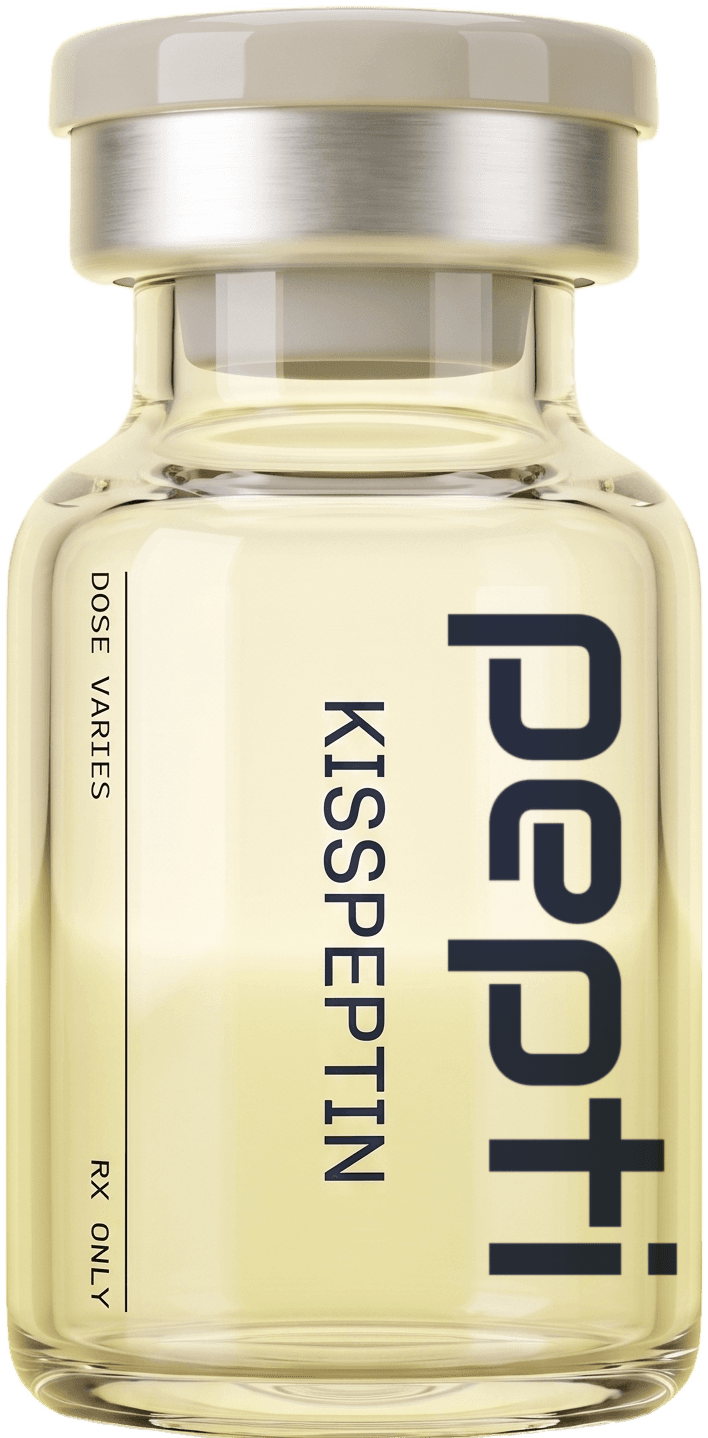
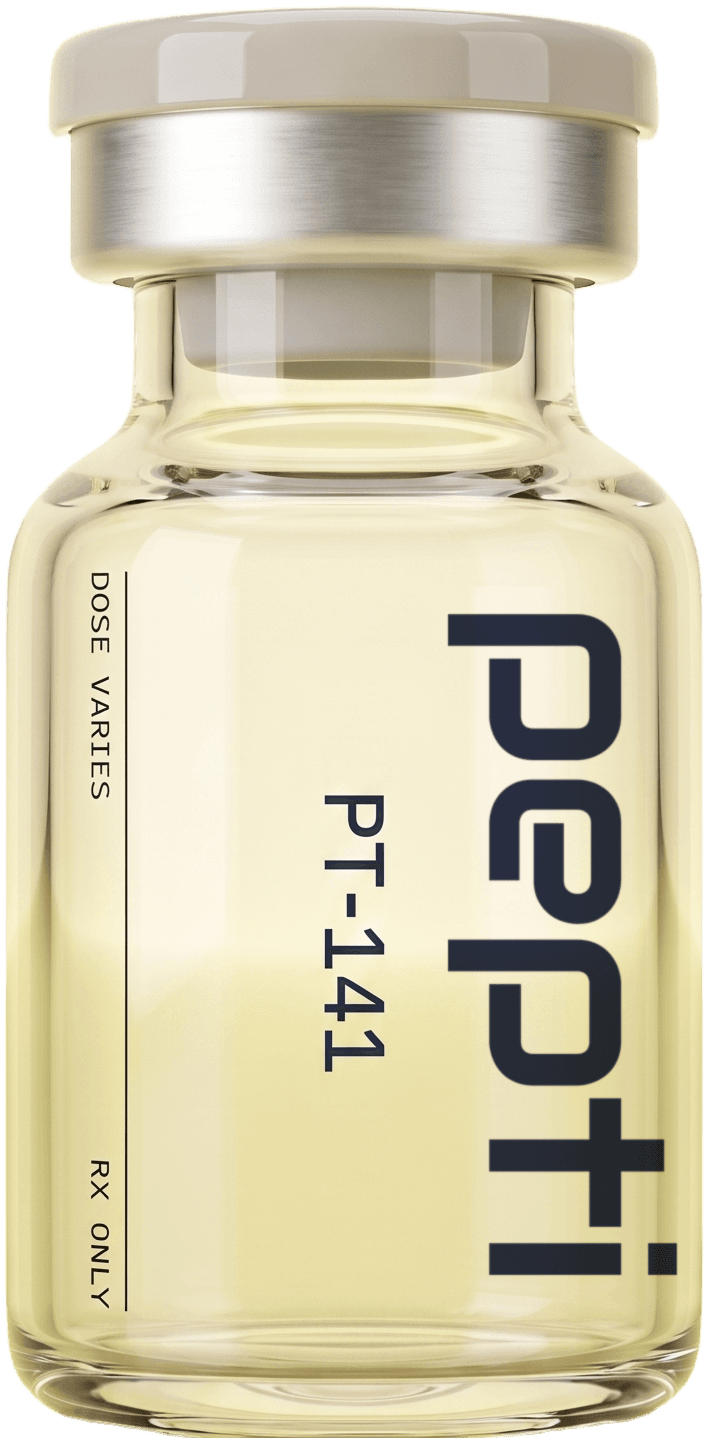
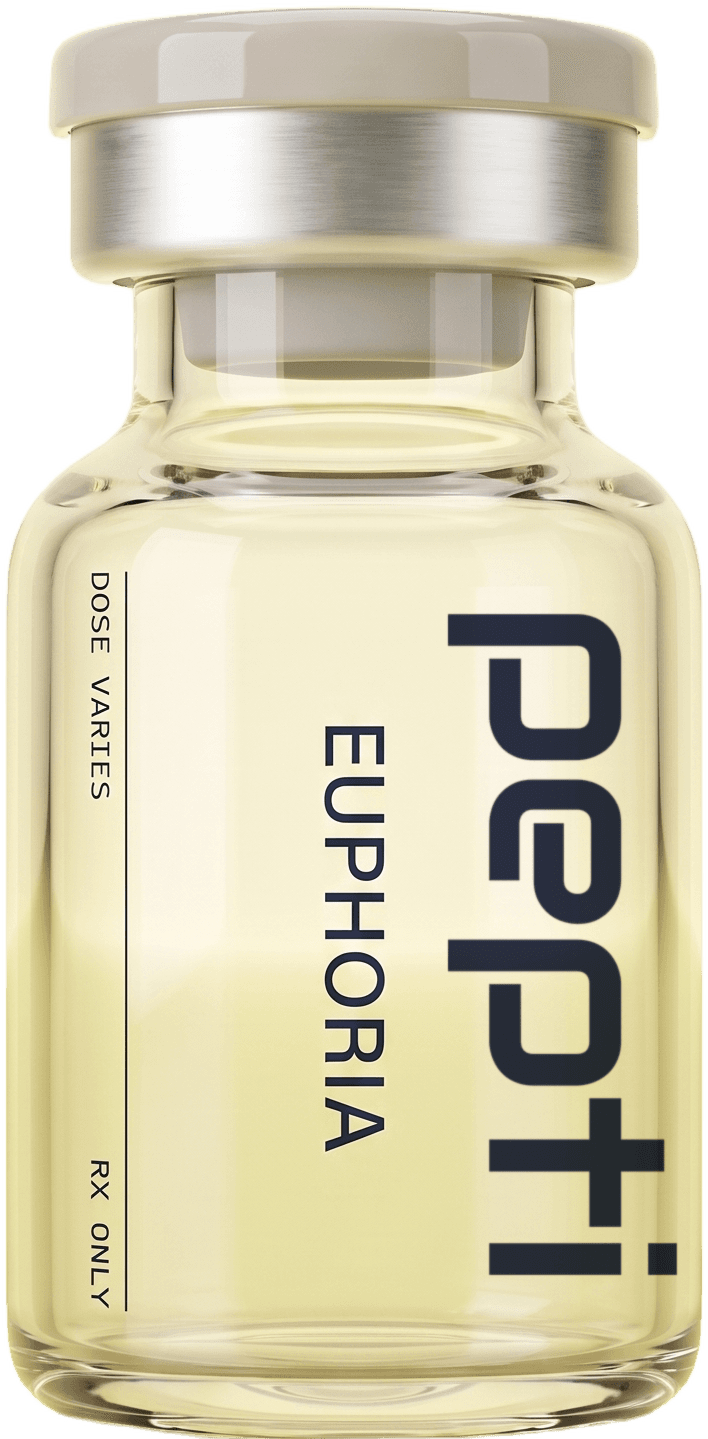
Kisspeptin is a prescription injection supplied as 5 mL multi-dose vial, Kisspeptin-10 2 mg/mL (10 mg Kisspeptin-10 per vial). The reviewed directions are: Inject 0.25 mL (25 units) subcutaneously once daily Monday through Friday. That is 20 doses per vial, about 4 weeks at Monday through Friday. It requires a prescription from a physician licensed in your state, is compounded by a state-licensed US pharmacy, and is not FDA approved.
This page covers what kisspeptin is, the pathway it acts on, what the human research does and does not establish, where kisspeptin-10 currently stands with the FDA, how it is dosed, and how to get it prescribed.
— Kisspeptin
What kisspeptin actually is
— A hormone the body already makes, sitting at the top of the reproductive axis
Kisspeptin is a family of peptides encoded by the KISS1 gene. A precursor is cut into kisspeptin-54 and shorter fragments — kisspeptin-14, -13 and -10 — that share the same ten-amino-acid tail. That tail binds the receptor, KISS1R (older papers call it GPR54), which is why the ten-amino-acid fragment is active on its own. The product on this page is kisspeptin-10: the shortest active form, not the full-length hormone used in most of the human trials below. That distinction comes up again.
In the body, kisspeptin is released by hypothalamic neurons and acts on the neurons that make gonadotropin-releasing hormone, GnRH. GnRH tells the pituitary to release luteinising hormone (LH) and follicle-stimulating hormone (FSH), which drive testosterone production in the testes and oestrogen production and ovulation in the ovaries. Kisspeptin is not a sex hormone and does not act on the gonads; it is the upstream signal that sets the axis in motion.
— Why it is called kisspeptin
The gene was found in 1996 in Hershey, Pennsylvania, as a suppressor of melanoma spread (Journal of the National Cancer Institute, 1996) and named KiSS-1 after the town's chocolate. Its reproductive role was recognised in 2003, when two groups reported in the New England Journal of Medicine and in PNAS that people born with a non-functioning KISS1R receptor do not go through puberty and have low LH, FSH and sex hormones.
— What it is not
Kisspeptin is not testosterone and not an anabolic agent. It adds no hormone from outside; the research describes it prompting the body's own pituitary and gonads. It is not a treatment for erectile dysfunction, and it is not an approved fertility drug — the fertility work is investigational and used the 54-amino-acid form under trial conditions.
— Kisspeptin
How kisspeptin is described to work
Unlike most peptides in this category, kisspeptin's mechanism has been mapped in humans by direct hormone measurement and brain imaging. Four pathways come up in the literature.
— Stimulating GnRH neurons
The core mechanism, established in humans. Kisspeptin binds KISS1R on GnRH neurons, which release GnRH to the pituitary. A 2005 paper in the Journal of Clinical Endocrinology and Metabolism from the Imperial College group reported that intravenous kisspeptin-54 in healthy men raised LH, FSH and testosterone dose-dependently. Work with kisspeptin-10 in healthy men, in the same journal in 2011, reported a rise in LH, more frequent LH pulses and a rise in testosterone after a single bolus or short infusion. Hormone changes appear within the hour.
— Driving the LH surge
In women, the same signal triggers ovulation. The 2007 JCEM paper reported that the LH response to subcutaneous kisspeptin-54 in healthy women was greatest in the days before ovulation. That is the basis of the IVF trigger work: a kisspeptin injection can prompt the woman's own LH surge rather than substituting hCG for it.
— Modulating sexual and emotional processing in the brain
Kisspeptin receptors are also found in limbic regions involved in emotion and reward. A 2017 paper in the Journal of Clinical Investigation used functional MRI in healthy men during a kisspeptin-54 infusion and reported greater activation of these structures in response to sexual and couple-bonding images, alongside reduced negative mood; a 2018 follow-up in JCI Insight reported changes in resting brain connectivity. This is a direct action on the brain, separate from the hormone changes, and it is the mechanism behind the sexual-desire trials.
— The point of intermittent dosing
Kisspeptin behaves differently depending on how continuously the receptor is exposed. Animal work reviewed by the FDA describes continuous high-dose exposure producing an initial LH surge and then a return to baseline despite the infusion continuing, while intermittent lower-dose exposure produced repeatable LH pulses. The Imperial group saw the same in women with hypothalamic amenorrhoea: twice-daily subcutaneous kisspeptin-54 for two weeks stimulated the axis and then the response faded (JCEM 2009), whereas twice-weekly injections for eight weeks sustained it (Clinical Pharmacology and Therapeutics 2010). This phenomenon, tachyphylaxis, is why a kisspeptin schedule is built around gaps.
— Kisspeptin
What the research actually shows
— Reproductive hormone stimulation in men
The best-characterised finding. In healthy men, intravenous kisspeptin-54 and kisspeptin-10 are reported to raise LH and testosterone acutely and to increase LH pulse frequency. A 2013 paper in Clinical Endocrinology reported the same for intravenous kisspeptin-10 in men with type 2 diabetes and mild biochemical hypogonadism. These were mechanistic studies over hours, not treatment trials over months, and every one used the intravenous route.
— Hypothalamic amenorrhoea in women
Women whose periods have stopped because of low body weight, stress or over-training have a suppressed axis with intact ovaries. The 2009 and 2010 Imperial studies reported that kisspeptin-54 injections stimulated LH and FSH release in these women, sustained over eight weeks when injections were spaced out. They were small physiological studies and did not measure whether ovulation or fertility was restored.
— Triggering egg maturation in IVF
The most clinically developed line of work. A 2014 paper in the Journal of Clinical Investigation reported that a single subcutaneous injection of kisspeptin-54, given in place of the usual hCG trigger to women undergoing IVF, produced egg maturation in the large majority and was followed by healthy live births. A 2015 JCEM study extended this to women at high risk of ovarian hyperstimulation syndrome, and a 2017 phase 2 randomised trial in Human Reproduction tested a second dose in that group. These are proper prospective trials, but they used kisspeptin-54 as a one- or two-dose trigger in a fertility clinic.
— Sexual desire
Two randomised, double-blind, placebo-controlled crossover trials from the same group appeared in JAMA Network Open. The first, in 2022, enrolled premenopausal women with hypoactive sexual desire disorder (HSDD) and reported that a kisspeptin-54 infusion increased activation in sexual-processing brain regions on fMRI, with the treatment described as well tolerated. The second, in 2023, enrolled men with HSDD and reported greater activation of key brain structures during sexual stimuli and a measurable increase in penile tumescence in response to sexual videos, versus placebo. They are real and randomised; they are also small, single-session and intravenous, and measured brain and physiological response rather than months of sexual function in daily life.
— What human data exists
Kisspeptin has more human data than almost any other peptide in this category, and almost none of it tests the product on this page as it is used. The physiology is established in people; the IVF and HSDD trials are prospective and, in three cases, randomised. But they used kisspeptin-54 in most cases, the intravenous route in most cases, and single doses or short courses in every case. There are no randomised controlled trials of a subcutaneous kisspeptin-10 course taken over weeks for sexual desire or testosterone support — which is how it is prescribed. The FDA's 2024 review reached the same conclusion for the hypogonadism use: the studies were too small and exploratory, with different routes and frequencies, to support a conclusion on effectiveness.
The prescribing rests on a well-mapped mechanism and clinical experience. The honest framing is "established physiology, promising early trials with a related form, and clinical use," not "proven for what you are buying it for."
— What the evidence does not establish
- It does not establish that a subcutaneous kisspeptin-10 course raises testosterone or LH in a sustained way. The hormone studies were acute and intravenous, and the response is regimen-dependent.
- It does not establish an effect on sexual desire in daily life. The HSDD trials measured brain activation and physiological arousal during a single infusion.
- It does not establish any benefit in men on testosterone therapy, which suppresses the very system kisspeptin acts on.
- It does not establish safety of repeated subcutaneous kisspeptin-10 injections over months. The FDA found one study of a single subcutaneous kisspeptin-10 dose in healthy women and none by the intramuscular route.
- It does not establish efficacy for any condition as an FDA-approved treatment. It is not approved for anything.
— Kisspeptin
Where kisspeptin stands with the FDA right now
This section is about kisspeptin-10 specifically, because that is the substance the FDA has assessed and the substance in this product. Verified against the FDA's own documents in September 2026.
Kisspeptin-10 was placed in Category 2 of the FDA's interim 503A bulk drug substances list on 29 September 2023 — the category for nominated substances the FDA considers to raise significant safety risks. The FDA's published reasoning is that compounded drugs containing kisspeptin-10 "may pose risk for immunogenicity for certain routes of administration and may have complexities with regard to peptide-related impurities and API characterization," and that the agency "has no, or only limited, safety-related information for the proposed routes of administration."
On 29 October 2024 the FDA's Pharmacy Compounding Advisory Committee reviewed kisspeptin-10 for the nominated use of treating secondary hypogonadism in men. The FDA's briefing document concluded the criteria weighed against adding it to the 503A Bulks List, citing incomplete characterisation of impurities, immunogenicity potential by injection, no studies of those routes in men with hypogonadism, and insufficient evidence of effectiveness. The committee voted 0 in favour and 11 against.
Kisspeptin-10 remains in Category 2 today. It was not among the peptides the FDA moved out of Category 2 in April 2026, and it was not on the agenda when the committee met on 23–24 July 2026 to consider BPC-157, KPV, TB-500, MOTS-c, emideltide, Semax and epitalon. The current FDA 503A list, updated 14 May 2026, gives Category 2 as cesium chloride, domperidone, germanium sesquioxide, ibutamoren mesylate, kisspeptin-10, and quinacrine hydrochloride for intrauterine administration. It names kisspeptin-10 only; kisspeptin-54 and other forms do not appear, because only kisspeptin-10 was nominated.
Category 2 is an interim policy position, not a scheduling action or a ban on the molecule, and the FDA has not issued a final rule on kisspeptin-10; but the FDA's interim enforcement discretion for compounding with nominated substances does not extend to Category 2. It is not an FDA-approved drug product, and compounded medications never are. If this status changes, this page will be updated.
— Kisspeptin
Realistic expectations
These are patterns described by prescribers, not trial endpoints — the human trials measured hours, not weeks. Individual response varies and a physician decides whether treatment is appropriate at all.
— The first injections
Kisspeptin's hormonal effect is fast and short: in the research, LH rises within an hour and the peptide is cleared in minutes. Prescribers describe the early experience as unremarkable — an injection, no immediate sensation, occasionally a brief flush or headache.
— Weeks one to two
Where changes in desire or mood are reported, this is when prescribers describe them appearing, consistent with the imaging work showing a direct limbic effect rather than a slow hormonal build. Some people report nothing, which is normal.
— Weeks two to four
If the intent is hormonal support, this is when a physician would typically look at bloodwork, because the trial data cannot say what a Monday-to-Friday subcutaneous course does to testosterone over a month. A vial is sized at about four weeks for that reason.
— After the course
No withdrawal or rebound is described in the human literature. Kisspeptin prompts the body's own axis rather than replacing its output, so there is no suppression to recover from — the opposite of external testosterone. Whether any change in desire persists is not something the trials can answer.
— Kisspeptin
When something else makes more sense
A reference that only ever recommends its own product is not much of a reference. Some honest cases where kisspeptin is not the first thing to reach for:
- Low testosterone confirmed on labs, with symptoms. Kisspeptin is not a replacement therapy and has not been shown to correct hypogonadism in a trial. That is a conversation with your physician about the cause; at-home blood testing is where it starts.
- You are already on testosterone. It suppresses the very signal kisspeptin acts on, and nothing in the research supports using them together.
- The problem is arousal or erection rather than desire. PT-141 acts on melanocortin receptors and has randomised human trial data for arousal in women and erectile response in men. PT-141 + Oxytocin exists for people whose picture spans arousal and connection.
- You want kisspeptin alongside recovery and mood support. The EUPHORIA blend combines kisspeptin-10 with MOTS-c, BPC-157 and GHK-Cu in one vial.
- You are trying to conceive. The IVF work used kisspeptin-54 under fertility-clinic monitoring. That is a reproductive endocrinologist's territory, not a wellness prescription.
Your physician will tell you if kisspeptin is not the right tool for what you have described. A consultation does not guarantee a prescription, and being declined is refunded.
— Kisspeptin
Dosing, and how a vial is actually used
— Why the dose is measured in units
The directions are written in millilitres and in insulin-syringe units because that is what you can read off the barrel. 0.25 mL is 25 units on a U-100 syringe; the number is printed on your medication.
— Subcutaneous, and where
Subcutaneous means into the fat layer, not the muscle. Abdomen and thigh are the usual sites, rotated. Site does not matter for effect, because kisspeptin acts in the brain and pituitary after absorption, not where it is injected.
— Why it is Monday to Friday, and why a vial covers about four weeks
The two-day gap each week is deliberate. The research describes the response fading under continuous exposure and holding up when exposure is spaced; five doses a week rather than seven builds that gap in. Twenty doses at that pace is four weeks, which is why refills run on a 28-day cycle. One vial per fill, always — not a stockpile. Your physician may direct a different schedule, and if so it is printed on your vial.
— Storage
Refrigerated, and it ships that way in insulated packaging with ice packs. Kisspeptin-10 is a short peptide sensitive to heat, light and temperature swings, so the label's storage directions are not optional. Beyond-use dating runs from first puncture and is on the label.
— Kisspeptin
Safety and side effects
Kisspeptin has a better human safety record than most peptides in this category, with a caveat about form. Across the Imperial College studies — healthy volunteers, women with hypothalamic amenorrhoea, women undergoing IVF, men and women with HSDD — kisspeptin-54 by infusion or subcutaneous injection is described as well tolerated, and the HSDD trials reported no serious adverse events attributed to it. The FDA's own review notes that acute intravenous kisspeptin-10 "has not raised any major safety concerns in studies to date."
The caveat is that those studies used a different form, a different route or a single dose. The FDA's concerns about compounded subcutaneous kisspeptin-10 are about what is not known: an immune response to a repeatedly injected short peptide and its impurities, and the absence of repeated-dosing studies. Those are gaps in the data, not findings of harm, and they are why a physician rather than a form reviews your history.
What gets reported clinically is mostly minor: injection-site redness or soreness, transient flushing, headache, occasional nausea. Because kisspeptin stimulates sex-hormone production, a hormone-sensitive condition — including a history of hormone-sensitive cancer — must be raised with the physician before starting. There is no established interaction list, which is why the intake asks for every medication you take.
Stop and contact your physician for any reaction that is severe, spreading, or involves difficulty breathing.
— Kisspeptin
How kisspeptin compares
Kisspeptin vs PT-141
Different systems. Kisspeptin acts on the reproductive axis and limbic brain regions; PT-141 (bremelanotide) acts on melanocortin receptors. PT-141 has larger randomised trials behind it, including those that supported its FDA-approved brand-name version for HSDD in premenopausal women, and is used as needed rather than on a schedule. Kisspeptin's HSDD evidence is two small mechanistic trials. PT-141 is the more established answer for desire; kisspeptin is the one with a hormonal mechanism.
Kisspeptin alone vs the EUPHORIA blend
The EUPHORIA blend contains kisspeptin-10 alongside MOTS-c, BPC-157 and GHK-Cu. Same molecule; the difference is one vial covering several aims, with each component's dose fixed by the blend's proportions. Kisspeptin alone is the cleaner choice when kisspeptin is the point; the blend when the physician wants the combination.
— Kisspeptin
Availability and formats
| Question | Answer |
|---|---|
| Can I get it by telehealth? | Yes, where a physician licensed in your state prescribes it |
| Which states? | All 50 states and DC |
| Does it come as a pen? | No, this one is a vial and syringe only |
| Does it come as a capsule? | No |
| Does it come as a nasal spray? | No |
| Is bloodwork required first? | Not routinely; your physician decides |
— Kisspeptin
Where to get Kisspeptin prescribed
Kisspeptin cannot be bought legitimately without a prescription. Sites shipping it with no prescription are selling a research-use-only product, where no pharmacy is accountable for identity, purity, sterility or concentration.
The prescription route works like this:
- Complete a medical intake covering your history, medications, allergies and what you are treating.
- A physician licensed in your state reviews it.
- If appropriate, a state-licensed, FDA-registered pharmacy compounds it to that prescription.
- It ships refrigerated with your directions printed on the vial.
- Your physician stays reachable afterwards for dose questions and side effects.
Current all-in pricing for Kisspeptin is published: medication, physician review, refill management and shipping in one figure, with no separate membership fee. What to check on any provider is in how to tell if a peptide seller is legitimate.
— Kisspeptin
Who should not take it, or should discuss it first
| Situation | Why |
|---|---|
| Pregnancy or breastfeeding | Not used; safety data is absent |
| Tested athletes | Many peptides are prohibited in competition; check the current list |
— Full specification
Everything on the label.
— Product
Kisspeptin (Injectable)
— How supplied
5 mL multi-dose vial, Kisspeptin-10 2 mg/mL (10 mg Kisspeptin-10 per vial)
— Typical directions
Inject 0.25 mL (25 units) subcutaneously once daily Monday through Friday.
— Dose volume
0.25 mL (25 units on a U-100 insulin syringe)
— Doses per vial
20
— Coverage per vial
about 4 weeks at Monday through Friday
— Formats
Vial and syringe
— Available in
All 50 states and DC
— Bloodwork
Not routinely required; your physician decides
— Legal status
Prescription-only, compounded, not FDA approved
— Category
Intimacy
— References
What this is based on.
References
- Dhillo WS, Chaudhri OB, Patterson M et al.. Kisspeptin-54 stimulates the hypothalamic-pituitary gonadal axis in human males · J Clin Endocrinol Metab (2005) · PMID 16174713
- Comninos AN, Dhillo WS. Emerging Roles of Kisspeptin in Sexual and Emotional Brain Processing · Neuroendocrinology (2018) · PMID 28866668
- Dhillo WS, Chaudhri OB, Thompson EL et al.. Kisspeptin-54 stimulates gonadotropin release most potently during the preovulatory phase of the menstrual cycle in women · J Clin Endocrinol Metab (2007) · PMID 17635940
- George JT, Veldhuis JD, Roseweir AK et al.. Kisspeptin-10 is a potent stimulator of LH and increases pulse frequency in men · J Clin Endocrinol Metab (2011) · PMID 21632807
- George JT, Veldhuis JD, Tena-Sempere M et al.. Exploring the pathophysiology of hypogonadism in men with type 2 diabetes: kisspeptin-10 stimulates serum testosterone and LH secretion in men with type 2 diabetes and mild biochemical hypogonadism · Clin Endocrinol (Oxf) (2013) · PMID 23153270
- Jayasena CN, Nijher GM, Chaudhri OB et al.. Subcutaneous injection of kisspeptin-54 acutely stimulates gonadotropin secretion in women with hypothalamic amenorrhea, but chronic administration causes tachyphylaxis · J Clin Endocrinol Metab (2009) · PMID 19820030
- Jayasena CN, Nijher GM, Abbara A et al.. Twice-weekly administration of kisspeptin-54 for 8 weeks stimulates release of reproductive hormones in women with hypothalamic amenorrhea · Clin Pharmacol Ther (2010) · PMID 20980998
- Jayasena CN, Abbara A, Comninos AN et al.. Kisspeptin-54 triggers egg maturation in women undergoing in vitro fertilization · J Clin Invest (2014) · PMID 25036713
- Abbara A, Jayasena CN, Christopoulos G et al.. Efficacy of Kisspeptin-54 to Trigger Oocyte Maturation in Women at High Risk of Ovarian Hyperstimulation Syndrome (OHSS) During In Vitro Fertilization (IVF) Therapy · J Clin Endocrinol Metab (2015) · PMID 26192876
- Abbara A, Clarke S, Islam R et al.. A second dose of kisspeptin-54 improves oocyte maturation in women at high risk of ovarian hyperstimulation syndrome: a Phase 2 randomized controlled trial · Hum Reprod (2017) · PMID 28854728
- Comninos AN, Wall MB, Demetriou L et al.. Kisspeptin modulates sexual and emotional brain processing in humans · J Clin Invest (2017) · PMID 28112678
- Comninos AN, Demetriou L, Wall MB et al.. Modulations of human resting brain connectivity by kisspeptin enhance sexual and emotional functions · JCI Insight (2018) · PMID 30333302
Citations are provided for educational purposes. They do not constitute medical advice. Always discuss any peptide protocol with your prescribing physician.
— Common questions
Kisspeptin, answered.
Through a telehealth provider where a physician licensed in your state reviews a medical intake and a licensed US pharmacy compounds the prescription. Pepti prescribes Kisspeptin in all 50 states and DC; start with the free assessment.
5 mL multi-dose vial, Kisspeptin-10 2 mg/mL (10 mg Kisspeptin-10 per vial)
Inject 0.25 mL (25 units) subcutaneously once daily Monday through Friday. Your physician sets your own dose and it is printed on your medication.
20 at the standard volume, about 4 weeks at Monday through Friday.
Kisspeptin is supplied as a vial, drawn with an insulin syringe. It is not available as a pen or capsule.
Not routinely, though your physician may want labs depending on your history. at-home blood testing covers hormone, metabolic and thyroid markers without a lab visit.
It is legal to prescribe and dispense in the United States with a valid prescription. It is not FDA approved: compounded medications are prepared by licensed pharmacies pursuant to a prescription rather than approved as manufactured products. See are peptides FDA approved.
Pricing is published on the Kisspeptin page as one all-in figure covering medication, physician review, refill management and shipping. What drives peptide pricing generally is in how much do peptides cost.
Yes. Kisspeptin-10 was placed in Category 2 of the FDA's interim 503A bulk drug substances list on 29 September 2023 — the category for nominated substances the FDA considers to raise significant safety risks — and the FDA's advisory committee voted 0–11 against adding it to the 503A Bulks List in October 2024. It remains in Category 2 on the FDA's list updated 14 May 2026, and was not among the peptides moved out of Category 2 in April 2026. The FDA's stated concerns are immunogenicity potential with injected use, incomplete characterisation of impurities, and limited subcutaneous safety data. No final rule has been issued.
Both come from the same gene and share the ten-amino-acid tail that binds the KISS1R receptor. Kisspeptin-54 is the full-length hormone used in most human trials, including the IVF trigger and HSDD studies. Kisspeptin-10 is the shortest active fragment, cleared within minutes; it is the form in this product and the form the FDA has assessed.
In healthy men, single intravenous doses of kisspeptin-54 and kisspeptin-10 are reported to raise LH and testosterone within hours, because kisspeptin stimulates the body's own axis. No trial has measured what a subcutaneous kisspeptin-10 course does over weeks, and continuous exposure blunts the response. It is not a substitute for testosterone therapy and has not been shown to treat low testosterone.
Two small randomised, placebo-controlled crossover trials in JAMA Network Open (women with HSDD in 2022, men in 2023) reported that a kisspeptin-54 infusion increased activation in sexual-processing brain regions on fMRI, and in men increased penile tumescence in response to sexual videos. Those are single-session, intravenous trials, not months of daily-life desire on a subcutaneous course. The mechanism is real; the product as prescribed has not been trialled.
Because the response fades under continuous exposure. Animal studies and the Imperial College studies in women with hypothalamic amenorrhoea describe the LH response holding up with intermittent kisspeptin and fading with continuous kisspeptin — tachyphylaxis. A two-day gap each week is one way of preserving the response; your physician may direct a different schedule.
External testosterone suppresses the hypothalamus and pituitary — the system kisspeptin acts on. No trial has tested the combination, and the FDA found no evidence for the nominated use of preserving fertility during testosterone therapy. Tell your physician if you are on testosterone.
In the published human studies kisspeptin-54 is described as well tolerated, and the HSDD trials reported no serious adverse events attributed to it. Clinically what is reported is mostly injection-site redness or soreness, brief flushing, headache and occasional nausea. A history of hormone-sensitive cancer must be raised with the physician first. Repeated subcutaneous kisspeptin-10 has not been studied over months, which is the gap the FDA has flagged.
— Next step
See what a physician
recommends for you.
A licensed physician in your state reviews your intake and decides what is appropriate. A consultation does not guarantee a prescription.
Important legal & safety information
The assessment process available on the Pepti website asks a series of medical questions, and the answers provided are reviewed by an independent licensed physician affiliated with our partner physician network. The licensed providers have established exclusionary criteria, and the answers provided determine if the individual is screened out of eligibility for treatment. The licensed clinicians retain the sole decision to prescribe peptide therapy and other compounded medications to patients. Treatment may be denied at the physician's sole discretion. If a prescription is not approved, you will not be charged for the medication.
Pharmacy Providers. Pepti is a technology platform and is not a healthcare provider, pharmacy, or prescriber. All medications offered through the platform are compounded by independent FDA-registered 503A or 503B compounding pharmacies based on a valid prescription written by a licensed physician for an individual patient. Compounded medications are not FDA-approved as products. The active pharmaceutical ingredients used by our partner pharmacies are sourced from FDA-registered facilities. Compounded medications may not undergo the same testing or quality control as commercially manufactured FDA-approved drugs.
Results vary. Results from peptide therapy and other compounded treatments vary based on individual factors, including age, weight, medical history, adherence to the prescribed protocol, lifestyle factors, and physiological response. Pepti makes no guarantee of any specific outcome. Statements about peptide therapy and compounded medications offered through the platform have not been evaluated by the Food and Drug Administration. These products are not intended to diagnose, treat, cure, or prevent any disease.
Product images. Product photographs and renderings shown on this website are for illustrative purposes only. The appearance of vials, packaging, labeling, and other materials you receive may vary and is determined by the dispensing compounding pharmacy.
Off-label use.Many peptides offered through the platform are prescribed for off-label use. “Off-label” means the medication is being prescribed for a use, dose, or patient population that is not specifically approved by the FDA. Off-label prescribing is legal and common in U.S. medical practice when supported by clinical experience and judgment.
Mailing & shipping. Pepti currently dispenses prescription medication to patients in all 50 states and Washington, D.C.. All orders ship in unbranded, tamper-evident packaging via expedited delivery from our partner compounding pharmacies. Temperature-sensitive medications ship with insulated packaging and ice packs. Shipping is included at no additional cost. We do not currently ship medication outside all 50 states and Washington, D.C., internationally, or to APO/FPO addresses.
Not for emergencies. Pepti is not designed for medical emergencies. If you are experiencing a medical emergency, call 911 or go to your nearest emergency room immediately. For urgent but non-emergency medical questions, contact your primary care provider or use an urgent care service.
No doctor-patient relationship with Pepti. Your use of the platform does not create a doctor-patient relationship between you and pepti LLC. A doctor-patient relationship is established only between you and the independent licensed physician who reviews your intake and prescribes your treatment. The physicians who use the platform are independent contractors and are solely responsible for the medical care they provide.
Prescription medications. All prescription products require a valid prescription from a licensed healthcare provider. By using the platform, you acknowledge that you are at least 18 years old and that the information you provide is true, accurate, current, and complete. Providing false information may result in inappropriate treatment recommendations or denial of service.
Cosmetic & wellness products.Certain products offered through Pepti — including skincare, hair care, body care, supplements, men's grooming, sports recovery, and sexual wellness products — are cosmetic or dietary supplement products, not prescription medications. These products do not require a prescription and are not reviewed or prescribed by a physician. Statements regarding dietary supplements have not been evaluated by the Food and Drug Administration. These products are not intended to diagnose, treat, cure, or prevent any disease. Results vary by individual. Consult your healthcare provider before starting any new supplement or topical product, especially if you are pregnant, nursing, or taking other medications.
pepti LLC · Delaware Limited Liability Company · 131 Continental Dr, Suite 305, Newark, DE 19713 · For media or partnership inquiries, email hello@hellopepti.com. For patient support, email support@hellopepti.com. For privacy and HIPAA inquiries, email privacy@hellopepti.com.