Cognitive · Reference
Semax + Selank: What It Is, Where to Get It Prescribed, and What It Costs
This page covers what Semax + Selank is, what each of the two components is and where it came from, the pathways researchers have described for each, why they are compounded into one vial, what the published work does and does not establish, where each component currently stands with the FDA, how a vial is dosed, and how to get it prescribed.

Reviewed by Dr. Gene, MD · Board-certified Family Medicine
Every Pepti prescription is reviewed by a licensed U.S. physician before it's dispensed — and only provided if clinically appropriate.
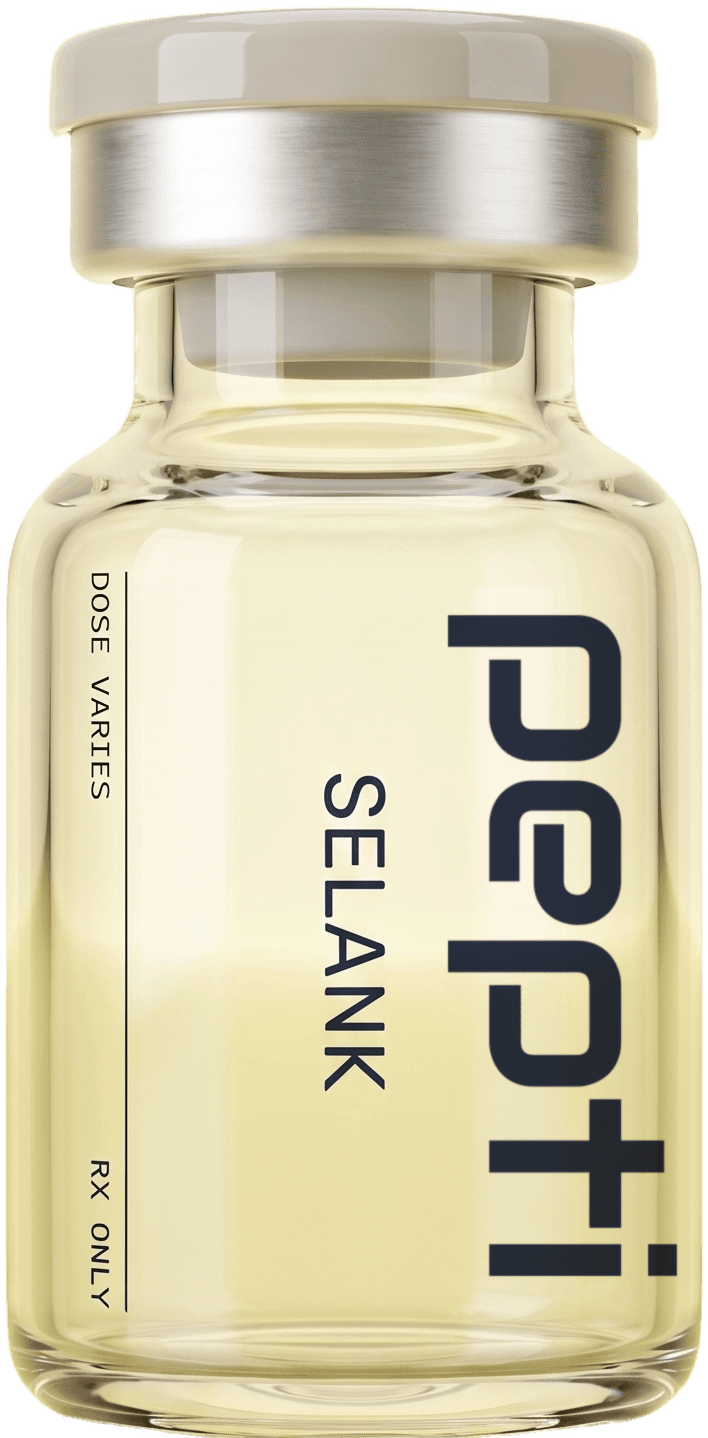
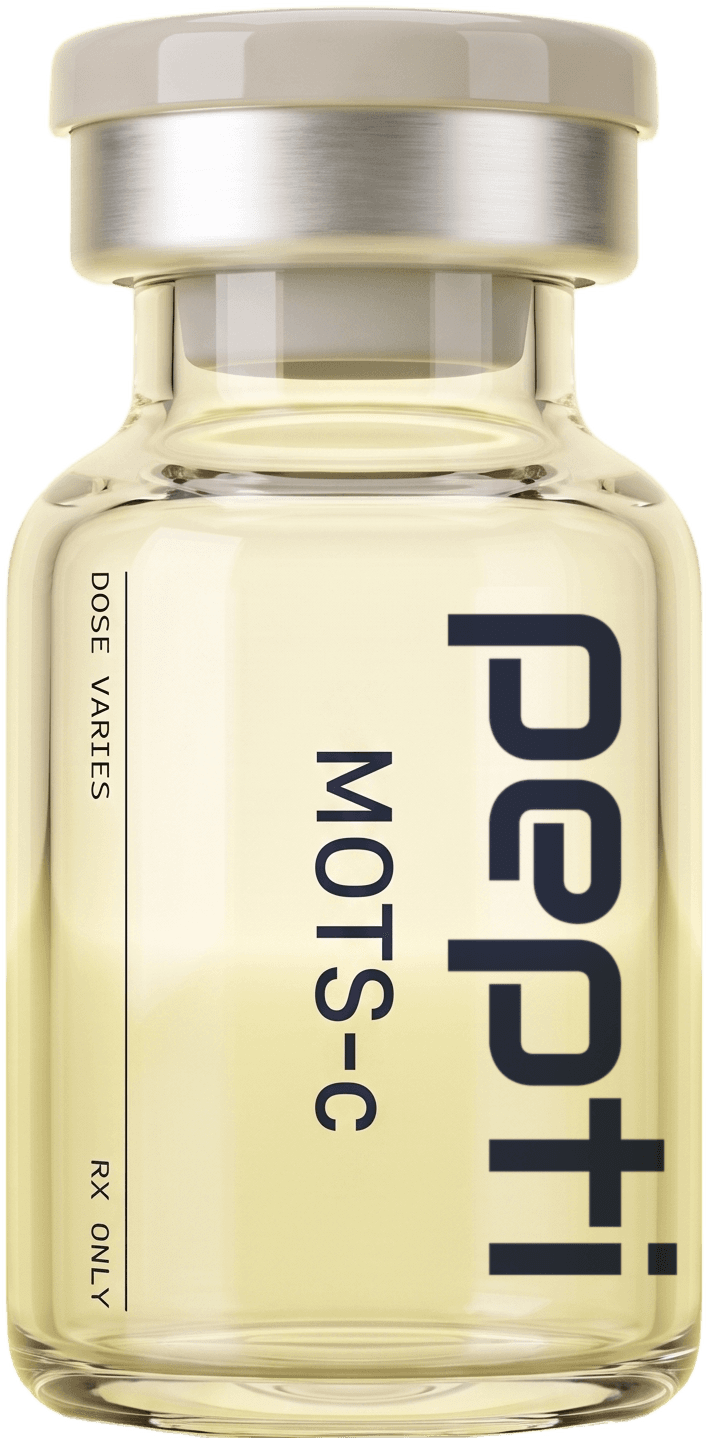
Treatments mentioned
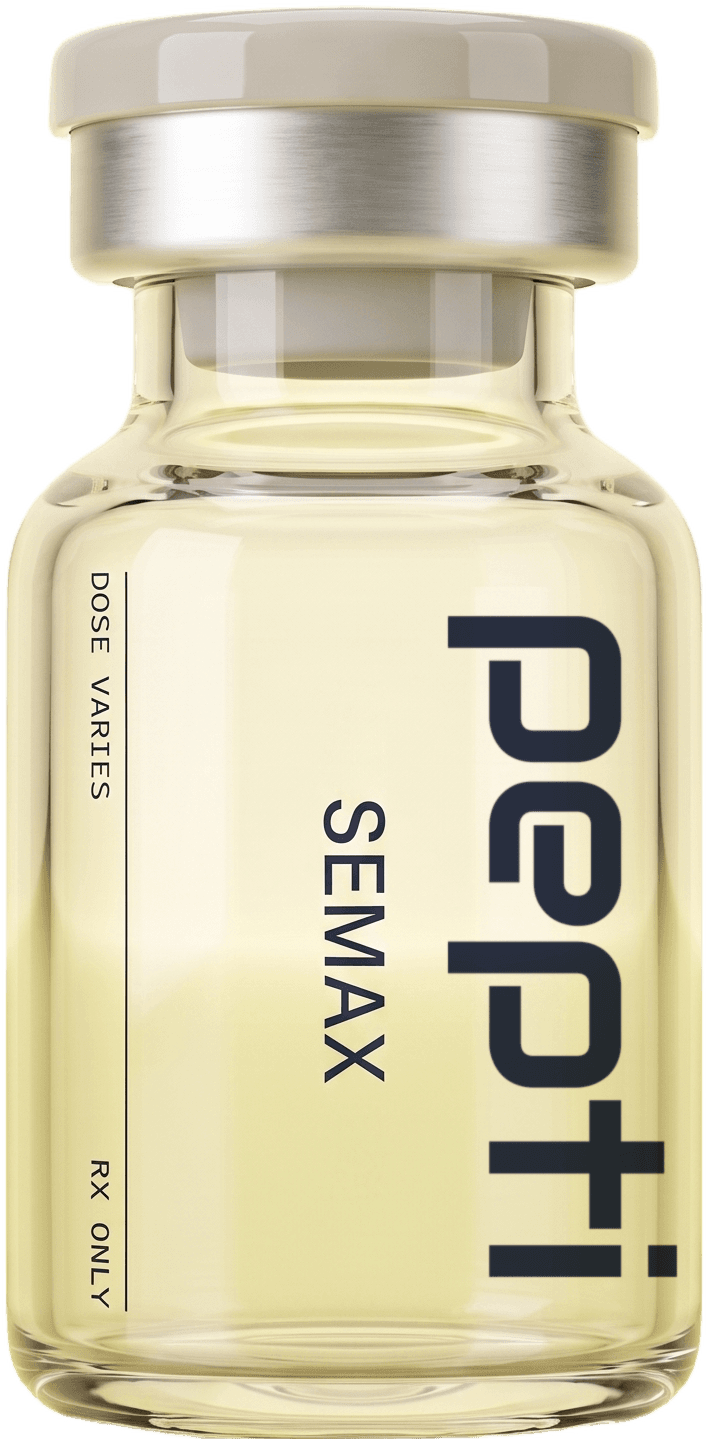
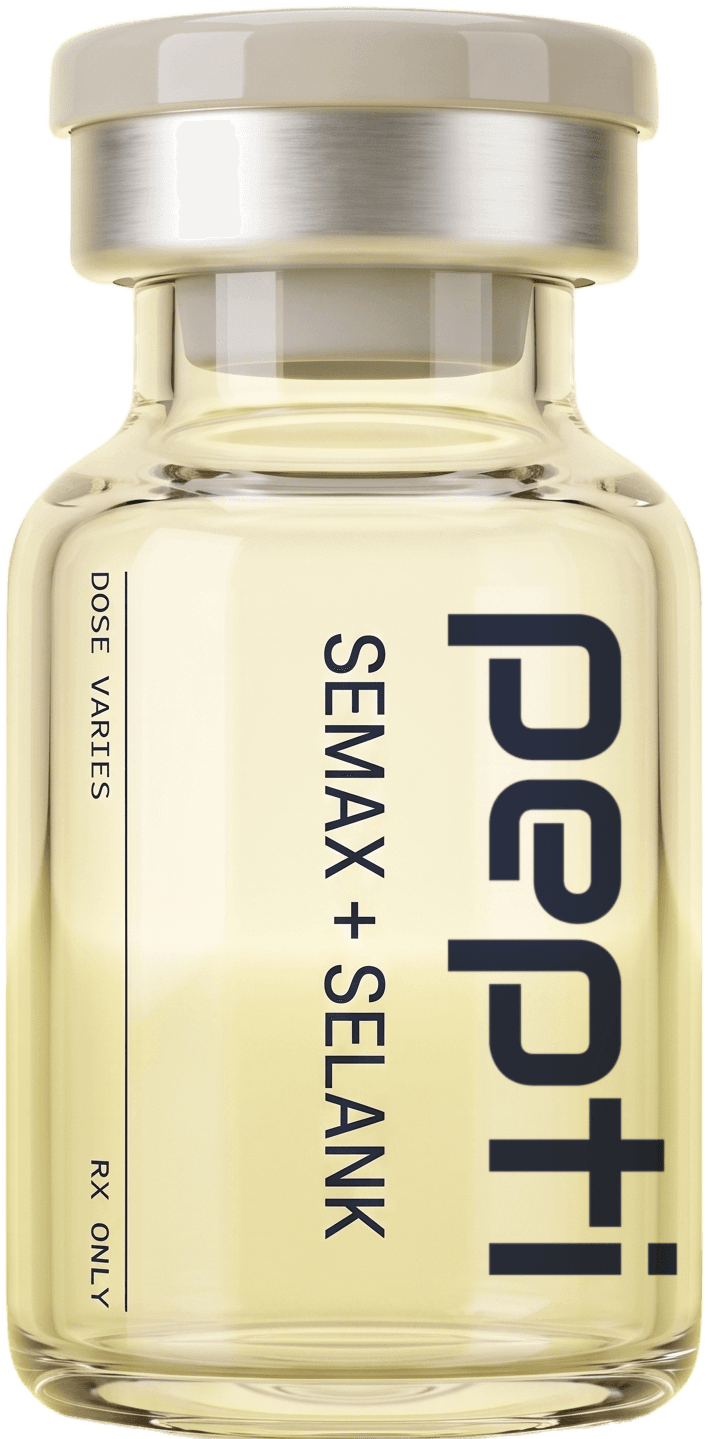
Semax + Selank is a prescription injection supplied as vial containing 1 mg Semax + 1 mg Selank. The reviewed directions are: Inject 0.25 mL (25 units) subcutaneously once daily Monday through Friday. That is 20 doses per vial, about 4 weeks at Monday through Friday. It requires a prescription from a physician licensed in your state, is compounded by a state-licensed US pharmacy, and is not FDA approved.
This page covers what Semax + Selank is, what each of the two components is and where it came from, the pathways researchers have described for each, why they are compounded into one vial, what the published work does and does not establish, where each component currently stands with the FDA, how a vial is dosed, and how to get it prescribed.
Semax + Selank
What Semax + Selank actually is
Two separate peptides, one vial
Semax + Selank is not a single molecule. It is two independently developed, independently studied peptides dissolved together in one sterile multi-dose vial by a compounding pharmacy. Each has its own research literature, its own described mechanism and its own regulatory file at the FDA. The pairing has no name in any journal; it is a pharmacy formulation, not a drug. That shapes everything on this page: "does Semax + Selank work" has to be broken into two questions, because the combination itself has never been studied as a combination.
Component Per vial What it is Studied for Semax 1 mg Seven-amino-acid analogue of the 4–7 region of ACTH, with a Pro-Gly-Pro tail and no hormonal activity Ischaemic stroke and chronic cerebrovascular disease in Russia; attention and neurotrophic signalling in animals Selank 1 mg Seven-amino-acid analogue of tuftsin, an immune fragment of immunoglobulin G, with the same Pro-Gly-Pro tail Anxiety and stress response in Russian comparator trials; GABA signalling in animals and cells Where both came from
Both peptides were designed at the Institute of Molecular Genetics of the Russian Academy of Sciences, Selank with the Zakusov Institute of Pharmacology in Moscow, on one engineering idea: take a short natural signalling fragment and add a Pro-Gly-Pro tail so it survives enzymatic breakdown long enough to act. Semax keeps positions 4 to 7 of adrenocorticotropic hormone, a region studied for decades for its effects on attention and learning in animals, and is described as devoid of the cortisol-raising and pigment-stimulating activity of the parent hormone. Selank keeps the four amino acids of tuftsin, a fragment the body itself cuts from immunoglobulin G.
Both are registered medicines in Russia, supplied there as nasal drops, and nearly all of their human research was done in Russian hospitals by the groups that invented them, published in Russian-language journals with English abstracts on PubMed. That provenance does not make the research worse; it does mean two compounds with real clinical history in one country and very little clinical study in this one — and, for Semax, that gap is exactly what the FDA's July 2026 review turned on.
What it is not
It is not a stimulant and does not work like one, and it is not a substitute for prescribed ADHD treatment. It is not a benzodiazepine, even though Selank is repeatedly compared with one in the Russian trials, and it is not an antidepressant or a treatment for panic disorder. It is not a hormone, a steroid or a growth-hormone secretagogue. Neither component is a treatment for stroke in the United States, and nothing on this page is a reason to delay emergency care. And it is not a study drug: no trial has measured either peptide's effect on memory, focus or productivity in healthy adults, and this page does not claim one.
Semax + Selank
How each component is described to work
All of the mechanistic detail below is from animal and cell studies unless a human population is named. Each component has its own sections because each has its own literature; no study has looked at what the two do together.
Semax: BDNF and its receptor in the hippocampus
The most cited Semax mechanism. A 2006 paper in Brain Research reported that a single application of Semax in rats increased BDNF protein and TrkB receptor phosphorylation in the hippocampus, and that treated animals showed more conditioned avoidance responses. BDNF is the growth factor most closely tied to synaptic plasticity, so this is the finding the "cognitive" label rests on. It is a rat finding.
Semax: neurotrophins and immune genes in the injured brain
A 2010 paper in Cellular and Molecular Neurobiology reported that in rats with a middle cerebral artery occlusion, Semax increased transcription of BDNF, NGF and their receptors selectively in ischaemic cortex. A 2014 genome-wide study in BMC Genomics found the largest effect was on immune-response genes, with a smaller set of vascular genes, and proposed immune modulation and vascular support as the core of what the peptide does in ischaemia. This is the basis for the neuroprotection language attached to Semax, and why its clinical history is in stroke rather than in healthy people.
Semax: the stress axis
A 2024 paper in the European Journal of Pharmacology tested Semax in male rats under chronic unpredictable stress. Daily low-dose treatment counteracted the stress-induced loss of sucrose preference, adrenal enlargement and the fall in hippocampal BDNF, which the authors framed as antidepressant-like activity through the stress axis. A rat mechanism, not a treatment claim — but it is the thread connecting Semax to the reason it is paired with Selank.
Selank: positive modulation of GABA-A receptors
The Selank mechanism most often cited is at the GABA-A receptor, the family benzodiazepines act on. A 2018 paper in Protein and Peptide Letters used radioligand binding on rat brain-cell membranes and reported that Selank altered how GABA itself bound, in the manner of a positive allosteric modulator, rather than acting on the receptor directly. A 2016 study in Frontiers in Pharmacology measured 84 neurotransmission genes in rat frontal cortex and reported changes in 45 of them an hour after Selank, in a pattern correlating with what GABA produced. The picture is a peptide that modifies GABA signalling rather than driving it — the proposed explanation for why the Russian trials describe anxiolytic effects without sedation.
Selank: enkephalins and BDNF
The oldest Selank mechanism concerns the enkephalins, the body's short opioid peptides involved in stress regulation. A 2001 paper in the Bulletin of Experimental Biology and Medicine reported that Selank inhibited the enzymes that degrade leu-enkephalin in human plasma; the 2008 clinical paper below measured the same marker in patients, which makes this the one Selank mechanism with a human correlate. Selank also has a BDNF thread: a 2008 report in Doklady Biological Sciences described intranasal Selank changing BDNF expression in the rat hippocampus, and a 2019 paper in the Bulletin of Experimental Biology and Medicine reported that it prevented the ethanol-related shift in hippocampal and prefrontal BDNF in rats, alongside better object-recognition performance. Animal work; it is where the "nootropic" language around Selank comes from.
How the two are meant to fit together
The rationale prescribers give is that focus and calm are usually the same problem approached from two sides. Semax is described around neurotrophic signalling and attention; Selank around GABA modulation and stress reactivity. A person whose concentration is undermined by a racing, anxious baseline is the case the pairing is built for: one component described as supporting the attentional side, the other as settling the reactive side, without the sedation that would defeat the first.
Described target Which component Type of evidence BDNF and TrkB signalling Semax, and Selank Rat Neurotrophin and immune gene expression after ischaemia Semax Rat GABA-A receptor modulation Selank Rat brain membranes, cell lines Enkephalin degradation Selank Human plasma in vitro; a patient marker in one trial Stress-axis markers under chronic stress Semax Rat That table is a rationale, not a finding. No study has confirmed that the two act together, or add to each other, when injected in one dose. And the 1 mg + 1 mg split is fixed by the pharmacy: every dose delivers the same amount of each.
Semax + Selank
What the research actually shows
Attention and memory: the animal work
This is where the "cognitive" category comes from, and it is animal work. The 2006 Semax study measured conditioned avoidance in rats; the 2019 Selank study measured object recognition in rats. Several Russian Selank clinical papers describe a "mild nootropic" effect on attention and verbal-fluency tests in anxiety patients, as a secondary observation. None of this is a trial of either peptide for attention or memory in healthy adults.
Neurological disease: the Russian Semax series
Semax's human evidence is in the indication it was built for. A 1997 controlled clinical study in the Korsakov Journal of Neurology and Psychiatry compared 30 acute ischaemic stroke patients given intranasal Semax alongside standard care with 80 conventionally treated patients, reporting faster regression of deficits on clinical scales and electrophysiology. A 2005 evaluation in the same journal followed 187 patients with chronic cerebrovascular insufficiency and reported clinical improvement, stabilisation of progression and good tolerability including in older patients. A 2018 clinical trial followed 110 patients after ischaemic stroke, with and without Semax, and reported rising plasma BDNF and better final Barthel Index scores in the Semax subgroups. These are controlled, sometimes large, studies in a patient population that is not the population reading this page.
Anxiety: the Selank comparator trials
Selank has controlled human trials — Russian, small, compared against an active drug rather than placebo, and not described as randomised or blinded in the published abstracts. Zozulya and colleagues, 2008, Korsakov Journal: 62 patients with generalised anxiety disorder or neurasthenia, Selank against the benzodiazepine medazepam on the Hamilton, Zung and CGI scales, with the anxiolytic effect reported as similar and Selank additionally described as anti-asthenic and mildly activating. Medvedev and colleagues, 2014: 60 patients with anxiety-phobic and somatoform disorders, Selank against phenazepam, reporting a pronounced anxiolytic effect, a mild nootropic effect and an effect persisting about a week after the last dose. Medvedev and colleagues, 2015: 70 patients, phenazepam alone against phenazepam plus Selank, with the combination reported to bring the benzodiazepine's effect on earlier and reduce its side effects. A 2008 immune-marker study by Uchakina and colleagues rounds out the set.
The limits sit alongside the findings: sixty to seventy patients each; an active comparator, so the trials show "similar to a benzodiazepine" rather than "better than nothing"; clinician-rated scales; all from the developing institutions; none replicated outside Russia. A 2021 review in the Journal of Clinical Pharmacology characterised Selank as poorly studied outside its country of origin, which is fair.
Healthy adults
A 2018 paper in the Bulletin of Experimental Biology and Medicine gave 14 healthy adults a single intranasal dose of Semax and measured changes in the brain's default mode network on functional MRI. That is a mechanistic study, not a performance trial. There is no published randomised trial of Semax, of Selank, or of the two together for attention, memory, mood or productivity in healthy people — the use most people in the US are reading about.
What human data exists
This is the part to understand before starting.
There are no randomised controlled trials of Semax + Selank, or of any Semax-and-Selank combination, in humans. The pairing has never been studied as a pairing, in people or in animals. Evidence is per component, and it is uneven:
- Semax has Russian clinical studies in acute ischaemic stroke, chronic cerebrovascular disease and optic nerve disease — several controlled, some over a hundred patients — nearly all using the intranasal product registered there. There are no randomised, placebo-controlled trials in English-language, peer-reviewed journals, and no trial in healthy adults for any cognitive endpoint.
- Selank has small Russian comparator-controlled trials in anxiety disorders against benzodiazepines. There is no placebo-controlled trial in the PubMed-indexed literature, and none has been replicated by an independent group.
- Neither has been the subject of a published trial by the subcutaneous route. The Russian products, and the Russian studies, are intranasal.
Much of medicine rests on mechanism plus clinical experience, and that is the basis physicians prescribe this pairing on. But the accurate framing is "registered and used clinically in Russia, with a coherent preclinical mechanism, and no Western-standard trial evidence for either component or the pair," not "proven."
What the evidence does not establish
- That two peptides together do more than either alone. No study has compared the pair with its components.
- An effect on memory, focus or attention in healthy adults. No trial has measured that for either peptide.
- An effect size against placebo for anxiety. The Selank trials used an active comparator.
- A dose–response relationship, or a timeline, for the subcutaneous route. The FDA found no published work on subcutaneous Semax.
- Long-term safety over years of continuous use. The trials ran for weeks.
- Anything about combining either peptide with SSRIs, SNRIs, stimulants or antipsychotics, because that has not been studied.
- Efficacy for any condition as an FDA-approved treatment. Neither component is approved for anything in the United States.
Semax + Selank
Where Semax + Selank stands with the FDA right now
The blend has no regulatory status of its own; the FDA regulates the bulk substances a pharmacy compounds from, not a pharmacy's pairing of them. So the question is where each component stands, and the two have very different histories. A lot of what is published online is out of date.
Semax: off the safety-risk list, recommended by the committee on 24 July 2026
Semax was placed in Category 2 of the FDA's 503A bulk drug substances list in 2023 — the category for nominated substances with identified safety concerns — over a theoretical immunogenicity concern from aggregation and peptide-related impurities. It is no longer in Category 2. The FDA's safety-risks page, current as of 22 April 2026, lists "Semax (heptapeptide)" only among bulk drug substances "nominated but withdrawn," and the 503A categories document updated 14 May 2026 does not carry it in Category 1, 2 or 3.
On 24 July 2026 the FDA's Pharmacy Compounding Advisory Committee considered Semax (free base and acetate) for the 503A Bulks List, for the nominated uses of cerebral ischaemia, migraine and trigeminal neuralgia, and voted 8–5, with one abstention, to recommend adding it. FDA's own briefing document had concluded that the balance of criteria weighed against listing, finding insufficient evidence of effectiveness on the English-language material available and no literature on administration by subcutaneous injection; the committee weighed the presentations and voted the other way.
A committee vote is a recommendation, not a decision. The FDA issues its own determination through rulemaking, and as of September 2026 that determination is pending.
Selank: withdrawn in September 2024, never reviewed
Selank's history is different, and it is worth getting right. Selank acetate, listed by the FDA as "Selank acetate (TP-7)," was placed in Category 2 in 2023 with the same generic peptide concern. On 27 September 2024 the FDA removed it from Category 2, recording that it "received additional information from the nominator indicating that they intended to nominate a different bulk drug substance." In plain terms, the nomination was withdrawn as a mistake rather than resolved on the science, a year and a half before the twelve-peptide removal of April 2026.
Today the FDA's safety-risks page lists Selank acetate among substances "nominated but withdrawn"; the 14 May 2026 categories document does not carry it in any category; it was not on the agenda of the July 2026 advisory committee meeting; and it is not among the substances the FDA has said the committee will consider before the end of February 2027. So: not flagged as a safety risk since September 2024, never evaluated by the committee, no active nomination.
What that adds up to
As of September 2026, neither component sits in Category 1, 2 or 3 of the 503A list, and neither is restricted. Semax has been recommended for the positive list by the advisory committee, over the objection of FDA staff, and awaits the agency's final determination; Selank has never been reviewed. Both remain legal for a physician to prescribe and a state-licensed pharmacy to compound. Neither is an FDA-approved drug product, and compounded medications never are — they are prepared by a licensed pharmacy to a physician's prescription, not approved as manufactured products. See are peptides FDA approved.
Semax + Selank
Realistic expectations
These are patterns described by prescribers, not trial endpoints. The Russian trials measured stroke recovery and anxiety scales over a few weeks by the intranasal route; they do not give a timeline for a healthy adult on subcutaneous dosing. Individual response varies, and a physician decides whether treatment is appropriate at all.
The first week
Most people report nothing dramatic. Prescribers describe any early change as subtle — a sense of being less reactive to stress rather than any effect at the time of injection. There is no "kick." Noticing nothing in the first week is normal and is not a sign the course is not working.
Weeks two to four
This is the window the Selank trials worked in and where prescribers describe the clearest change, if it occurs: a lower anxious baseline, easier concentration under pressure, less mental fatigue late in the day. It is described as a background change rather than an event, which is easy to overattribute; a simple daily log is more useful than memory. One vial at weekday dosing covers roughly this period.
Why it is dosed Monday to Friday
The weekday schedule is a prescriber convention, not a trial design. It keeps total exposure modest and builds in a regular break, given that long-term data does not exist for either component. The 2014 Selank trial reported the anxiolytic effect persisting about a week after the last dose, so the weekend gap is not described as a loss of effect. Your directions will say what your physician has chosen.
After the course
No withdrawal syndrome and no rebound are described in the published work for either component, in contrast to the benzodiazepine comparators in the Selank trials. That is a reported finding from small studies, not a guarantee; tell your physician if anything shifts when you stop. Whether anything persists is unknown.
Semax + Selank
When something else makes more sense
Reaching for the pair when one component is the actual question is the commonest mistake. Some honest cases where Semax + Selank is not the first thing to reach for:
- A psychiatric diagnosis under active treatment. If you are on an SSRI, SNRI, benzodiazepine or antipsychotic, or have been diagnosed with panic disorder, bipolar disorder or major depression, that treatment comes first and this pairing is at most an adjunct your prescriber may or may not agree to.
- The complaint is focus only, or stress only. Semax on its own delivers the component with the neurotrophic literature; Selank on its own the component with the anxiety trials. Each single vial carries ten times the amount of that peptide.
- Sleep is the actual problem. DSIP is aimed at sleep directly, and the SERENITY blend combines DSIP with Selank for people whose stress and sleep are the same problem.
- The picture is fatigue more than cognition. NAD+ injection and MOTS-c are aimed at cellular energy, and the SYNAPSE blend combines Semax and Selank with MOTS-c and tesamorelin for a complaint that straddles both.
- Inflammation or gut symptoms are also in play. The ELEVATE blend pairs Semax and Selank with BPC-157 and KPV in one preparation.
- A different cognitive mechanism suits your history. Dihexa and PE-22-28 are different molecules with different described mechanisms, and a physician may prefer one of them.
- You would rather not inject. Pepti lists a separate Semax Nasal Spray and Selank Nasal Spray, the route the Russian products and trials actually used.
Your physician will tell you if Semax + Selank is not the right tool for what you have described. A consultation does not guarantee a prescription, and being declined is refunded.
Semax + Selank
Dosing, and how a vial is actually used
| Question | Answer |
|---|---|
| Standard dose | 0.25 mL, 25 units on a U-100 insulin syringe |
| Schedule | Once daily, Monday through Friday, weekends off |
| Doses per vial | 20 |
| Coverage per vial | About 4 weeks |
| Who sets the dose | The prescribing physician; it is printed on your vial |
| Storage | Refrigerated, with a beyond-use date on the label |
Why the dose is measured in units
The directions are written in millilitres and in insulin-syringe units because that is what you can read off the barrel. 0.25 mL is 25 units on a U-100 syringe. You are not calculating anything — the number is printed on your medication. Because the two peptides are in fixed proportion, every dose delivers the same split: with 1 mg of each across 20 doses, that is 0.05 mg of Semax and 0.05 mg of Selank per injection. If your directions and syringe markings appear to disagree, ask before dosing.
Subcutaneous, and where
Subcutaneous means into the fat layer, not the muscle. Abdomen and thigh are the usual sites, rotated so the same spot is not used repeatedly. There is no reason to inject near the head or neck; both peptides are carried systemically. One honest gap: the Russian products are nasal drops and the clinical studies used that route, and published pharmacokinetic work on either peptide given subcutaneously has not been identified. Your directions will say.
Why a vial covers about four weeks
20 doses at once daily, Monday through Friday, is four weeks, which is why refills run on a 28-day cycle. The weekend gap is part of the schedule, not a missed dose. Morning dosing is the usual direction, because Semax is occasionally described as producing restlessness if taken late in the day. One vial per fill, always — not a stockpile.
Storage
Refrigerated, and it ships that way in insulated packaging with ice packs. Beyond-use dating runs from first puncture and is on the label; a two-peptide vial is not something to keep past it. Keep it out of light, do not freeze it, and do not shake the vial.
Semax + Selank
Safety and side effects
Each component is described as well tolerated in its own Russian clinical series. Semax's 2005 cerebrovascular study made tolerability an explicit endpoint and reported it as good, including in older patients. The Selank trials used a formal side-effect scale and a benzodiazepine comparator, and the finding reported most consistently is what was absent: no sedation, no memory impairment, no dependence signal and no withdrawal over the study periods.
What gets reported with the injectable is mostly injection-site: redness, mild soreness, occasional bruising. Some people describe transient restlessness or an early headache from Semax if it is dosed late in the day; some describe early fatigue or flatness from Selank, and a few the opposite, a sense of being wired. All are usually described as settling.
Two points from the FDA's 2026 Semax review are worth knowing. The agency's stated safety concern is a quality one, not a known toxicity: an injectable peptide could in principle provoke an immune response if it aggregates or carries impurities — a reason to care where a compounded peptide comes from, which is what the quality page is about. And a mouse study reported Semax potentiating amphetamine-induced dopamine release; no equivalent human finding exists, but if you take a stimulant your physician should know.
There is no established interaction list, because the trials that would produce one have not been run — for the pair or for either component. The one combination studied is Selank with a benzodiazepine, under supervision. Nobody has studied either peptide alongside SSRIs, SNRIs, stimulants or antipsychotics, which is precisely why the intake asks for every medication you take and why a physician reviews it rather than a form.
Stop and contact your physician for any reaction that is severe, spreading, involves difficulty breathing, or involves a marked change in mood.
Semax + Selank
How Semax + Selank compares
Semax + Selank vs Semax alone or Selank alone
The single-peptide vials of Semax and Selank each contain 10 mg; this vial contains 1 mg of each. The pair is not a bigger dose of anything — it is a smaller amount of two things in one injection. It makes sense when a physician wants both described mechanisms in play from the start; a single makes sense when one complaint is the whole picture, or when a physician wants to see what one peptide does before adding the other.
Semax + Selank vs the nasal sprays
The Semax Nasal Spray and Selank Nasal Spray are the same peptides by the route the Russian products and every Russian trial used. The injection delivers a measured dose without depending on nasal absorption; the sprays are needle-free and match the studied route. Neither route has been compared with the other in a published human trial for either peptide, and there is no pepti Pen for this pairing. Which you are prescribed is your physician's decision.
Semax + Selank vs the larger blends
Three Pepti blends carry these peptides alongside others. The ELEVATE blend adds BPC-157 and KPV, for people whose picture includes gut or inflammatory symptoms. The SYNAPSE blend adds MOTS-c and tesamorelin, where fatigue and metabolism are part of the complaint. The SERENITY blend carries Selank without Semax, with DSIP and a growth-hormone secretagogue pair, for stress and sleep together. Semax + Selank is the narrowest of these: the two neuropeptides and nothing else, which is the right starting point when focus and calm are the whole question.
Semax + Selank
Availability and formats
| Question | Answer |
|---|---|
| Can I get it by telehealth? | Yes, where a physician licensed in your state prescribes it |
| Which states? | All 50 states and DC |
| Does it come as a pen? | No, this one is a vial and syringe only |
| Does it come as a capsule? | No |
| Does it come as a nasal spray? | No |
| Is bloodwork required first? | Not routinely; your physician decides |
Semax + Selank
Where to get Semax + Selank prescribed
Semax + Selank cannot be bought legitimately without a prescription. Sites shipping it with no prescription are selling a research-use-only product, where no pharmacy is accountable for identity, purity, sterility or concentration.
The prescription route works like this:
- Complete a medical intake covering your history, medications, allergies and what you are treating.
- A physician licensed in your state reviews it.
- If appropriate, a state-licensed, FDA-registered pharmacy compounds it to that prescription.
- It ships refrigerated with your directions printed on the vial.
- Your physician stays reachable afterwards for dose questions and side effects.
Current all-in pricing for Semax + Selank is published: medication, physician review, refill management and shipping in one figure, with no separate membership fee. What to check on any provider is in how to tell if a peptide seller is legitimate.
Semax + Selank
Who should not take it, or should discuss it first
| Situation | Why |
|---|---|
| Existing psychiatric treatment should be reviewed by the prescriber before adding anything | Raised at intake |
| Pregnancy or breastfeeding | Not used; safety data is absent |
| Tested athletes | Many peptides are prohibited in competition; check the current list |
Full specification
Everything on the label.
Product
Semax + Selank (Injectable)
How supplied
vial containing 1 mg Semax + 1 mg Selank
Typical directions
Inject 0.25 mL (25 units) subcutaneously once daily Monday through Friday.
Dose volume
0.25 mL (25 units on a U-100 insulin syringe)
Doses per vial
20
Coverage per vial
about 4 weeks at Monday through Friday
Formats
Vial and syringe
Available in
All 50 states and DC
Bloodwork
Not routinely required; your physician decides
Legal status
Prescription-only, compounded, not FDA approved
Category
Cognitive
References
What this is based on.
References
- Kozlovskaya MM, Kozlovskii II, Val'dman EA et al.. Selank and short peptides of the tuftsin family in the regulation of adaptive behavior in stress · Neurosci Behav Physiol (2003) · PMID 14969422
- Zozulia AA, Neznamov GG, Siuniakov TS et al.. Efficacy and possible mechanisms of action of a new peptide anxiolytic selank in the therapy of generalized anxiety disorders and neurasthenia · Zh Nevrol Psikhiatr Im S S Korsakova (2008) · PMID 18454096
- Medvedev VE, Tereshchenko ON, Israelian AIu et al.. A comparison of the anxiolytic effect and tolerability of selank and phenazepam in the treatment of anxiety disorders · Zh Nevrol Psikhiatr Im S S Korsakova (2014) · PMID 25176261
- Medvedev VE, Tereshchenko ON, Kost NV et al.. Optimization of the treatment of anxiety disorders with selank · Zh Nevrol Psikhiatr Im S S Korsakova (2015) · PMID 26356395
- Uchakina ON, Uchakin PN, Miasoedov NF et al.. Immunomodulatory effects of selank in patients with anxiety-asthenic disorders · Zh Nevrol Psikhiatr Im S S Korsakova (2008) · PMID 18577961
- Zozulya AA, Kost NV, Sokolov OY et al.. The inhibitory effect of Selank on enkephalin-degrading enzymes as a possible mechanism of its anxiolytic activity · Bull Exp Biol Med (2001) · PMID 11550013
- Vyunova TV, Andreeva L, Shevchenko K, Myasoedov N. Peptide-based Anxiolytics: The Molecular Aspects of Heptapeptide Selank Biological Activity · Protein Pept Lett (2018) · PMID 30255741
- Volkova A, Shadrina M, Kolomin T et al.. Selank Administration Affects the Expression of Some Genes Involved in GABAergic Neurotransmission · Front Pharmacol (2016) · PMID 26924987
- Filatova E, Kasian A, Kolomin T et al.. GABA, Selank, and Olanzapine Affect the Expression of Genes Involved in GABAergic Neurotransmission in IMR-32 Cells · Front Pharmacol (2017) · PMID 28293190
- Inozemtseva LS, Karpenko EA, Dolotov OV et al.. Intranasal administration of the peptide Selank regulates BDNF expression in the rat hippocampus in vivo · Dokl Biol Sci (2008) · PMID 18841804
- Kolik LG, Nadorova AV, Antipova TA et al.. Selank, Peptide Analogue of Tuftsin, Protects Against Ethanol-Induced Memory Impairment by Regulating of BDNF Content in the Hippocampus and Prefrontal Cortex in Rats · Bull Exp Biol Med (2019) · PMID 31625062
- Doyno CR, White CM. Sedative-Hypnotic Agents That Impact Gamma-Aminobutyric Acid Receptors: Focus on Flunitrazepam, Gamma-Hydroxybutyric Acid, Phenibut, and Selank · J Clin Pharmacol (2021) · PMID 34396551
Citations are provided for educational purposes. They do not constitute medical advice. Always discuss any peptide protocol with your prescribing physician.
Common questions
Semax + Selank, answered.
Through a telehealth provider where a physician licensed in your state reviews a medical intake and a licensed US pharmacy compounds the prescription. Pepti prescribes Semax + Selank in all 50 states and DC; start with the free assessment.
vial containing 1 mg Semax + 1 mg Selank
Inject 0.25 mL (25 units) subcutaneously once daily Monday through Friday. Your physician sets your own dose and it is printed on your medication.
20 at the standard volume, about 4 weeks at Monday through Friday.
Semax + Selank is supplied as a vial, drawn with an insulin syringe. It is not available as a pen or capsule.
Not routinely, though your physician may want labs depending on your history. at-home blood testing covers hormone, metabolic and thyroid markers without a lab visit.
It is legal to prescribe and dispense in the United States with a valid prescription. It is not FDA approved: compounded medications are prepared by licensed pharmacies pursuant to a prescription rather than approved as manufactured products. See are peptides FDA approved.
Pricing is published on the Semax + Selank page as one all-in figure covering medication, physician review, refill management and shipping. What drives peptide pricing generally is in how much do peptides cost.
With 1 mg of Semax and 1 mg of Selank across 20 doses, each 0.25 mL injection delivers 0.05 mg of each. The ratio is fixed by the pharmacy's formulation; if your physician wants a different balance, the two are prescribed separately.
No. The pairing has never been studied as a pairing, in humans or in animals. The evidence is per component: Semax has Russian clinical studies in stroke and cerebrovascular disease, several controlled; Selank has small Russian comparator trials in anxiety disorders against benzodiazepines. Neither has a placebo-controlled trial in the English-language literature, and neither has a trial for attention or memory in healthy adults. There are no randomised controlled trials of Semax + Selank.
No. Both were placed in Category 2 of the FDA's 503A bulk substances list in 2023. Selank acetate was removed on 27 September 2024 after the nominator said it had intended to nominate a different substance, and it has never been reviewed by the Pharmacy Compounding Advisory Committee. Semax came off the list in April 2026, and on 24 July 2026 the committee voted 8–5, with one abstention, to recommend adding it to the 503A Bulks List, against the recommendation of the FDA's own reviewers; the FDA's final determination is pending. Both remain legal to prescribe and dispense.
Yes, in Russia, where both are registered medicines supplied as nasal drops — Semax used in neurology for ischaemic stroke and chronic cerebrovascular disease, Selank as an anxiolytic. Neither is approved in the United States, the European Union or the United Kingdom.
No trial has measured that in healthy adults for either peptide, so nobody can honestly promise it. What exists is animal work describing Semax around BDNF and attention and Selank around GABA modulation and stress reactivity, Russian clinical series in stroke and anxiety patients, and prescriber experience describing subtle changes over two to four weeks in some people. Your physician will tell you whether that evidence base fits what you have described.
There is no trial-established timeline for the injectable form of either component. Prescribers generally describe nothing dramatic in the first week, and any change — a lower anxious baseline, easier concentration under pressure — as emerging over two to four weeks of weekday dosing, which is why a vial is sized at about four weeks. Those are clinical patterns, not endpoints.
Selank plus the benzodiazepine phenazepam was studied in one supervised Russian trial of 70 patients. Neither peptide has been studied alongside SSRIs, SNRIs, stimulants or antipsychotics, and a mouse study reported Semax potentiating amphetamine-induced dopamine release. Existing psychiatric treatment is raised at intake for exactly this reason, and your prescriber decides.
Most commonly injection-site reactions — redness, mild soreness, occasional bruising. Some people describe restlessness or an early headache if Semax is dosed late in the day, and early fatigue or, less often, a wired feeling from Selank; both are usually reported as settling. The Russian series describe each component as well tolerated, and the Selank trials reported no sedation, memory impairment or dependence. There is no established interaction list, which is why your physician reviews every medication you take.
Next step
See what a physician recommends for you.
A licensed physician in your state reviews your intake and decides what is appropriate. A consultation does not guarantee a prescription.