Anti-Aging · Reference
Is ASCEND Blend Banned in Sports? WADA, NCAA and Drug Tests for All Four Components
This page is general information, not legal or anti-doping advice. Lists are revised every year and the responsibility for checking sits with the athlete.

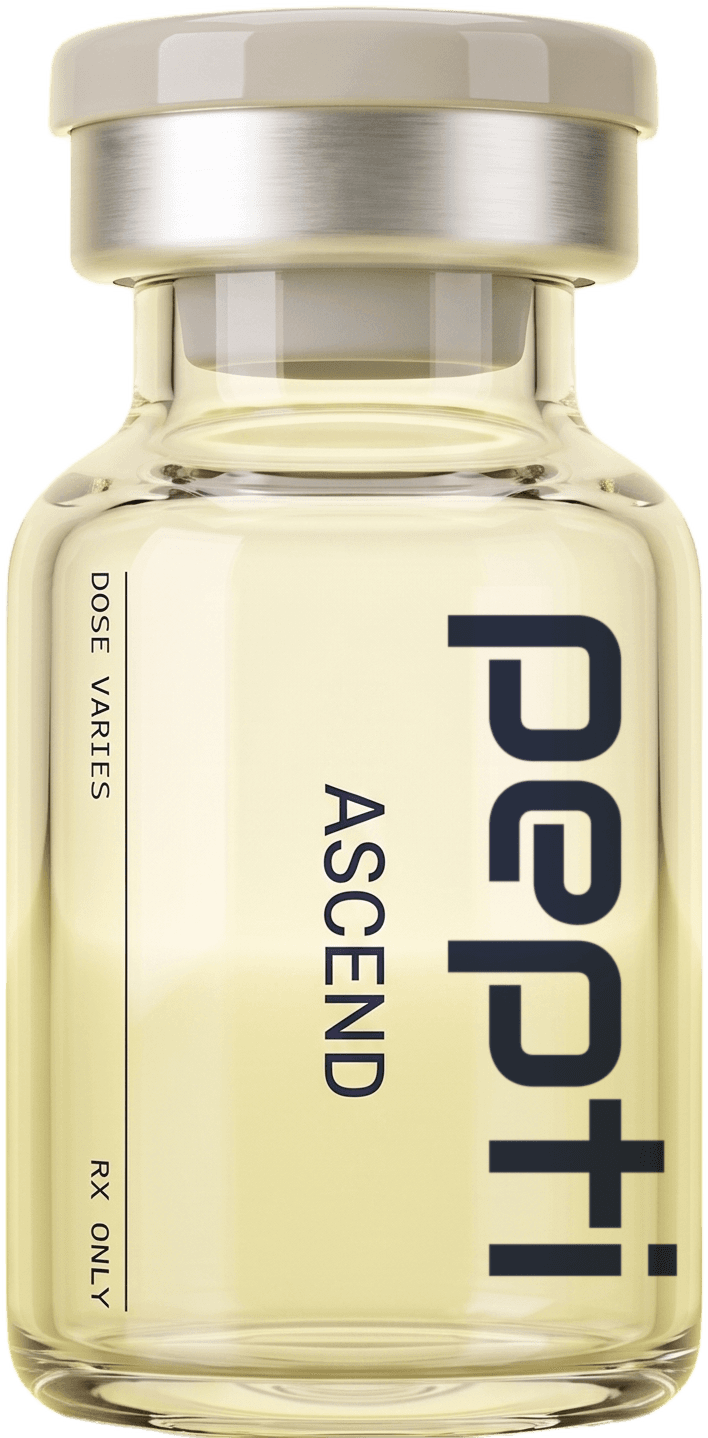
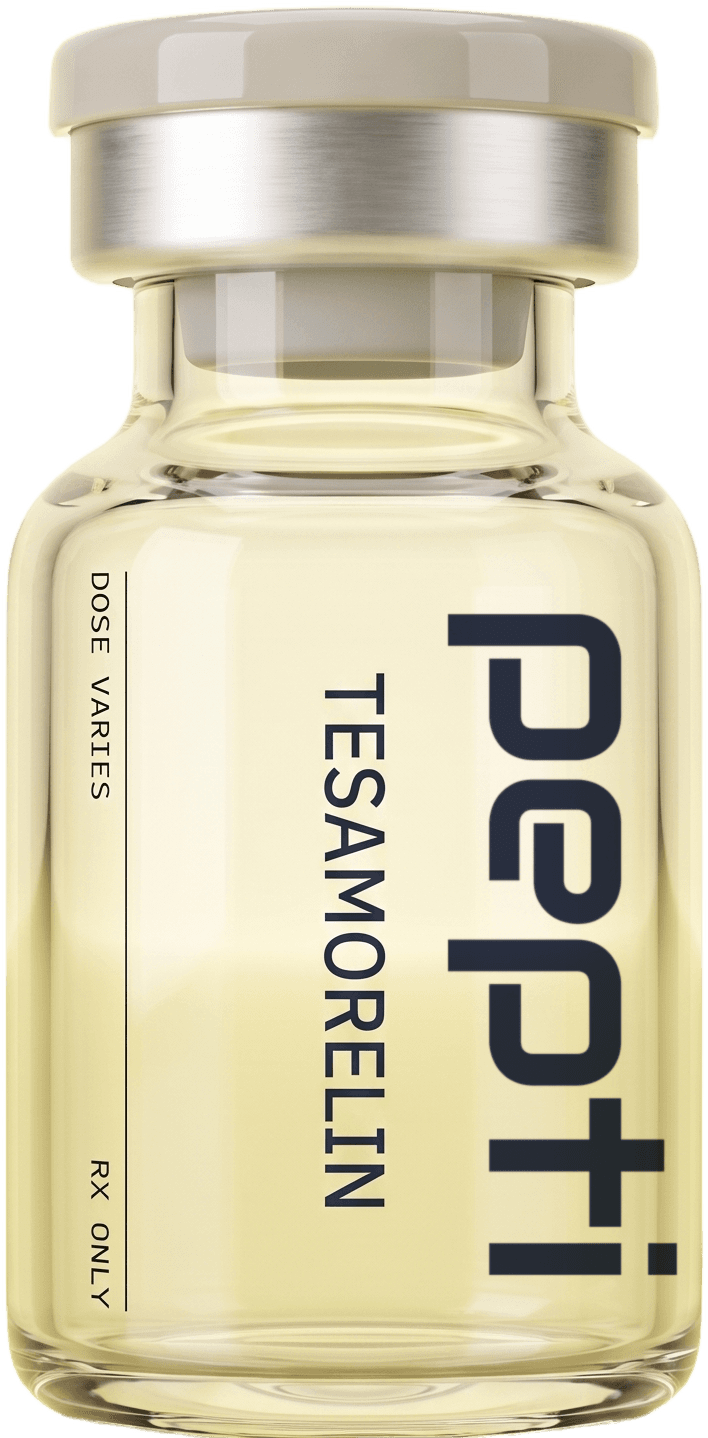
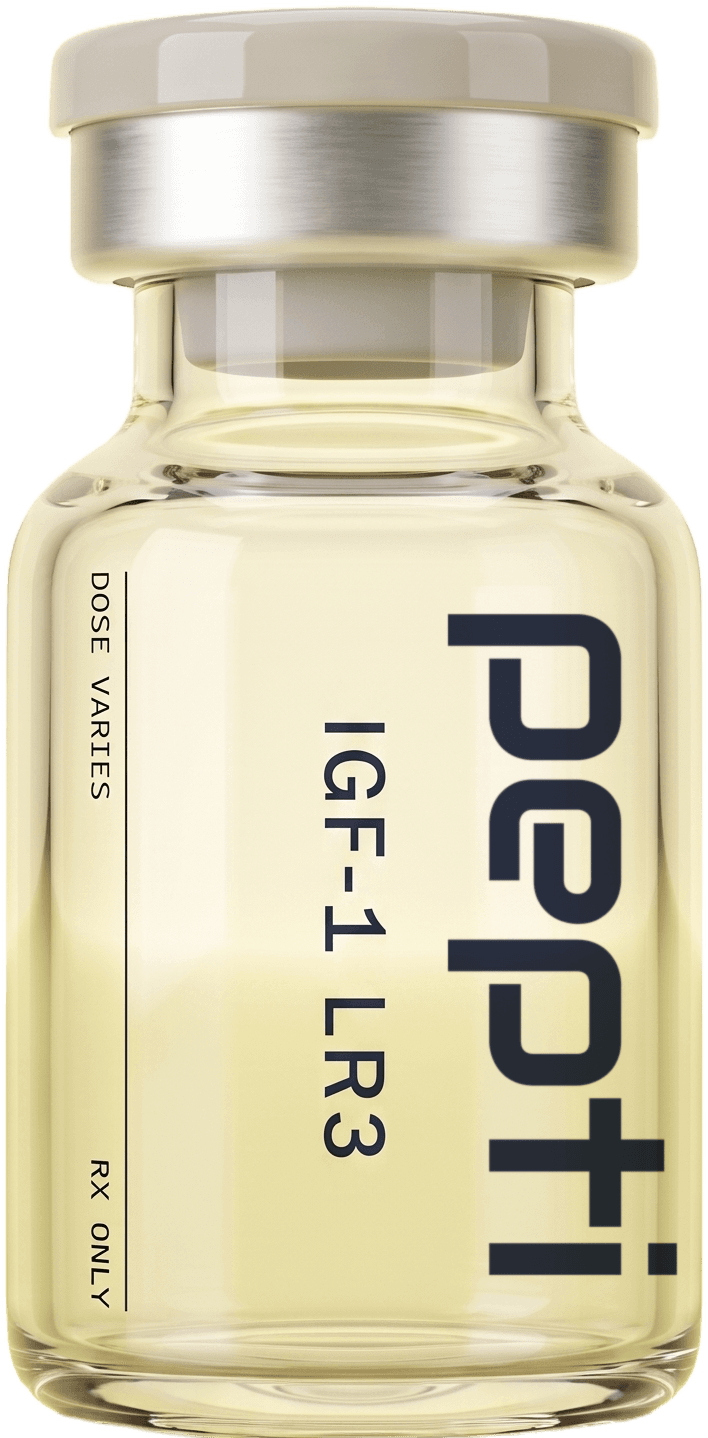
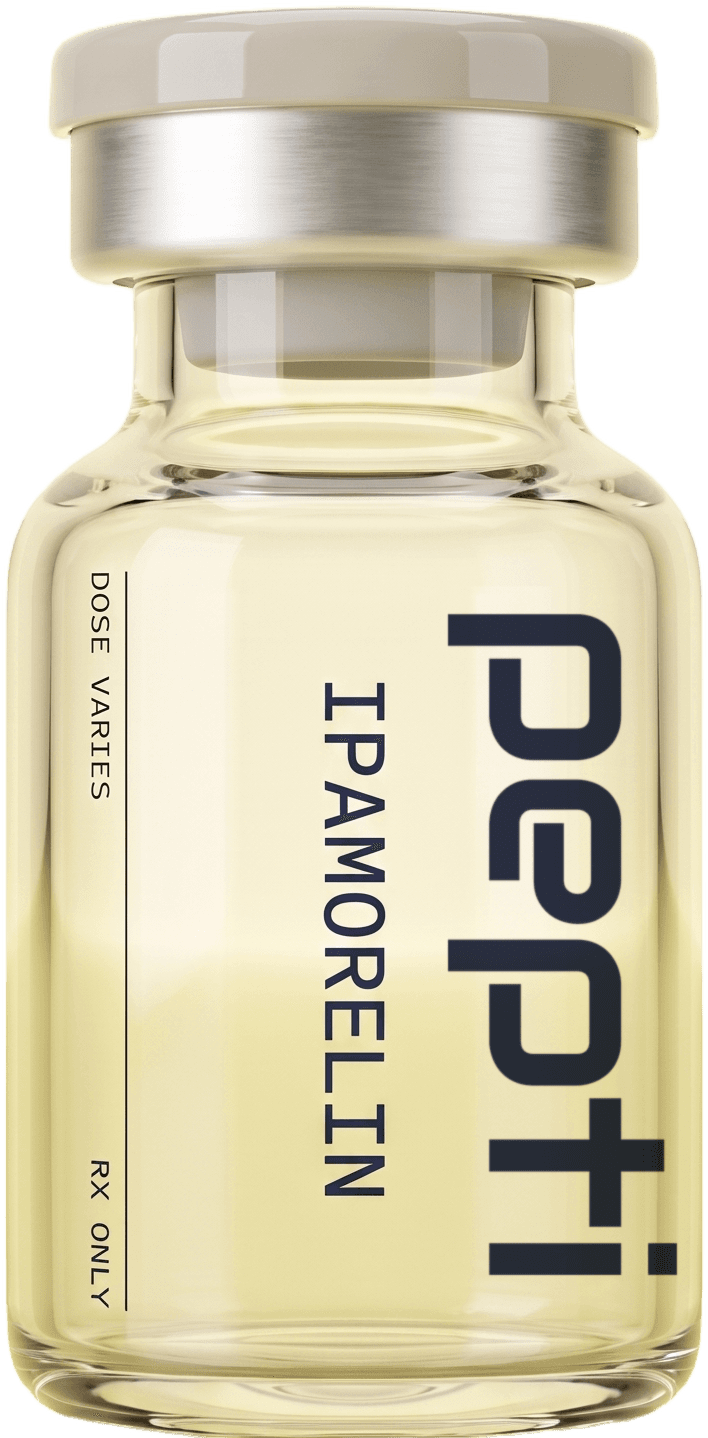
Yes. ASCEND is prohibited for any athlete in a tested pool, and unlike most blends it is not one component that causes the problem but all four. The 2026 WADA Prohibited List names CJC-1295 and tesamorelin under S2.2.4 as GHRH analogues and ipamorelin under S2.2.4 as a growth hormone secretagogue, and S2.3 names IGF-1 "and its analogues," which covers IGF-1 LR3. Every S2 class is prohibited at all times, in and out of competition, every S2 substance is non-Specified, and the 2027 List carries the S2.2.4 entries forward. A prescription does not change this. A standard workplace drug test, by contrast, does not look for any of the four.
This page is general information, not legal or anti-doping advice. Lists are revised every year and the responsibility for checking sits with the athlete.
Is ASCEND Blend Banned in Sports? WADA, NCAA and Drug Tests for All Four Components
The short answer
| The question you are asking | The answer |
|---|---|
| Is ASCEND banned by WADA? | Yes, through all four components: CJC-1295, tesamorelin and ipamorelin (S2.2.4) and IGF-1 LR3 (S2.3) |
| In competition only, or all the time? | All the time. S2 is prohibited in and out of competition |
| Specified or non-Specified? | Non-Specified, like everything in S2 |
| Is it banned by the NCAA? | Yes. Its class is peptide hormones, growth factors, related substances and mimetics, and the NCAA names IGF-1 among its examples |
| Does an FDA-approved tesamorelin product change that? | No. The List names substances, not unapproved products |
| Does a prescription help? | No. Only a therapeutic use exemption granted in advance does |
| Is a TUE realistic? | TUEs in this class are not a routine grant |
| Can labs detect the components? | Methods are published for the growth hormone releasing peptide class and for IGF-1 LR3 |
| Will it show up on a workplace drug test? | No |
Is ASCEND Blend Banned in Sports? WADA, NCAA and Drug Tests for All Four Components
What is in ASCEND, component by component
ASCEND is a 5 mL multi-dose vial containing 6 mg CJC-1295, 12 mg ipamorelin, 10 mg tesamorelin and 1 mg IGF-1 LR3, at $289 a month all-in, covering the medication, physician review, refill management and shipping. Each component has its own position on the List.
| Component | Amount per vial | 2026 WADA class | Specified? | Named on the List? |
|---|---|---|---|---|
| CJC-1295 | 6 mg | S2.2.4 Growth hormone releasing factors, GHRH analogues | No | Yes, as an example |
| Tesamorelin | 10 mg | S2.2.4 Growth hormone releasing factors, GHRH analogues | No | Yes, as an example |
| Ipamorelin | 12 mg | S2.2.4 Growth hormone secretagogues and their mimetics | No | Yes |
| IGF-1 LR3 | 1 mg | S2.3 Growth factors and growth factor modulators | No | Covered by "IGF-1 and its analogues" |
S2.2.4: three of the four
S2.2.4 covers growth hormone releasing factors in three groups. The first, GHRH and its analogues, gives CJC-1293, CJC-1295, sermorelin and tesamorelin as examples. The second covers growth hormone secretagogues and their mimetics, including ipamorelin and ibutamoren (MK-677). The third covers GH-releasing peptides, including hexarelin and GHRP-1 through GHRP-6. ASCEND's three secretagogues are named in the List itself, not caught by a catch-all. The 2027 Prohibited List keeps CJC-1295, sermorelin, tesamorelin, ipamorelin and hexarelin in S2.2.4.
S2.3: IGF-1 LR3
S2.3 names IGF-1 "and its analogues." IGF-1 LR3 is native IGF-1 with an arginine substituted at position 3 and a 13-amino-acid extension on the N-terminus, which is exactly what an analogue is. Pepti's live pages state plainly that IGF-1 and its analogues are prohibited at all times under the WADA code.
Why S2 rather than S0
S0 is the catch-all for substances not addressed by any other section and with no current approval for human therapeutic use. ASCEND's components are addressed directly by S2.2.4 and S2.3, so S0 does not come into it. The practical difference is that S0 substances are Specified, while S2 substances are non-Specified, which matters at the sanctioning stage. It does not make either one more permitted.
Is ASCEND Blend Banned in Sports? WADA, NCAA and Drug Tests for All Four Components
The approved tesamorelin product does not help
Tesamorelin is unusual among compounded peptides because an FDA-approved product exists, approved in November 2010 for reducing excess abdominal fat in adults with HIV who have lipodystrophy. That changes nothing for an athlete. The Prohibited List names substances, and an approved drug can be prohibited in sport; many are. Tesamorelin is named in S2.2.4 whether the vial came from a manufacturer or a compounding pharmacy, and the compounded tesamorelin in ASCEND is not FDA approved in any case. More is in is tesamorelin banned in sports.
Is ASCEND Blend Banned in Sports? WADA, NCAA and Drug Tests for All Four Components
No off-season for ASCEND
The S2 heading reads "prohibited at all times (in- and out-of-competition)." Using ASCEND in a summer training block, months from any event, is a violation exactly as much as using it the week of a final. Out-of-competition testing exists to catch substances used in training and recovery phases, which is precisely when people reach for a growth hormone axis blend.
Is ASCEND Blend Banned in Sports? WADA, NCAA and Drug Tests for All Four Components
Can a lab actually detect ASCEND's components?
Yes, and the methods are published.
| Component | What the anti-doping literature reports |
|---|---|
| Ipamorelin | Drug Testing and Analysis published the determination of growth hormone releasing peptide metabolites in human urine in 2015, covering GHRP-1, GHRP-2, GHRP-6, hexarelin and ipamorelin |
| Small peptides generally | A 2016 Journal of Separation Science paper described a direct-urine-injection screen covering peptides under 2 kDa |
| IGF-1 LR3 | Anti-doping laboratories have published methods for detecting LR3 |
| Blood matrices | A 2026 paper in The Analyst described a harmonised workflow for peptidic doping agents in dried and liquid blood |
Detection windows for small peptides are generally short, often hours to a few days. That is not a strategy. Under Code Article 6.6 a negative sample can be stored and reanalysed later, and Article 17 allows a charge within ten years of the asserted violation. Under strict liability the rule is about use, not about whether a given lab ran a given method.
A separate point: IGF-1 on your bloodwork
Treatment on the growth hormone axis can move IGF-1, a marker a clinician may look at. That is not a drug test result; it is a normal consequence of treatment, and it is a reason your medical record should be accurate.
Is ASCEND Blend Banned in Sports? WADA, NCAA and Drug Tests for All Four Components
Why a prescription does not protect you
ASCEND at Pepti is a valid prescription from a licensed physician, compounded by a licensed pharmacy. It is still an anti-doping violation to use it in a tested pool. Article 2.1.1 of the Code makes it the athlete's personal duty to ensure no prohibited substance enters their body, and intent, fault or negligence do not need to be shown.
Therapeutic use exemptions
A TUE is the only route by which a prohibited substance can be permitted, and it has to be granted in advance by an anti-doping body, not by a prescriber. The athlete must show four things:
- A diagnosed medical condition supported by relevant clinical evidence.
- That use will not produce any additional enhancement of performance beyond a return to normal health.
- That it is an indicated treatment, with no reasonable permitted therapeutic alternative.
- That the need is not a consequence of earlier prohibited use without a TUE.
Growth hormone releasing factors and IGF-1 analogues are prohibited precisely because their effects overlap with performance, and the reasons people ask about ASCEND (body composition, recovery, sleep, ageing) are not indicated treatments for a diagnosed condition. For a four-component blend in which every component is prohibited, an exemption is harder still to justify. USADA requires athletes in its Registered Testing Pool, Clean Athlete Program and Education Pool to hold a TUE in advance, and directs other competitors, including recreational ones, to submit a TUE Pre-Check Form.
Is ASCEND Blend Banned in Sports? WADA, NCAA and Drug Tests for All Four Components
College sport and other programs
The NCAA bans "peptide hormones, growth factors, related substances and mimetics," and its published examples include growth hormone, IGF-1 and ibutamoren, another secretagogue. It also states that "any substance that is chemically/pharmacologically related to one of the above drug classes, even if it is not listed as an example, is also banned," and holds the student-athlete accountable regardless. A college athlete should treat the answer for ASCEND as identical to the WADA answer. Professional leagues mostly run their own programs under collective bargaining, so check your league's current policy. Military services and some employers have their own rules.
Is ASCEND Blend Banned in Sports? WADA, NCAA and Drug Tests for All Four Components
Workplace and clinical drug tests
Employment panels are a different system. Standard pre-employment and workplace panels look for drugs of abuse, and none of ASCEND's peptides is on them or structurally similar to anything on them. Expanded panels in safety-sensitive jobs add more drugs of abuse, not therapeutic peptides. See do peptides show up on a drug test.
| Type of test | Does it look for ASCEND's components? | What to do |
|---|---|---|
| Pre-employment or workplace panel | No | Declare prescriptions through the confidential route if asked |
| Anti-doping test | Yes, all four are prohibited | Do not use ASCEND if you are in a tested pool |
| Military or regulated profession | Policies vary | Read your own policy |
| Before surgery | A safety question | Tell the treating clinician everything you take |
Is ASCEND Blend Banned in Sports? WADA, NCAA and Drug Tests for All Four Components
The neighbouring products are prohibited too
Switching blends does not help a tested athlete, because the growth hormone axis is the problem.
| Product | What is in it | What makes it prohibited | Price |
|---|---|---|---|
| ASCEND | CJC-1295, ipamorelin, tesamorelin, IGF-1 LR3 | All four (S2.2.4 and S2.3) | $289/mo |
| CJC-1295 / Ipamorelin | 6 mg CJC-1295, 12 mg ipamorelin | Both (S2.2.4) | $239/mo |
| Tesamorelin | 10 mg tesamorelin | S2.2.4 | $249/mo |
| IGF-1 LR3 | 1000 mcg IGF-1 LR3 | S2.3 | $259/mo |
| TITAN | Tesamorelin, CJC-1295, ipamorelin, BPC-157 | All four (S2.2.4, and BPC-157 under S0) | $289/mo |
More on the List for every peptide athletes ask about is in peptides for athletes, is ipamorelin banned in sports and peptides vs HGH.
Is ASCEND Blend Banned in Sports? WADA, NCAA and Drug Tests for All Four Components
Where ASCEND stands with the FDA
Anti-doping status and FDA status are separate questions. ASCEND has no regulatory status of its own; the components do. CJC-1295 and ipamorelin were placed in Category 2 of the FDA's interim 503A list in September 2023 and taken to the Pharmacy Compounding Advisory Committee, which in October and December 2024 voted against recommending them for the 503A Bulks List for the specific uses evaluated; both have since left 503A Category 2 as withdrawn nominations, and no final FDA determination has been issued. Tesamorelin is the active ingredient of an approved product and was never on the bulks list. IGF-1 LR3 has never been nominated or reviewed. All four remain legal to prescribe and dispense. Compounded medications are not FDA approved.
Is ASCEND Blend Banned in Sports? WADA, NCAA and Drug Tests for All Four Components
If you are not drug tested
For a recreational athlete outside any testing program, the anti-doping question does not arise, but the medical one does. ASCEND's IGF-1 LR3 component brings a low blood sugar risk, and a personal or family history of cancer is treated as a reason not to prescribe it. If you are not sure whether you are in a testing pool, find out from your federation before starting. The cautions are in ASCEND blend side effects.
Is ASCEND Blend Banned in Sports? WADA, NCAA and Drug Tests for All Four Components
Where to get ASCEND prescribed
ASCEND cannot be bought legitimately without a prescription. Sites selling it "for research use only" are not accountable for identity, purity, sterility or concentration. The prescription route:
- Complete a free online intake covering your history, medications, whether you are drug tested, blood sugar, cancer and family history, and what you want help with.
- A physician licensed in your state reviews it, usually within 24 hours.
- If it is appropriate, a PCAB-accredited, FDA-registered US 503A compounding pharmacy prepares it to that prescription. Lot test results are published at /quality/lab-results.
- It ships refrigerated with your directions printed on the vial.
- Your physician stays reachable for questions and side effects.
Step by step: how to get ASCEND prescribed online. Bloodwork is not required for any Pepti treatment. If your physician wants labs for your care, they'll ask through your account.
References
What this is based on.
References
- Falutz J, Allas S, Blot K et al.. Metabolic effects of a growth hormone-releasing factor in patients with HIV · N Engl J Med (2007) · PMID 18057338
- Raun K, Hansen BS, Johansen NL et al.. Ipamorelin, the first selective growth hormone secretagogue · Eur J Endocrinol (1998) · PMID 9849822
- Teichman SL, Neale A, Lawrence B et al.. Prolonged stimulation of growth hormone (GH) and insulin-like growth factor I secretion by CJC-1295, a long-acting analog of GH-releasing hormone, in healthy adults · J Clin Endocrinol Metab (2006) · PMID 16352683
Citations are provided for educational purposes. They do not constitute medical advice. Always discuss any peptide protocol with your prescribing physician.
Common questions
Is ASCEND Blend Banned in Sports? WADA, NCAA and Drug Tests for All Four Components, answered.
Yes. All four components are prohibited: CJC-1295, tesamorelin and ipamorelin under S2.2.4, and IGF-1 LR3 under S2.3 as an IGF-1 analogue.
Yes. S2 substances are prohibited at all times, so there is no permitted off-season use for a tested athlete.
All of them. ASCEND is unusual in that every component is named on the List or covered by a named class.
Yes. S2.3 names IGF-1 "and its analogues," and IGF-1 LR3 is an IGF-1 analogue, prohibited at all times.
A TUE requires a diagnosed condition, no enhancement beyond normal health and no permitted alternative. Body composition, recovery and sleep are not indicated treatments for a diagnosed condition, and TUEs in this class are not a routine grant.
No. Anti-doping rules are strict liability, and a prescription is not an exemption. Only a TUE granted in advance is.
Yes. The NCAA bans peptide hormones, growth factors, related substances and mimetics, names IGF-1 and ibutamoren among its examples, and bans anything pharmacologically related.
No. Standard employment panels screen for drugs of abuse, and none of ASCEND's peptides is on them.
Detection windows for small peptides are generally hours to a few days. That does not make use permitted, and samples can be stored and reanalysed for up to ten years.
No. TITAN contains tesamorelin, CJC-1295 and ipamorelin, all under S2.2.4, plus BPC-157, which is named under S0.
No, but both are prohibited. Growth hormone is under S2.2.3; ASCEND's secretagogues are under S2.2.4 and its IGF-1 analogue under S2.3. The free assessment goes to a physician licensed in your state. A consultation does not guarantee a prescription.
Next step
See what a physician recommends for you.
A licensed physician in your state reviews your intake and decides what is appropriate. A consultation does not guarantee a prescription.