Supplements · Reference
Cyanocobalamin vs Methylcobalamin: Which Form of B12 Is Better?
Cyanocobalamin and methylcobalamin are both vitamin B12; they differ only in the small group attached to the cobalt atom at the centre of the molecule.
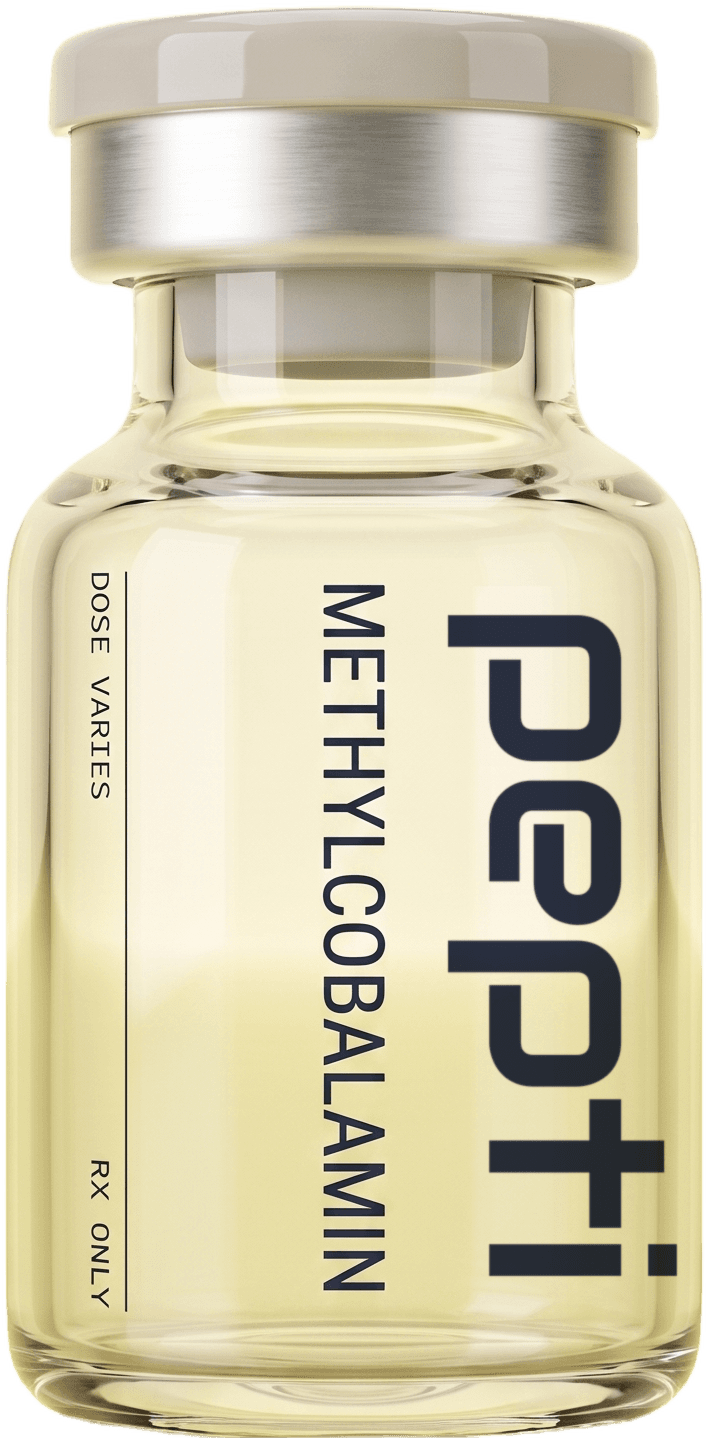
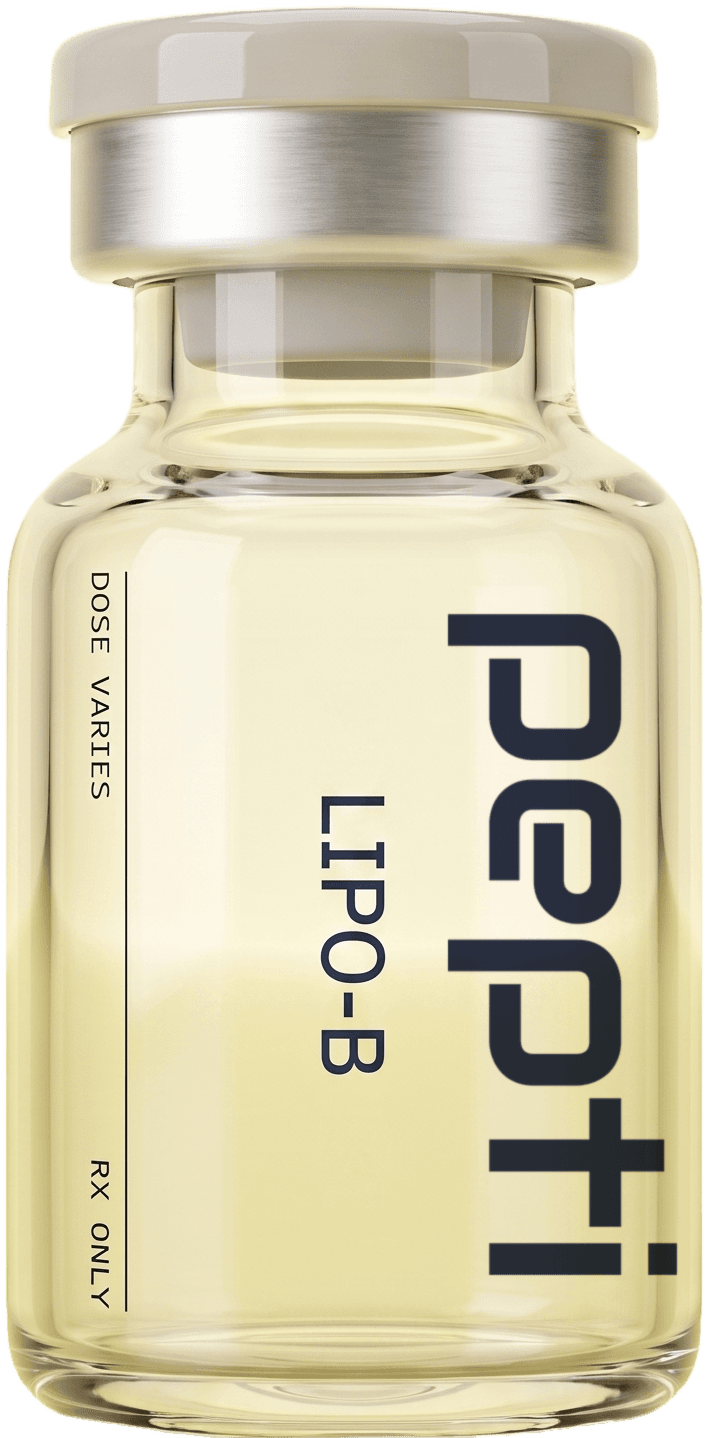
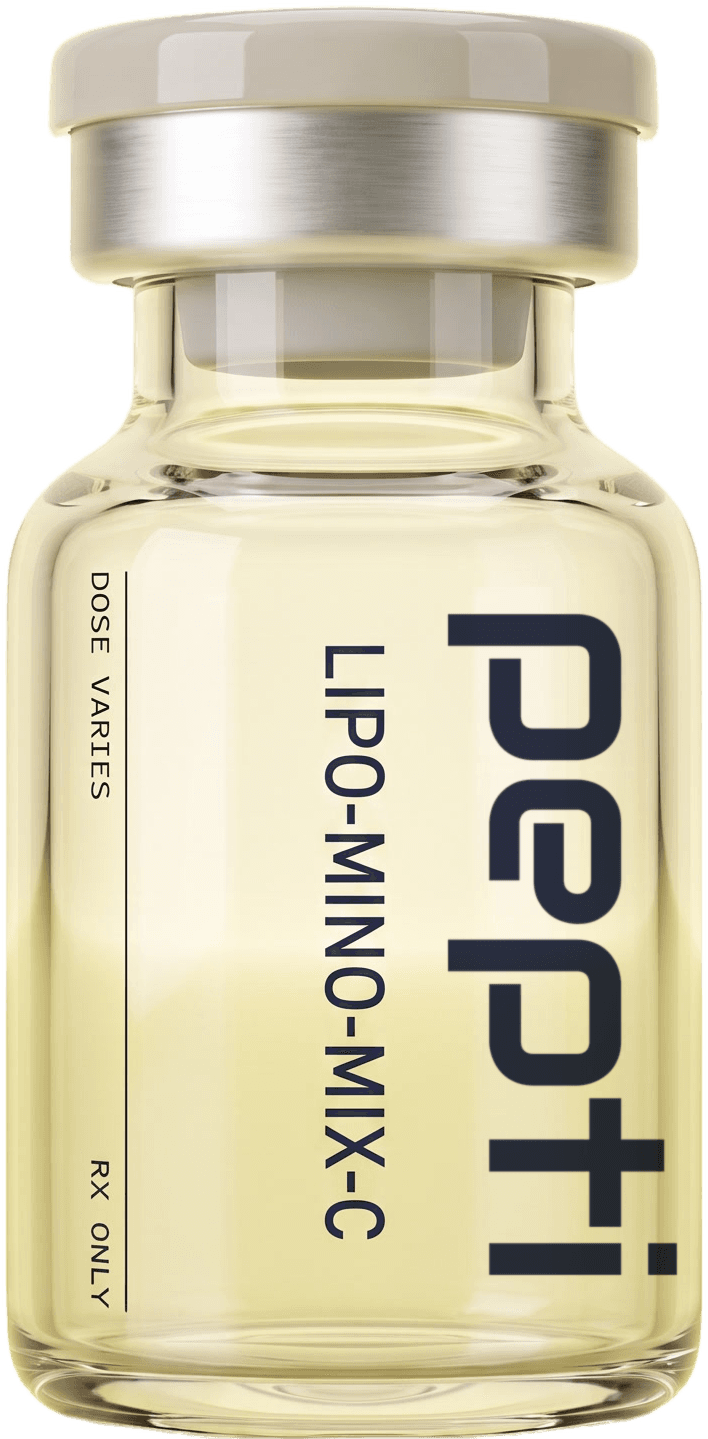
Cyanocobalamin is the stable synthetic form used in most supplements and in the FDA-approved B12 injection, and the body converts it into the two active forms. Methylcobalamin is one of those active forms supplied directly. Because cells strip that group off whatever form arrives and rebuild the active coenzymes themselves, a 2015 review in Molecular Nutrition & Food Research concluded the coenzyme forms are not likely to be superior for preventing or treating deficiency. Pepti prescribes compounded methylcobalamin injections, and its Lipo-B and Lipo-Mino-Mix-C injections contain cyanocobalamin.
This page explains each form, how the body handles them, what the evidence says about which is better, how injection compares with tablets, where each stands with the FDA, how they are dosed at Pepti, and who suits which.
Cyanocobalamin vs Methylcobalamin
The short answer
| If you want | The usual prescription | What is in it | Price |
|---|---|---|---|
| B12 on its own, in an active form | Methylcobalamin (Active B12) | 5 mL vial, methylcobalamin 2 mg/mL (10 mg per vial) | $229/mo |
| B12 with lipotropic nutrients alongside a weight program | Lipo-B (B12 + MIC) | 10 mL vial; methionine 50 mg, inositol 50 mg, choline 25 mg and B12 (cyanocobalamin) 1 mg per mL | $209/mo |
| The related MIC and B12 preparation | Lipo-Mino-Mix-C | 10 mL vial of MIC with B vitamins, including cyanocobalamin | $209/mo |
Every figure is an all-in monthly price covering the medication, physician review, refill management and shipping, with no separate membership fee. Current pricing always lives on each product page.
Cyanocobalamin vs Methylcobalamin
What vitamin B12 is
Vitamin B12, or cobalamin, is a large molecule built around a single cobalt atom. The group attached on top of that cobalt, called the upper ligand, is what distinguishes the forms you see on labels:
| Form | Upper ligand | Where you meet it |
|---|---|---|
| Cyanocobalamin | A cyanide group | Most supplements; the FDA-approved B12 injection; Lipo-B |
| Hydroxocobalamin | A hydroxyl group | Another pharmaceutical form |
| Methylcobalamin | A methyl group | One of the two active coenzymes; Pepti's Methylcobalamin injection |
| Adenosylcobalamin | An adenosyl group | The other active coenzyme |
Inside the cell only two forms do any work. Methylcobalamin is the cofactor for methionine synthase, the enzyme that turns homocysteine back into methionine and keeps the methylation cycle turning. Adenosylcobalamin is the cofactor for methylmalonyl-CoA mutase, a mitochondrial enzyme. Every other form is converted into one of those two first. Humans cannot make B12; bacteria synthesise it, animal foods concentrate it, and the liver keeps a reserve that typically lasts years.
Cyanocobalamin vs Methylcobalamin
Cyanocobalamin on its own terms
What it is
Cyanocobalamin is a stable, inexpensive form of B12 that does not occur naturally in the body but is easily converted by it. "Vitamin B12" on a supplement label almost always means cyanocobalamin. Once absorbed, the body removes the cyanide group and builds both active coenzymes, methylcobalamin and adenosylcobalamin, from the core molecule.
About the cyanide group
The word puts people off, but the amount is trivially small for almost everyone. The one recognised exception is Leber's hereditary optic neuropathy, a rare inherited eye condition, in which cyanocobalamin is avoided. Cyanocobalamin has no established upper intake limit, because no toxicity has been demonstrated from excess; the body excretes what it does not use.
Where it stands
Cyanocobalamin injection is an FDA-approved prescription drug, listed in the FDA's Drugs@FDA database as an approved injectable, and it is the standard in US practice for B12 deficiency. The B12 in Lipo-B is cyanocobalamin. Lipo-B as a compounded combination is not an FDA-approved product; only single-ingredient cyanocobalamin injection is.
Cyanocobalamin vs Methylcobalamin
Methylcobalamin on its own terms
What it is
Methylcobalamin is the methyl form of B12, the cofactor methionine synthase uses directly. That is why it is called "active" or "coenzyme" B12. It is a description of chemistry, not a claim about how well it works once injected. It is sold as "mecobalamin" in Japan, where it has been a prescription drug for decades. The full reference is at what is methylcobalamin.
What arriving "active" does and does not mean
Methylcobalamin arrives already in one of the working forms, but the cell does not simply use it as delivered. Cells strip the upper ligand from every form of B12 that arrives and rebuild both coenzymes from the core. Injected methylcobalamin therefore supplies the adenosylcobalamin pathway too, and cyanocobalamin ends up supplying the methylcobalamin pathway. The two forms converge inside the cell.
Where it stands
No FDA-approved drug product contains methylcobalamin as its active ingredient. In the United States it is available as a dietary supplement or, on prescription, as a compounded injection. On the FDA's 503A bulk drug substances list, updated 14 May 2026, methylcobalamin sits in Category 1, "Bulk Drug Substances Under Evaluation," under which state-licensed pharmacies may compound it while the FDA's evaluation continues. It is not in Category 2.
Cyanocobalamin vs Methylcobalamin
Head to head
| Cyanocobalamin | Methylcobalamin | |
|---|---|---|
| What it is | Vitamin B12 with a cyanide upper ligand | Vitamin B12 with a methyl upper ligand |
| Occurs naturally in the body? | No; converted to the active forms | Yes; one of the two active coenzymes |
| How cells use it | Ligand removed; both coenzymes rebuilt | Ligand removed; both coenzymes rebuilt |
| Superior for deficiency? | Not shown to be inferior | Not shown to be superior (2015 review) |
| Stability | Very stable; the usual supplement form | Light-sensitive; kept in its carton out of direct light |
| Avoided in | Leber's hereditary optic neuropathy | No comparable exclusion |
| FDA-approved injection? | Yes | No; compounded, 503A Category 1 |
| Where Pepti uses it | Inside Lipo-B and Lipo-Mino-Mix-C | As Methylcobalamin (Active B12), $229/mo |
The real difference is regulation and preference, not potency
People often ask which form is "better absorbed" or "stronger." The review literature does not support a meaningful clinical difference for treating or preventing deficiency, because both end up as the same coenzymes inside the cell. What honestly separates them is narrower: methylcobalamin carries no cyanide group, which matters for the rare person with Leber's disease and is a preference for others; cyanocobalamin is the approved injection with the longest track record. A physician who prescribes either one is not short-changing you.
Cyanocobalamin vs Methylcobalamin
Injection vs tablets, for either form
The form matters less than the route for one group of people: those who cannot absorb B12 from the gut. Oral B12 needs stomach acid to free it from food, intrinsic factor from the stomach lining to carry it, and a healthy end section of the small intestine to absorb it. Pernicious anaemia (autoimmune loss of intrinsic factor), stomach or bowel surgery, Crohn's disease, long-term acid suppression and metformin all interfere. An intramuscular injection enters the blood regardless of what the gut is doing.
| Question | What the evidence says |
|---|---|
| Does high-dose oral B12 work for deficiency? | Two Cochrane reviews (2005, updated 2018) found oral and intramuscular B12 had similar effects on serum levels, on low-quality evidence from three trials with 153 participants |
| The best-known single trial | A 1998 trial in Blood randomised 38 newly deficient patients to 2 mg oral daily or intramuscular injections; correction was prompt and indistinguishable |
| When is injection the clearer choice? | When absorption is unreliable, when nerve symptoms make fast repletion the priority, or when tablets have not worked |
That is the real reason injections exist: not because injected B12 is stronger, but because it bypasses the absorption problem.
Cyanocobalamin vs Methylcobalamin
What B12 does and does not do
The evidence is definitive in deficiency. Correcting B12 deficiency corrects megaloblastic anaemia, lowers methylmalonic acid and homocysteine, and improves or halts the nerve symptoms, with the degree of nerve recovery depending on how long the damage has been present. Deficiency is more common in vegetarians and especially vegans, in long-term metformin users, in older adults, after gastric or bowel surgery, and with long-term acid suppression.
What the human data does not do is support B12 as a general tonic. No randomised trial shows B12 injections, of either form, improve energy, mood or performance in people with normal B12 status, and none shows methylcobalamin outperforming cyanocobalamin on any clinical outcome. A 2026 meta-analysis in the Journal of Clinical Medicine of B-vitamin supplementation in diabetic neuropathy reported small changes in some nerve scores, no significant effect on pain, and enough bias that its authors declined to recommend routine use. Neither form is a weight-loss treatment, even when B12 appears in a weight-management injection.
Cyanocobalamin vs Methylcobalamin
Dosing at Pepti
| Product | Directions | Math at that concentration | Doses per vial |
|---|---|---|---|
| Methylcobalamin, 2 mg/mL | 1.25 mL (125 units) intramuscularly once weekly | 1.25 mL x 2 mg/mL = 2.5 mg methylcobalamin per injection | 4, about 4 weeks |
| Lipo-B, B12 1 mg/mL | 0.8 mL (80 units) intramuscularly three times weekly | 0.8 mL x 1 mg/mL = 0.8 mg cyanocobalamin per injection, with the MIC nutrients | 12, about 4 weeks |
The math column is arithmetic on the vial concentration, not a dose recommendation. Your physician sets your directions after reviewing your intake, and they are printed on the vial. Both go into the muscle rather than under the skin: usually the outer thigh or the upper outer buttock, rotated between doses. Intramuscular injection uses a longer needle, and the pharmacy supplies syringes and needles suited to the directions. Because 1.25 mL is more than a 1 mL insulin barrel holds, methylcobalamin comes with an appropriate syringe. Refills run every 28 days, one vial per fill, and injectables ship refrigerated with ice packs, sterile syringes and alcohol prep pads. Keep methylcobalamin in its carton, out of direct light.
Cyanocobalamin vs Methylcobalamin
Side effects
For both forms, what gets reported with injections is mostly at the site: stinging, soreness and occasional bruising. Less commonly people report itching, a transient rash, acne-like eruptions, mild diarrhoea or headache. Rare but documented with cobalamin injections of any form are allergic reactions, including anaphylaxis; people with a cobalt allergy should say so on the intake.
Two situations need physician attention. Treating a severe, established B12-deficiency anaemia can cause potassium to fall as the marrow ramps up production. And high-dose folic acid can correct the anaemia of B12 deficiency while nerve damage continues, so folate and B12 are assessed together. Nitrous oxide, dental or recreational, inactivates B12 and can bring on nerve problems in someone with low stores.
Stop and contact your physician for any reaction that is severe, spreading or involves difficulty breathing. For swelling of the face or throat or trouble breathing, call 911.
Cyanocobalamin vs Methylcobalamin
Who suits which
| Situation | What tends to fit |
|---|---|
| Leber's hereditary optic neuropathy | Not cyanocobalamin; methylcobalamin is one alternative |
| Preference to avoid the cyanide group | Methylcobalamin |
| B12 as part of a weight-management plan | Lipo-B, which contains cyanocobalamin with methionine, inositol and choline |
| A physician prefers the approved product | Cyanocobalamin injection, which does the same job in deficiency |
| Tired, with B12 never measured | A B12 level is how deficiency is identified; thyroid, iron and sleep explain fatigue far more often |
| On a GLP-1 and asking about B12 | Pepti's semaglutide and tirzepatide vials contain no B12; B12 is a separate prescription if wanted |
Cyanocobalamin vs Methylcobalamin
What the evidence shows, honestly
Cyanocobalamin and methylcobalamin are the same vitamin with a different chemical cap, and the body removes that cap from both. The review literature says the active forms are not likely to be superior for preventing or treating deficiency. The honest case for methylcobalamin is the absence of the cyanide group and patient preference; the honest case for cyanocobalamin is that it is the FDA-approved injection with the longest record. Whichever form is used, B12 replacement corrects deficiency; neither form has been shown to raise energy in people whose levels are normal. Any provider claiming methylcobalamin is "far better absorbed" or works where cyanocobalamin does not is overstating the evidence.
Cyanocobalamin vs Methylcobalamin
Where to get a B12 injection prescribed
Prescription B12 injections should come from a licensed pharmacy, not from a site selling vials "for research use only," where identity, purity, sterility and concentration are untested. The prescription route:
- Complete a free online intake covering your history, medications, diet and what you want help with.
- A physician licensed in your state reviews it, usually within 24 hours.
- If it is appropriate, a PCAB-accredited, FDA-registered US 503A pharmacy compounds it to that prescription. Lot test results are published at /quality/lab-results.
- It ships refrigerated with your directions printed on the vial.
- Your physician stays reachable for questions and dose changes.
Pepti is cash-pay and does not bill insurance. Current pricing is on the Methylcobalamin and Lipo-B product pages.
Common questions
Cyanocobalamin vs Methylcobalamin, answered.
Both are vitamin B12. They differ only in the group on the cobalt atom: cyanide for cyanocobalamin, methyl for methylcobalamin. Cyanocobalamin is converted by the body into the active forms; methylcobalamin is one of those active forms supplied directly.
The review literature says no for preventing or treating deficiency. A 2015 review in Molecular Nutrition & Food Research concluded the coenzyme forms are not likely to be superior, because cells strip and rebuild the ligand from every form. Methylcobalamin's real advantages are the absence of the cyanide group and preference.
No, for almost everyone. The amount is trivially small, and cyanocobalamin is the form used in the FDA-approved B12 injection. The recognised exception is Leber's hereditary optic neuropathy, in which it is avoided.
Absorption from the gut depends far more on the person than the form: stomach acid, intrinsic factor and a healthy small intestine. Injection of either form bypasses that. No trial shows methylcobalamin outperforming cyanocobalamin on a clinical outcome.
For many deficient people, high-dose oral B12 works about as well, according to Cochrane reviews. Injections are the clearer choice when absorption is the problem, such as pernicious anaemia or bowel surgery, or when nerve symptoms make fast repletion the priority.
Cyanocobalamin, at 1 mg per mL, alongside 50 mg methionine, 50 mg inositol and 25 mg choline per mL in a 10 mL vial. Lipo-B is $209 a month at Pepti.
No. No FDA-approved drug product contains methylcobalamin as its active ingredient. It is compounded on prescription and sits in Category 1 of the FDA's 503A bulk substances list, updated 14 May 2026. Cyanocobalamin injection is FDA approved.
Only if you were deficient. Fatigue caused by B12 deficiency responds to replacement; in people with normal levels, no placebo-controlled trial has shown B12 injections of either form improve energy.
Long-term metformin use is associated with lower B12 levels; the Diabetes Prevention Program Outcomes Study reported this over more than a decade of follow-up. Acid suppressants have a similar, smaller effect on oral absorption.
No. Pepti's GLP-1 vials contain no B12. Methylcobalamin or Lipo-B are separate prescriptions if your physician thinks one fits.
Methylcobalamin is $229 a month and Lipo-B is $209 a month, all-in, covering medication, physician review, refill management and shipping, with no membership fee.
No. Bloodwork is not required for any Pepti treatment. If your physician wants labs for your care, they'll ask through your account. The free assessment goes to a physician licensed in your state. A consultation does not guarantee a prescription.
Related answers
Keep reading.
- Methylcobalamin (Active B12): What It Is, Where to Get It Prescribed, and What It Costs
- Do You Need a Prescription for Methylcobalamin (B12) Injections? Is It Legal to Buy Online?
- How Long Does B12 Take to Work? What Research Measured and When
- How to Get Methylcobalamin (Active B12) Prescribed Online: Steps, Intake and Cost
- Dihexa vs DSIP: A Memory Peptide and a Sleep Peptide, Compared
Next step
See what a physician recommends for you.
A licensed physician in your state reviews your intake to see whether treatment fits your history. A consultation does not guarantee a prescription.