Weight Loss · Reference
AOD-9604 vs Tesamorelin for Fat Loss: Mechanism, Evidence, Cost, and Which One Fits
This page explains each on its own terms, puts them side by side, and covers the blends that contain them, where tirzepatide fits, the evidence, FDA status, dosing, price and who suits which.
Medically reviewed by Dr. Gene, MD · November 4, 2026
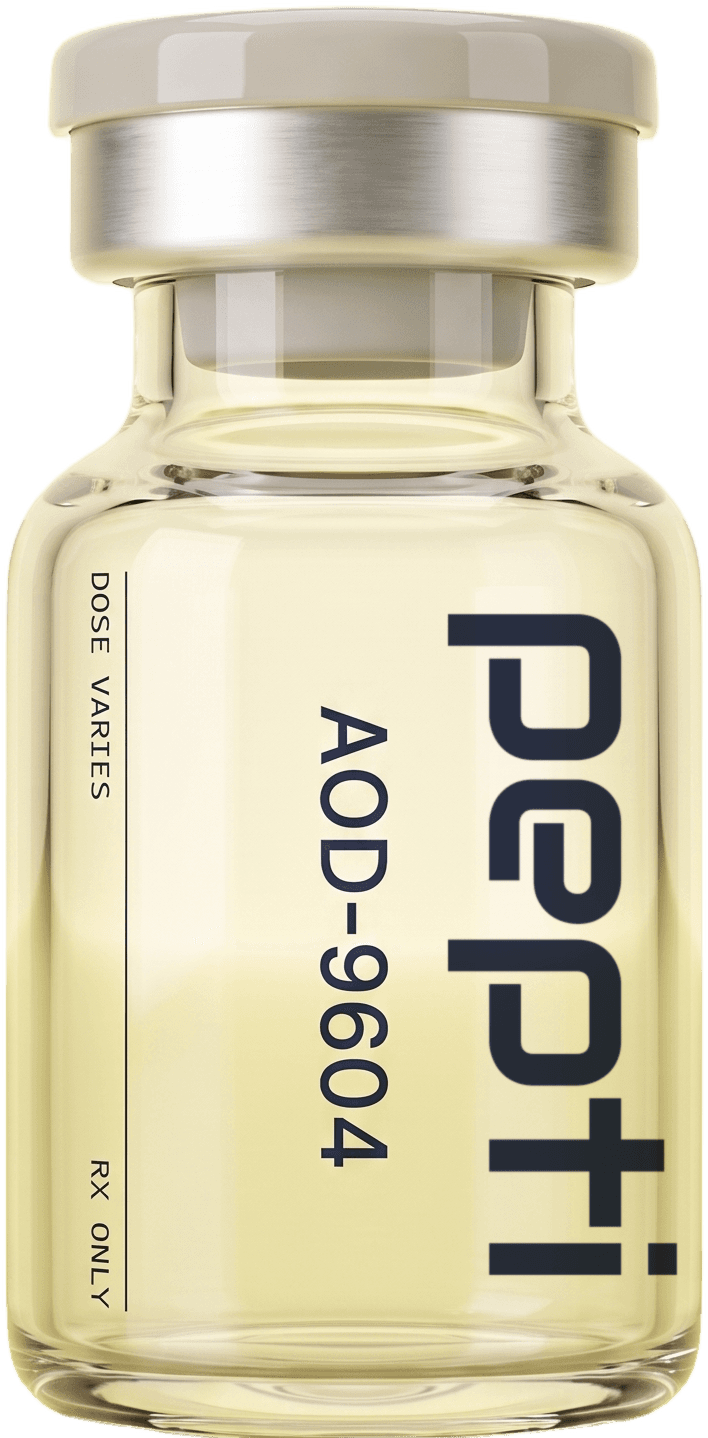
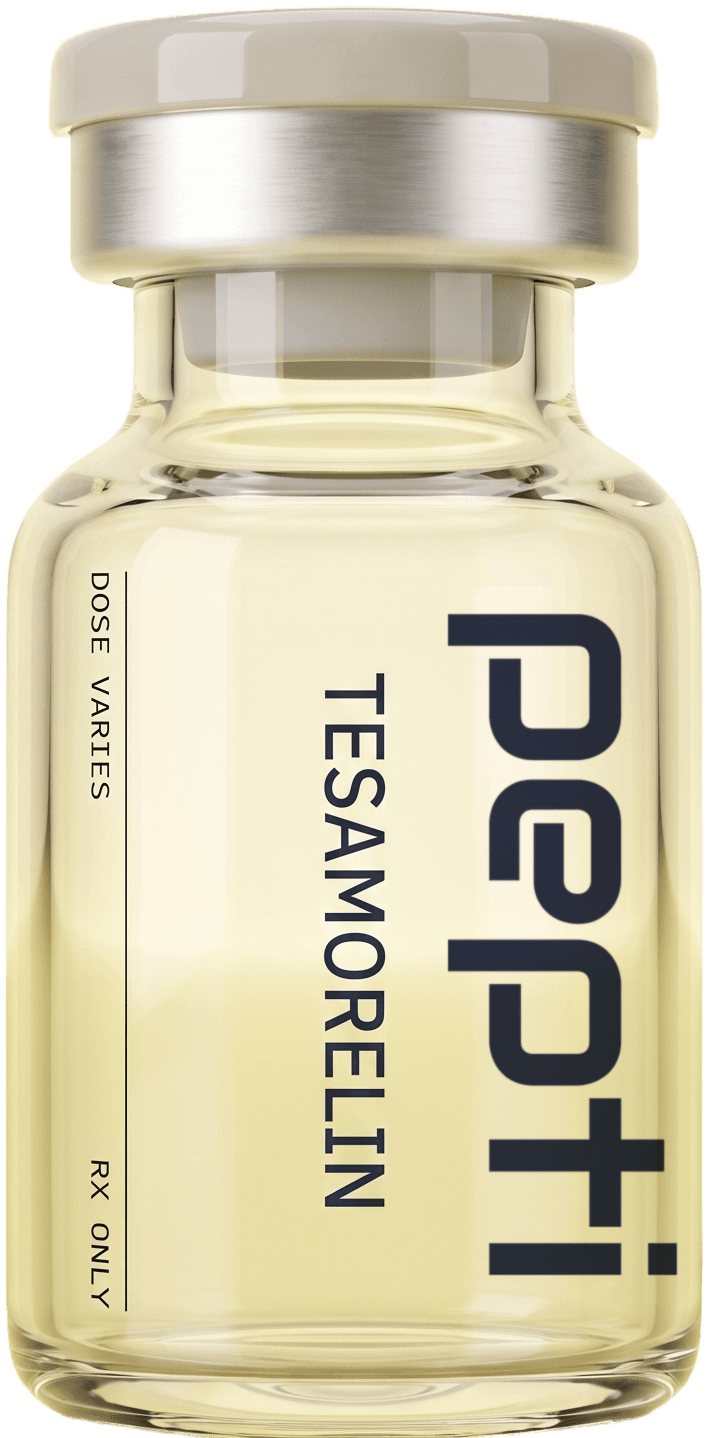
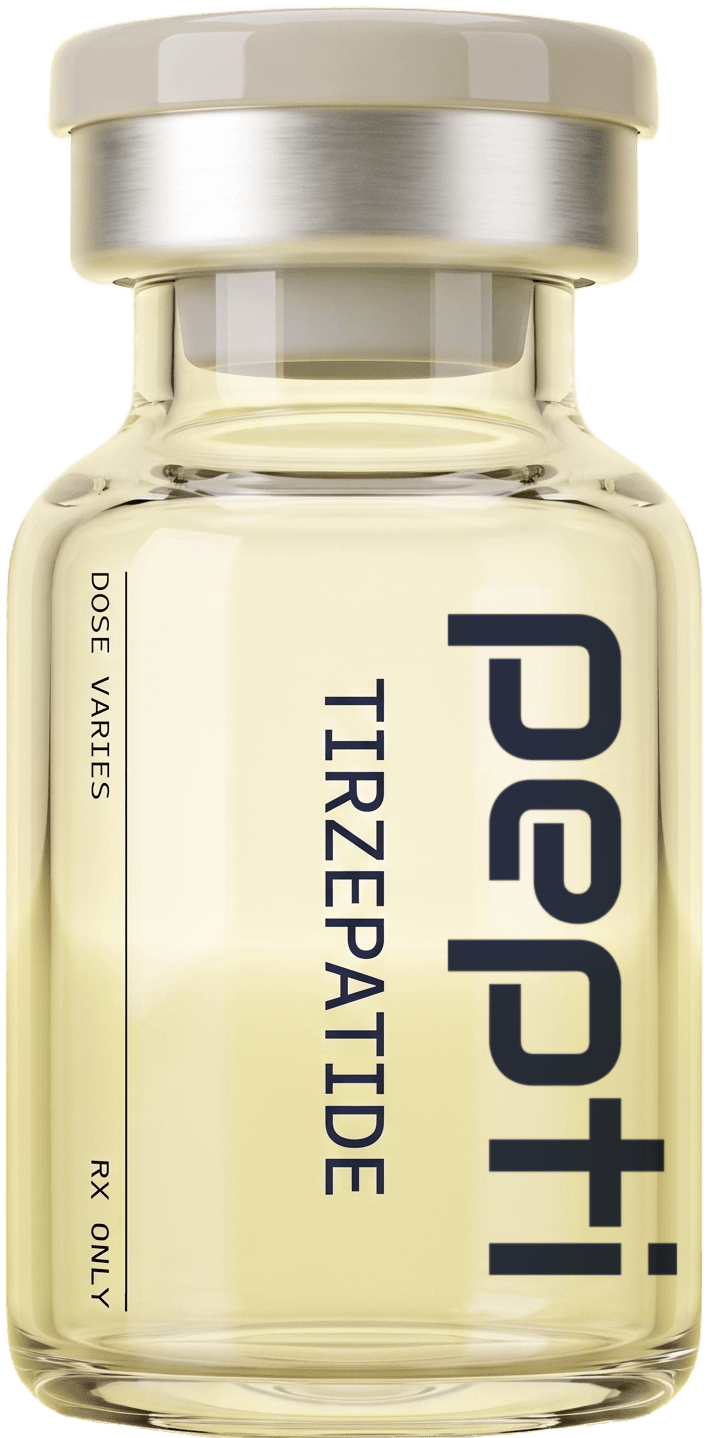
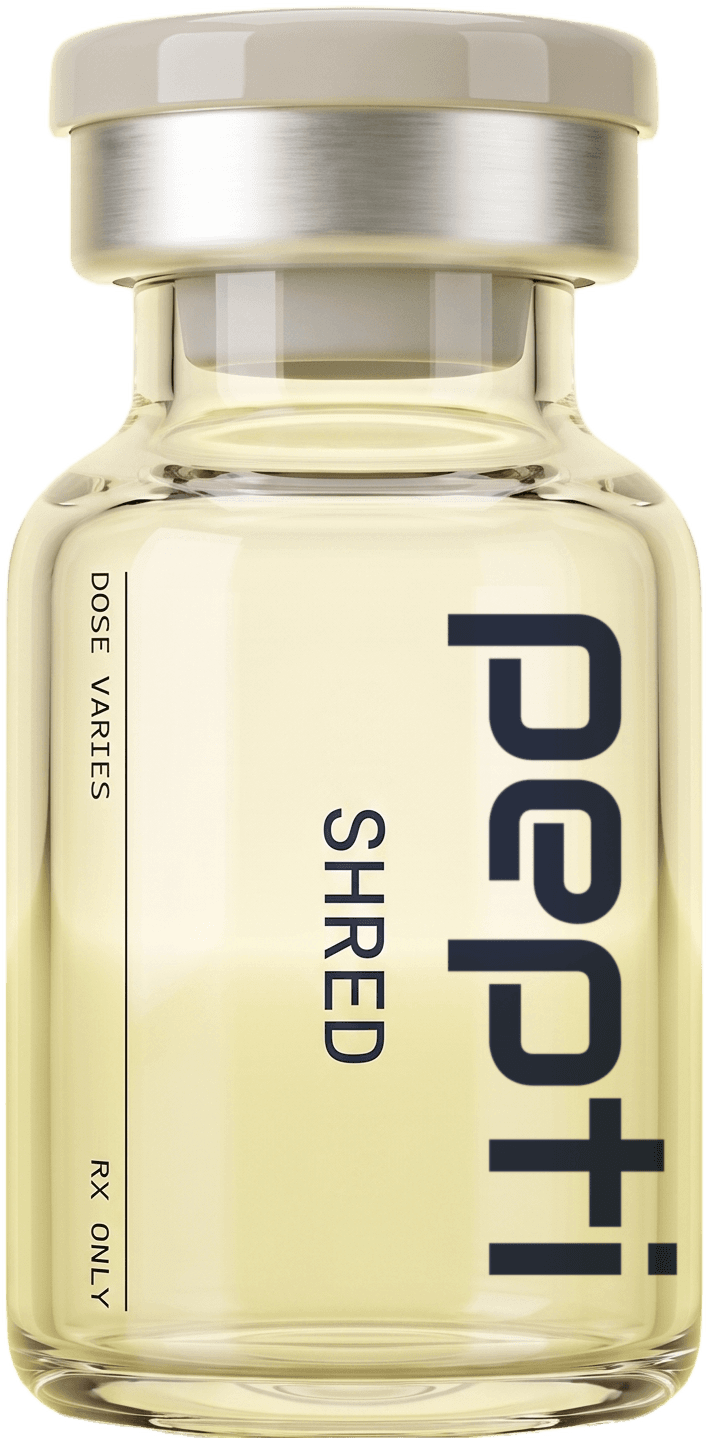
AOD-9604 and tesamorelin are both connected to growth hormone and both prescribed around fat, but they work from opposite directions and their human evidence points opposite ways. Tesamorelin is a growth-hormone-releasing hormone analogue that prompts the pituitary to release the body's own growth hormone, and it is the active ingredient of an FDA-approved product with randomised trials reporting reduced visceral fat. AOD-9604 is a fragment of growth hormone that leaves the growth hormone axis alone, and its largest human trial found no significant weight loss over placebo. Both are prescription-only, compounded by a licensed US pharmacy, and the compounded versions are not FDA approved.
This page explains each on its own terms, puts them side by side, and covers the blends that contain them, where tirzepatide fits, the evidence, FDA status, dosing, price and who suits which.
AOD-9604 vs Tesamorelin for Fat Loss
The short answer
| If your main goal is | The usual prescription | What is in it | Price |
|---|---|---|---|
| Fat around the middle (visceral fat) | Tesamorelin | 10 mg tesamorelin in a 5 mL vial | $249/mo |
| A fat-metabolism signal without touching the growth hormone axis | AOD-9604 | 10 mg AOD-9604 in a 5 mL vial | $229/mo |
| Both in one vial, for body composition alongside training | PHYSIQ Blend | Tesamorelin, ipamorelin, AOD-9604 and MOTS-c | $289/mo |
| AOD-9604 with a growth hormone secretagogue pair | SHRED Blend | AOD-9604, CJC-1295, ipamorelin and MOTS-c | $279/mo |
| Tesamorelin with a second pituitary route | Tesamorelin + Ipamorelin | Tesamorelin and ipamorelin in one vial | $259/mo |
| Appetite and weight management | Tirzepatide | Dose-specific vials | From $159/mo |
Every figure is an all-in monthly price covering the medication, physician review, refill management and shipping. There is no separate membership fee. Current pricing always lives on each product page; the table is a guide to which product fits which goal.
AOD-9604 vs Tesamorelin for Fat Loss
Tesamorelin on its own terms
What it is
Growth-hormone-releasing hormone (GHRH) is the 44-amino-acid signal the hypothalamus sends to the pituitary to trigger a growth hormone pulse. Tesamorelin is that entire sequence with a trans-3-hexenoic acid group attached to one end, which protects it from the enzyme DPP-4 that otherwise clears native GHRH within minutes. That makes it a secretagogue: it contains no growth hormone, it delivers the instruction, and the pituitary decides how much to release. The full reference is at the tesamorelin guide.
How tesamorelin is described to work
- A pulsatile growth hormone release. It binds the same pituitary receptor as native GHRH. Because the release is pulsatile and still subject to somatostatin, the pattern looks like an amplified version of normal physiology rather than the flat elevation of injected growth hormone.
- IGF-1 as the mediator. Released growth hormone acts on the liver to produce IGF-1. In the trials IGF-1 rose by roughly 80 to 120% and stayed within the physiological range.
- Lipolysis, with visceral fat responding first. Growth hormone signals fat cells to release stored fat, and visceral fat, the fat around the organs, is particularly responsive. That explains the pattern every tesamorelin trial has reported: a measurable reduction in visceral fat on CT, with no significant change in fat under the skin.
What human data exists for tesamorelin
Unlike most peptides prescribed in compounded form, tesamorelin has randomised, double-blind, placebo-controlled human trials, with roughly 1,100 people randomised across the published work:
Study Who What was reported 2007, New England Journal of Medicine 412 people with HIV and abdominal fat accumulation, 26 weeks Visceral fat fell 15.2% on treatment and rose 5.0% on placebo 2010 pooled analysis, Journal of Clinical Endocrinology and Metabolism 806 people across both phase 3 trials Treatment effect on visceral fat of 15.4%; no significant change in subcutaneous fat; visceral fat returned toward baseline after switching to placebo 2012, Journal of Clinical Endocrinology and Metabolism 60 abdominally obese adults without HIV and with reduced growth hormone secretion, 12 months Visceral fat fell 16 cm² against a 19 cm² rise on placebo; body weight did not meaningfully change 2019, Lancet HIV 61 people with HIV and fatty liver, 12 months Liver fat fraction fell more than on placebo Every one used a fixed daily dose of 1 mg or 2 mg, most were in people with HIV, and the longest ran 12 months. None used the weekday-night schedule or the 0.5 mg dose prescribed as a compounded vial. The approved product's own label states it is not indicated for weight-loss management, because its effect on scale weight is neutral.
AOD-9604 vs Tesamorelin for Fat Loss
AOD-9604 on its own terms
What it is
Human growth hormone is a protein of 191 amino acids. AOD-9604 is a synthetic copy of the last fifteen, positions 177 to 191, with a tyrosine added at the front, making a 16-amino-acid peptide. It is the same molecule people call "hGH fragment 176-191". AOD stands for Anti-Obesity Drug. It came from work at Monash University in Melbourne and was developed in the late 1990s by an Australian company, Metabolic Pharmaceuticals, as an oral obesity treatment. It is not growth hormone and not a secretagogue: cell work reports it does not bind the growth hormone receptor, and the human trials reported no change in IGF-1. The full reference is at what is AOD-9604.
How AOD-9604 is described to work
- The "lipolytic domain" idea. A 2000 paper in Hormone Research proposed that growth hormone's effect on fat lives in its tail end and can be separated from its growth and blood-sugar effects. Obese Zucker rats given the fragment gained less weight, without the loss of insulin sensitivity that chronic growth hormone causes.
- Beta-3 adrenergic receptors. A 2001 paper in Endocrinology reported reduced weight gain and more beta-3 receptors in the fat of obese mice, and no effect in mice lacking that receptor.
- Fat oxidation without the glucose effect. A 2001 paper in the International Journal of Obesity reported increased fat oxidation and plasma glycerol in obese mice, without the rise in blood glucose growth hormone causes.
The FDA's 2024 review noted that the molecular target of AOD-9604 has never been identified.
What human data exists for AOD-9604
AOD-9604 is one of the few compounded peptides with randomised, placebo-controlled human trials: six of them, run in Australia between roughly 2001 and 2007, enrolling close to 900 people. The decisive one, called OPTIONS, enrolled 536 adults with obesity and gave oral AOD-9604 or placebo daily for 24 weeks on top of a supervised diet and exercise program. It did not find statistically significant weight loss versus placebo, and on 21 February 2007 the company ended development for obesity. What the trials did establish is mostly about safety: no change in IGF-1, no impairment of glucose tolerance, no antibodies detected, and no serious adverse event judged related to treatment. Every trial used oral or intravenous dosing; there is no published human trial of the subcutaneous injection that is actually prescribed.
AOD-9604 vs Tesamorelin for Fat Loss
Head to head
| Tesamorelin | AOD-9604 | |
|---|---|---|
| Built from | The full 44-amino-acid GHRH sequence with a stabilising cap | Growth hormone positions 177 to 191, plus a tyrosine |
| Relationship to growth hormone | Prompts the pituitary to release it | A fragment of it that does not act on its receptor |
| Effect on IGF-1 | Raises it; that is how it works | No change in the human trials |
| Main described mechanism | Growth hormone pulse, then IGF-1 and lipolysis, visceral fat first | Fat-cell signalling in animals, possibly through beta-3 receptors; target not identified |
| Best human evidence | Two phase 3 trials and smaller randomised trials reporting reduced visceral fat | Six randomised trials; the largest found no significant weight loss over placebo |
| Effect on scale weight | Weight-neutral on the approved product's label | No significant weight loss in the trials |
| Approved product | Yes, for one indication | None |
| Route in the human trials | Subcutaneous, 1 to 2 mg daily | Oral or intravenous only |
| Vial at Pepti | 5 mL, 2 mg/mL (10 mg) | 5 mL, 2 mg/mL (10 mg) |
| Standard directions | 0.25 mL (25 units) Monday to Friday nights at bedtime | 0.25 mL (25 units) once daily, Monday to Friday |
| Per dose | 0.5 mg | 0.5 mg |
| Doses per vial | 20, about 4 weeks | 20, about 4 weeks |
| Price at Pepti | $249 a month | $229 a month |
The real difference is evidence, not strength
No study has measured both in the same people, so "which burns more fat" has no answer. What can be said is that tesamorelin has human trials reporting a reduction in one specific kind of fat, visceral fat, measured on CT, while the scale barely moved. AOD-9604 was tested properly for weight loss and did not separate from placebo. Neither is a weight-loss drug in the sense most people mean, and the medication with that evidence is a GLP-1.
AOD-9604 vs Tesamorelin for Fat Loss
Who suits which
Tesamorelin
Tesamorelin is the usual choice when the specific concern is fat around the middle and the aim is a waist measurement rather than a number on the scale. It has the stronger human record, and suits someone comfortable with a medication that raises growth hormone and IGF-1, with the glucose and fluid effects that brings. Its trials were judged on six- and twelve-month horizons.
AOD-9604
AOD-9604 suits someone who wants to avoid any effect on the growth hormone axis, who is already training and eating well, and who understands that the human obesity trials were negative. Prescribers typically frame it as support for a program that is already working, not a driver of results on its own.
Both together: PHYSIQ
They act on different systems, and the PHYSIQ Blend puts tesamorelin, AOD-9604, ipamorelin and MOTS-c in one vial. No study has tested any of these combinations. A single-agent vial is simpler and cheaper, and is the one to start with if your physician wants to see what one compound does before adding others. What is PHYSIQ covers the blend in full.
AOD-9604 vs Tesamorelin for Fat Loss
The SHRED Blend and AOD-9604
The SHRED Blend does contain AOD-9604. Each 5 mL vial holds 10 mg AOD-9604, 6 mg CJC-1295, 10 mg ipamorelin and 10 mg MOTS-c, and the standard 0.25 mL dose delivers 0.5 mg AOD-9604, 0.3 mg CJC-1295, 0.5 mg ipamorelin and 0.5 mg MOTS-c. SHRED does not contain tesamorelin. Its growth hormone signal comes from CJC-1295, a modified GHRH analogue, paired with ipamorelin at the ghrelin receptor.
| SHRED | PHYSIQ | |
|---|---|---|
| AOD-9604 | 10 mg | 10 mg |
| GHRH analogue | CJC-1295, 6 mg | Tesamorelin, 10 mg |
| Ipamorelin | 10 mg | 10 mg |
| MOTS-c | 10 mg | 10 mg |
| Price at Pepti | $279 a month | $289 a month |
The only difference is the GHRH analogue. Tesamorelin has randomised trials in abdominal fat; CJC-1295 has human pharmacology reporting sustained growth hormone and IGF-1 rises in healthy adults but no outcome trials. A physician who wants the better-evidenced GHRH signal alongside AOD-9604 will usually prefer PHYSIQ. Neither blend has been studied as a blend. The full breakdown is in what is SHRED.
AOD-9604 vs Tesamorelin for Fat Loss
AOD-9604 or tesamorelin alongside tirzepatide
Tirzepatide works in a completely different way: it acts on gut-hormone receptors to reduce appetite, and the branded product has large randomised human trials with weight as the primary endpoint. Neither AOD-9604 nor tesamorelin acts on appetite.
Some prescribers do combine them. With tesamorelin, the rationale given is that the GLP-1 addresses total weight while tesamorelin addresses visceral fat. With AOD-9604, there is no reason from the evidence to expect it to add to a GLP-1's effect, and the GLP-1 is the one with the evidence. No trial has tested either combination, and no trial shows that a growth hormone secretagogue preserves lean mass during GLP-1 treatment. Your physician sets your directions after reviewing your intake and your full medication list. What is tirzepatide covers the GLP-1 side.
AOD-9604 vs Tesamorelin for Fat Loss
Where each stands with the FDA
The two are in completely different regulatory positions.
| Tesamorelin | AOD-9604 | |
|---|---|---|
| Approved product | Approved 10 November 2010 for reduction of excess abdominal fat in adults with HIV-associated lipodystrophy; current formulation approved 25 March 2025 | None |
| 503A bulk substances list | Never nominated, because it is the active ingredient of an approved product | Category 2 in 2023; left Category 2 on 27 September 2024 when nominations were withdrawn |
| Advisory committee | Not on the July 2026 agenda | 4 December 2024: voted 0 to 12 against adding it to the 503A Bulks List, for obesity |
| Current FDA listing | Unaffected by the 2026 peptide changes | "Nominated but withdrawn"; not in Category 1, 2 or 3 of the list updated 14 May 2026 |
| Final FDA rule | Not applicable | None issued |
The approved tesamorelin product's label states that long-term cardiovascular safety has not been established and that it is not indicated for weight-loss management. Compounded tesamorelin shares the active peptide but is not that product; it is prepared by a state-licensed pharmacy to an individual prescription, the trial data belongs to the approved product at its approved doses, and prescribing it for anything other than the approved indication is off-label.
For AOD-9604, some sources claim FDA "GRAS" status. As of September 2026 there is no GRAS notice for AOD-9604 in the FDA's inventory, and it would have no bearing on a prescription injection in any case. Both remain legal to prescribe and dispense as compounded medications, and compounded medications are not FDA approved. Are peptides FDA approved explains the difference.
AOD-9604 vs Tesamorelin for Fat Loss
Dosing, side by side
Both are injected under the skin (subcutaneously), rotating sites, five days a week with weekends off. The volume is the same, 0.25 mL, which is 25 units on a U-100 insulin syringe, and from the standard 10 mg vials it delivers 0.5 mg of either. A 15 mg / 5 mL strength exists for each, which delivers 0.75 mg in the same volume. You do not need to calculate anything: your physician sets your directions after reviewing your intake, and they are printed on the vial.
Timing differs. Tesamorelin is taken at bedtime, because the body's largest natural growth hormone pulse happens during deep sleep and the dose amplifies a pulse already under way. AOD-9604 is directed once daily; some prescribers direct it in the morning before eating. Twenty doses per vial covers about four weeks, which is why refills run every 28 days, one vial at a time. Both ship refrigerated with ice packs and stay in the fridge between doses; do not shake the tesamorelin vial. Bloodwork is not required for any Pepti treatment. If your physician wants labs for your care, they'll ask through your account.
AOD-9604 vs Tesamorelin for Fat Loss
Side effects
Tesamorelin. The approved product's label pools data from 740 treated patients. Effects more frequent than placebo were injection-site reactions (17% versus 6%), joint pain (13% versus 11%), pain in the extremities, muscle aches and swelling of the ankles or hands (each 6%), and tingling (5%); hypersensitivity reactions occurred in 4%. Those figures are at 2 mg daily, four times the standard compounded dose. Fluid retention, joint aches and hand tingling are classic growth hormone effects and usually mean the dose is higher than the person needs. The label also records new-onset diabetes in 5% of treated patients against 1% on placebo, so existing diabetes or borderline glucose needs discussing.
AOD-9604. The six company trials give it more human safety data than most compounded peptides. Intravenous dosing was associated with headache, fatigue, dizziness and low blood sugar; oral dosing with headache, diarrhoea, flatulence, increased appetite and nausea, more so at the highest dose. Adverse events were similarly distributed between peptide and placebo. With the injection, prescribers mostly report injection-site redness or bruising. No human trial has used the subcutaneous route.
For both, stop and contact your physician for any reaction that is severe, spreading, or involves difficulty breathing.
AOD-9604 vs Tesamorelin for Fat Loss
Who should not take either, or should discuss it first
| Situation | Why |
|---|---|
| Pregnancy or breastfeeding | Contraindicated for tesamorelin; not used for AOD-9604 because safety data is absent |
| Pituitary disorder, pituitary surgery, head irradiation or head trauma | Tesamorelin needs a pituitary that can respond; the approved product is contraindicated here |
| Active cancer | Contraindicated on the approved tesamorelin label; any cancer history should be on the intake |
| Diabetes or borderline fasting glucose | Especially for tesamorelin, because growth hormone reduces insulin sensitivity |
| Known hypersensitivity to tesamorelin | Contraindicated |
| Tested athletes | GHRH analogues are prohibited in competition, and AOD-9604 is prohibited by WADA as a growth hormone fragment |
AOD-9604 vs Tesamorelin for Fat Loss
What the evidence shows, honestly
Tesamorelin has real human trials reporting a reduction in visceral fat, measured on CT, in people with HIV and in one trial of 60 abdominally obese adults without HIV, at doses higher than the compounded vial and with scale weight largely unchanged. Visceral fat drifted back toward baseline after stopping. AOD-9604 has a clean safety record from oral and intravenous trials and a negative result for weight loss, and nothing at all for the subcutaneous route. Any provider describing AOD-9604 as a trial-backed fat-burner is describing trials that reached the opposite conclusion. Neither replaces diet, training and sleep.
AOD-9604 vs Tesamorelin for Fat Loss
Where to get AOD-9604 or tesamorelin prescribed
Neither can be bought legitimately without a prescription. Sites selling them "for research use only" are not accountable for what is in the vial: identity, purity, sterility and concentration are untested. The prescription route:
- Complete a free online intake covering your history, medications and what you want help with.
- A physician licensed in your state reviews it, usually within 24 hours.
- If it is appropriate, a state-licensed, FDA-registered US pharmacy compounds it to that prescription. Lot test results are published at /quality/lab-results.
- It ships refrigerated with your directions printed on the vial.
- Your physician stays reachable for questions and dose changes.
Pepti prescribes AOD-9604 and the SHRED Blend in all 50 states and DC. Step-by-step pages: how to get AOD-9604 prescribed online, how to get tesamorelin prescribed online, how to get the SHRED Blend prescribed online and how to get tirzepatide prescribed online.
References
What this is based on.
References
- Heffernan M, Summers RJ, Thorburn A et al.. The effects of human GH and its lipolytic fragment (AOD9604) on lipid metabolism following chronic treatment in obese mice and beta(3)-AR knock-out mice · Endocrinology (2001) · PMID 11713213
- Ng FM, Sun J, Sharma L et al.. Metabolic studies of a synthetic lipolytic domain (AOD9604) of human growth hormone · Hormone Research (2000) · PMID 11146367
- Heffernan MA, Thorburn AW, Fam B et al.. Increase of fat oxidation and weight loss in obese mice caused by chronic treatment with human growth hormone or a modified C-terminal fragment · International Journal of Obesity and Related Metabolic Disorders (2001) · PMID 11673763
- Wilding J. AOD-9604 Metabolic · Current Opinion in Investigational Drugs (2004) · PMID 15134286
- Kwon DR, Park GY. Effect of Intra-articular Injection of AOD9604 with or without Hyaluronic Acid in Rabbit Osteoarthritis Model · Annals of Clinical and Laboratory Science (2015) · PMID 26275694
- Cox HD, Smeal SJ, Hughes CM et al.. Detection and in vitro metabolism of AOD9604 · Drug Testing and Analysis (2015) · PMID 25208511
- Orlovius AK, Thomas A, Schänzer W et al.. AOD-9604 does not influence the WADA hGH isoform immunoassay · Drug Testing and Analysis (2013) · PMID 24124033
- Mendias CL, Awan TM. Safety and Efficacy of Approved and Unapproved Peptide Therapies for Musculoskeletal Injuries and Athletic Performance · Sports Medicine (2026) · PMID 41966639
- Falutz J, Allas S, Blot K et al.. Metabolic effects of a growth hormone-releasing factor in patients with HIV · N Engl J Med (2007) · PMID 18057338
- Stanley TL, Feldpausch MN, Oh J et al.. Effect of tesamorelin on visceral fat and liver fat in HIV-infected patients with abdominal fat accumulation: a randomized clinical trial · JAMA (2014) · PMID 25038357
- Falutz J, Mamputu JC, Potvin D et al.. Effects of tesamorelin (TH9507), a growth hormone-releasing factor analog, in human immunodeficiency virus-infected patients with excess abdominal fat: a pooled analysis of two multicenter, double-blind placebo-controlled phase 3 trials with safety extension data · J Clin Endocrinol Metab (2010) · PMID 20554713
- Falutz J, Potvin D, Mamputu JC et al.. Effects of tesamorelin, a growth hormone-releasing factor, in HIV-infected patients with abdominal fat accumulation: a randomized placebo-controlled trial with a safety extension · J Acquir Immune Defic Syndr (2010) · PMID 20101189
Citations are provided for educational purposes. They do not constitute medical advice. Always discuss any peptide protocol with your prescribing physician.
Common questions
AOD-9604 vs Tesamorelin for Fat Loss, answered.
For fat around the middle, tesamorelin is the one with human trial evidence, reported as reduced visceral fat on CT. AOD-9604's largest human trial found no significant weight loss over placebo. Neither is a weight-loss drug; tesamorelin's own label calls it weight-neutral. No study has compared them directly.
Some physicians prescribe them together because they act on different systems, and the PHYSIQ Blend contains both. No study has tested the combination.
Yes. SHRED contains 10 mg AOD-9604, 6 mg CJC-1295, 10 mg ipamorelin and 10 mg MOTS-c per 5 mL vial. It does not contain tesamorelin; PHYSIQ is the blend that pairs AOD-9604 with tesamorelin.
Some prescribers combine them, as they work through unrelated mechanisms, but there is no trial of the combination and no reason from the evidence to expect AOD-9604 to add to tirzepatide's effect. Tirzepatide is the one with the human weight-loss evidence.
They are sometimes prescribed together, with the GLP-1 addressing total weight and tesamorelin addressing visceral fat. No trial has tested the combination. Because both affect glucose handling in different ways, your physician reviews your full medication list before setting directions.
No. It is a fragment of growth hormone, not a stimulus for it, and IGF-1 did not change across the six human trials. Tesamorelin does raise growth hormone and IGF-1; that is how it works.
Yes. AOD-9604 is growth hormone positions 177 to 191 with a tyrosine added at the front. Depending on whether that tyrosine is counted, sources call it 176-191 or 177-191.
An FDA-approved tesamorelin product exists for one indication: excess abdominal fat in adults with HIV-associated lipodystrophy. Compounded tesamorelin is a different product and is not FDA approved. AOD-9604 has no approved product of any kind.
At Pepti, AOD-9604 is $229 a month and tesamorelin is $249 a month, all-in, including the medication, physician review, refill management and shipping. PHYSIQ, which contains both, is $289 a month, and SHRED is $279 a month.
There is no trial-established timeline for either at the compounded dose. The tesamorelin trials measured visceral fat at six and twelve months, by imaging, not by the scale. For AOD-9604 there is no human result to anchor one.
No. Bloodwork is not required for any Pepti treatment. If your physician wants labs for your care, they'll ask through your account. The free assessment goes to a physician licensed in your state. A consultation does not guarantee a prescription.
Next step
See what a physician recommends for you.
A licensed physician in your state reviews your intake and decides what is appropriate. A consultation does not guarantee a prescription.