— Anti-Aging · Reference
CJC-1295 / Ipamorelin / Sermorelin: What It Is, Where to Get It Prescribed, and What It Costs
This page covers what the three-peptide blend is, what each component is and the pathways researchers have described for it, why a GHRH analogue is combined with a ghrelin-receptor peptide, what the published work does and does not establish, where each component currently stands with the FDA, how the Pen cartridge is dosed, and how to get it prescribed.
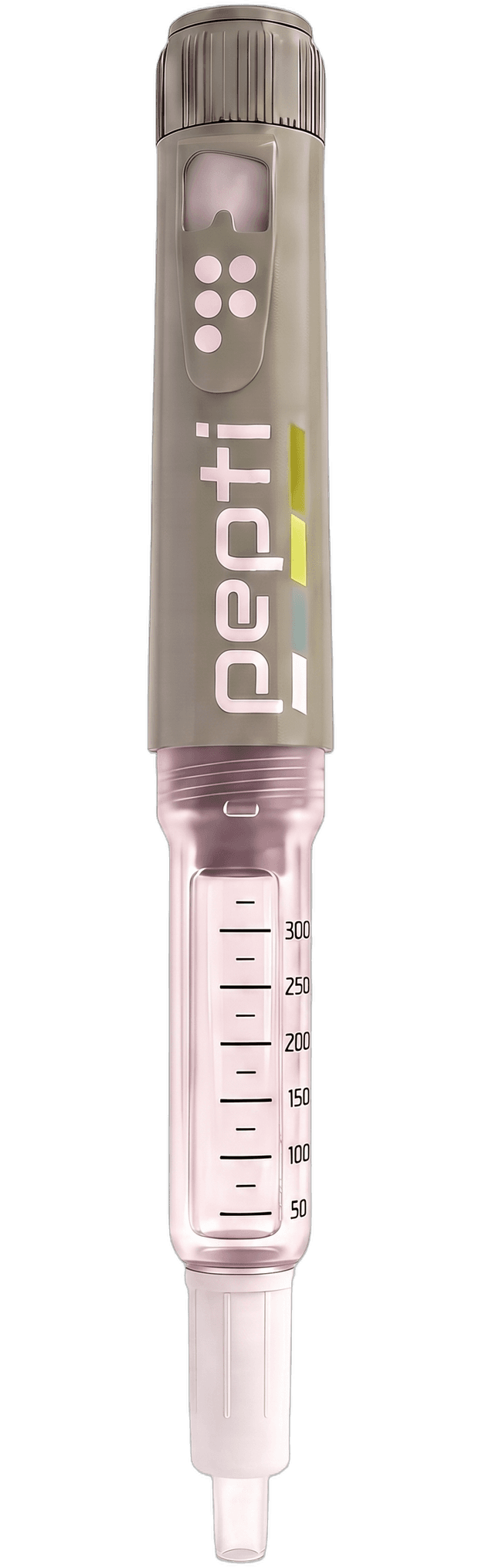
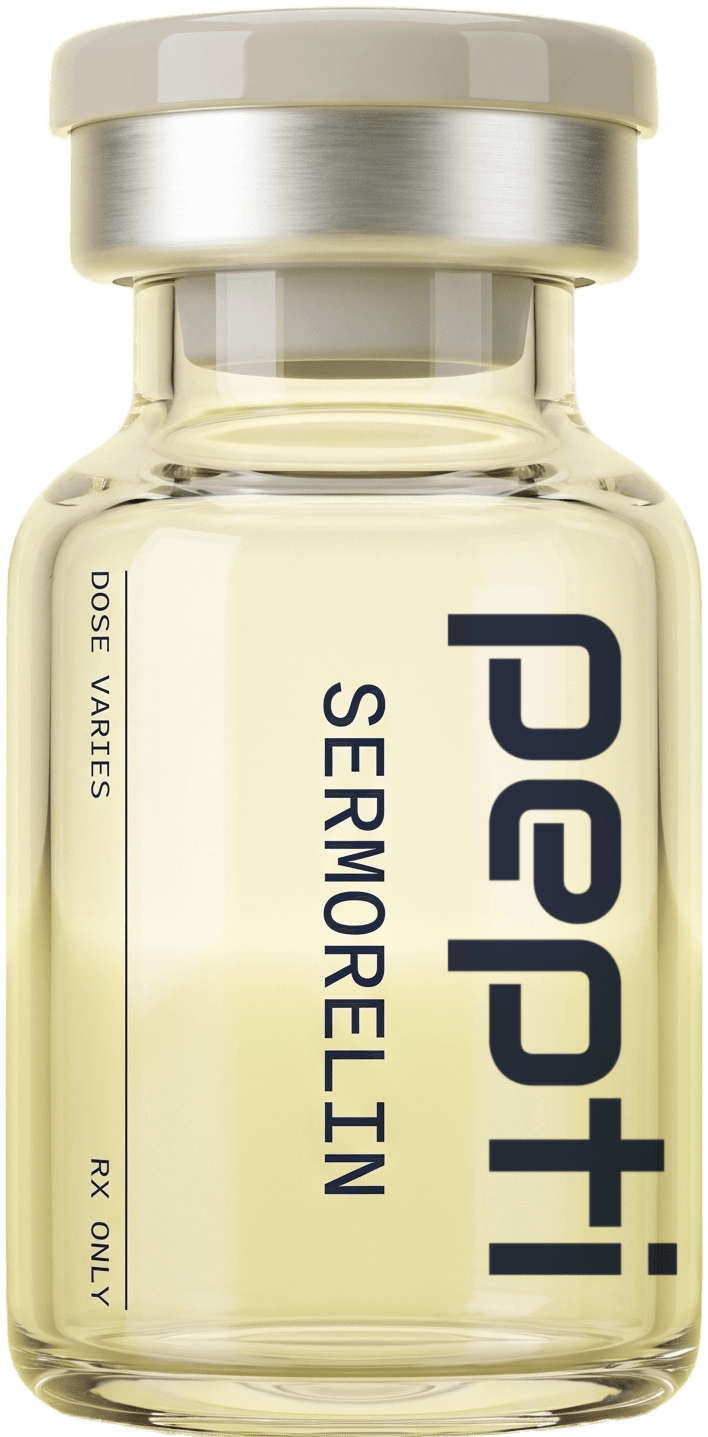
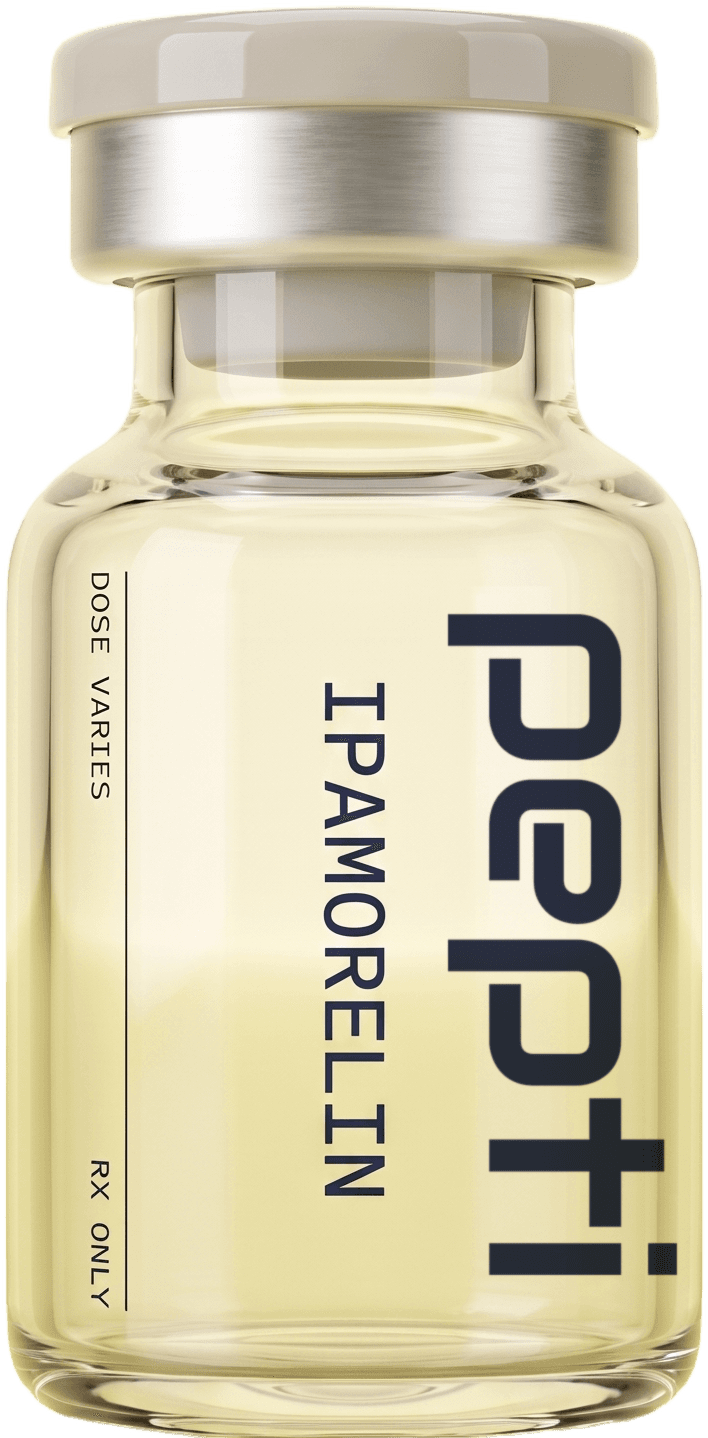
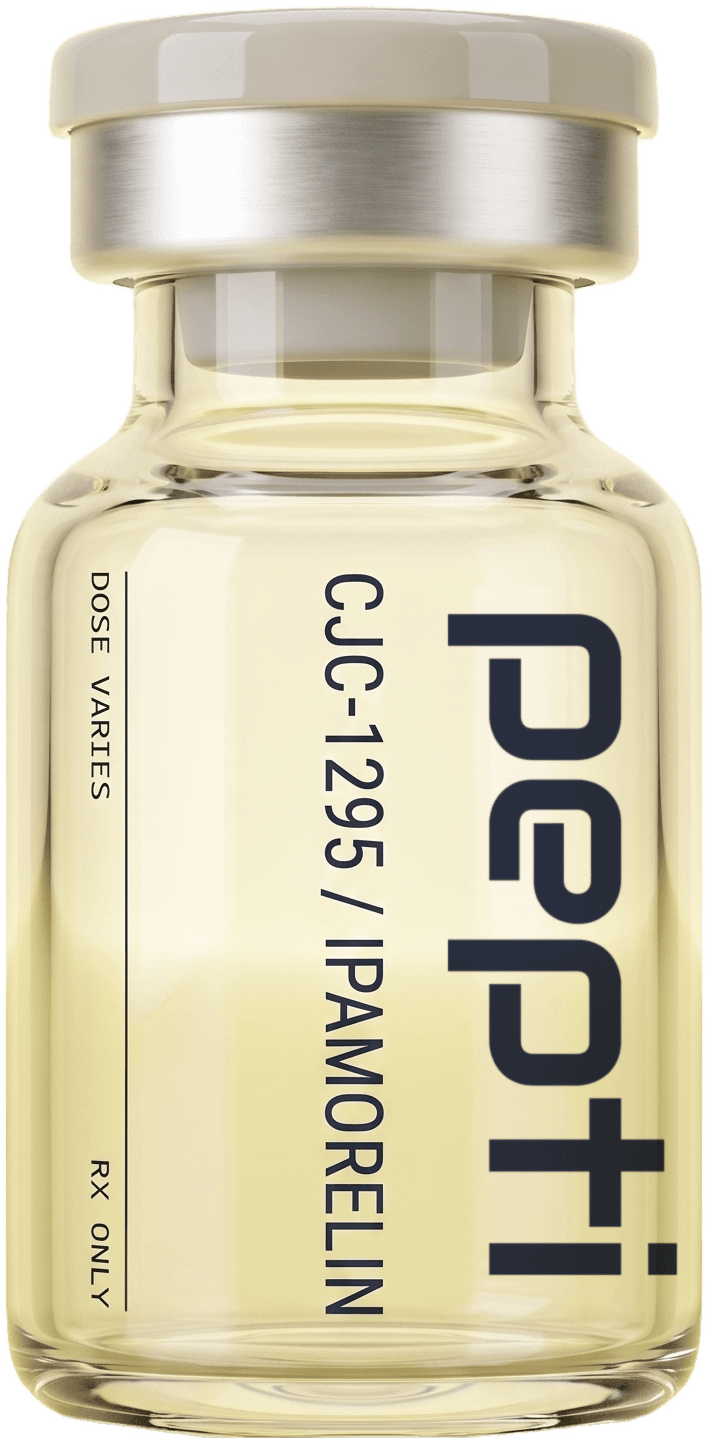
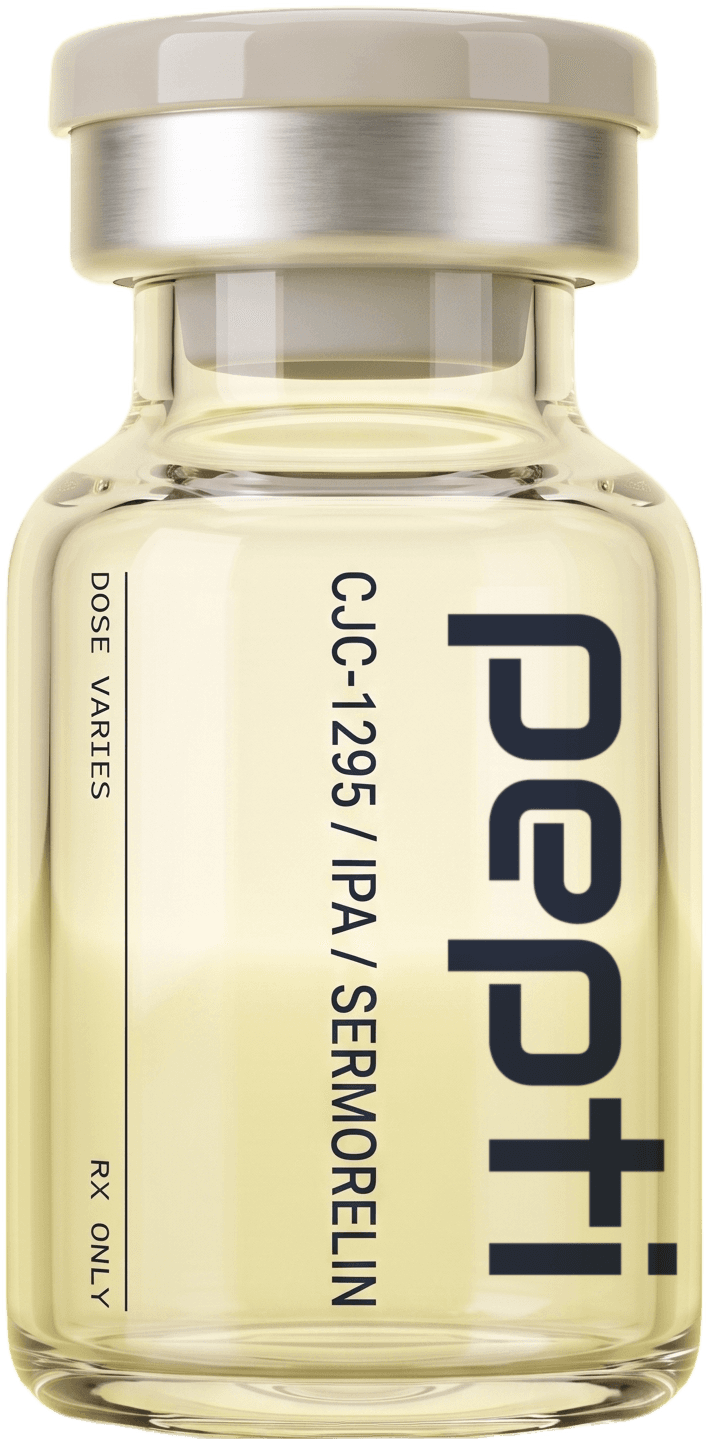
CJC-1295 / Ipamorelin / Sermorelin is a prescription injection supplied as Pen only — 3 mL pre-filled Pen cartridge containing 1.5 mg CJC-1295 + 6 mg Ipamorelin + 6 mg Sermorelin (no vial version). It requires a prescription from a physician licensed in your state, is compounded by a state-licensed US pharmacy, and is not FDA approved.
This page covers what the three-peptide blend is, what each component is and the pathways researchers have described for it, why a GHRH analogue is combined with a ghrelin-receptor peptide, what the published work does and does not establish, where each component currently stands with the FDA, how the Pen cartridge is dosed, and how to get it prescribed.
— CJC-1295 / Ipamorelin / Sermorelin
What is in it
| Component | What it is | Studied for |
|---|---|---|
| CJC-1295 | a growth-hormone-releasing hormone analogue structured for a longer duration of action than sermorelin | sleep quality, recovery, body composition |
| Ipamorelin | a selective growth-hormone secretagogue acting at the ghrelin receptor | sleep quality, recovery, body composition |
| Sermorelin | a 29-amino-acid analogue of growth-hormone-releasing hormone, the signal the hypothalamus sends to the pituitary | sleep quality, recovery, body composition, age-related decline in GH output |
— CJC-1295 / Ipamorelin / Sermorelin
What CJC-1295 / Ipamorelin / Sermorelin actually is
— Three peptides, one cartridge
This is not a single molecule. It is three separately studied peptides dissolved together in one sterile 3 mL cartridge by a compounding pharmacy: 1.5 mg CJC-1295, 6 mg ipamorelin and 6 mg sermorelin, 13.5 mg in total. None of the three is growth hormone. Each is a signal that asks the pituitary to release the growth hormone it already makes, in the pulsed pattern it always has — CJC-1295 and sermorelin through the growth-hormone-releasing hormone (GHRH) receptor, ipamorelin through the ghrelin receptor. Ipamorelin and sermorelin are present in equal amounts; CJC-1295 is one-ninth of the total. The ratio is fixed by the formulation and cannot be adjusted per component. The name describes the contents and appears in no journal: the combination has never been studied as a combination, so "does it work" is three questions.
— Where the three came from
Sermorelin is the oldest and the best documented: the first 29 amino acids of the body's own GHRH, the shortest fragment that keeps the full activity of the 44-amino-acid original. As Geref it was an FDA-approved drug from 1990 to 2009, first as a diagnostic test of pituitary function and then as a treatment for growth hormone deficiency in children, and was discontinued for commercial reasons, not for any safety or effectiveness problem.
CJC-1295 is sermorelin with four amino-acid substitutions that protect it from the enzyme DPP-IV, which otherwise clears GHRH from the blood in minutes. The version in compounded blends, including this one, is the form without the "drug affinity complex" (DAC) tag, also called modified GRF (1-29); the DAC form used in the 2006 human trials binds to albumin and circulates for about a week.
Ipamorelin is a five-amino-acid peptide developed by Novo Nordisk in the 1990s, from a different class: the growth hormone releasing peptides, which mimic ghrelin. The 1998 paper in the European Journal of Endocrinology that characterised it called it "the first selective growth hormone secretagogue," because in animals it released growth hormone without meaningfully raising cortisol, ACTH or prolactin.
— What it is not
It is not growth hormone and contains none, and it is not a substitute for growth hormone therapy in a diagnosed deficiency, which is a separate, FDA-approved treatment. If the pituitary cannot respond, these peptides do nothing — which is why sermorelin worked as a diagnostic test. It is not an anabolic steroid and does not suppress testosterone. It is not a weight-loss medication: ipamorelin's receptor is the one ghrelin uses to signal hunger. And it is not fast.
— CJC-1295 / Ipamorelin / Sermorelin
How each component is described to work
The receptor pharmacology below is established, much of it in people. The downstream effects on sleep, recovery and body composition are inferred from what growth hormone does, not from trials of this blend.
— Sermorelin at the GHRH receptor
Somatotrophs, the pituitary cells that make and store growth hormone, carry a GHRH receptor. Sermorelin binds it, raises cyclic AMP inside the cell and triggers release of stored hormone. In a 1997 trial in the Journal of Clinical Endocrinology and Metabolism, a nightly subcutaneous dose of a GHRH(1-29) analogue in older adults raised growth hormone within ten minutes, for about two hours: a pulse followed by a return to baseline, not a plateau.
— CJC-1295: the same receptor, a longer signal
CJC-1295 acts at the same receptor; its substitutions resist DPP-IV, so the no-DAC form lasts roughly half an hour rather than minutes. In a 2006 study in the American Journal of Physiology, once-daily CJC-1295 normalised growth in mice engineered to lack GHRH entirely. In healthy adults given the DAC form and sampled every ten minutes (Journal of Clinical Endocrinology and Metabolism, 2006), the pituitary's pulsatile pattern was preserved: more hormone per pulse rather than a flat elevation.
— Ipamorelin at the ghrelin receptor
Ipamorelin binds the growth hormone secretagogue receptor, GHS-R1a, the receptor ghrelin uses; the 1998 characterisation used receptor antagonists to show it acts there and not at the GHRH receptor. Activation triggers release from the pituitary directly and, at the hypothalamus, reduces somatostatin, the brake signal. In human volunteers given intravenous ipamorelin (Pharmaceutical Research, 1999), a single sharp episode of growth hormone release peaked at about forty minutes. Its selectivity — no cortisol or prolactin rise of the kind GHRP-2 and GHRP-6 produce — was measured in animals; the human study measured growth hormone only.
— Why a GHRH analogue is paired with a ghrelin-receptor peptide
The pituitary listens to two inputs: GHRH from the hypothalamus, and ghrelin-type signals from the gut. They act through different receptors on the same cell, and one also lifts the somatostatin brake, so since the early 1990s the two classes have been described as more than additive when given together. That is the logic of every GHRH-plus-GHRP blend on this site: one component supplies the GHRH signal, ipamorelin the ghrelin signal, and both converge on one pulse, timed at bedtime to line up with the body's own largest nocturnal pulse.
— Why two GHRH analogues, and what IGF-1 has to do with it
Why carry both sermorelin and CJC-1295 when both act on the same receptor? The rationale prescribers give is duration: a brief, native-shaped signal from sermorelin and a longer one from CJC-1295, for a sharper onset with a longer tail. It is a rationale, not a finding; no study has compared the three-peptide combination with the two-peptide one.
Whichever signal releases it, growth hormone acts mostly by prompting the liver to make insulin-like growth factor 1 (IGF-1), and because the pituitary is still doing the releasing, the body's feedback — somatostatin, and IGF-1 itself — stays intact. That is why a secretagogue is described as self-limiting in a way injected growth hormone is not, and why IGF-1, with fasting glucose alongside it because growth hormone opposes insulin, is what a physician tracks.
— CJC-1295 / Ipamorelin / Sermorelin
What the research actually shows
— Sermorelin in children with growth hormone deficiency
This is the strongest evidence for any component, and the population was children. The Geref International Study Group trial (Journal of Clinical Endocrinology and Metabolism, 1996) gave 110 previously untreated prepubertal children once-daily bedtime GHRH(1-29) for up to a year: mean height velocity roughly doubled over the first six months, bone age advanced in proportion to height, fasting glucose did not change and the drug was reported as well tolerated. A 1999 review in BioDrugs summarised the programme: growth in most children with idiopathic deficiency, though somewhat less than recombinant growth hormone produced.
— Sermorelin in older adults
A National Institute on Aging study (Journal of Clinical Endocrinology and Metabolism, 1992) gave GHRH(1-29) twice daily to healthy men in their late sixties for fourteen days and reported growth hormone and IGF-1 rising to levels no longer significantly different from men in their twenties. A six-week study of single nightly injections in men aged 64 to 76 (Metabolism, 1997) reported higher nocturnal growth hormone but no change in IGF-1 or body composition. The longest, a sixteen-week randomised placebo-controlled trial in nineteen adults aged 55 to 71 (Journal of Clinical Endocrinology and Metabolism, 1997), reported IGF-1 rising within two weeks, holding for twelve, then drifting back toward baseline. These are endocrine endpoints, not reports of people feeling or performing differently.
— CJC-1295 and ipamorelin in people
The 2006 trial in the Journal of Clinical Endocrinology and Metabolism gave healthy adults the DAC form of CJC-1295 and reported dose-dependent rises in growth hormone and IGF-1 persisting for days, described as well tolerated; a companion paper reported the pulsatile pattern preserved. Both used the long-acting form, not the daily-dosed form in this cartridge. For ipamorelin, the 1999 dose-escalation study in healthy male volunteers confirmed dose-proportional growth hormone release by the intravenous route and measured nothing else, and a 2014 randomised, placebo-controlled phase 2 trial in the International Journal of Colorectal Disease of intravenous ipamorelin in 114 bowel-resection patients, for post-operative ileus, did not separate from placebo. There are no human data for the subcutaneous route.
— Sleep and body composition
The sleep rationale is physiological. The largest growth hormone pulse of the day occurs during slow-wave sleep, and a 2000 study in JAMA found slow-wave sleep and growth hormone secretion declining together in healthy men from early adulthood. Prescribers reason from that, and patients frequently report deeper sleep; no published trial of any of the three components has sleep quality as an endpoint. For body composition, the human sermorelin trials that measured it were short and found no change. Ipamorelin's evidence is rat bone studies (Growth Hormone and IGF Research, 1999; Journal of Endocrinology, 2000) and a 2001 mouse study in Biochemical and Biophysical Research Communications in which secretagogues increased fat and food intake. Nothing here is a body-composition result in adults.
— What human data exists
Stated precisely: there are no randomised controlled trials of the CJC-1295 / Ipamorelin / Sermorelin blend in humans, and no study of any kind has examined the three together. The evidence is per component, and it is uneven:
- Sermorelin has randomised and controlled human trials, in children with growth hormone deficiency and in small groups of healthy older adults, with height velocity and hormone levels as endpoints, plus an adverse-event record collected while it was an approved drug.
- CJC-1295 has the 2006 healthy-adult trials of the DAC form, which measured growth hormone and IGF-1.
- Ipamorelin has one pharmacokinetic study in healthy volunteers and one phase 2 surgical trial that did not meet its endpoints, both intravenous.
Each shows its peptide raises measured growth hormone in people; none measured sleep, recovery or body composition in the adults typically prescribed the blend. Much of medicine rests on mechanism plus clinical experience, and that is the basis physicians prescribe it on. The honest framing is "known to raise growth hormone and IGF-1 in humans; benefits beyond that are inferred from physiology and clinical experience," not "proven for sleep or body composition."
— What the evidence does not establish
- That three peptides together do more than two, or than one. No study has compared the blend with its components.
- That the blend improves sleep, recovery or body composition; those outcomes have not been measured in a trial.
- An effect size or a timeline. Timelines below are prescriber experience.
- Long-term safety with continuous use over years; the longest adult sermorelin trial ran sixteen weeks.
- Efficacy for any condition as an FDA-approved treatment. No component is currently approved for anything.
— CJC-1295 / Ipamorelin / Sermorelin
Where CJC-1295 / Ipamorelin / Sermorelin stands with the FDA right now
A blend has no regulatory status of its own; the FDA regulates the bulk substances a pharmacy compounds from. The three components are in three different positions, and most of what is online muddles them. Verified as of September 2026.
— Sermorelin: a former approved drug
Sermorelin acetate was the active ingredient of Geref, held by EMD Serono: the diagnostic presentation (NDA 19-863) approved on 28 December 1990, the treatment presentation for growth hormone deficiency in children (NDA 20-443) on 26 September 1997. In 2008 EMD Serono told the FDA both were being discontinued and asked for the applications to be withdrawn; the FDA withdrew approval effective 18 June 2009. On 4 March 2013, in response to a citizen petition, the FDA published a determination in the Federal Register that both Geref products "were not withdrawn from sale for reasons of safety or effectiveness," having reviewed its own records and the post-marketing adverse-event data. No generic has come to market.
Sermorelin does not appear in Category 1, 2 or 3 of the FDA's interim 503A bulk drug substances list, updated 14 May 2026, and it was on neither the April 2026 removal list nor the July 2026 advisory committee agenda. Its footing for compounding is its history as the active ingredient of an approved drug whose withdrawal the FDA itself determined was not for safety or effectiveness.
— CJC-1295: reviewed and voted against
CJC-1295 was placed in Category 2 of the 503A list — the category for substances flagged as raising significant safety risks — in 2023. In September 2024 its nomination was withdrawn and the FDA referred it to the Pharmacy Compounding Advisory Committee instead. On 4 December 2024 the committee considered the whole CJC-1295 family, evaluated for growth hormone deficiency, and voted 0–13 against adding CJC-1295 (free base) to the 503A Bulks List, 1–12 against the acetate, and 0–13 against each of the three DAC forms. The FDA's safety-risk page, current as of 22 April 2026, lists CJC-1295 under "nominated but withdrawn," citing an immunogenicity risk common to injectable peptides, characterisation complexity, limited clinical data, and reported adverse events of increased heart rate and a systemic vasodilatory reaction.
— Ipamorelin: reviewed, voted against, and one lingering listing
Ipamorelin acetate was placed in Category 2 on 29 September 2023 under both the 503A and the 503B interim policies. Its 503A nomination was withdrawn in September 2024, and on 29 October 2024 the advisory committee, evaluating it for growth hormone deficiency and post-operative ileus, voted 0 yes, 12 no, 1 abstain against both ipamorelin (free base) and ipamorelin acetate, citing a lack of safety and efficacy data for those two uses. Like CJC-1295 it appears under "nominated but withdrawn" on the safety-risk page; unlike CJC-1295, the same page notes that ipamorelin acetate still sits in Category 2 under the 503B interim policy, which governs outsourcing facilities making batches without patient-specific prescriptions. Pepti's medication is compounded under 503A — by a state-licensed pharmacy, to a physician's prescription for a named patient — and the 503A interim list as updated 14 May 2026 has six substances in Category 2, none of them ipamorelin or CJC-1295.
— What that adds up to
Neither CJC-1295 nor ipamorelin was among the twelve peptides removed from Category 2 on 15 April 2026 — both had already left it in 2024 — and neither was on the 23–24 July 2026 committee agenda. A committee vote is a recommendation, not a decision; the FDA issues its own determination through rulemaking, and none has been issued for either. The committee judged the specific uses in the nomination packages against approved drugs that already exist for them; its vote is not a finding that the peptides are unsafe at prescribed doses, and it is not a ban. None of the three is an FDA-approved drug product today, and compounded medications never are.
— CJC-1295 / Ipamorelin / Sermorelin
Realistic expectations
These are patterns described by prescribers, not trial endpoints. Individual response varies widely, and a physician decides whether treatment is appropriate at all.
— The first one to three weeks
Most people notice little beyond the injection itself. What gets reported earliest is sleep — deeper, or harder to wake from — and some people report a warm flush or a brief head rush for a few minutes after a dose, which fades. Noticing nothing in this window is normal.
— Weeks three to eight
This is where prescribers most often describe easier recovery from training and steadier daytime energy. It is also when a follow-up IGF-1 is worth drawing: the human sermorelin trials saw it move within two to four weeks of nightly dosing, and if yours has not, that is a conversation about dose, timing, or whether this is the right tool.
— Weeks eight to sixteen
Where body-composition change is reported at all, this is the window prescribers describe it in, and always alongside training and adequate protein rather than instead of them. The sixteen-week human trial saw IGF-1 begin to drift back toward baseline on continued treatment — the axis adapts — which is one reason a physician adjusts the dose over time rather than leaving it fixed.
— After stopping
No withdrawal and no rebound is described for any component; the pituitary was never switched off, which is the key difference from injected growth hormone. Whatever was gained in sleep pattern or recovery tends to fade over weeks as the nocturnal pulse returns to its previous amplitude.
— CJC-1295 / Ipamorelin / Sermorelin
When something else makes more sense
Defaulting to the fullest growth-hormone formula is the commonest mistake here. Some honest cases where this blend is not the first thing to reach for:
- A first course, or a physician who wants to see how the axis responds. Sermorelin alone has the longest human record and was an approved drug; ipamorelin alone is the gentler single agent.
- You want the GHRH-plus-GHRP logic without the third peptide. CJC-1295 / Ipamorelin and Ipamorelin + Sermorelin each deliver one GHRH analogue with ipamorelin, as vials, at a lower price. No study shows the three-peptide version does more.
- Abdominal fat is the target. Tesamorelin is the one GHRH analogue with randomised human trials and an FDA-approved brand for excess visceral fat in a specific population; compounded tesamorelin is not that approved product. Tesamorelin + Ipamorelin pairs it with the ghrelin signal.
- Sleep is the whole goal. The SERENITY blend pairs CJC-1295 and ipamorelin with DSIP and selank, and DSIP on its own is the peptide described around sleep rather than around growth hormone.
- Recovery from an injury, not general recovery. That is a repair question — BPC-157, or the REVIVE blend, which combines CJC-1295 and ipamorelin with GHK-Cu and TB-500.
- You need a syringe-and-vial format. This product is Pen only; the two-peptide blends above come as vials.
Your physician will tell you if this blend is not the right tool for what you have described. A consultation does not guarantee a prescription, and being declined is refunded.
— CJC-1295 / Ipamorelin / Sermorelin
Dosing, and how the Pen cartridge is actually used
There is no vial to draw from. The medication arrives as a pre-filled 3 mL cartridge that loads into a reusable pepti Pen injector, and the dose is dialled in clicks rather than read off a syringe barrel.
— Your dose is set by your physician and printed on the label
No standard dose is published for this blend and none is stated here: the physician sets it, adjusts it at refills as IGF-1 and your response come in, and the number of clicks is printed on your cartridge label. Because the three peptides are in fixed proportion, every dose delivers CJC-1295, ipamorelin and sermorelin in the same 1 : 4 : 4 ratio; you cannot take more of one and less of another. If your directions and the pen's dial appear to disagree, ask before dosing.
— Subcutaneous, empty stomach, bedtime
Subcutaneous means into the fat layer, not the muscle; abdomen and thigh are the usual sites, rotated. The empty-stomach instruction is not a formality: glucose and fatty acids after a meal blunt the growth hormone pulse, which is the whole point of the injection. Treatment is nightly, and prescribers direct it at bedtime so the induced pulse lines up with the body's own slow-wave-sleep pulse. Your directions will say.
— Why a cartridge is a monthly fill
Refills ship monthly, one cartridge per fill, never a stockpile. How many doses a cartridge holds depends on the dose your physician sets, which is another reason the number is on your label rather than here.
— Storage
Refrigerated, and it ships that way in insulated packaging with ice packs. A cartridge in use stays in the refrigerator between doses, with the needle tip removed. Beyond-use dating is on the label.
— CJC-1295 / Ipamorelin / Sermorelin
Safety and side effects
Sermorelin is the component with a regulator-collected adverse-event record: in the Geref programme the commonly reported events were injection-site reactions and transient facial flushing, and the trials in older adults reported it as well tolerated with no change in fasting glucose or blood pressure. Clinical reports on GHRH-plus-GHRP blends are consistent with that: injection-site redness or soreness, a warm flush or brief light-headedness shortly after a dose, headache, and — from ipamorelin's ghrelin receptor — increased appetite. Water retention, tingling in the hands and joint aches are described with anything that raises growth hormone, and are the usual signal that a dose is too high.
Two things are specific to this axis. Growth hormone opposes insulin, so fasting glucose or HbA1c is checked at baseline, and anyone with diabetes or impaired glucose tolerance discusses it first. And the FDA's safety-risk summary for CJC-1295 cites reports of increased heart rate and a systemic vasodilatory reaction, with limited clinical data, which is one reason the intake asks about cardiovascular history. The FDA also notes an immunogenicity risk common to injectable peptides, a reason to use a pharmacy accountable for purity; how each cartridge is verified is on the quality page.
There is no established interaction list for the blend, because the trials that would produce one have not been run. That is why the intake asks for every medication you take and why a physician reviews it rather than a form. Stop and contact your physician for any reaction that is severe, spreading, or involves difficulty breathing.
— CJC-1295 / Ipamorelin / Sermorelin
How CJC-1295 / Ipamorelin / Sermorelin compares
— CJC-1295 / Ipamorelin / Sermorelin vs CJC-1295 / Ipamorelin
The only difference is sermorelin. CJC-1295 / Ipamorelin is the two-peptide version, as a vial: the same GHRH-plus-ghrelin logic with one GHRH analogue rather than two. It is the more common prescription, costs less, and no study shows the three-peptide version does more.
— CJC-1295 / Ipamorelin / Sermorelin vs Ipamorelin + Sermorelin
Ipamorelin + Sermorelin is the same idea built on sermorelin alone, without CJC-1295, as a vial. If a physician wants the blend whose GHRH component was an approved drug and nothing else, this is it.
— CJC-1295 / Ipamorelin / Sermorelin vs tesamorelin
Tesamorelin is a different GHRH analogue, the one with randomised human trials and an FDA-approved brand for excess abdominal fat in a specific population. If visceral fat is the target a physician may prefer it; if sleep and recovery are, a sermorelin- or CJC-based blend is the more usual choice. The TITAN and ASCEND blends combine tesamorelin with CJC-1295 and ipamorelin.
— Pen only, and what that means
This blend is supplied only as a pre-filled 3 mL cartridge for the reusable click-dial pepti Pen; the pharmacy does not carry it as a vial. The format removes the draw step and measures in clicks. If a syringe-and-vial format matters to you, the two-peptide blends above come that way.
— CJC-1295 / Ipamorelin / Sermorelin
Availability and formats
| Question | Answer |
|---|---|
| Can I get it by telehealth? | Yes, where a physician licensed in your state prescribes it |
| Which states? | All 50 states and DC |
| Does it come as a pen? | Yes, as a pre-filled pepti Pen cartridge with a reusable click-dial injector |
| Does it come as a capsule? | No |
| Does it come as a nasal spray? | No |
| Is bloodwork required first? | Usually, for this medication |
— CJC-1295 / Ipamorelin / Sermorelin
Where to get CJC-1295 / Ipamorelin / Sermorelin prescribed
CJC-1295 / Ipamorelin / Sermorelin cannot be bought legitimately without a prescription. Sites shipping it with no prescription are selling a research-use-only product, where no pharmacy is accountable for identity, purity, sterility or concentration.
The prescription route works like this:
- Complete a medical intake covering your history, medications, allergies and what you are treating.
- A physician licensed in your state reviews it and will usually want baseline bloodwork before prescribing this one.
- If appropriate, a state-licensed, FDA-registered pharmacy compounds it to that prescription.
- It ships refrigerated with your directions printed on the vial.
- Your physician stays reachable afterwards for dose questions and side effects.
Current all-in pricing for CJC-1295 / Ipamorelin / Sermorelin is published: medication, physician review, refill management and shipping in one figure, with no separate membership fee. What to check on any provider is in how to tell if a peptide seller is legitimate.
— CJC-1295 / Ipamorelin / Sermorelin
Who should not take it, or should discuss it first
| Situation | Why |
|---|---|
| Personal history of cancer | Raised at intake |
| Diabetes or impaired glucose tolerance | Raised at intake |
| Personal history of cancer | standard for growth signalling |
| Diabetes or impaired glucose tolerance | since GH reduces insulin sensitivity |
| Pregnancy or breastfeeding | Not used; safety data is absent |
| Tested athletes | Many peptides are prohibited in competition; check the current list |
— Full specification
Everything on the label.
— Product
CJC-1295 / Ipamorelin / Sermorelin (Injectable)
— How supplied
Pen only — 3 mL pre-filled Pen cartridge containing 1.5 mg CJC-1295 + 6 mg Ipamorelin + 6 mg Sermorelin (no vial version)
— Formats
Vial and syringe · pepti Pen cartridge with a reusable injector
— Available in
All 50 states and DC
— Bloodwork
Commonly required before prescribing
— Legal status
Prescription-only, compounded, not FDA approved
— Category
Anti-Aging
— References
What this is based on.
References
- Teichman SL, Neale A, Lawrence B et al.. Prolonged stimulation of growth hormone (GH) and insulin-like growth factor I secretion by CJC-1295, a long-acting analog of GH-releasing hormone, in healthy adults · J Clin Endocrinol Metab (2006) · PMID 16352683
- Raun K, Hansen BS, Johansen NL et al.. Ipamorelin, the first selective growth hormone secretagogue · Eur J Endocrinol (1998) · PMID 9849822
- Ionescu M, Frohman LA. Pulsatile secretion of growth hormone (GH) persists during continuous stimulation by CJC-1295, a long-acting GH-releasing hormone analog · J Clin Endocrinol Metab (2006) · PMID 17018654
- Alba M, Fintini D, Sagazio A et al.. Once-daily administration of CJC-1295, a long-acting growth hormone-releasing hormone (GHRH) analog, normalizes growth in the GHRH knockout mouse · Am J Physiol Endocrinol Metab (2006) · PMID 16822960
- Gobburu JV, Agersø H, Jusko WJ et al.. Pharmacokinetic-pharmacodynamic modeling of ipamorelin, a growth hormone releasing peptide, in human volunteers · Pharm Res (1999) · PMID 10496658
- Johansen PB, Nowak J, Skjaerbaek C et al.. Ipamorelin, a new growth-hormone-releasing peptide, induces longitudinal bone growth in rats · Growth Horm IGF Res (1999) · PMID 10373343
- Svensson J, Lall S, Dickson SL et al.. The GH secretagogues ipamorelin and GH-releasing peptide-6 increase bone mineral content in adult female rats · J Endocrinol (2000) · PMID 10828840
- Venkova K, Mann W, Nelson R et al.. Efficacy of ipamorelin, a novel ghrelin mimetic, in a rodent model of postoperative ileus · J Pharmacol Exp Ther (2009) · PMID 19289567
- Beck DE, Sweeney WB, McCarter MD et al.. Prospective, randomized, controlled, proof-of-concept study of the Ghrelin mimetic ipamorelin for the management of postoperative ileus in bowel resection patients · Int J Colorectal Dis (2014) · PMID 25331030
- Van Cauter E, Leproult R, Plat L. Age-related changes in slow wave sleep and REM sleep and relationship with growth hormone and cortisol levels in healthy men · JAMA (2000) · PMID 10938176
- Blackman MR, Sorkin JD, Münzer T et al.. Growth hormone and sex steroid administration in healthy aged women and men: a randomized controlled trial · JAMA (2002) · PMID 12425705
- Giannoulis MG, Sonksen PH, Umpleby M et al.. The effects of growth hormone and/or testosterone in healthy elderly men: a randomized controlled trial · J Clin Endocrinol Metab (2006) · PMID 16332938
Citations are provided for educational purposes. They do not constitute medical advice. Always discuss any peptide protocol with your prescribing physician.
— Common questions
CJC-1295 / Ipamorelin / Sermorelin, answered.
Through a telehealth provider where a physician licensed in your state reviews a medical intake and a licensed US pharmacy compounds the prescription. Pepti prescribes CJC-1295 / Ipamorelin / Sermorelin in all 50 states and DC; start with the free assessment.
Pen only — 3 mL pre-filled Pen cartridge containing 1.5 mg CJC-1295 + 6 mg Ipamorelin + 6 mg Sermorelin (no vial version)
CJC-1295 / Ipamorelin / Sermorelin is available as a vial with syringes and as a pre-filled pepti Pen cartridge with a reusable injector.
Usually yes for this medication. A physician will generally want baseline labs before prescribing, and at-home blood testing covers hormone, metabolic and thyroid markers without a lab visit.
It is legal to prescribe and dispense in the United States with a valid prescription. It is not FDA approved: compounded medications are prepared by licensed pharmacies pursuant to a prescription rather than approved as manufactured products. See are peptides FDA approved.
Pricing is published on the CJC-1295 / Ipamorelin / Sermorelin page as one all-in figure covering medication, physician review, refill management and shipping. What drives peptide pricing generally is in how much do peptides cost.
No. The three-peptide combination has never been studied as a combination, in humans or in animals. The evidence is per component: sermorelin has randomised trials in children with growth hormone deficiency and in small groups of older adults; CJC-1295 has 2006 healthy-adult trials of its long-acting form; ipamorelin has one volunteer study and one surgical trial, both intravenous.
Sermorelin is the unmodified 29-amino-acid GHRH fragment and CJC-1295 is that fragment with four substitutions that make it last longer. The rationale prescribers give is a sharper onset from one and a longer tail from the other. No study has tested whether two GHRH-receptor peptides do more than one, so treat that as a rationale rather than a finding.
Yes, as Geref: approved in 1990 for diagnostic use and in 1997 for treating growth hormone deficiency in children, until its manufacturer discontinued it in 2008. The FDA withdrew the approvals in 2009 and in 2013 formally determined the withdrawal was not for reasons of safety or effectiveness. No approved sermorelin product is marketed today, and a compounded cartridge is not an FDA-approved drug.
No. Both were placed in Category 2 of the FDA's 503A bulk substances list in 2023, left it in September 2024, and were then reviewed by the Pharmacy Compounding Advisory Committee, which in October and December 2024 voted against recommending them for the 503A Bulks List for the uses it evaluated. The FDA has issued no final determination for either, and both remain legal to prescribe and dispense.
The pharmacy that compounds this blend supplies it as a 3 mL pre-filled cartridge for the reusable pepti Pen and does not offer it as a vial. The two-peptide blends, CJC-1295 / Ipamorelin and Ipamorelin + Sermorelin, come as vials.
Your physician sets the dose, and it is printed on your cartridge label as a number of clicks on the pepti Pen. It is injected subcutaneously, nightly, on an empty stomach, and adjusted at refills as your IGF-1 and response come in. No standard dose is published here because there is not one.
Each component is described as prompting the pituitary to release its own growth hormone, and in the human trials of each, measured growth hormone rose. Whether that translates into the sleep, recovery or body-composition changes people take it for has not been measured in a trial of this blend; IGF-1 bloodwork is how your physician checks that your axis is responding.
No trial of any of the three components has sleep quality as an endpoint; the rationale is physiological, and patients frequently report deeper sleep. It is not a weight-loss medication: ipamorelin acts at the receptor ghrelin uses to signal hunger, and the sermorelin trials that measured body composition found no change. For weight, semaglutide and tirzepatide are the medications with trial evidence.
— Next step
See what a physician
recommends for you.
A licensed physician in your state reviews your intake and decides what is appropriate. A consultation does not guarantee a prescription.
Important legal & safety information
The assessment process available on the Pepti website asks a series of medical questions, and the answers provided are reviewed by an independent licensed physician affiliated with our partner physician network. The licensed providers have established exclusionary criteria, and the answers provided determine if the individual is screened out of eligibility for treatment. The licensed clinicians retain the sole decision to prescribe peptide therapy and other compounded medications to patients. Treatment may be denied at the physician's sole discretion. If a prescription is not approved, you will not be charged for the medication.
Pharmacy Providers. Pepti is a technology platform and is not a healthcare provider, pharmacy, or prescriber. All medications offered through the platform are compounded by independent FDA-registered 503A or 503B compounding pharmacies based on a valid prescription written by a licensed physician for an individual patient. Compounded medications are not FDA-approved as products. The active pharmaceutical ingredients used by our partner pharmacies are sourced from FDA-registered facilities. Compounded medications may not undergo the same testing or quality control as commercially manufactured FDA-approved drugs.
Results vary. Results from peptide therapy and other compounded treatments vary based on individual factors, including age, weight, medical history, adherence to the prescribed protocol, lifestyle factors, and physiological response. Pepti makes no guarantee of any specific outcome. Statements about peptide therapy and compounded medications offered through the platform have not been evaluated by the Food and Drug Administration. These products are not intended to diagnose, treat, cure, or prevent any disease.
Product images. Product photographs and renderings shown on this website are for illustrative purposes only. The appearance of vials, packaging, labeling, and other materials you receive may vary and is determined by the dispensing compounding pharmacy.
Off-label use.Many peptides offered through the platform are prescribed for off-label use. “Off-label” means the medication is being prescribed for a use, dose, or patient population that is not specifically approved by the FDA. Off-label prescribing is legal and common in U.S. medical practice when supported by clinical experience and judgment.
Mailing & shipping. Pepti currently dispenses prescription medication to patients in 50 states. All orders ship in unbranded, tamper-evident packaging via expedited delivery from our partner compounding pharmacies. Temperature-sensitive medications ship with insulated packaging and ice packs. Shipping is included at no additional cost. We do not currently ship medication outside 50 states, internationally, or to APO/FPO addresses.
Not for emergencies. Pepti is not designed for medical emergencies. If you are experiencing a medical emergency, call 911 or go to your nearest emergency room immediately. For urgent but non-emergency medical questions, contact your primary care provider or use an urgent care service.
No doctor-patient relationship with Pepti. Your use of the platform does not create a doctor-patient relationship between you and pepti LLC. A doctor-patient relationship is established only between you and the independent licensed physician who reviews your intake and prescribes your treatment. The physicians who use the platform are independent contractors and are solely responsible for the medical care they provide.
Prescription medications. All prescription products require a valid prescription from a licensed healthcare provider. By using the platform, you acknowledge that you are at least 18 years old and that the information you provide is true, accurate, current, and complete. Providing false information may result in inappropriate treatment recommendations or denial of service.
Cosmetic & wellness products.Certain products offered through Pepti — including skincare, hair care, body care, supplements, men's grooming, sports recovery, and sexual wellness products — are cosmetic or dietary supplement products, not prescription medications. These products do not require a prescription and are not reviewed or prescribed by a physician. Statements regarding dietary supplements have not been evaluated by the Food and Drug Administration. These products are not intended to diagnose, treat, cure, or prevent any disease. Results vary by individual. Consult your healthcare provider before starting any new supplement or topical product, especially if you are pregnant, nursing, or taking other medications.
pepti LLC · Delaware Limited Liability Company · 131 Continental Dr, Suite 305, Newark, DE 19713 · For media or partnership inquiries, email hello@hellopepti.com. For patient support, email support@hellopepti.com. For privacy and HIPAA inquiries, email privacy@hellopepti.com.