Anti-Aging · Reference
Tesamorelin + Ipamorelin: What It Is, Where to Get It Prescribed, and What It Costs
This page covers what Tesamorelin + Ipamorelin is, what each of the two components is and the pathway researchers have described for it, why they are compounded into one vial, what the human trials and animal work do and do not establish, where each component stands with the FDA as of September 2026, how a vial is dosed and monitored, and how to get it prescribed.

Reviewed by Dr. Gene, MD · Board-certified Family Medicine
Every Pepti prescription is reviewed by a licensed U.S. physician before it's dispensed — and only provided if clinically appropriate.
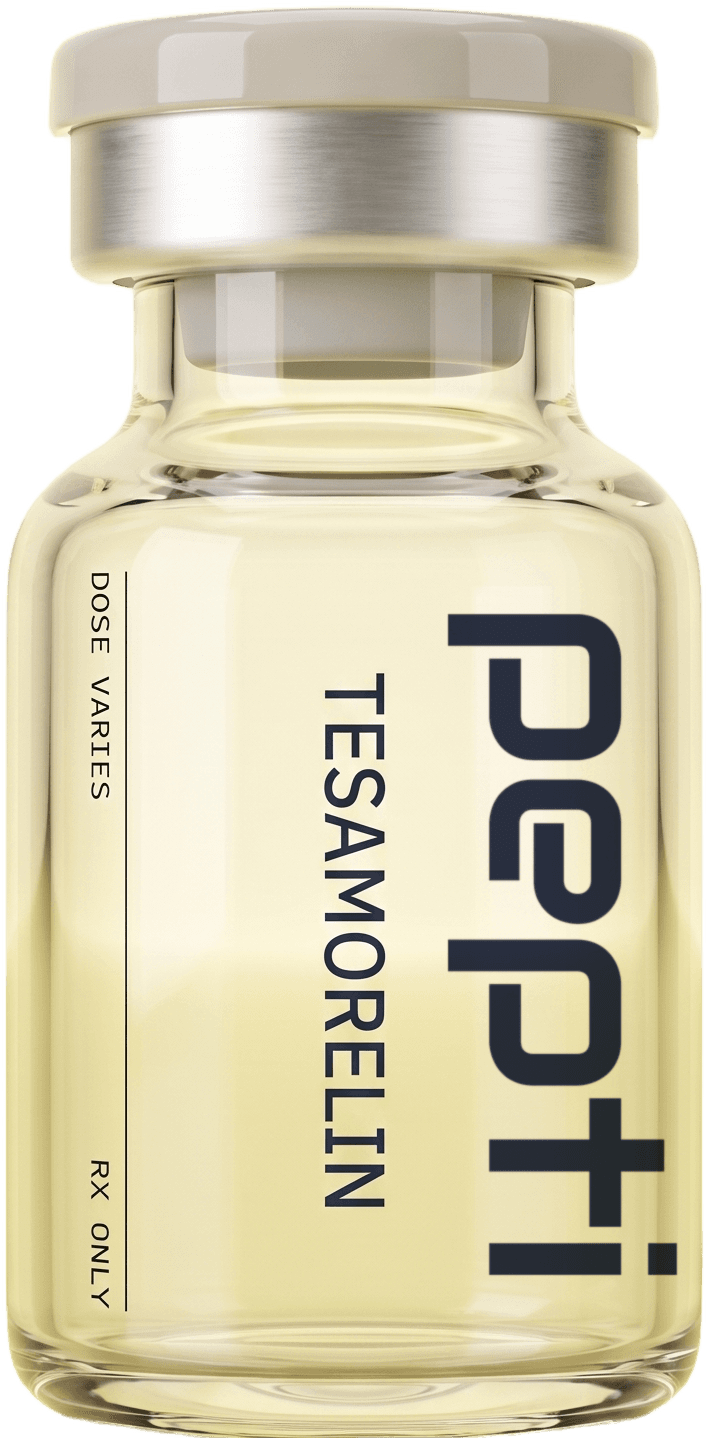
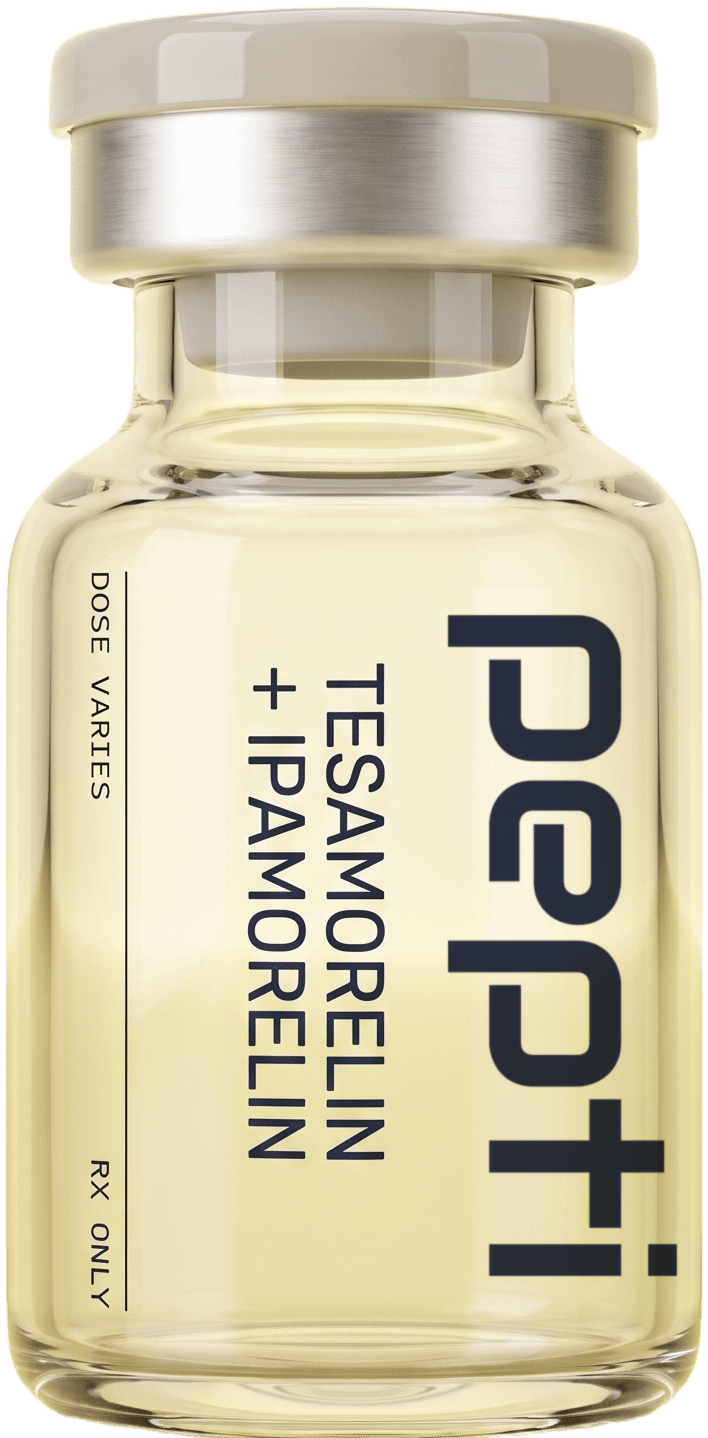
Tesamorelin + Ipamorelin is a prescription injection supplied as 5 mL multi-dose vial, Tesamorelin 2 mg/mL + Ipamorelin 1 mg/mL (10 mg Tesamorelin / 5 mg Ipamorelin per vial). The reviewed directions are: Inject 0.25 mL (25 units) subcutaneously Monday through Friday nights at bedtime. That is 20 doses per vial, about 4 weeks at Monday through Friday. It requires a prescription from a physician licensed in your state, is compounded by a state-licensed US pharmacy, and is not FDA approved.
This page covers what Tesamorelin + Ipamorelin is, what each of the two components is and the pathway researchers have described for it, why they are compounded into one vial, what the human trials and animal work do and do not establish, where each component stands with the FDA as of September 2026, how a vial is dosed and monitored, and how to get it prescribed.
Tesamorelin + Ipamorelin
What Tesamorelin + Ipamorelin actually is
Two peptides, one vial
Tesamorelin + Ipamorelin is not a single molecule. It is two independently studied growth-hormone secretagogues — compounds that prompt the pituitary to release growth hormone the body makes itself — dissolved together in one sterile multi-dose vial by a compounding pharmacy. Each has its own research literature, its own described mechanism and its own, very different, regulatory file at the FDA. The combination has no name in any journal, and it has never been studied as a combination. That shapes everything on this page: "does it work" has to be broken into two questions.
Component Per vial What it is Studied for Tesamorelin 10 mg The full 44-amino-acid growth-hormone-releasing hormone sequence with a stabilising cap; active ingredient of an FDA-approved product Visceral fat in HIV-associated lipodystrophy (randomised human trials); liver fat, abdominal obesity, cognition in smaller trials Ipamorelin 5 mg A synthetic five-amino-acid ghrelin mimetic acting at the pituitary growth hormone secretagogue receptor Growth hormone release (human volunteers); bone and body composition (rats and mice); postoperative ileus (one failed human trial) Neither contains growth hormone. Both deliver an instruction; the pituitary decides how much to release, and the body's feedback loops — somatostatin, IGF-1 — still apply. That is the central difference from injected growth hormone, which bypasses the gland altogether.
Why these two, and why in this ratio
The pituitary listens to two separate inputs for growth hormone. Growth-hormone-releasing hormone from the hypothalamus acts on one receptor; ghrelin-type signals, originally from the gut, act on another. Tesamorelin supplies the first signal and ipamorelin the second. Because the two receptors sit on the same cells and are described as acting additively, the prescriber's rationale is that one bedtime injection of both produces a fuller pulse than either alone, on top of the pulse slow-wave sleep already produces.
The ratio is worth noticing. In the standard strength tesamorelin is 10 of the 15 mg in the vial, so by mass this is mostly a tesamorelin preparation with ipamorelin as the smaller component. The proportion is set by the pharmacy's formulation and differs between the three strengths; within any one vial it cannot be adjusted per component, which is the genuine trade-off of any blend.
What it is not
It is not growth hormone, and it cannot substitute for it in someone whose pituitary cannot respond — the approved tesamorelin product is contraindicated where the hypothalamic–pituitary axis is disrupted for exactly that reason. It is not a weight-loss medication: the approved tesamorelin label states it is not indicated for weight-loss management because its effect on scale weight is neutral, and the mouse work on ipamorelin points, if anywhere, the other way. It is not an anabolic steroid; neither component binds the androgen receptor or suppresses testosterone. And it is not a treatment for any diagnosed disease as supplied here — no regulator has reviewed this combination for anything.
Tesamorelin + Ipamorelin
How each component is described to work
The receptor pharmacology of both components is well established. What differs is how far downstream the human evidence reaches: for tesamorelin, to imaging endpoints in randomised trials; for ipamorelin, to a growth hormone pulse in volunteers and no further.
Tesamorelin: the GHRH receptor and a pulsatile release
Native growth-hormone-releasing hormone is cut apart in the bloodstream within minutes by the enzyme DPP-4. Tesamorelin is that same 44-residue sequence with a trans-3-hexenoic acid group on one end that protects the cleavage site, so a subcutaneous dose survives long enough to reach the pituitary. There it binds the GHRH receptor on somatotroph cells and triggers a growth hormone pulse. Because the release is pulsatile and remains subject to somatostatin, the pattern is described as an amplified version of normal physiology rather than a flat, sustained elevation.
IGF-1 as the mediator, and why it is the number that gets measured
Growth hormone released in the pulse acts on the liver to produce IGF-1, which carries most of the signal to tissue. In the 2007 New England Journal of Medicine trial of tesamorelin in people with HIV, IGF-1 rose substantially over 26 weeks. The size of that rise is why IGF-1 monitoring is written into the approved product's label, and why it is the marker your physician tracks rather than growth hormone itself, which is pulsatile and hard to interpret from a single draw.
Tesamorelin: lipolysis, and why visceral fat responded first
Growth hormone is lipolytic — it signals fat cells to release stored triglyceride — and visceral fat, the fat around the organs, carries a higher density of the relevant receptors than the fat under the skin. That explains the pattern every tesamorelin trial has reported: a measurable reduction in visceral fat on CT with no significant change in subcutaneous fat. It is also why the trial evidence is specific to visceral fat and says nothing about general weight, a distinction that is frequently lost in marketing.
Ipamorelin: a selective ghrelin-receptor agonist
Ipamorelin is a pentapeptide developed at Novo Nordisk in the 1990s. It binds the growth hormone secretagogue receptor, GHS-R1a — the receptor ghrelin uses — and not the GHRH receptor; the founding paper in the European Journal of Endocrinology in 1998 used receptor antagonists to show that. The same paper called it "the first selective growth hormone secretagogue" because in pigs it released growth hormone at potency comparable to the older peptides GHRP-2 and GHRP-6 without raising ACTH or cortisol above what GHRH itself produced, and without affecting prolactin. That selectivity is the reason it, rather than an older GHRP, is the ghrelin-side component in a preparation taken nightly for weeks. In humans, selectivity is inferred from the animal work rather than measured directly.
Why the two are combined, and why at bedtime
The rationale is one pulse, two signals. A GHRH analogue asks the pituitary to release; a ghrelin-receptor agonist asks through a second door on the same cell, and is also described as easing the somatostatin brake. The largest natural growth hormone pulse occurs in the first hours of slow-wave sleep, so a bedtime dose is intended to land on top of a pulse the body is already producing rather than creating one at a time the system would normally be quiet. Two points of precision: the additive effect has been described for the classes, not measured for this pairing; and the pairing is a clinical rationale, not a finding.
Tesamorelin + Ipamorelin
What the research actually shows
Visceral fat in HIV-associated lipodystrophy
This is tesamorelin's evidence, and it is the strongest evidence for any component of any growth-hormone secretagogue prescribed as a compounded peptide. The first phase 3 trial, in the New England Journal of Medicine in 2007, randomised 412 people with HIV and abdominal fat accumulation to daily tesamorelin 2 mg or placebo for 26 weeks and reported a 15.2% fall in visceral fat on CT against a 5.0% rise on placebo, with a fall in triglycerides and no group difference in glycaemic measures. A pooled analysis of both phase 3 trials in the Journal of Clinical Endocrinology and Metabolism in 2010 covered 806 randomised patients with a 26-week safety extension; visceral fat fell on treatment and rose on placebo, subcutaneous fat did not change significantly, and in patients switched to placebo after 26 weeks the reduction drifted back toward baseline. That last point matters before you start: the effect is described as maintained while the signal is present.
Abdominal obesity without HIV
One randomised trial has tested tesamorelin outside HIV, in the Journal of Clinical Endocrinology and Metabolism in 2012: 60 abdominally obese adults with reduced growth hormone secretion, tesamorelin 2 mg or placebo for 12 months. It reported a reduction in visceral fat versus an increase on placebo, with improvements in triglycerides and C-reactive protein, no change in subcutaneous fat and no change in glucose measures. It is one trial of 60 people selected for low growth hormone secretion, but it is the most direct evidence that the visceral-fat finding is a property of the molecule rather than of HIV. Smaller randomised trials of tesamorelin in liver fat and in cognition in older adults are covered on the tesamorelin page.
Growth hormone release with ipamorelin
Established in every species tested. In humans, a dose-escalation study in Pharmaceutical Research in 1999 gave healthy male volunteers intravenous ipamorelin at five dose levels and reported dose-proportional pharmacokinetics, a roughly two-hour half-life and a single, sharp episode of growth hormone release at every dose. That study is the human pharmacology anchor for ipamorelin. It measured growth hormone only — not sleep, body composition, strength or recovery — and it did not use the subcutaneous route.
Body fat, in mice
A 2001 paper in Biochemical and Biophysical Research Communications runs against how ipamorelin is often marketed. In mice, twice-daily ipamorelin increased body weight, fat-pad weight, leptin and food intake, and the authors concluded that secretagogues of this class increase adiposity by growth-hormone-independent mechanisms that likely include feeding. This does not mean ipamorelin makes people fatter; it means the animal evidence does not support fat loss as an effect of ipamorelin, and nobody should tell you it does. In this blend the body-composition case rests on tesamorelin.
Postoperative ileus: ipamorelin's one patient trial
Ipamorelin was taken into human trials by Helsinn for return of bowel function after surgery, because ghrelin receptors also sit on the nerves that drive gut movement. A phase 2, multicentre, double-blind, placebo-controlled study in the International Journal of Colorectal Disease in 2014 randomised 114 adults undergoing bowel resection to intravenous ipamorelin or placebo twice daily for up to seven days. Time to tolerating a solid meal did not differ significantly from placebo, no secondary endpoint separated, and the programme was discontinued. It is the only randomised trial of ipamorelin in patients ever published, for a surgical indication by intravenous infusion.
What human data exists
There are no randomised controlled trials of Tesamorelin + Ipamorelin, or of any tesamorelin-plus-ipamorelin combination, in humans. The blend has never been studied as a blend. Evidence is per component, and it is sharply uneven:
- Tesamorelin has randomised, double-blind, placebo-controlled human trials, including two phase 3 trials that supported an FDA approval, with more than 800 people randomised in the pooled phase 3 analysis alone. Every trial used a fixed daily dose of 1 mg or 2 mg, most were in people with HIV, and the longest ran 12 months. None used the weekday-night schedule or the doses on this page.
- Ipamorelin has one pharmacokinetic study in healthy volunteers confirming that intravenous ipamorelin releases growth hormone in people, and one randomised phase 2 trial in bowel-resection patients that did not meet its endpoints. There are no randomised human trials of ipamorelin for sleep, recovery, body composition or any wellness use, and no human data for the subcutaneous route at all — the FDA's 2024 review looked and found none.
Much of medicine rests on mechanism plus clinical experience, and that is the basis on which physicians prescribe this blend. But the accurate framing is "one component with trial evidence for one endpoint, one component with pharmacology and prescribing experience, combined on a rationale," not "proven in people."
What the evidence does not establish
- That the two together do more than tesamorelin alone. No study has compared the blend with its components.
- An effect on scale weight. The approved tesamorelin label calls the drug weight-neutral; the trials measured visceral fat on CT, not kilograms.
- An effect on subcutaneous fat. Every tesamorelin trial that measured it reported no significant change.
- Results at the compounded doses or schedule. The human data is at 1–2 mg tesamorelin daily; five nights a week at the doses on this page is a physician's extrapolation.
- Any effect of ipamorelin on sleep, recovery or body composition in adults. No trial has measured it.
- Long-term safety of the combination. The approved tesamorelin label says long-term cardiovascular safety has not been established; the longest human exposure to ipamorelin on record is seven days.
- Efficacy for any condition as an FDA-approved treatment. Neither the blend nor compounded versions of its components are approved for anything.
Tesamorelin + Ipamorelin
Where Tesamorelin + Ipamorelin stands with the FDA right now
The blend has no regulatory status of its own; the FDA regulates the substances a pharmacy compounds from, not the brand name of a combination. So the question is where each component stands, and the two answers could hardly be more different. As of 24 September 2026:
Tesamorelin: an approved biologic exists, and this is not it
An FDA-approved tesamorelin product exists. Egrifta (tesamorelin acetate), from Theratechnologies, was approved on 10 November 2010 for the reduction of excess abdominal fat in HIV-infected adult patients with lipodystrophy. On 23 March 2020 that approval was deemed a biologics licence under the Public Health Service Act, in the transition that moved protein products onto the biologics framework; the FDA's own record now describes it as BLA 022505. The current formulation, Egrifta WR, is dosed at 1.28 mg once daily, with labelling revised in March 2025. Its label carries three limitations of use: long-term cardiovascular safety has not been established, it is not indicated for weight-loss management because its effect on weight is neutral, and there are no data to support improved antiretroviral adherence. It is contraindicated in disruption of the hypothalamic–pituitary axis, active malignancy, known hypersensitivity and pregnancy.
Tesamorelin is not on the FDA's 503A bulk drug substances category list and never was, because that list is for nominated substances that are not components of approved drugs; on the version updated 14 May 2026 it appears in no category. It was not among the peptides removed from Category 2 on 15 April 2026 and was not on the Pharmacy Compounding Advisory Committee's July 2026 agenda.
Compounded tesamorelin is not Egrifta. It is prepared by a state-licensed pharmacy to an individual physician's prescription. It has not been reviewed by the FDA for safety, effectiveness or manufacturing quality as a finished product, and the trial data above belongs to the approved product at its approved doses. Prescribing it for anything other than HIV-associated lipodystrophy is off-label, which is a physician's decision and common across medicine, but it should be understood as such.
Ipamorelin: withdrawn nomination, voted against, no final rule
Ipamorelin acetate was placed in Category 2 of the FDA's interim 503A and 503B lists — the category for nominated substances the agency has flagged as presenting significant safety risks — on 29 September 2023. The concern the FDA recorded was immunogenicity risk from aggregation or peptide-related impurities for certain routes, the characterisation complexity of its unnatural amino acids, and the limited safety data from the intravenous hospital trials, which are not the outpatient subcutaneous use prescribed here. The 503A nomination was later withdrawn by the nominator, and the FDA's page on those listings, current as of 22 April 2026, now records ipamorelin acetate under withdrawn 503A nominations while noting that the agency "has not identified safety-related information regarding ipamorelin acetate via certain other injectable routes of administration" and "lacks sufficient information to know whether the drug would cause harm if administered to humans via those routes." The same page still lists ipamorelin acetate in Category 2 for 503B outsourcing facilities.
On 29 October 2024 the FDA's Pharmacy Compounding Advisory Committee voted 0 in favour, 12 against, with 1 abstention, on adding ipamorelin (free base) and ipamorelin acetate to the 503A Bulks List. The uses evaluated were growth hormone deficiency and postoperative ileus — not the uses it is actually prescribed for — and the committee's stated reason was a lack of information supporting safety and efficacy in the available data for those uses; one member remarked that frequent prescribing does not by itself mean a drug is safe and effective.
A committee vote is an advisory recommendation, not a rule. On the FDA's 503A category list updated 14 May 2026, ipamorelin appears in no category and no final determination has been issued; it is not on the July 2026 advisory docket. The pharmacies that compound this blend are state-licensed 503A pharmacies preparing it to an individual prescription; the 503B Category 2 listing governs outsourcing facilities, which is a different channel.
What that adds up to
One component is the active ingredient of an approved biologic, prescribed here off-label in a compounded form. The other has a withdrawn 503A nomination, an advisory vote against it for two clinical uses that are not the ones prescribed, and no final FDA rule. Both are legal to prescribe and dispense with a valid prescription. Neither the blend nor compounded versions of its components is an FDA-approved drug product, and compounded medications never are — they are prepared by a licensed pharmacy to a physician's prescription, not approved as manufactured products.
Tesamorelin + Ipamorelin
Realistic expectations
These are patterns described by prescribers, not trial endpoints. The tesamorelin trials measured visceral fat at six and twelve months and describe nothing week by week; the compounded dose is lower than the trial dose; and nothing about the ipamorelin half has been measured in people beyond the pulse itself. Individual response varies, and a physician decides whether treatment is appropriate at all.
The first one to two weeks
The pharmacology says what happens on night one: a growth hormone pulse within the hour, gone by morning. What people describe first is sleep — often deeper, sometimes with more vivid dreams — which fits a bedtime dose landing on the slow-wave pulse. Some report a brief headache, flushing, hunger or light-headedness after the injection; some early fluid retention, joint stiffness or hand tingling can appear, which the tesamorelin trials recorded as the commonest non-injection-site effects. Nobody should expect a visible change in the abdomen in two weeks, and noticing nothing is normal.
Weeks two to twelve
IGF-1 has risen and settled. This is the window in which prescribers describe recovery between training sessions and, where diet and training are in place, the first body-composition changes. The follow-up IGF-1 and fasting glucose draw usually falls here and decides whether the dose and strength stay where they are.
Three to six months
The tesamorelin trials measured their primary endpoint at six months. If visceral fat is the goal, this is the horizon on which to judge it — by waist measurement or imaging rather than the scale, which the evidence says will not move much. The approved label advises weighing the case for continuing in anyone who has not had a reduction in visceral fat, and that is a reasonable conversation to have with your physician.
After stopping
No withdrawal is described for either component; because both ask the pituitary for a pulse rather than replacing growth hormone, the gland's own output is not suppressed. What the tesamorelin extension data does describe is visceral fat drifting back toward baseline over the six months after switching to placebo — the pattern of most metabolic therapies, where the effect is maintained while the signal is present.
Tesamorelin + Ipamorelin
When something else makes more sense
A reference that only ever recommends its own product is not much of a reference. Some honest cases where this blend is not the first thing to reach for:
- The goal is scale weight. Tesamorelin is weight-neutral on its own label and the ipamorelin animal data runs the wrong way. Semaglutide and tirzepatide have large randomised human trial programmes for exactly that.
- Visceral fat is the whole goal. Tesamorelin alone is the component with the trial evidence, and a physician may reasonably see no reason to add a second secretagogue.
- You want the GH axis for sleep and recovery rather than visceral fat. Sermorelin is often the entry point, and CJC-1295 / Ipamorelin is the most commonly prescribed combination for that purpose.
- You want to see how you respond to the ghrelin signal alone. Ipamorelin on its own is the way a physician does that before combining.
- You want a broader body-composition brief. The PHYSIQ blend pairs the same two peptides with AOD-9604 and MOTS-c; the ASCEND blend and TITAN blend add CJC-1295 with IGF-1 LR3 or BPC-157 respectively. More components is not automatically better, and which, if any, fits is a physician's call.
- Your fasting glucose is already borderline, or your history includes a pituitary condition or an active cancer. Any GH-axis therapy can push glucose further, and the latter two are contraindications on the approved tesamorelin product that no compounded version changes.
Your physician will tell you if Tesamorelin + Ipamorelin is not the right tool for what you have described. A consultation does not guarantee a prescription, and being declined is refunded.
Tesamorelin + Ipamorelin
Strengths available
| Strength | Directions |
|---|---|
| Tesamorelin/Ipamorelin 10mg/5mg 5mL | Inject 0.25 mL (25 units) subcutaneously Monday through Friday nights at bedtime. |
| Tesamorelin/Ipamorelin 15mg/10mg 5mL | Inject 0.25 mL (25 units) subcutaneously Monday through Friday nights at bedtime. |
| Tesamorelin/Ipamorelin 25mg/7.5mg 5mL | Inject 0.25 mL (25 units) subcutaneously Monday through Friday nights at bedtime. |
A higher strength delivers more medication in the same volume. Which one you are prescribed is your physician's decision.
The same 0.25 mL draw delivers 0.5 mg tesamorelin and 0.25 mg ipamorelin from the 10 mg / 5 mg vial, 0.75 mg and 0.5 mg from the 15 mg / 10 mg vial, and 1.25 mg and 0.375 mg from the 25 mg / 7.5 mg vial. The three strengths therefore differ in ratio as well as amount — the highest is the most tesamorelin-weighted — and the choice is usually informed by your baseline IGF-1.
Tesamorelin + Ipamorelin
Dosing, and how a vial is actually used
Why the dose is measured in units
The directions are written in millilitres and in insulin-syringe units because that is what you can actually read off the barrel. 0.25 mL is 25 units on a U-100 syringe. You are not calculating anything — the number is printed on your medication. Because the two peptides are in fixed proportion within a vial, every dose delivers the same split; you cannot take more of one and less of the other. If your directions and syringe markings appear to disagree, ask before dosing.
Subcutaneous, at bedtime, five nights a week
Subcutaneous means into the fat layer, not the muscle. The abdomen is the usual site, rotated so the same spot is not used repeatedly. The dose is taken shortly before sleep, on an empty stomach where possible, so the pulse it triggers lands on top of the one slow-wave sleep already produces; a meal shortly before is described as blunting the response. The weekday-only schedule is a prescriber convention that gives the axis two nights without a signal each week; it is not trial-derived, and your physician may direct otherwise.
Why a vial covers four weeks
20 doses at five nights a week is exactly four weeks, which is why refills run on a 28-day cycle. Weekends off is part of the schedule, not a missed dose. One vial per fill, always — not a stockpile.
What your physician monitors
IGF-1 is the practical dosing guide, because it is the mediator of growth hormone effect and the aim is a physiological range rather than the highest achievable. Fasting glucose matters because growth hormone reduces insulin sensitivity. Lipids and thyroid are commonly checked alongside because both interact with the same axis. At-home blood testing covers these without a lab visit; a provider prescribing a GH-axis blend with no labs at all is not monitoring you.
Storage
Refrigerated, and it ships that way in insulated packaging with ice packs. Beyond-use dating runs from first puncture and is printed on the label; a two-peptide vial is not something to keep past it. Do not shake the vial.
Tesamorelin + Ipamorelin
Safety and side effects
The tesamorelin half is better characterised than most compounded peptides because the approved product's label reports pooled data from 740 treated patients, 543 of them in the 26-week placebo-controlled phase. The adverse reactions more frequent than placebo were injection-site reactions (17% versus 6%), arthralgia (13% versus 11%), pain in extremity, myalgia and peripheral oedema (each 6% versus 5%, 2% and 2%), and paraesthesia (5% versus 2%); hypersensitivity reactions such as rash and urticaria also occurred. Those figures are at 2 mg daily, well above the per-injection tesamorelin dose in any strength on this page.
The fluid-related effects — puffiness, joint aches, hand tingling, occasionally carpal tunnel symptoms — are classic growth hormone effects and usually mean the dose is higher than the person needs. They are the reason the dose is titrated to IGF-1 rather than upward by feel.
On glucose: the tesamorelin trials reported no clinically meaningful group differences at 26 weeks, but the label records new elevation of HbA1c to the diabetic range in 5% of treated patients against 1% on placebo. Fasting glucose at baseline and follow-up is standard, and existing diabetes means closer supervision, not exclusion.
The ipamorelin half was reported as well tolerated in the volunteer study and in the seven-day surgical trial. What gets reported clinically at compounded doses is mostly minor and short: headache, flushing or warmth after injection, hunger, light-headedness, and injection-site redness or soreness. Two things from the FDA's 2024 review deserve a plain statement: the committee cited a lack of safety and efficacy data for the two uses it examined, and the serious adverse events the agency recorded occurred with intravenous dosing in hospital patients rather than subcutaneous use. Separately, anything raising growth hormone and IGF-1 carries the class considerations in the approved labelling — glucose intolerance, fluid retention and a caution about existing tumours — and no data show ipamorelin is exempt.
There is no established interaction list for the blend, because the trials that would produce one have not been run. The approved tesamorelin label notes that growth hormone can alter cytochrome P450 metabolism and that people on glucocorticoid replacement may need adjustment, which is why the intake asks for every medication you take and why a physician reviews it rather than a form.
Stop and contact your physician for any reaction that is severe, spreading, or involves difficulty breathing.
Tesamorelin + Ipamorelin
How Tesamorelin + Ipamorelin compares
Tesamorelin + Ipamorelin vs CJC-1295 / Ipamorelin
The same idea — a GHRH analogue plus a ghrelin-receptor agonist in one vial — with a different GHRH half. CJC-1295 / Ipamorelin uses a modified 29-amino-acid GHRH fragment and is the most commonly prescribed GH-axis combination for a general recovery and body-composition brief. This blend uses the full 44-residue sequence with the phase 3 trial record for visceral fat. Prescribers reach for it when visceral fat is the specific goal and for CJC-1295 / Ipamorelin when it is not.
Tesamorelin + Ipamorelin vs tesamorelin alone
Tesamorelin on its own is the component carrying the human trial evidence, at the same per-injection tesamorelin dose in the matching strength. Adding ipamorelin adds the second pituitary signal on a rationale, not on a trial. A physician who wants to see how a patient responds to the GHRH signal alone, or who wants the cleaner evidence base, starts with the single agent; one who wants the fuller pulse chooses the blend.
Tesamorelin + Ipamorelin vs PHYSIQ
The PHYSIQ blend contains the same two peptides plus AOD-9604 and MOTS-c, in equal parts. It is the broader body-composition formula; this blend is the narrower one, with more tesamorelin by proportion and nothing acting outside the growth hormone axis. If a physician's aim is a GH-axis prescription and nothing else, this is the more targeted of the two.
Tesamorelin + Ipamorelin
Availability and formats
| Question | Answer |
|---|---|
| Can I get it by telehealth? | Yes, where a physician licensed in your state prescribes it |
| Which states? | All 50 states and DC |
| Does it come as a pen? | No, this one is a vial and syringe only |
| Does it come as a capsule? | No |
| Does it come as a nasal spray? | No |
| Is bloodwork required first? | Usually, for this medication |
Tesamorelin + Ipamorelin
Where to get Tesamorelin + Ipamorelin prescribed
Tesamorelin + Ipamorelin cannot be bought legitimately without a prescription. Sites shipping it with no prescription are selling a research-use-only product, where no pharmacy is accountable for identity, purity, sterility or concentration.
The prescription route works like this:
- Complete a medical intake covering your history, medications, allergies and what you are treating.
- A physician licensed in your state reviews it and will usually want baseline bloodwork before prescribing this one.
- If appropriate, a state-licensed, FDA-registered pharmacy compounds it to that prescription.
- It ships refrigerated with your directions printed on the vial.
- Your physician stays reachable afterwards for dose questions and side effects.
Current all-in pricing for Tesamorelin + Ipamorelin is published: medication, physician review, refill management and shipping in one figure, with no separate membership fee. What to check on any provider is in how to tell if a peptide seller is legitimate.
Tesamorelin + Ipamorelin
Who should not take it, or should discuss it first
| Situation | Why |
|---|---|
| Personal history of cancer | Raised at intake |
| Diabetes or impaired glucose tolerance | Raised at intake |
| Pregnancy or breastfeeding | Raised at intake |
| Pregnancy or breastfeeding | Not used; safety data is absent |
| Tested athletes | Many peptides are prohibited in competition; check the current list |
Full specification
Everything on the label.
Product
Tesamorelin + Ipamorelin (Injectable)
How supplied
5 mL multi-dose vial, Tesamorelin 2 mg/mL + Ipamorelin 1 mg/mL (10 mg Tesamorelin / 5 mg Ipamorelin per vial)
Typical directions
Inject 0.25 mL (25 units) subcutaneously Monday through Friday nights at bedtime.
Dose volume
0.25 mL (25 units on a U-100 insulin syringe)
Doses per vial
20
Coverage per vial
about 4 weeks at Monday through Friday
Formats
Vial and syringe
Available in
All 50 states and DC
Bloodwork
Commonly required before prescribing
Strengths available
3
Legal status
Prescription-only, compounded, not FDA approved
Category
Anti-Aging
References
What this is based on.
References
- Raun K, Hansen BS, Johansen NL, et al.. Ipamorelin, the first selective growth hormone secretagogue · European Journal of Endocrinology (1998) · PMID 9849822
- Greenwood-Van Meerveld B, Tyler K, Mohammadi E, Pietra C. Efficacy of ipamorelin, a ghrelin mimetic, on gastric dysmotility in a rodent model of postoperative ileus · Journal of Experimental Pharmacology (2012) · PMID 27186127
- Andersen NB, Malmlöf K, Johansen PB, et al.. The growth hormone secretagogue ipamorelin counteracts glucocorticoid-induced decrease in bone formation of adult rats · Growth Hormone & IGF Research (2001) · PMID 11735244
- Lall S, Tung LY, Ohlsson C, Jansson JO, Dickson SL. Growth hormone (GH)-independent stimulation of adiposity by GH secretagogues · Biochemical and Biophysical Research Communications (2001) · PMID 11162489
- Adeghate E, Ponery AS. Mechanism of ipamorelin-evoked insulin release from the pancreas of normal and diabetic rats · Neuro Endocrinology Letters (2004) · PMID 15665799
- Semenistaya E, Zvereva I, Thomas A et al.. Determination of growth hormone releasing peptides metabolites in human urine after nasal administration of GHRP-1, GHRP-2, GHRP-6, Hexarelin, and Ipamorelin · Drug Test Anal (2015) · PMID 25869809
- Nass R, Pezzoli SS, Oliveri MC et al.. Effects of an oral ghrelin mimetic on body composition and clinical outcomes in healthy older adults: a randomized trial · Ann Intern Med (2008) · PMID 18981485
- Moreno-Reyes R, Kerkhofs M, L'Hermite-Balériaux M, Thorner MO et al.. Evidence against a role for the growth hormone-releasing peptide axis in human slow-wave sleep regulation · Am J Physiol (1998) · PMID 9612233
- Copinschi G, Leproult R, Van Onderbergen A, Caufriez A et al.. Prolonged oral treatment with MK-677, a novel growth hormone secretagogue, improves sleep quality in man · Neuroendocrinology (1997) · PMID 9349662
- Falutz J, Allas S, Blot K et al.. Metabolic effects of a growth hormone-releasing factor in patients with HIV · N Engl J Med (2007) · PMID 18057338
- Stanley TL, Feldpausch MN, Oh J et al.. Effect of tesamorelin on visceral fat and liver fat in HIV-infected patients with abdominal fat accumulation: a randomized clinical trial · JAMA (2014) · PMID 25038357
- Falutz J, Mamputu JC, Potvin D et al.. Effects of tesamorelin (TH9507), a growth hormone-releasing factor analog, in human immunodeficiency virus-infected patients with excess abdominal fat: a pooled analysis of two multicenter, double-blind placebo-controlled phase 3 trials with safety extension data · J Clin Endocrinol Metab (2010) · PMID 20554713
Citations are provided for educational purposes. They do not constitute medical advice. Always discuss any peptide protocol with your prescribing physician.
Common questions
Tesamorelin + Ipamorelin, answered.
Through a telehealth provider where a physician licensed in your state reviews a medical intake and a licensed US pharmacy compounds the prescription. Pepti prescribes Tesamorelin + Ipamorelin in all 50 states and DC; start with the free assessment.
5 mL multi-dose vial, Tesamorelin 2 mg/mL + Ipamorelin 1 mg/mL (10 mg Tesamorelin / 5 mg Ipamorelin per vial)
Inject 0.25 mL (25 units) subcutaneously Monday through Friday nights at bedtime. Your physician sets your own dose and it is printed on your medication.
20 at the standard volume, about 4 weeks at Monday through Friday.
Tesamorelin + Ipamorelin is supplied as a vial, drawn with an insulin syringe. It is not available as a pen or capsule.
Usually yes for this medication. A physician will generally want baseline labs before prescribing, and at-home blood testing covers hormone, metabolic and thyroid markers without a lab visit.
It is legal to prescribe and dispense in the United States with a valid prescription. It is not FDA approved: compounded medications are prepared by licensed pharmacies pursuant to a prescription rather than approved as manufactured products. See are peptides FDA approved.
Pricing is published on the Tesamorelin + Ipamorelin page as one all-in figure covering medication, physician review, refill management and shipping. What drives peptide pricing generally is in how much do peptides cost.
At the standard 0.25 mL dose from the 10 mg / 5 mg vial: 0.5 mg tesamorelin and 0.25 mg ipamorelin. The 15 mg / 10 mg strength delivers 0.75 mg and 0.5 mg, and the 25 mg / 7.5 mg strength 1.25 mg and 0.375 mg, from the same draw. The ratio within any one vial is fixed; if your physician wants a different balance, the components are prescribed separately.
No. The combination has never been studied as a combination, in humans or in animals. The evidence is per component: tesamorelin has two phase 3 randomised placebo-controlled trials in people with HIV-associated abdominal fat accumulation and smaller randomised trials in other populations; ipamorelin has one volunteer pharmacokinetic study confirming growth hormone release by intravenous dosing and one randomised surgical trial that did not meet its endpoints. There are no randomised controlled trials of the blend.
Same active peptide, different product. Egrifta is manufactured under an FDA biologics licence — approved in November 2010 and deemed a biologic in March 2020 — for reducing excess abdominal fat in adults with HIV-associated lipodystrophy. The compounded tesamorelin in this blend is prepared by a state-licensed pharmacy to an individual prescription, is not FDA approved, and is prescribed off-label at a dose and schedule your physician sets. The trial results belong to the approved product; the compounded version borrows the mechanism, not the data.
No. Tesamorelin is the active ingredient of an approved drug and has never been on the FDA's 503A bulk substances list; the April 2026 removals from Category 2 and the July 2026 advisory committee meeting did not concern it. Ipamorelin acetate was placed in Category 2 in September 2023; its 503A nomination was later withdrawn, and on 29 October 2024 the Pharmacy Compounding Advisory Committee voted 0–12, with one abstention, against adding ipamorelin to the 503A Bulks List for growth hormone deficiency and postoperative ileus. That is advisory, no final rule has been issued, and ipamorelin appears in no category on the current 503A list. Both remain legal to prescribe and dispense.
The tesamorelin evidence is about visceral fat measured on CT, not scale weight; the approved label describes the drug as weight-neutral. The ipamorelin animal work reported increased body fat and food intake in mice, and there are no human data either way. If weight is the goal, semaglutide and tirzepatide have randomised human trials behind them.
There is no trial-established timeline in humans for the blend. Prescribers generally describe sleep changes in the first two weeks, recovery and the first body-composition changes over weeks two to twelve where training and diet are in place, and visceral fat, where it changes, as a three-to-six-month proposition — the horizon the tesamorelin trials measured. Those are clinical patterns, not endpoints.
Both pair a GHRH analogue with ipamorelin. CJC-1295 / Ipamorelin is the more commonly prescribed combination for a general sleep, recovery and body-composition brief. This blend swaps in tesamorelin, the GHRH analogue with phase 3 trial evidence for visceral fat, and is usually chosen when that is the specific goal. Which fits is your physician's decision.
No. Growth-hormone secretagogues, including GHRH analogues and ghrelin-receptor agonists, are prohibited in competition by anti-doping bodies, and a prescription does not change that. If you are a tested athlete, check the current prohibited list for your sport before starting anything, and tell your physician.
Next step
See what a physician recommends for you.
A licensed physician in your state reviews your intake and decides what is appropriate. A consultation does not guarantee a prescription.