Immune · Reference
How Long Does FORTIFY Blend Take to Work? What the Component Studies Measured
This page sets out what each component study measured and over what period, why the blend has no timeline of its own, how FORTIFY is taken at Pepti, and what to keep track of instead of waiting for a date. For the blend in full, read what is FORTIFY Blend.

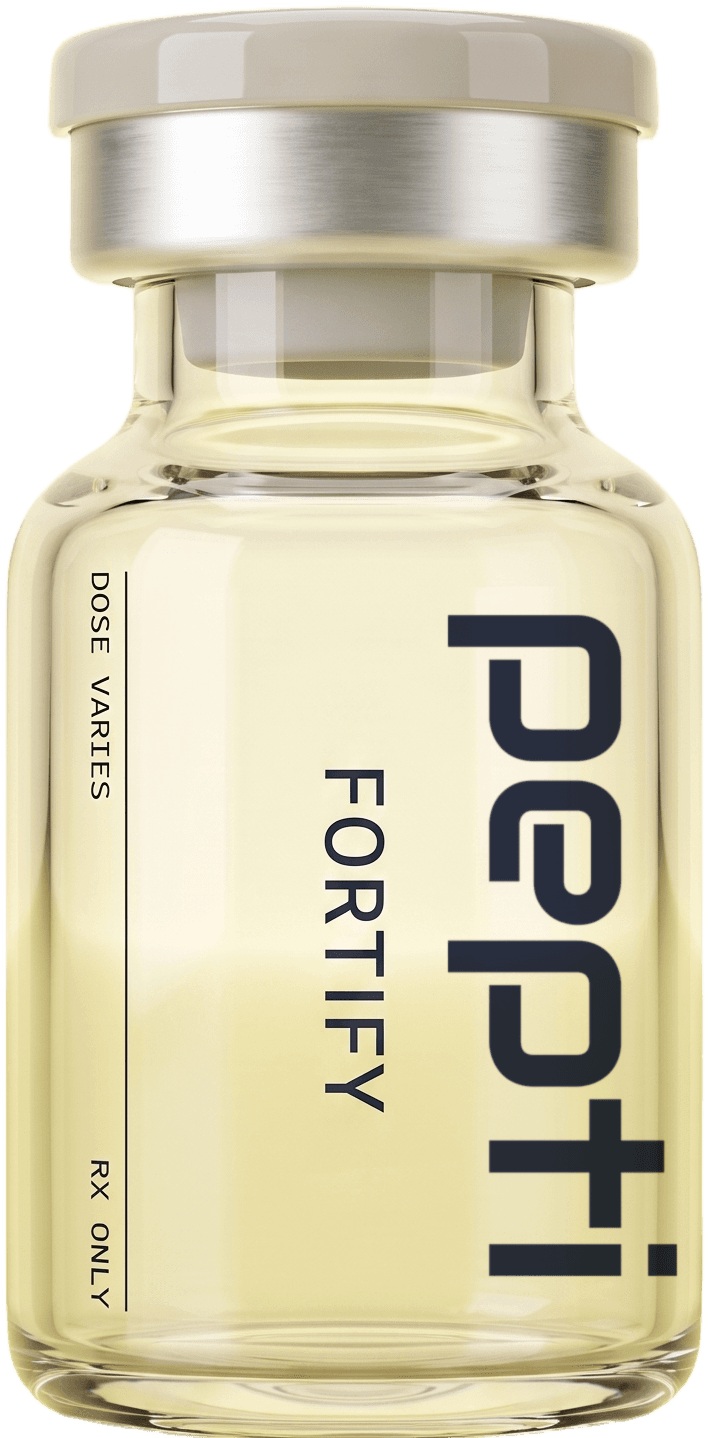
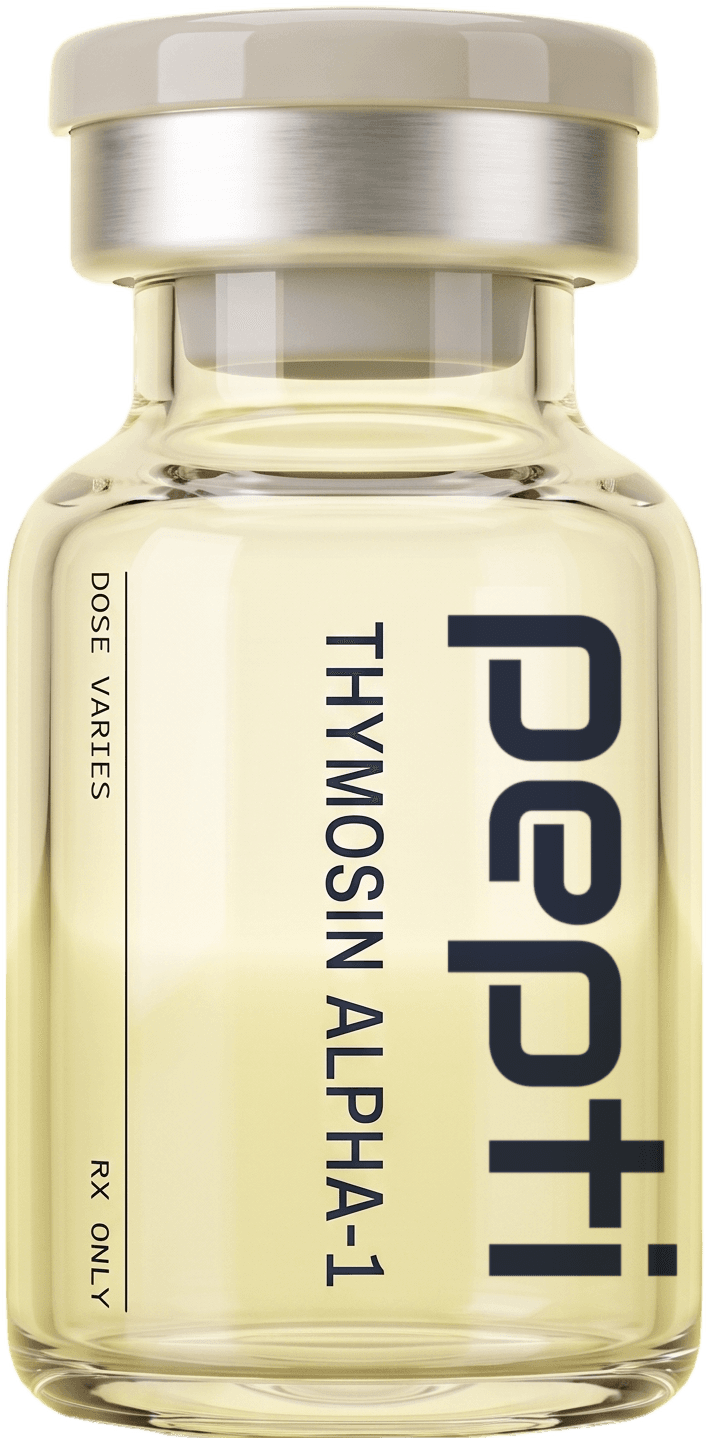
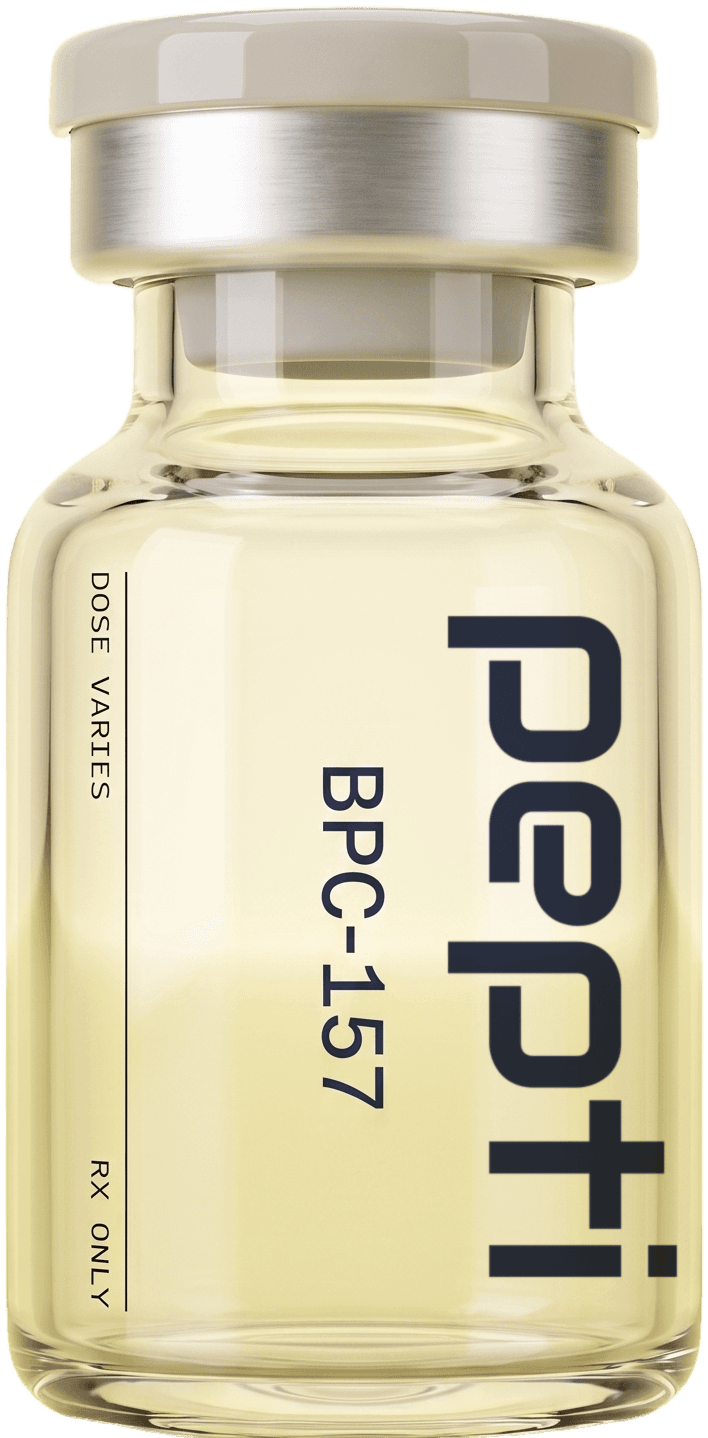
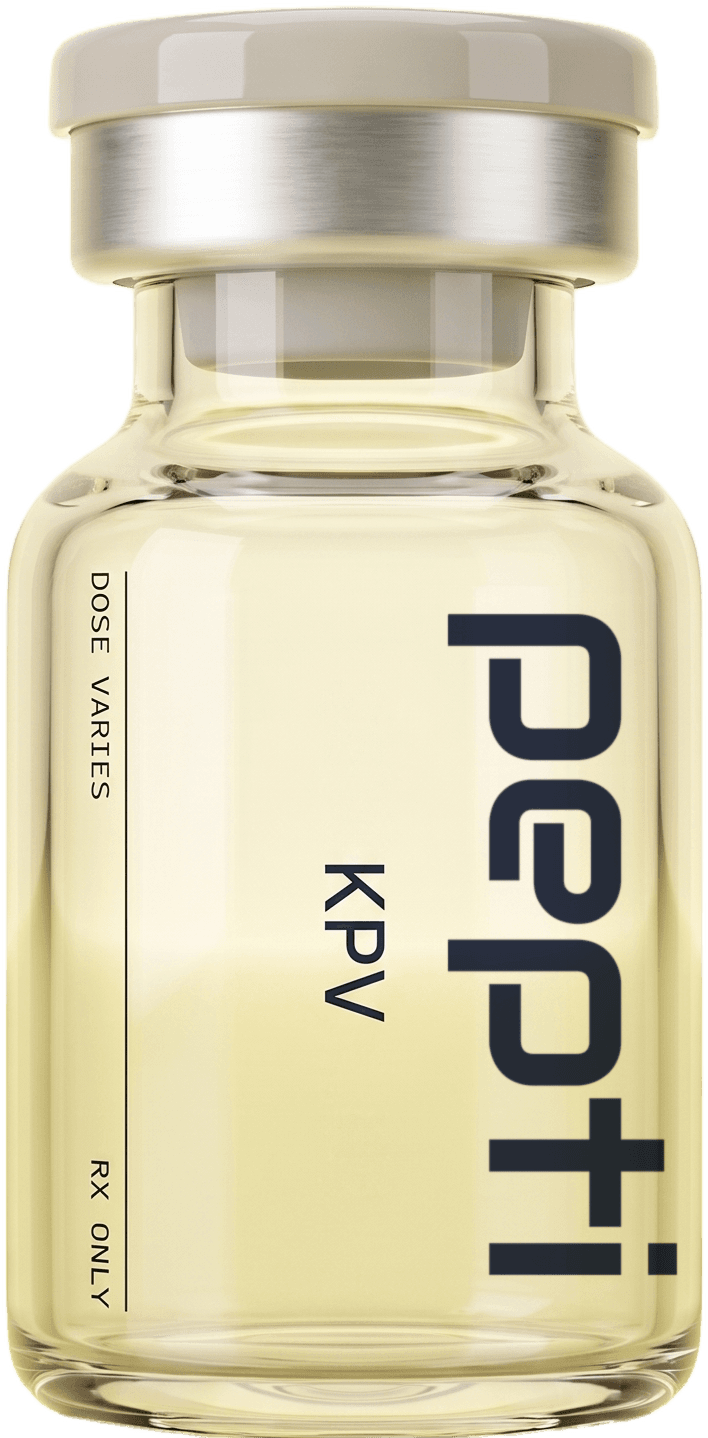
There is no study of how long FORTIFY takes to work, because the blend (thymosin alpha-1, BPC-157, KPV and LL-37 in one vial) has never been studied as a blend, in people or in animals. The research behind its components ran on very different clocks: thymosin alpha-1's sepsis trials judged mortality at 28 days and a hepatitis B trial gave 26- or 52-week courses and measured response at 18 months, the only randomised human study of BPC-157 was a two-week enema trial reported as a conference abstract, LL-37's human trials were topical treatments for leg ulcers, and KPV has no human studies. Immune function is also not something a person feels from week to week, so noticing nothing is normal. None of those durations is a timeline for a person injecting FORTIFY.
This page sets out what each component study measured and over what period, why the blend has no timeline of its own, how FORTIFY is taken at Pepti, and what to keep track of instead of waiting for a date. For the blend in full, read what is FORTIFY Blend.
How Long Does FORTIFY Blend Take to Work? What the Component Studies Measured
The short answer
| Component | Study behind the timing question | How long it ran | What it measured |
|---|---|---|---|
| Thymosin alpha-1 | Hepatology, 1998: 98 people with chronic hepatitis B | A 26-week course, a 52-week course, or no treatment | Virological response at 18 months; responses built up after the course finished |
| Thymosin alpha-1 | Journal of Viral Hepatitis, 2012: 552 people with hepatitis C | 48 weeks, added to interferon-based treatment | Sustained viral response, not different from control |
| Thymosin alpha-1 | ETASS, Critical Care, 2013: 361 people with severe sepsis | Hospital treatment, judged at 28 days | Mortality, 26.0% against 35.0%, marginal significance |
| Thymosin alpha-1 | TESTS, BMJ, 2025: 1,106 adults with sepsis | Hospital treatment, judged at 28 days | Mortality, 23.4% against 24.1%; no clear benefit |
| BPC-157 | Ulcerative colitis enema trial in 53 people, 2005 conference abstract | Two weeks | Disease activity, judged too incomplete by the FDA |
| LL-37 | Wound Repair and Regeneration, 2014 and 2021: 34 and 148 patients | The trial period for ulcer healing | Healing of venous leg ulcers with a topical treatment |
| KPV | Mouse colitis models, Gastroenterology, 2008 | Animal model periods | Gut inflammation in mice |
| FORTIFY as a blend | None | None | Nothing has been measured |
Read the last row first. Every timing claim made for FORTIFY borrows from a separate literature, and the human part of it comes from people with hepatitis, sepsis or leg ulcers.
How Long Does FORTIFY Blend Take to Work? What the Component Studies Measured
Why FORTIFY has no timeline of its own
| The gap | What the studies did | What a FORTIFY prescription involves |
|---|---|---|
| Combination | One peptide at a time | Four peptides in fixed proportion |
| Population | People with hepatitis B or C, sepsis, colitis or leg ulcers; mice | Adults who want help with immune resilience |
| Route | Hospital injections, enema, topical application, animal dosing | Subcutaneous injection on weekdays |
| Dose | Each trial's own dose of one peptide | 0.25 mg thymosin alpha-1, 0.25 mg BPC-157, 0.1 mg KPV and 0.05 mg LL-37 per dose |
| Endpoint | Mortality at 28 days, viral response, ulcer healing, colon inflammation | Usually how often you get ill, which nobody has measured |
A 28-day mortality figure in an intensive care unit is not a clock for how a healthy person feels. A viral response measured 18 months after a hepatitis B course says something about that disease. A cream on a leg ulcer is not an injection under the skin. The question most people bring to FORTIFY, whether they get ill less often, has no trial behind it at all, for the blend or for any component.
How Long Does FORTIFY Blend Take to Work? What the Component Studies Measured
What each component's research tells you about timing
Thymosin alpha-1: courses of months, judged later still
Thymosin alpha-1 has the longest human record of the four, and its trials ran on the timescale of the disease being studied. In the 1998 Hepatology trial, people with chronic hepatitis B were given a 26-week course, a 52-week course or no treatment, and complete virological response at 18 months was 40.6, 26.5 and 9.4 percent. The responses accumulated after the course had finished rather than during it. A 2012 hepatitis C trial ran 48 weeks and found no difference.
In sepsis, the clock was 28 days because that is when mortality was judged. ETASS reported a marginally significant difference, and the larger, double-blind TESTS trial found no clear mortality benefit. A 2026 Cochrane review of ten hepatitis B trials graded the evidence as very low certainty. None of these trials enrolled healthy adults, and none can tell you when someone using FORTIFY for resilience would notice anything. More in how long does thymosin alpha-1 take to work.
BPC-157: a two-week human abstract
The only randomised, placebo-controlled human study of BPC-157 was a two-week enema trial in 53 people with mild to moderate ulcerative colitis, reported only as a 2005 conference abstract. The FDA judged it too incomplete to support either efficacy or safety. It used a different route from FORTIFY's injection, in one condition, at a different amount. The rest of BPC-157's literature is animal work on the stomach and intestinal lining, with animal healing periods. See how long does BPC-157 take to work.
LL-37: topical leg-ulcer trials
Two randomised, placebo-controlled trials of topical LL-37 on hard-to-heal venous leg ulcers were published in Wound Repair and Regeneration. The 2014 first-in-man trial of 34 patients reported faster healing at the two lower concentrations and no difference from placebo at the highest. The 2021 phase IIb trial of 148 patients found no significant improvement across the whole study population. Those measured wound closure with a treatment applied to the wound. There are no human trials of injectable LL-37, and FORTIFY carries 0.05 mg per dose, its smallest component.
KPV: no human studies at all
KPV's research is cell and mouse work, deepest in colitis models, with the 2008 Gastroenterology paper reporting reduced inflammation in mice and uptake into gut cells through the PepT1 transporter. There is no human trial of KPV for any indication, so there is nothing from which to estimate a human timeline. See how long does KPV take to work.
How Long Does FORTIFY Blend Take to Work? What the Component Studies Measured
Why immune change is hard to time
Immune function does not produce a sensation. Nobody feels their dendritic cells. The thing people hope for, catching fewer colds or getting over them faster, can only be judged across months, and it is confounded by everything that changes with the seasons: school terms, travel, sleep, stress and whatever is circulating that year. Noticing nothing in the first weeks of a course tells you very little either way, and so does a quiet month in summer.
That is why it is more useful to agree with your physician what you are watching than to wait for a date. More on the general picture is in how long do peptides take to work.
How Long Does FORTIFY Blend Take to Work? What the Component Studies Measured
How FORTIFY is taken at Pepti
| Question | Answer |
|---|---|
| Product | FORTIFY Blend |
| Vial | 5 mL: thymosin alpha-1 1 mg/mL, BPC-157 1 mg/mL, KPV 0.4 mg/mL, LL-37 0.2 mg/mL |
| Typical directions | Inject 0.25 mL (25 units) subcutaneously once daily Monday through Friday |
| Per dose | 0.25 mg thymosin alpha-1, 0.25 mg BPC-157, 0.1 mg KPV, 0.05 mg LL-37 |
| Doses per vial | 20, about four weeks of weekday doses |
| Formats | Vial and syringe only |
| Price | $289/mo, all-in |
Your physician sets your directions after reviewing your intake, and they are printed on the vial. Because the four peptides are in fixed proportion, every dose delivers the same split. The units and mL detail is in FORTIFY Blend dosage. The price covers medication, physician review, refill management and shipping, with no membership fee. Vials ship refrigerated with ice packs, ready to use, with sterile syringes and alcohol prep pads, and refills run every 28 days, one vial per fill.
How Long Does FORTIFY Blend Take to Work? What the Component Studies Measured
While you are on it
| What to do | Why |
|---|---|
| Take it on the schedule printed on the vial | Weekends off are part of the directions, not missed doses |
| Keep a simple record of illnesses: when, how long, how bad | It is the only way to look back over months, and it beats memory |
| Note the gut, if that was part of why it was prescribed | BPC-157 and KPV are the gut-lining components |
| Raise how it is going at refill | Your care team is reachable at any time through your account |
| Do not change your own dose | You cannot take more of one component and less of another, and more is not a way to speed anything up |
For an active infection, a fever, a cough that is getting worse or a spreading red wound, contact a physician for actual treatment; FORTIFY is not that treatment. For a reaction that is severe, spreading, or involves difficulty breathing, call 911, then tell your physician. The full list is in FORTIFY Blend side effects.
When a narrower prescription may make more sense
If the question is really about one thing, a single-purpose prescription is easier to judge, because there is one variable instead of four.
| Situation | Option |
|---|---|
| Immune support is the whole goal | Thymosin Alpha-1, $249/mo |
| The other thymic peptide physicians consider | Thymalin, $209/mo |
| A gut complaint, nothing else | BPC-157, $209/mo |
| Inflammation without an immune goal | KPV, $229/mo |
How Long Does FORTIFY Blend Take to Work? What the Component Studies Measured
What the evidence does not establish
- Any timeline for FORTIFY in people, or in animals.
- A benefit in healthy adults for frequent colds, slow recovery or general immune support, at any point.
- That four peptides together act faster or do more than one alone.
- That injected LL-37 does anything the topical trials measured.
- That KPV does anything in people.
- Long-term safety over years of continuous use.
All four components sat in Category 2 of the FDA's interim 503A list at some point from 2023, and none is there now. The advisory committee voted 4 to 17 against listing thymosin alpha-1 in December 2024, voted 8 to 6 to recommend BPC-157 and KPV in July 2026, and is scheduled to consider LL-37 before the end of February 2027. Final determinations are pending. FORTIFY is not FDA approved, and compounded medications are not FDA approved. BPC-157 is named on the WADA Prohibited List at all times.
How Long Does FORTIFY Blend Take to Work? What the Component Studies Measured
Where to get FORTIFY prescribed
FORTIFY cannot be bought legitimately without a prescription. Sites selling it "for research use only" are not accountable for identity, purity, sterility or concentration. The prescription route:
- Complete a free online intake covering your history, medications and what you want help with.
- A physician licensed in your state reviews it, usually within 24 hours.
- If it is appropriate, a PCAB-accredited, FDA-registered US 503A compounding pharmacy prepares it to that prescription. Lot test results are published at /quality/lab-results.
- It ships refrigerated with your directions printed on the vial.
- Your physician stays reachable for questions and side effects.
Step by step: how to get FORTIFY Blend prescribed online. The research claim by claim is in FORTIFY Blend benefits.
References
What this is based on.
References
- Dominari A, Hathaway Iii D, Pandav K et al.. Thymosin alpha 1: A comprehensive review of the literature · World J Virol (2020) · PMID 33362999
- Dürr UH, Sudheendra US, Ramamoorthy A. LL-37, the only human member of the cathelicidin family of antimicrobial peptides · Biochim Biophys Acta (2006) · PMID 16716248
- Dalmasso G, Charrier-Hisamuddin L, Nguyen HT et al.. PepT1-mediated tripeptide KPV uptake reduces intestinal inflammation · Gastroenterology (2008) · PMID 18061177
- Grönberg A, Mahlapuu M, Ståhle M et al.. Treatment with LL-37 is safe and effective in enhancing healing of hard-to-heal venous leg ulcers: a randomized, placebo-controlled clinical trial · Wound Repair Regen (2014) · PMID 25041740
- Mahlapuu M, Sidorowicz A, Mikosinski J et al.. Evaluation of LL-37 in healing of hard-to-heal venous leg ulcers: A multicentric prospective randomized placebo-controlled clinical trial · Wound Repair Regen (2021) · PMID 34687253
- Lande R, Gregorio J, Facchinetti V et al.. Plasmacytoid dendritic cells sense self-DNA coupled with antimicrobial peptide · Nature (2007) · PMID 17873860
Citations are provided for educational purposes. They do not constitute medical advice. Always discuss any peptide protocol with your prescribing physician.
Common questions
How Long Does FORTIFY Blend Take to Work? What the Component Studies Measured, answered.
No study has measured it. FORTIFY has never been tested as a blend. Its components were studied separately, over periods set by the disease being studied, such as 28 days in sepsis trials and 26- or 52-week courses in hepatitis B, and none of those periods is a timeline for a person.
Immune function does not produce a sensation, so noticing nothing is normal. Injection-site tenderness is the most common thing people notice.
No trial has measured that for FORTIFY or any of its components. Whether you get ill less often can only be judged across months, and the seasons confound it. Keeping a record of illnesses gives you and your care team something real to look at.
There is no human timeline. BPC-157's one randomised human study was a two-week enema trial in ulcerative colitis, reported as an abstract, and KPV's gut research is in mice.
Nothing shows that. No study has compared the blend with its components, and FORTIFY carries 5 mg of thymosin alpha-1 per vial against the 10 mg in the single product.
There is no trial-based number. Each vial covers about four weeks of weekday doses, and you can raise how it is going with your care team at any time, including at refill.
The five-days-on, two-days-off pattern is a prescribing convention common across peptide protocols, not something derived from a FORTIFY trial. It also gives injection sites a rest.
No. Take the dose printed on your vial on the schedule printed on your vial. If you have questions about your directions, message your care team.
FORTIFY is prescribed for resilience between illnesses, not as a treatment during one. An illness that needs treating needs a physician. Tell your care team if you get ill while on FORTIFY.
Bloodwork is not required for any Pepti treatment. If your physician wants labs for your care, they'll ask through your account. The free assessment goes to a physician licensed in your state. A consultation does not guarantee a prescription.
Next step
See what a physician recommends for you.
A licensed physician in your state reviews your intake and decides what is appropriate. A consultation does not guarantee a prescription.