Recovery · Reference
How Long Does ARA-290 Take to Work? What the Trials Measured, and When
This page lists what each study measured and when, explains why a trial endpoint is not a personal schedule, and covers what your directions look like and what to track. What ARA-290 is and how it is described to work are in what is ARA-290.
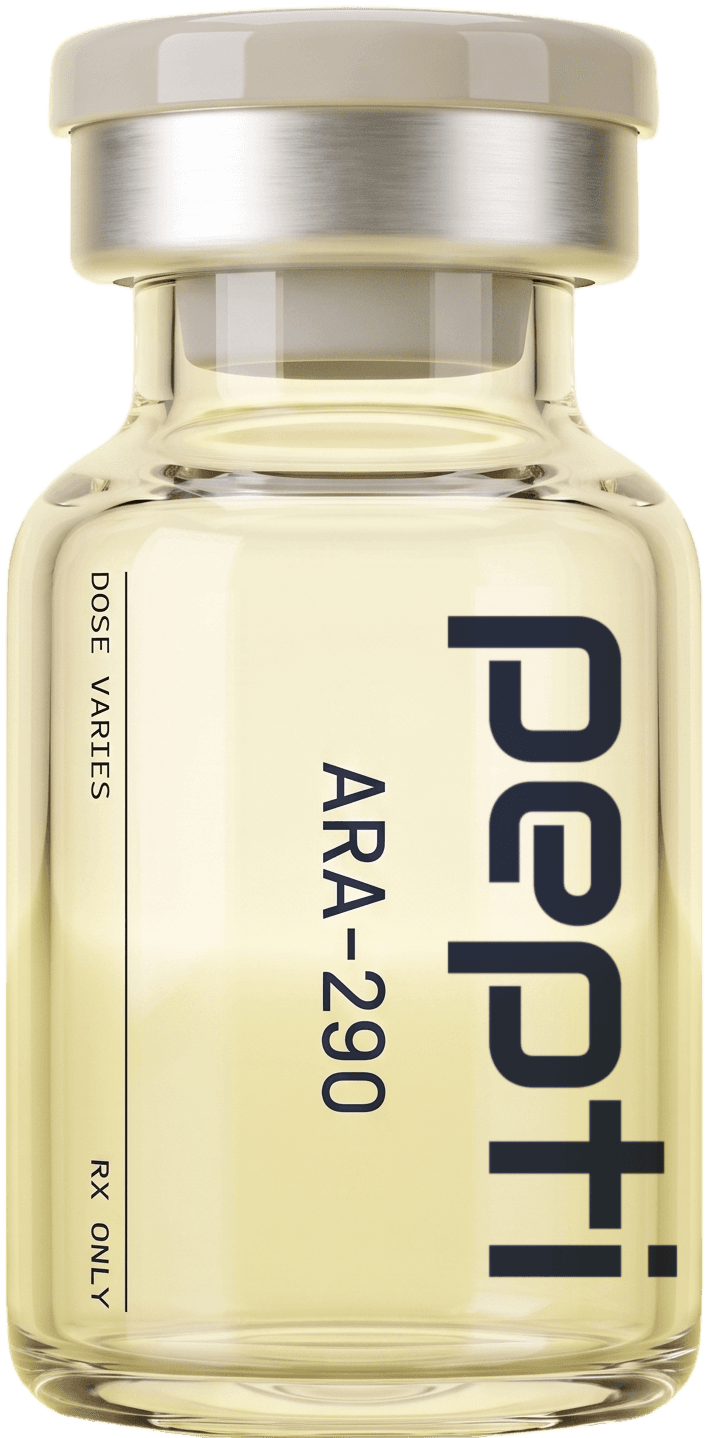
Treatments mentioned
There is no promised timeline for ARA-290: the human trials measured their outcomes after 28 days of treatment, and that four-week mark is the only window with data. No trial measured anything in the first days or weeks, and no trial in neuropathy dosed for longer than four weeks. At day 28, the sarcoidosis and type 2 diabetes trials reported changes in neuropathy symptom questionnaires and in corneal nerve fibre counts, while pain-intensity scores moved almost as much on placebo. ARA-290 is not a fast-acting painkiller. Compounded medications, ARA-290 included, are not FDA approved.
This page lists what each study measured and when, explains why a trial endpoint is not a personal schedule, and covers what your directions look like and what to track. What ARA-290 is and how it is described to work are in what is ARA-290.
How Long Does ARA-290 Take to Work? What the Trials Measured, and When
The short answer
| Study | Who | Treatment period | When it measured | What it measured |
|---|---|---|---|---|
| Molecular Medicine, 2012, pilot | 22 people with sarcoidosis and small-fibre neuropathy symptoms | Four weeks, intravenous three times a week | Week four | Symptom questionnaire, SF-36, pain and fatigue scores |
| Molecular Medicine, 2013 | People with sarcoidosis and documented small nerve fibre loss | 28 days, daily subcutaneous | Day 28 | Symptoms, corneal nerve fibre density, temperature sensitivity, six-minute walk |
| Molecular Medicine, 2015 | People with type 2 diabetes and painful neuropathy | 28 days, daily subcutaneous | Day 28, then a further month of follow-up | PainDetect questionnaire, corneal nerve fibres, HbA1c, lipids |
| Investigative Ophthalmology and Visual Science, 2017 | 64 people with sarcoidosis-associated nerve fibre loss | 28 days, three daily doses or placebo | Day 28 | Corneal nerve fibre area (primary), skin biopsy, pain |
| Journal of Clinical Medicine, 2020 | 9 people with diabetic macular oedema | Twelve weeks, daily | Twelve weeks | Visual acuity, retinal thickness, antibodies |
| European Neuropsychopharmacology, 2015 | 36 healthy volunteers | One dose | After the dose | Mood |
The honest summary: every neuropathy result comes from a four-week course measured at the end of it.
How Long Does ARA-290 Take to Work? What the Trials Measured, and When
What each trial found at its endpoint
The 2012 pilot, at week four
The treated group improved more than placebo on the Small Fiber Neuropathy Screening List, a symptom questionnaire, and improved from baseline on the pain and physical-functioning parts of the SF-36. The Brief Pain Inventory pain score and the fatigue score improved equally in both groups, and depressive symptoms did not change. At four weeks, then, the signal was in a symptom questionnaire, not in pain intensity separated from placebo.
The 2013 trial, at day 28
This trial used once-daily subcutaneous injection, the route Pepti's product uses. Treated patients reported improved neuropathic symptoms, corneal nerve fibre density increased, skin temperature sensitivity changed, and six-minute walk distance increased.
The 2015 diabetes trial, at day 28 and a month later
Neuropathic symptoms on the PainDetect questionnaire improved in the treated group, corneal nerve fibre density increased in the subset who started with clearly reduced density, and HbA1c and lipids improved against placebo. During the month of follow-up after dosing stopped, the metabolic improvements persisted.
The 2017 dose-ranging trial, at day 28
Only the middle of three doses beat placebo on corneal nerve fibre area, the primary endpoint, and it also increased regenerating fibres in skin biopsy. Pain improved in every group, including placebo, and the placebo-corrected reduction in pain at the middle dose was not statistically significant.
The twelve-week study
The 2020 open-label study is the only one that dosed for longer than four weeks. In nine people with diabetic macular oedema, twelve weeks of daily cibinetide did not improve visual acuity or retinal thickness. The course was safe, and no antibodies to the peptide were detected. It shows that a longer course was tolerated in a small group; it does not show a benefit.
How Long Does ARA-290 Take to Work? What the Trials Measured, and When
Why none of this gives you a date
Nothing was measured early
The trials measured nothing before week four, so there is no human data on what the first days or weeks feel like. Any claim about a first-week effect is not drawn from the research.
Nerve fibres regrow slowly
The objective change the trials found was in small nerve fibres, counted with corneal confocal microscopy, a non-invasive eye scan used as a stand-in for small fibre density elsewhere. Regrowth, where it happens, is slow, and there is no reason to expect a change in burning or tingling within days. The 2016 review in Pain Reports also notes that in the earlier trial regrowth was seen in the cornea but not in the skin, so the signal is real but partial.
It is not an analgesic
ARA-290 does not act on sodium channels or opioid receptors. It is described as working through an anti-inflammatory repair receptor in injured tissue over weeks. Pain-intensity scores in the trials moved in the placebo groups almost as much as in the treated groups. If what you need is relief tonight, this is the wrong tool.
A trial endpoint is not a personal schedule
A trial reports a group average at a fixed day. It does not say when any one person notices anything, or whether they will. The trial doses were also set by the sponsor and are not the same as a compounded prescription's directions.
Beyond four weeks is unknown
No neuropathy trial dosed for longer than four weeks. Whether continued dosing adds anything, and what repeated courses do, has not been studied. That is a conversation to have with your physician before starting and again at the first refill.
How Long Does ARA-290 Take to Work? What the Trials Measured, and When
What your directions look like
| ARA-290 | |
|---|---|
| Vial | 5 mL multi-dose vial, 2 mg/mL (10 mg ARA-290) |
| Typical printed direction | Inject 0.25 mL (25 units) subcutaneously once daily Monday through Friday |
| Per dose | 0.5 mg (math at 2 mg/mL) |
| Doses per vial | 20 |
| One vial lasts | About four weeks |
| Refills | Every 28 days, one vial per fill |
| Price | $219/mo, all-in |
A vial is sized to about four weeks, which lines up with the treatment length that has actually been studied. The weekday schedule is a prescribing pattern, not a trial design: the trials dosed daily. Your physician sets your directions after reviewing your intake, and they are printed on the vial. Never change your own dose; taking more does not make anything happen faster, and no study has tested that. The arithmetic is in ARA-290 dosage.
How Long Does ARA-290 Take to Work? What the Trials Measured, and When
What to track, and when to message your care team
| What to note | Why | When to message |
|---|---|---|
| Burning, tingling, numbness and where they are | The trials used symptom questionnaires; your own notes are the closest equivalent | At each refill, or sooner if things worsen |
| Walking distance or activity tolerance | One trial measured six-minute walk distance | At refill |
| Injection-site redness or soreness | The most commonly reported effect | If it spreads or does not settle within a few days |
| Shakiness, sweating or confusion, if you take glucose-lowering medication | One trial reported improved HbA1c | Treat it first, then report it |
| Nothing at all | Not feeling a change is common and not a side effect | Say so at refill |
Facial or throat swelling, trouble breathing or a widespread rash needs 911 first. Side effects are covered in ARA-290 side effects.
Before starting, it helps to have looked at the testable causes of small-fibre neuropathy, such as B12 deficiency, thyroid disease and poorly controlled glucose. Bloodwork is not required for any Pepti treatment. If your physician wants labs for your care, they'll ask through your account.
How Long Does ARA-290 Take to Work? What the Trials Measured, and When
What the evidence shows, honestly
ARA-290 has more human trial data than most compounded peptides, and that data is clear about its own time frame: four weeks of daily dosing, measured at day 28. Within that window, the trials reported changes in symptom questionnaires and corneal nerve fibre counts in sarcoidosis and type 2 diabetes. They were small (22 to 64 people), short and run by the developer, and no phase 3 trial has been completed. As of the FDA's 14 May 2026 update, cibinetide is in Category 3 of substances nominated for the 503A bulks list, "Bulk Drug Substances Nominated Without Adequate Support," a paperwork category, not a safety finding. The benefit-by-benefit detail is in ARA-290 benefits.
How Long Does ARA-290 Take to Work? What the Trials Measured, and When
Where to get ARA-290 prescribed
- Complete a free online intake covering your history, medications and what you want help with.
- A physician licensed in your state reviews it, usually within 24 hours.
- If it is appropriate, a PCAB-accredited, FDA-registered US 503A compounding pharmacy prepares it to that prescription. Lot test results are published at /quality/lab-results.
- It ships refrigerated with ice packs, with sterile syringes and alcohol prep pads, and your directions printed on the vial.
- Your care team stays reachable for side effects and questions. Refills run every 28 days, one vial per fill.
Pepti is cash-pay and does not bill insurance, and the price covers medication, physician review, refill management and shipping, with no membership fee. Step by step: how to get ARA-290 prescribed online.
References
What this is based on.
References
- Dahan A, Dunne A, Swartjes M et al.. ARA 290 improves symptoms in patients with sarcoidosis-associated small nerve fiber loss and increases corneal nerve fiber density · Mol Med (2013) · PMID 24136731
- Heij L, Niesters M, Swartjes M et al.. Safety and efficacy of ARA 290 in sarcoidosis patients with symptoms of small fiber neuropathy: a randomized, double-blind pilot study · Mol Med (2012) · PMID 23168581
- Brines M, Patel NS, Villa P et al.. Nonerythropoietic, tissue-protective peptides derived from the tertiary structure of erythropoietin · Proc Natl Acad Sci U S A (2008) · PMID 18676614
- Swartjes M, Morariu A, Niesters M et al.. ARA290, a peptide derived from the tertiary structure of erythropoietin, produces long-term relief of neuropathic pain: an experimental study in rats and β-common receptor knockout mice · Anesthesiology (2011) · PMID 21873879
- Swartjes M, van Velzen M, Niesters M et al.. ARA 290, a peptide derived from the tertiary structure of erythropoietin, produces long-term relief of neuropathic pain coupled with suppression of the spinal microglia response · Mol Pain (2014) · PMID 24529189
- van Velzen M, Heij L, Niesters M et al.. ARA 290 for treatment of small fiber neuropathy in sarcoidosis · Expert Opin Investig Drugs (2014) · PMID 24555851
- Brines M, Dunne AN, van Velzen M et al.. ARA 290, a nonerythropoietic peptide engineered from erythropoietin, improves metabolic control and neuropathic symptoms in patients with type 2 diabetes · Mol Med (2015) · PMID 25387363
- Cerit H, Veer IM, Dahan A et al.. Testing the antidepressant properties of the peptide ARA290 in a human neuropsychological model of drug action · Eur Neuropsychopharmacol (2015) · PMID 26431906
- Dahan A, Brines M, Niesters M et al.. Targeting the innate repair receptor to treat neuropathy · Pain Rep (2016) · PMID 29392190
- Culver DA, Dahan A, Bajorunas D et al.. Cibinetide Improves Corneal Nerve Fiber Abundance in Patients With Sarcoidosis-Associated Small Nerve Fiber Loss and Neuropathic Pain · Invest Ophthalmol Vis Sci (2017) · PMID 28475703
- Thomas A, Knoop A, Schänzer W et al.. Characterization of in vitro generated metabolites of selected peptides <2 kDa prohibited in sports · Drug Test Anal (2017) · PMID 28941172
- Brines M, Culver DA, Ferdousi M et al.. Corneal nerve fiber size adds utility to the diagnosis and assessment of therapeutic response in patients with small fiber neuropathy · Sci Rep (2018) · PMID 29549285
Citations are provided for educational purposes. They do not constitute medical advice. Always discuss any peptide protocol with your prescribing physician.
Common questions
How Long Does ARA-290 Take to Work? What the Trials Measured, and When, answered.
The human trials measured outcomes after 28 days of treatment, and that is the only window with data. Nothing was measured earlier, and no one can say when, or whether, an individual will notice a change.
The neuropathy trials treated people for four weeks. One 2015 trial followed people for a further month afterwards, and a separate 2020 study in macular oedema dosed for twelve weeks.
There is no human data on the first week. ARA-290 is not a painkiller, and nerve fibre regrowth, where it happens, is slow.
No. It does not act on sodium channels or opioid receptors, and in the trials pain-intensity scores moved almost as much on placebo.
At the typical printed direction of 0.25 mL once daily Monday through Friday, a 5 mL vial holds 20 doses, about four weeks.
No neuropathy trial dosed for longer than four weeks, so whether continuing adds anything is unknown. Discuss it with your physician at your first refill.
In the 2015 diabetes trial the metabolic improvements persisted during a month of follow-up. Nothing else about durability is known.
No. Never change your own dose. In the 2017 trial only the middle of three doses beat placebo on the primary endpoint, and the highest dose did not reach significance.
Symptom questionnaires, corneal nerve fibre density or area, skin biopsy nerve fibres, temperature sensitivity, walking distance, and in diabetes, HbA1c and lipids.
No. Bloodwork is not required for any Pepti treatment. If your physician wants labs for your care, they'll ask through your account. The free assessment goes to a physician licensed in your state. A consultation does not guarantee a prescription.
Next step
See what a physician recommends for you.
A licensed physician in your state reviews your intake and decides what is appropriate. A consultation does not guarantee a prescription.