A sleep HRV recovery tracker helps you see how your body is responding to rest, stress, training, travel, nutrition, and treatment over time. The Pepti One Band and Pepti Ring track sleep, heart rate, HRV, and recovery, then bring that data into the Pepti app next to labs and physician-guided care.
The point is not to chase a perfect score every morning. It is to spot patterns: when your sleep is slipping, when stress is accumulating, when recovery is trending down, and when your protocol may need a smarter conversation with your clinician.
Key takeaways
- Pepti One tracks sleep, HRV, heart rate, and recovery in two form factors: the Band and the Ring.
- HRV is most useful as a trend, not a single “good” or “bad” number compared with someone else.
- Sleep and recovery data can explain plateaus in focus, weight, training, mood, and energy before you assume a medication is the issue.
- Bloodwork fills in what wearables cannot see, including hormone, metabolic, and thyroid markers through physician-reviewed at-home testing.
- Pepti’s test, treat, track model connects blood testing, the Daily Pack, physician-prescribed therapy, and Pepti One data in one feedback loop.
- For focus and calm protocols, data from Pepti One can help contextualize how lifestyle and recovery affect day-to-day cognition while using options like Semax + Selank.
What does a sleep HRV recovery tracker actually track?
A sleep HRV recovery tracker is designed to monitor the daily signals that reflect how rested, stressed, and ready your body may be. With Pepti One, that means four core categories: sleep, HRV, heart rate, and recovery.
The Pepti One Band and Pepti Ring are two ways to collect the same kind of 24/7 data. Some people prefer a band; others prefer a ring. The important part is that the data flows into the Pepti app, where it can sit alongside labs, treatments, and goals instead of living in a separate dashboard you forget to open.
Pepti One does not replace medical care, bloodwork, or a clinician’s judgment. It gives you more context between visits, so you and your care team are not relying only on memory: “I think I slept badly last week,” or “I felt more stressed but I’m not sure when it started.”
What sleep data from Pepti One can tell you
Sleep is the foundation metric because almost every other signal is affected by it. A short night, inconsistent bedtime, alcohol, late meals, travel, illness, or intense training can all show up in your sleep and recovery trends.
Pepti One tracks sleep so you can look for patterns such as:
- Sleep duration: Are you consistently getting enough time asleep?
- Sleep consistency: Are weekday and weekend schedules wildly different?
- Recovery after poor sleep: Does one bad night affect you for one day or several?
- Timing patterns: Do late nights line up with lower next-day recovery?
For most adults, the commonly recommended sleep range is 7 to 9 hours per night, but the useful question is more personal: what amount of sleep is associated with your best mood, appetite control, training output, focus, and resting heart-rate pattern?
That is where a tracker becomes helpful. Instead of treating sleep as a vague wellness goal, you can see whether a week of 6-hour nights is followed by higher resting heart rate, lower HRV, lower recovery, more cravings, or worse focus.
What HRV means and why it matters
HRV stands for heart rate variability, the small beat-to-beat variation in time between heartbeats. It is often used as a window into autonomic nervous system balance: how your body is shifting between stress activation and recovery mode.
The biggest mistake people make is comparing HRV numbers with friends, influencers, or athletes online. HRV is highly individual. A number that is normal for one person may be unusually low or high for someone else.
A smarter approach is to build a 7- to 14-day personal baseline, then watch for meaningful changes:
- A short-term HRV dip may reflect poor sleep, heavy training, stress, alcohol, illness, or travel.
- A persistent downward trend may suggest your recovery load is exceeding your current capacity.
- A return toward baseline can indicate that your body is adapting or that your sleep and recovery habits are improving.
HRV is not a diagnosis. It should not be used to self-adjust prescription medications. But it can be an excellent conversation starter: “My HRV has been below baseline for 10 days, my sleep is shorter, and my resting heart rate is up. Could stress, training load, nutrition, or my protocol timing be contributing?”
How heart-rate tracking adds context
Heart rate gives another layer of useful information. While HRV can be sensitive and sometimes noisy, heart-rate trends are easier for many people to understand.
Pepti One tracks heart rate so you can notice patterns such as:
- Resting heart rate trending higher after poor sleep
- Heart rate staying elevated during stressful work periods
- Slower recovery after hard workouts
- Changes that line up with illness, travel, or a new routine
A one-day change does not automatically mean something is wrong. But when heart-rate trends move together with low HRV, poor sleep, and lower recovery, the pattern becomes more meaningful.
Important: If you experience chest pain, fainting, severe shortness of breath, or a sudden concerning change in heart rhythm, do not rely on wearable data. Seek medical care promptly.
What a recovery score is useful for
Recovery data is best understood as a daily readiness signal. It summarizes how your recent sleep, HRV, heart-rate patterns, and other tracked recovery inputs are trending so you can adjust your day intelligently.
A lower recovery day does not mean you need to cancel your life. It may mean you should:
- Choose zone 2 cardio instead of max-effort intervals
- Move heavy lifting to tomorrow
- Prioritize an earlier bedtime
- Avoid adding more stressors if possible
- Keep nutrition simple and consistent
- Pay attention to hydration and protein intake
A higher recovery day does not mean you are invincible. It means your recent data suggests you may be better prepared for a demanding workout, long work block, or cognitively intense project.
The value is in the trend. If recovery is low for one day, that is normal. If it is low for two weeks, it is worth asking why.
Why Pepti One data matters for peptide therapy
Peptide therapy is not happening in a vacuum. Sleep, stress, nutrition, training, hormones, thyroid function, glucose regulation, and inflammation can all influence how someone feels during a protocol.
For example, a person using CJC-1295 / Ipamorelin / Sermorelin for advanced growth and recovery support may still feel run down if sleep is inconsistent and HRV is chronically suppressed. Someone using Semaglutide for medical weight management may see appetite and energy fluctuate when sleep duration drops below their normal range. A person considering DSIP for deep restorative sleep support may benefit from tracking sleep trends before and after physician-guided changes.
This is why wearable data matters: it can prevent over-attributing every good or bad day to a peptide. Sometimes the issue is not the protocol. Sometimes it is five nights of poor sleep, a stressful deadline, a harder training block, or under-fueling.
Pepti One helps create a better clinical conversation by turning “I feel off” into a more useful timeline.
How Semax + Selank fits with focus, calm, and recovery data
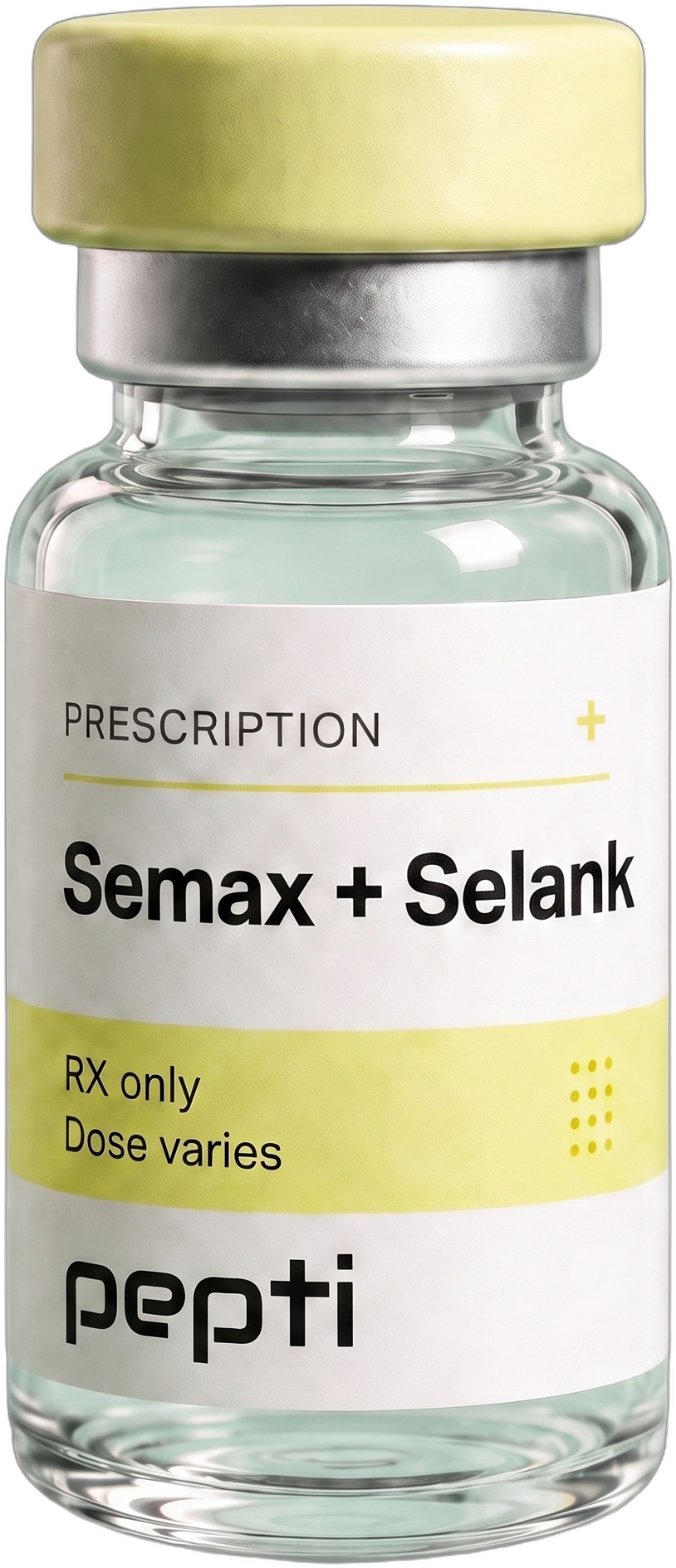
The suggested focus peptide for this topic is Semax + Selank, an injectable focus + calm nootropic blend prescribed through Pepti when clinically appropriate. People interested in this type of protocol are often trying to support mental performance without feeling wired or overstimulated.
Wearable data is useful here because focus is not only a brain chemistry question. It is also a recovery question.
If your sleep is short, HRV is down, and heart rate is elevated, your focus may suffer no matter what else you are doing. If your recovery trend improves, you may notice that deep work, emotional steadiness, and motivation feel more accessible.
That does not mean Pepti One “proves” a nootropic protocol is working. It means it helps you separate variables:
- Did focus improve on weeks when sleep was stable?
- Did calm worsen during high-stress periods despite the same protocol?
- Did poor recovery explain a bad day that might otherwise be blamed on treatment?
- Are subjective improvements lining up with better rest and steadier routines?
That context is especially helpful for busy professionals, parents, athletes, and anyone whose cognitive performance is affected by inconsistent sleep or chronic stress.
Why bloodwork still matters when you wear a tracker
Wearables show patterns. Bloodwork shows biology that a wearable cannot directly measure.
That distinction matters. A sleep HRV recovery tracker may show that you are under-recovered, but it cannot tell you whether thyroid markers, glucose regulation, sex hormones, vitamin status, or metabolic health are contributing. Pepti offers physician-reviewed at-home collection kits for hormone, metabolic, and thyroid panels, plus an at-home panel when a physician requires bloodwork and you do not have recent labs.
Baseline and follow-up bloodwork help clinicians:
- Identify issues that could affect safety or treatment fit
- Personalize protocols instead of guessing
- Track whether key markers move in the right direction
- Avoid missing common contributors to fatigue, weight changes, poor sleep, or low libido
- Decide whether a protocol should be continued, adjusted, or paused
You can learn more about Pepti’s blood testing and the biomarkers we test. The goal is not data for data’s sake. It is safer, more effective decision-making.
How the Daily Pack completes the loop
Supplements can be useful, but generic stacks often miss the point. If you do not know your deficiencies, you are guessing.
The Daily Pack is built from the patient’s own bloodwork. You upload labs or run a Pepti panel, then the daily supplement sachets are assembled around real deficiencies and goals. That means your supplement plan can be aligned with what your body actually needs, not just what is trending.
Together, the system is simple:
- Test: Use at-home bloodwork to establish a baseline.
- Treat: Work with a physician-guided plan when therapy is appropriate.
- Track: Use Pepti One to monitor sleep, HRV, heart rate, and recovery trends.
- Adjust: Use follow-up labs, symptom changes, and wearable patterns to guide smarter next steps.
That is the difference between collecting random health data and building a feedback loop.
How to use Pepti One data without obsessing
The healthiest way to use wearable data is to look for patterns, not perfection.
Try this practical framework:
- Days 1-14: Build your baseline. Do not overreact to daily changes.
- Weeks 3-4: Notice what lowers or improves your sleep, HRV, heart rate, and recovery.
- Monthly: Review trends alongside symptoms, training, nutrition, and treatment notes.
- At follow-up: Bring clear observations to your clinician, especially if patterns persist.
A useful note might look like this: “For the last 12 days, my sleep averaged 6.2 hours, HRV has been below my usual baseline, and recovery has stayed low. My focus and cravings are worse.” That is far more actionable than “I feel off.”
Data should reduce anxiety, not create it. If checking your score first thing in the morning changes your mood for the worse, zoom out. Weekly trends are usually more useful than single-day readings.
Frequently asked questions
What does Pepti One track?
Pepti One tracks sleep, HRV, heart rate, and recovery through the Pepti One Band or Pepti Ring. The data flows into the Pepti app so you can view recovery trends next to labs, goals, and treatment context.
Is HRV more important than sleep?
No. HRV is useful, but sleep is usually the foundation because poor sleep can lower HRV, raise resting heart rate, and reduce recovery. The best approach is to interpret HRV together with sleep duration, sleep consistency, heart-rate trends, and how you feel.
Can Pepti One tell me if peptide therapy is working?
Pepti One cannot diagnose conditions or prove that a medication is working by itself. It can show whether sleep, HRV, heart rate, and recovery are improving, worsening, or staying stable while your clinician reviews symptoms, labs, and treatment response.
How does Semax + Selank relate to wearable data?
Semax + Selank is a physician-prescribed focus + calm nootropic blend when appropriate. Wearable data can help contextualize focus and stress by showing whether poor sleep, low HRV, elevated heart rate, or low recovery may be influencing how you feel.
Ready to connect your labs, recovery data, and physician-guided plan? Take the free Pepti assessment at /assessment.