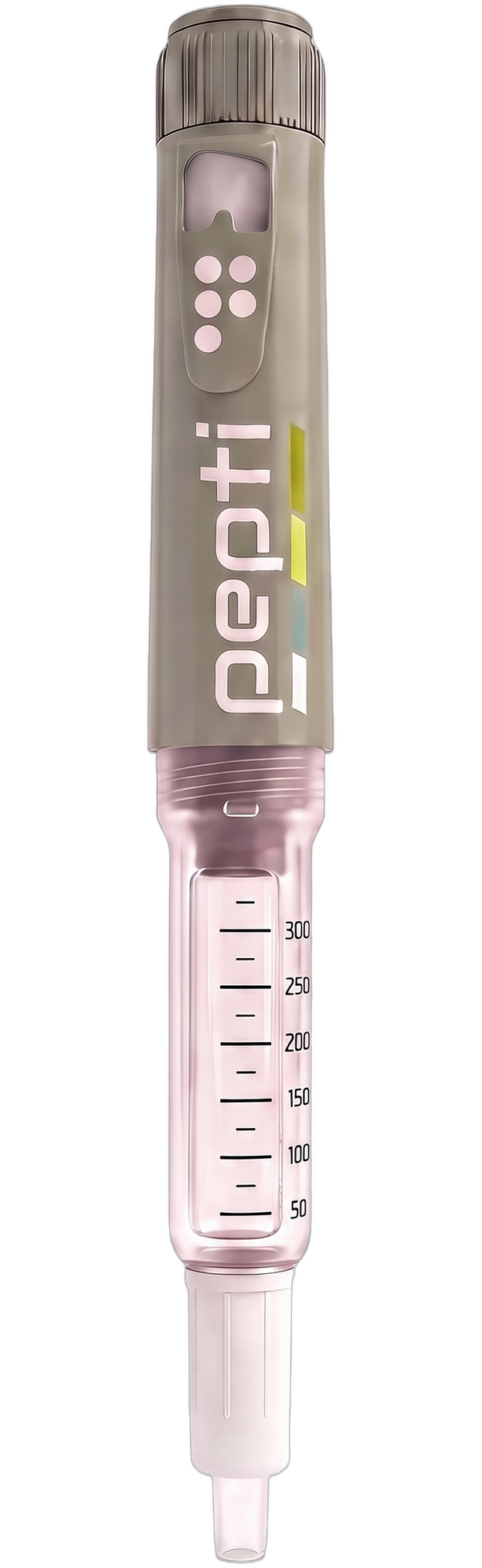
MOTS-c vs Tesamorelin is a comparison between two very different metabolic peptides: one is aimed at mitochondrial signaling and energy metabolism, while the other targets the growth-hormone axis to reduce visceral abdominal fat. In practical terms, MOTS-c is more of a cellular metabolism and resilience peptide, while Tesamorelin is more specifically studied for reducing deep belly fat.
For patients who have stubborn central fat, low energy, poor metabolic flexibility, or a plateau despite training and nutrition, a physician may consider either peptide individually or a combined protocol like MOTS-c / Tesamorelin. The best choice depends on your goals, baseline labs, medication history, glucose control, and how closely you can track progress.
Key takeaways
- MOTS-c and Tesamorelin work through different pathways. MOTS-c is a mitochondrial-derived peptide; Tesamorelin stimulates growth-hormone releasing hormone receptors.
- Tesamorelin has stronger clinical evidence for visceral fat reduction. It has been studied at 2 mg daily in clinical trials for excess abdominal fat in adults with HIV-associated lipodystrophy.
- MOTS-c is more about metabolic signaling than direct appetite suppression. It is not a GLP-1 medication and should not be framed like one.
- The blend may make sense when the goal is both metabolic support and abdominal fat targeting. That is why Pepti offers MOTS-c / Tesamorelin as a physician-prescribed injectable blend.
- Bloodwork matters. Baseline and follow-up labs help track glucose, lipids, thyroid markers, hormones, and safety signals before and during therapy.
What is MOTS-c used for?
MOTS-c is a mitochondrial-derived peptide, meaning it is encoded by mitochondrial DNA rather than nuclear DNA. Researchers first described MOTS-c in 2015, and since then it has been studied for its role in metabolic regulation, insulin sensitivity, exercise adaptation, and cellular stress response.
The simple version: MOTS-c appears to act like a metabolic messenger. It may help cells respond to energy stress by influencing pathways involved in glucose use, fat oxidation, and mitochondrial function. That is why people often search for MOTS-c when they are dealing with fatigue, metabolic slowdown, exercise plateaus, or body-composition goals.
In a clinical setting, MOTS-c is usually considered for patients who want support for:
- Metabolic flexibility
- Cellular energy and resilience
- Exercise recovery and adaptation
- Weight-management plateaus where energy and insulin sensitivity may be part of the picture
- Healthy aging goals tied to mitochondrial function
Important distinction: MOTS-c is not a stimulant, not a GLP-1, and not a guaranteed fat-loss injection. Its appeal is the upstream mitochondrial angle, but results depend heavily on nutrition, sleep, resistance training, and baseline metabolic health.
What is Tesamorelin used for?
Tesamorelin is a synthetic growth-hormone releasing hormone analog. Instead of supplying growth hormone directly, it stimulates the pituitary gland to release more of the body’s own growth hormone in pulses, which can increase IGF-1 downstream.
Tesamorelin is best known for its research and approved use in reducing excess visceral abdominal fat in adults with HIV-associated lipodystrophy. In major clinical trials published around 2010, tesamorelin 2 mg daily reduced visceral adipose tissue over 26 weeks compared with placebo. Follow-up research has continued to explore its effects on abdominal fat, liver fat, and cardiometabolic markers in specific populations.
In a physician-supervised peptide program, Tesamorelin may be considered when the primary concern is:
- Disproportionate abdominal or visceral fat
- Body-composition changes not explained by scale weight alone
- A need for GH-axis support with careful monitoring
- Fat-loss goals where appetite-suppressing medications are not the right fit
Because Tesamorelin can affect IGF-1 and glucose metabolism, it is not a casual wellness add-on. It is a medication that should be prescribed only after a physician reviews your history, risks, and labs.
MOTS-c vs Tesamorelin: how do they work?
Here is the cleanest way to compare them.
| Category | MOTS-c | Tesamorelin |
|---|---|---|
| Main pathway | Mitochondrial signaling | Growth-hormone releasing hormone receptor |
| Primary goal | Metabolic optimization and cellular energy | Targeted visceral fat reduction |
| Appetite effect | Not primarily appetite suppressing | Not primarily appetite suppressing |
| Common focus | Energy, metabolic flexibility, exercise adaptation | Deep abdominal fat, GH-axis support |
| Monitoring emphasis | Glucose, lipids, inflammatory and metabolic markers | IGF-1, glucose, lipids, metabolic markers |
| Best fit | Metabolic support and performance-minded goals | Central fat pattern and body-composition goals |
MOTS-c is more upstream and cellular. Tesamorelin is more endocrine and body-composition focused. That difference matters because two people can have the same waist measurement for different reasons: one may have poor metabolic flexibility and low training capacity, while another may have a visceral fat pattern tied to hormonal and GH-axis changes.
Which is better for fat loss: MOTS-c or Tesamorelin?
For targeted visceral fat reduction, Tesamorelin has the stronger human clinical evidence. The best-known studies used imaging to measure visceral adipose tissue, which is more meaningful than simply watching scale weight.
MOTS-c may still be relevant for fat-loss programs, but more as metabolic support than as a direct fat-loss medication. If someone is struggling with low energy, poor recovery, insulin resistance trends, or difficulty sustaining training intensity, mitochondrial support may help the overall plan work better.
That said, neither peptide replaces the fundamentals:
- A protein-forward nutrition plan
- Resistance training 2 to 4 days per week
- Daily movement and step targets
- Sleep regularity
- Alcohol moderation
- Follow-up tracking with labs and body measurements
If the main goal is appetite reduction and scale-weight loss, a physician might discuss options such as Semaglutide instead. If the main issue is abdominal fat distribution and metabolic resilience, MOTS-c, Tesamorelin, or the blend may be more relevant.
Why combine MOTS-c and Tesamorelin?
The logic of a MOTS-c / Tesamorelin blend is that abdominal fat and metabolic health are connected, but not identical. Tesamorelin focuses more directly on visceral fat through the GH axis, while MOTS-c supports mitochondrial signaling and metabolic adaptation.
A physician might consider the combination when a patient has:
- Stubborn waistline or central-fat concerns
- Low energy or reduced exercise tolerance
- A weight-loss plateau despite consistent habits
- Metabolic markers that need closer follow-up
- A preference for a non-GLP-1 approach, when clinically appropriate
Pepti’s MOTS-c / Tesamorelin injectable blend is listed at $259/mo and is reviewed through a doctor-prescribed telehealth model. That means the decision is based on your medical intake, goals, and any required lab review rather than a one-size-fits-all checkout flow.
How long does MOTS-c vs Tesamorelin take to work?
Timelines vary, but realistic expectations help. With mitochondrial and GH-axis peptides, many patients track changes over weeks to months rather than days.
A practical timeline might look like this:
- Weeks 1 to 2: injection routine, sleep consistency, nutrition setup, and baseline symptom tracking
- Weeks 3 to 6: possible changes in energy, training output, recovery, or waist measurements
- Weeks 8 to 12: more useful window for comparing weight trend, waist circumference, fasting glucose, and lipid movement
- Weeks 12 to 26: the range where body-composition changes become easier to evaluate, especially for Tesamorelin-style visceral fat goals
Clinical Tesamorelin studies often used 26-week treatment periods, which is a reminder that visceral fat reduction is not usually a two-week outcome. For MOTS-c, patient-reported energy or recovery changes may show up earlier, but metabolic results should still be judged with data.
What bloodwork should you check before these peptides?
Baseline and follow-up bloodwork help make peptide therapy safer and more specific. For MOTS-c vs Tesamorelin, the most relevant markers are usually metabolic, hormone, and thyroid-related.
A physician may want to review:
- Fasting glucose and A1c
- Fasting insulin, when available
- Lipid panel
- Liver and kidney markers
- Thyroid markers such as TSH and free T4
- IGF-1, especially with Tesamorelin
- Inflammation or nutrient markers when clinically relevant
Pepti offers physician-reviewed blood testing through at-home collection kits, including hormone, metabolic, and thyroid panels. If a physician requires bloodwork and you do not have recent labs, Pepti can offer an at-home panel for $129. You can also review the biomarkers we test to understand how lab data connects to treatment decisions.
This is also where the broader platform can help. Bloodwork identifies the starting point, the Daily Pack can be built around real deficiencies and goals, and Pepti One can track sleep, HRV, heart rate, and recovery trends alongside your treatment plan. The goal is to test, treat, and track instead of guessing.
MOTS-c vs Tesamorelin side effects and safety considerations
Both peptides are injectable medications and should be used under physician supervision. Common injection-related issues can include redness, tenderness, bruising, or irritation at the injection site.
Tesamorelin may require extra attention because of its GH-axis activity. Possible concerns include fluid retention, joint discomfort, changes in glucose control, carpal-tunnel-like symptoms, or elevated IGF-1. Patients with a history of certain cancers, uncontrolled diabetes, or pituitary-related conditions need careful physician review.
MOTS-c is generally discussed in the context of mitochondrial and metabolic research, but that does not mean it is risk-free. The main safety principle is to avoid using it blindly, especially if you have complex endocrine, autoimmune, cardiovascular, or metabolic conditions.
If you are comparing doctor-prescribed peptides with research-chemical vendors online, the difference is not just convenience. A legitimate care model includes physician review, appropriate lab monitoring, licensed pharmacy fulfillment, quality controls, and a way to ask for help if something feels off. Pepti explains this difference in more detail here: gray market vs Pepti.
Who is a better candidate for MOTS-c?
MOTS-c may be a better fit when the primary goal is metabolic support rather than targeted abdominal-fat reduction. It is especially relevant for patients who care about energy, training consistency, recovery, and mitochondrial health.
A typical MOTS-c conversation may involve:
- Afternoon energy crashes
- Reduced exercise capacity
- Weight-loss plateaus with fatigue
- Metabolic markers trending in the wrong direction
- Interest in longevity or performance support
The best candidates are willing to pair the peptide with sleep, nutrition, resistance training, and follow-up data. MOTS-c is not a shortcut around those inputs.
Who is a better candidate for Tesamorelin?
Tesamorelin may be a better fit when central or visceral fat is the main concern. This is especially true when waist circumference, body composition, and metabolic markers suggest a deeper abdominal-fat pattern rather than general weight gain alone.
A typical Tesamorelin conversation may involve:
- Stubborn waistline despite weight loss elsewhere
- Higher waist-to-height ratio
- Metabolic risk factors tied to abdominal fat
- Interest in GH-axis support with monitoring
- A desire for an option that is not primarily appetite suppression
Because Tesamorelin can influence IGF-1 and glucose dynamics, follow-up is part of the plan, not an optional extra.
Frequently asked questions
Is MOTS-c better than Tesamorelin for weight loss?
Not usually if the goal is targeted visceral fat reduction. Tesamorelin has stronger human clinical evidence for reducing deep abdominal fat, while MOTS-c is better understood as a metabolic and mitochondrial-support peptide.
Can MOTS-c and Tesamorelin be used together?
Yes, a physician may prescribe them together when the goal is both metabolic support and abdominal fat targeting. Pepti offers a MOTS-c / Tesamorelin injectable blend, but candidacy depends on your medical history, goals, and any required labs.
Does Tesamorelin suppress appetite like Semaglutide?
No, Tesamorelin is not a GLP-1 medication and is not primarily used for appetite suppression. It works through the growth-hormone releasing hormone pathway and is most associated with visceral-fat reduction.
Do I need bloodwork before MOTS-c or Tesamorelin?
Often, yes, especially if your physician wants to evaluate glucose, lipids, thyroid function, hormones, or IGF-1. Baseline and follow-up labs help personalize therapy and reduce avoidable risk.
Ready to find out whether MOTS-c, Tesamorelin, or the blend fits your goals? Take the free Pepti assessment and get a physician-reviewed recommendation.