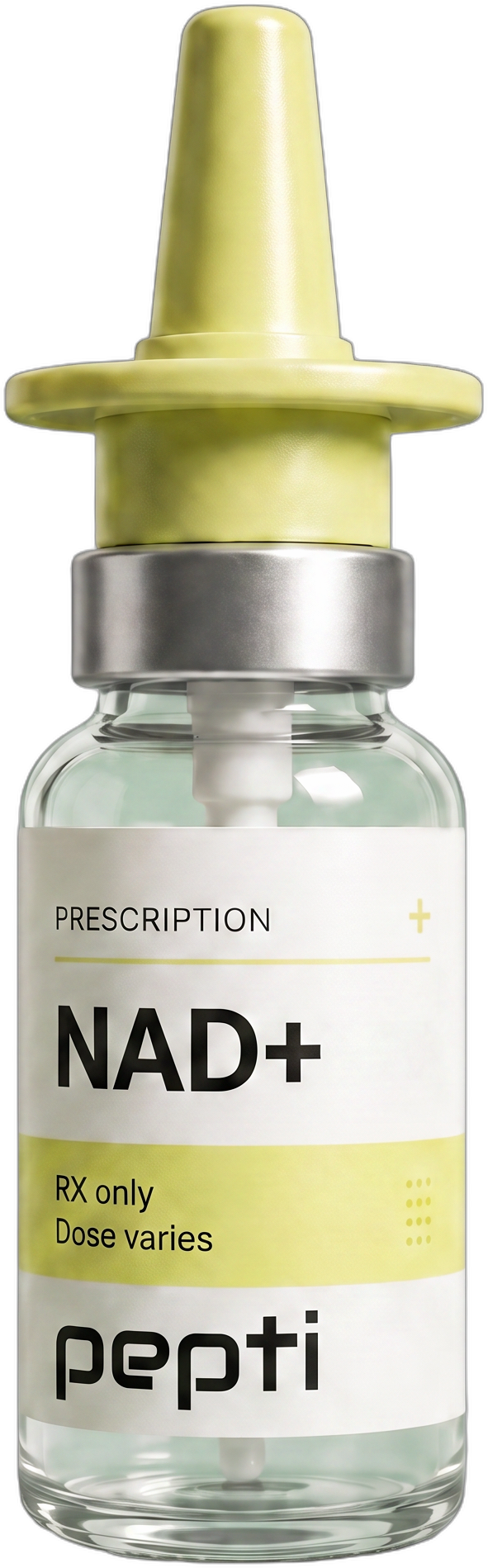
NAD+ Nasal Spray is a doctor-prescribed, needle-free way to support NAD+ availability, a coenzyme involved in cellular energy, repair signaling, and healthy aging pathways. This NAD+ nasal spray guide explains what it is, how it is typically used, what to expect, and how it compares with injectable NAD+ so you can have a smarter conversation with a clinician.
It is not a stimulant, a cure for fatigue, or a replacement for sleep, nutrition, exercise, or medical care. Think of it as one possible tool in a broader energy and longevity plan—best used with physician review, appropriate labs, and realistic expectations.
Key takeaways
- NAD+ is central to cellular energy metabolism. Your cells use NAD+ in reactions tied to mitochondrial function, redox balance, and repair signaling.
- Nasal spray is the needle-free option. It may be a good fit for patients who want NAD+ support without injections.
- Results are usually subtle, not instant. Some people track changes in energy, mental clarity, recovery, or sleep quality over 2–6 weeks.
- Dosing should be personalized. Frequency and amount vary by prescription, health history, goals, and tolerance.
- Bloodwork helps uncover “energy drains.” Thyroid, metabolic, nutrient, and hormone markers can clarify whether NAD+ is the right starting point.
- Use pharmacy-dispensed, physician-guided care. Avoid gray-market “research” products that lack the same prescribing, testing, and patient support standards.
What is NAD+ nasal spray?
NAD+ stands for nicotinamide adenine dinucleotide, a coenzyme found in every cell. It helps shuttle electrons in metabolic reactions, which is one reason it is often discussed in relation to mitochondria, cellular energy, and healthy aging.
A nasal spray is a prescription formulation intended to deliver NAD+ through the nasal route. The nasal cavity has a rich blood supply and a relatively thin mucosal barrier, which is why some medications are prescribed intranasally. For patients who dislike needles or travel often, a spray can be simpler than an injection protocol.
Pepti’s NAD+ nasal option is positioned for cellular energy, needle-free support at $269/month, with clinician review to determine whether it makes sense for the patient.
How does NAD+ work in the body?
NAD+ participates in hundreds of biochemical reactions. The most relevant categories for beginners are:
- Energy metabolism: NAD+ helps convert nutrients from food into usable cellular energy through pathways such as glycolysis, the TCA cycle, and oxidative phosphorylation.
- Redox balance: NAD+ and NADH act as a pair, moving electrons during metabolic reactions.
- Repair signaling: NAD+ is used by enzymes such as PARPs, which are involved in DNA repair processes.
- Healthy aging pathways: NAD+ is connected to sirtuins, a family of proteins studied for roles in metabolism, stress response, and longevity biology.
Researchers have studied NAD+ biology for decades, and interest accelerated in the 2010s and 2020s as scientists examined NAD+ precursors, mitochondrial function, and age-related metabolic changes. That said, human outcomes vary, and a nasal spray should not be framed as a guaranteed performance enhancer.
What are the potential benefits of NAD+ nasal spray?
People usually ask about NAD+ nasal spray for energy, focus, recovery, or longevity support. A clinician may consider it when a patient reports low energy despite basic lifestyle efforts, wants a non-injectable option, or is already building a broader mitochondrial support plan.
Potential areas patients often track include:
- Daytime energy: Less afternoon “crash” or better perceived stamina.
- Mental clarity: Easier task initiation or steadier focus, especially when sleep and nutrition are also addressed.
- Exercise recovery: Subjective improvements in readiness or soreness patterns.
- Healthy aging routines: Support for pathways tied to metabolism and repair signaling.
The key word is support. If fatigue is caused by hypothyroidism, anemia, sleep apnea, under-eating, medication effects, depression, or uncontrolled blood sugar, NAD+ alone is unlikely to solve the root issue. That is why a physician-reviewed plan matters.
How do you use NAD+ nasal spray?
Exact directions should come from your prescribing clinician and pharmacy label. In general, intranasal protocols may specify a certain number of sprays, one or both nostrils, and a weekly schedule such as daily use or several days per week.
Common practical tips include:
- Blow your nose gently before use.
- Keep the bottle clean and avoid touching the applicator tip.
- Aim slightly outward, not straight up toward the nasal septum.
- Avoid sharing the bottle with anyone.
- Track how you feel for at least 2–4 weeks before judging the protocol.
Some people prefer morning use because they are tracking daytime energy. Others may adjust timing based on tolerability. If you notice irritation, headache, nausea, dizziness, or sleep disruption, contact your prescribing team rather than changing the dose on your own.
How long does NAD+ nasal spray take to work?
Some patients report noticing changes within days, but a more realistic tracking window is 2–6 weeks. Cellular energy symptoms are influenced by sleep, stress, diet, hydration, exercise load, hormones, and metabolic health, so day-to-day variation is normal.
A good beginner tracking plan is simple:
- Rate morning energy from 1–10.
- Track afternoon energy from 1–10.
- Note sleep duration and perceived sleep quality.
- Track workouts, soreness, and recovery.
- Record any side effects or nasal irritation.
If you use a wearable, the Pepti One system can help you follow sleep, HRV, heart rate, and recovery trends next to your treatment plan. These data points do not diagnose anything, but they can help you see whether your routine is moving in the right direction.
NAD+ nasal spray vs NAD+ injection: which is better?
The “better” option depends on your goals, comfort with injections, schedule, and clinician recommendation. NAD+ Injection is often chosen by patients who are comfortable with injectable therapy and want a more traditional systemic route. Nasal spray is often chosen by patients who want a needle-free, convenient option.
A practical comparison:
| Feature | NAD+ nasal spray | NAD+ injection |
|---|---|---|
| Route | Intranasal | Injectable |
| Needle-free | Yes | No |
| Convenience | Easy for travel and daily routines | Requires injection comfort and supplies |
| Typical fit | Patients prioritizing ease of use | Patients comfortable with injections |
| Oversight needed | Yes, prescription and clinician review | Yes, prescription and clinician review |
Neither route should be purchased casually from unverified sellers. NAD+ products vary widely outside medical channels, and the route does not remove the need for quality controls.
Is NAD+ nasal spray safe?
NAD+ nasal spray can be appropriate for some patients when prescribed and monitored, but it is not automatically right for everyone. Safety depends on medical history, current medications, symptoms, product quality, dosing, and follow-up.
Possible tolerability issues may include:
- Nasal dryness or irritation
- Headache
- Nausea
- Dizziness or lightheadedness
- Sleep changes if used too late in the day
Tell your clinician if you are pregnant, trying to conceive, breastfeeding, managing cancer history, have significant cardiovascular disease, have complex neurologic symptoms, or take multiple medications. These situations do not always mean “never,” but they do mean the decision should be individualized.
Why bloodwork matters before starting NAD+ support
If your main goal is energy, baseline bloodwork can prevent guesswork. Low energy can come from many overlapping issues, and NAD+ is only one piece of the puzzle.
Pepti offers physician-reviewed blood testing through at-home collection kits, including hormone, metabolic, and thyroid panels. When a physician requires bloodwork and you do not have recent labs, an at-home panel is available for $129.
Markers that may be relevant include thyroid function, glucose and insulin patterns, lipids, liver and kidney markers, inflammatory signals, and nutrient-related data. You can learn more about the biomarkers we test.
Baseline and follow-up bloodwork can help answer questions like:
- Is fatigue more likely thyroid-related, metabolic, hormonal, or nutrient-related?
- Are there safety considerations before starting a protocol?
- Is the plan improving the markers that matter?
- Should the clinician adjust the protocol, pause, or focus elsewhere?
For patients with nutrient gaps, the Daily Pack can complement therapy by building daily supplement sachets from the patient’s own bloodwork and goals. The strongest approach is often test, treat, track: run labs, use the right protocol, and monitor trends over time.
Can NAD+ nasal spray be combined with other peptides?
Sometimes, but stacking should be clinician-guided. More products do not automatically mean better results, and combining too many variables makes it harder to know what is helping.
For mitochondrial and energy-oriented protocols, a clinician might also discuss MOTS-c, an injectable peptide positioned for mitochondrial optimization, or SS-31, an injectable option positioned for mitochondrial repair. For oxidative stress and detox support, Glutathione may be considered in some plans.
The right sequence matters. Many patients do better starting with one therapy, tracking response for 4–8 weeks, and then adjusting based on symptoms, labs, and recovery data.
How to buy NAD+ nasal spray safely online
Because NAD+ nasal spray is a prescribed therapy, the safest route is a legitimate medical process: intake, physician review, prescription when appropriate, and dispensing through licensed pharmacy channels.
Be cautious with websites selling “research use only” NAD+ sprays or products that bypass medical review. Gray-market vendors may look convenient, but patients often have limited visibility into sourcing, sterility standards, purity testing, storage, dosing accuracy, and recourse if something goes wrong. Pepti explains the difference in more detail here: gray market vs Pepti.
A legitimate telehealth experience should include:
- A health intake and medication history
- Physician review before prescribing
- Clear instructions and follow-up support
- Pharmacy-dispensed medication
- A way to ask questions or report side effects
That structure matters, especially for beginners.
Who is a good candidate for NAD+ nasal spray?
A potential candidate is someone looking for NAD+ support who prefers a needle-free route, has realistic expectations, and is willing to track outcomes. It may appeal to busy professionals, frequent travelers, or patients who want to explore cellular energy support without starting injections.
It may not be the best first step if your main symptoms are severe fatigue, chest pain, fainting, unexplained weight loss, new neurologic symptoms, or major sleep disruption. Those deserve medical evaluation before focusing on optimization.
Frequently asked questions
Is NAD+ nasal spray the same as a stimulant?
No. NAD+ is not like caffeine or prescription stimulants, and it should not be expected to create an immediate “jolt.” People usually track subtler changes in energy, clarity, or recovery over several weeks.
Can I use NAD+ nasal spray every day?
Some prescriptions may involve daily use, while others use a different schedule. Follow your clinician’s directions and pharmacy label, because frequency depends on your goals, health history, and tolerance.
Does NAD+ nasal spray require bloodwork?
Not always, but bloodwork can be very helpful when the goal is energy, metabolism, or healthy aging support. Labs can reveal thyroid, metabolic, hormone, or nutrient patterns that may change the treatment plan.
Is NAD+ nasal spray better than NAD+ injections?
Not universally. Nasal spray is needle-free and convenient, while injections may be preferred by patients comfortable with injectable protocols; the best option depends on your clinician’s assessment and your preferences.
Ready to see whether NAD+ nasal spray fits your goals? Take pepti’s free assessment at /assessment and a clinician can review the next best step.