NAD+ Nasal Spray for athletes is a needle-free prescription option designed to support cellular energy, recovery routines, and training consistency. It is not a stimulant, pre-workout, or shortcut for poor sleep and nutrition; it is a physician-guided way to support NAD+ biology when fatigue, travel, high training load, or aging make energy optimization a priority.
For competitive and recreational athletes, the best use case is simple: pair NAD+ support with baseline labs, recovery tracking, and disciplined training so you can see whether your plan is actually moving the needle.
Key takeaways
- NAD+ is central to cellular energy production. It helps shuttle electrons in mitochondrial pathways that generate ATP, the energy currency your muscles and brain use every day.
- Nasal delivery is convenient and needle-free. For athletes who travel, dislike injections, or want a simpler routine, NAD+ nasal spray can be easier to stay consistent with than injectable protocols.
- It is not a banned-performance shortcut or instant PR button. Think of it as cellular energy support, not a replacement for sleep, fueling, progressive training, or medical care.
- Bloodwork matters when fatigue is the complaint. Low B12, thyroid imbalance, low ferritin, poor glucose control, inflammation, or hormone issues can all feel like an energy problem.
- Tracking closes the loop. Labs, symptoms, sleep, HRV, heart rate, and recovery trends give more useful feedback than vibes alone.
What is NAD nasal spray for athletes?
NAD+ stands for nicotinamide adenine dinucleotide, a coenzyme found in every cell. It plays a central role in redox reactions, mitochondrial energy production, DNA repair pathways, and cell signaling systems that researchers have studied for decades.
For athletes, the interest is obvious: training is an energy-demanding stressor. Sprint work, heavy lifting, long endurance sessions, heat exposure, altitude, travel, and poor sleep all increase the need for efficient recovery and metabolic resilience.
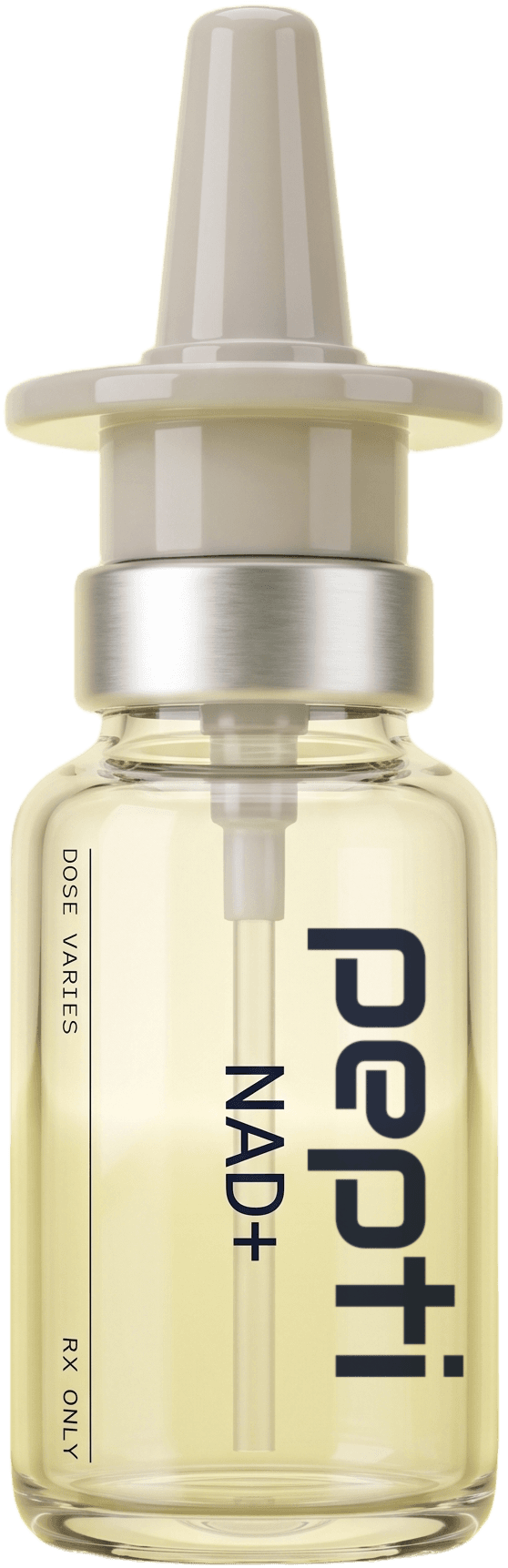
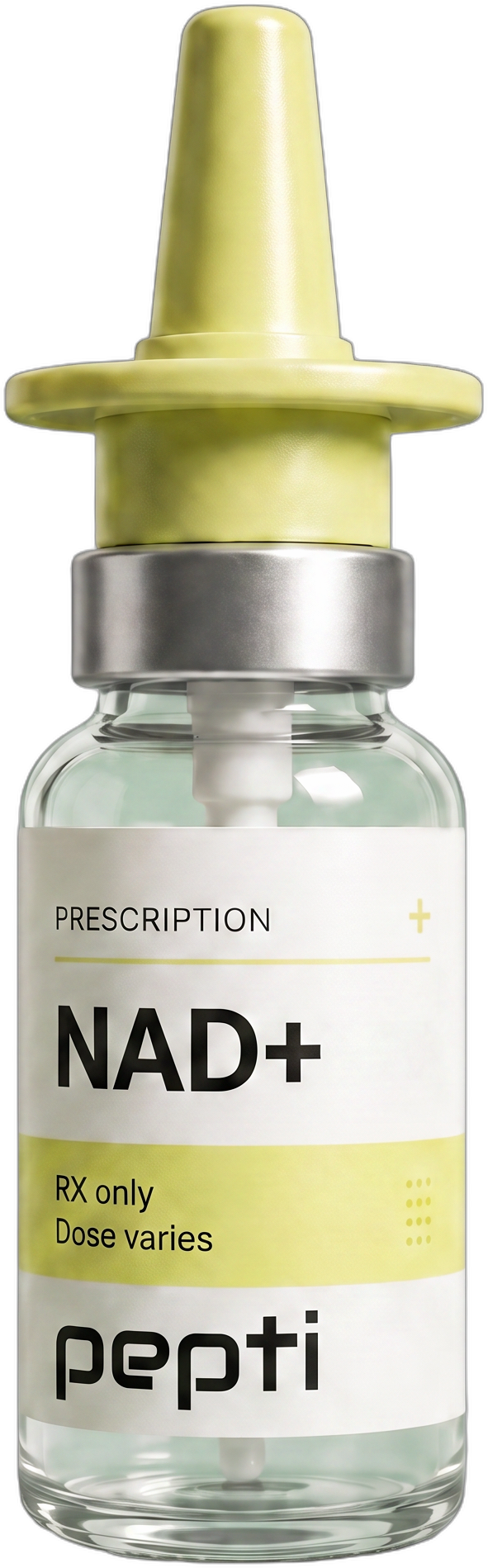
NAD+ nasal spray is a prescription nasal formulation used under clinician supervision. Pepti offers NAD+ Nasal Spray at $269/month as a needle-free option for cellular energy support. The nasal route is popular because it avoids injections and fits into a daily or near-daily routine more easily for many people.
The key point: NAD+ support works best when it is part of a broader performance system, not when it is treated like a standalone hack.
How NAD+ supports cellular energy during training
Most athletes think about energy in terms of calories, carbs, caffeine, or electrolytes. Those matter. But inside the cell, NAD+ is one of the molecules that helps convert food into usable energy.
During aerobic metabolism, NAD+ helps carry electrons through biochemical steps that ultimately support ATP production. ATP powers muscle contraction, nerve signaling, ion balance, and countless repair processes after training.
NAD+ is also involved in pathways tied to:
- Mitochondrial function and oxidative metabolism
- DNA repair signaling after cellular stress
- Sirtuin activity, a family of enzymes associated with metabolic regulation
- Circadian biology, which matters for athletes who travel or train early
- Inflammatory signaling, which can influence recovery status
None of this means more NAD+ automatically equals better performance. Biology is not that linear. But for athletes who feel chronically flat, struggle with training consistency, or are optimizing energy at the cellular level, NAD+ is a rational conversation to have with a physician.
Who might consider NAD nasal spray for performance support?
NAD+ nasal spray may fit athletes who want a low-friction protocol to support energy and recovery routines. Common use cases include:
- Endurance athletes in high-volume training blocks
- Strength athletes balancing heavy lifting with work and family stress
- Masters athletes noticing slower bounce-back than they had at 25
- Travel-heavy competitors dealing with time zones, sleep disruption, and compressed schedules
- Hybrid athletes mixing lifting, conditioning, and endurance events
- Busy recreational athletes who train before work and need sustainable energy, not another stimulant
It may be especially appealing if injections are a barrier. Some athletes are open to injectable protocols, while others simply will not stay consistent with them. A needle-free nasal option can improve adherence, and adherence is often what separates a good plan from a theoretical one.
NAD nasal spray vs NAD injection for athletes
Both nasal and injectable NAD+ are designed to support cellular energy, but they fit different preferences.
NAD+ Injection may be preferred by patients who are comfortable with injections and whose clinician recommends that route. Injectable protocols can be more structured and may make sense for patients already using other prescribed injectable therapies.
NAD+ nasal spray is often chosen when convenience is the deciding factor. It is needle-free, portable, and easier to integrate into a morning routine, travel bag, or training schedule.
A simple way to compare them:
- Nasal spray: best for convenience, needle-free use, travel, and consistency
- Injection: best for patients comfortable with injections and clinician-directed protocols
- Neither: a substitute for identifying why energy is low in the first place
If an athlete is exhausted because of under-fueling, overtraining, sleep debt, iron deficiency, thyroid dysfunction, or low B12, NAD+ may not address the root issue. That is where evaluation matters.
What results should athletes realistically expect?
Expectations should be practical. Some people report feeling more steady energy or better training readiness within the first few weeks, while others notice little until sleep, nutrition, and workload are cleaned up.
Reasonable outcomes to watch over 30 to 60 days include:
- More stable daytime energy
- Less reliance on caffeine to get through training
- Improved consistency in planned sessions
- Better subjective recovery after hard workouts
- More predictable morning readiness
- Better tolerance of travel or schedule disruption
What should you not expect? NAD+ nasal spray should not be expected to directly build muscle, melt fat, erase soreness overnight, or compensate for redlining your nervous system. If you are sleeping 5 hours, undereating protein, and stacking too much intensity, the first prescription is still better recovery hygiene.
Why bloodwork matters before using NAD+ for fatigue
Athletes often label every dip as an energy problem. Clinically, fatigue has many possible drivers, which is why physician-reviewed blood testing can be useful before starting or adjusting a protocol.
Pepti offers at-home collection kits for hormone, metabolic, and thyroid panels. When a physician requires bloodwork and a patient has no recent labs, Pepti also offers an at-home panel for $129. These labs help identify whether your energy issue is actually related to nutrient status, thyroid signaling, metabolic health, hormones, inflammation, or recovery burden.
Relevant biomarkers we test may include categories such as:
- Metabolic markers like fasting glucose, insulin, A1c, and lipids
- Thyroid markers that influence energy, temperature, and metabolism
- Hormone markers that can affect recovery and training adaptation
- Nutrient markers such as B12, vitamin D, ferritin, or related indicators
- Inflammation and organ health markers that help guide safe prescribing
Baseline labs help establish what is true before treatment. Follow-up labs help confirm that the plan is safe, appropriate, and worth continuing. That is especially important for athletes who tend to push through symptoms instead of investigating them.
How to track whether NAD nasal spray is helping
If you are using NAD+ nasal spray for athletic energy, do not rely only on how you feel after one good workout. Track trends over several weeks.
Useful metrics include:
- Morning resting heart rate
- Heart-rate variability, or HRV
- Sleep duration and sleep consistency
- Training readiness or recovery score
- Session RPE, or rating of perceived exertion
- Caffeine intake
- Workout completion rate
- Mood and focus during work or training
The Pepti One wearable system tracks sleep, HRV, heart rate, and recovery so those data can sit next to labs and treatment in the Pepti app. That makes it easier to see whether your plan is improving your recovery pattern or whether your training load is simply too high.
For example, if energy feels better but HRV is trending down, sleep is falling, and resting heart rate is climbing, the correct adjustment may be a deload week, not more intervention. Data keeps the plan honest.
How athletes can combine NAD+ with nutrition and supplements
NAD+ therapy should sit on top of strong fundamentals. Athletes should first dial in protein, carbohydrates around training, hydration, electrolytes, total calories, and sleep timing.
Supplementation can help, but only if it matches your actual needs. The Daily Pack is built from your own bloodwork, meaning the supplement sachets are assembled around real deficiencies and goals rather than a generic performance stack.
A practical performance framework is:
- Test with at-home bloodwork to find the real bottlenecks.
- Treat with physician-guided protocols when appropriate.
- Track with sleep, HRV, heart rate, recovery, symptoms, and training output.
That is a better model than guessing based on social media trends or adding five new products at once.
Where NAD+ fits with mitochondrial peptides
Some athletes exploring cellular energy also ask about mitochondrial-focused injectables. MOTS-c is prescribed for mitochondrial optimization, while SS-31 is prescribed for mitochondrial repair support.
These are different tools, not interchangeable labels. NAD+ is a coenzyme involved in energy transfer and cellular signaling. MOTS-c and SS-31 are peptide therapies with different mechanisms and clinical considerations.
A physician can help decide whether NAD+ alone makes sense, whether a different mitochondrial strategy is more appropriate, or whether labs suggest a non-peptide issue is the real priority.
Safety considerations for athletes
NAD+ nasal spray should be used only as prescribed. Athletes should tell their clinician about medications, supplements, stimulant use, sleep aids, medical conditions, pregnancy plans, and competition requirements.
Possible tolerability issues with nasal sprays can include local irritation, unusual taste, or nasal discomfort. Some patients may also notice changes in energy, sleep timing, or sensitivity depending on when they use it, which is why timing should be individualized.
If you compete in a drug-tested sport, you should review your governing body rules and disclose all therapies to the appropriate medical professionals. Pepti does not position NAD+ nasal spray as a way to bypass rules or gain an unfair advantage; the goal is physician-guided health optimization.
Frequently asked questions
Is NAD nasal spray good for athletes?
NAD nasal spray may be a useful option for athletes who want needle-free support for cellular energy and training consistency. It works best when paired with proper sleep, fueling, recovery planning, and physician-reviewed labs.
How long does NAD nasal spray take to work?
Some people notice changes in perceived energy within days to weeks, while others need 30 to 60 days to judge the trend. If fatigue is driven by thyroid, iron, B12, hormone, glucose, or sleep issues, those root causes should be evaluated too.
Is NAD nasal spray better than NAD injections?
Neither route is universally better. NAD nasal spray is often preferred for convenience and needle-free use, while NAD injections may fit patients comfortable with injectable protocols and physician-directed dosing.
Should athletes get bloodwork before NAD+ therapy?
Yes, bloodwork is often helpful because fatigue and poor recovery can come from many causes beyond NAD+ biology. Baseline and follow-up labs help clinicians personalize care, monitor safety, and decide whether the protocol is actually addressing the right problem.
Ready to see whether NAD+ support fits your training goals? Take Pepti’s free assessment at /assessment and connect with a physician-guided plan.