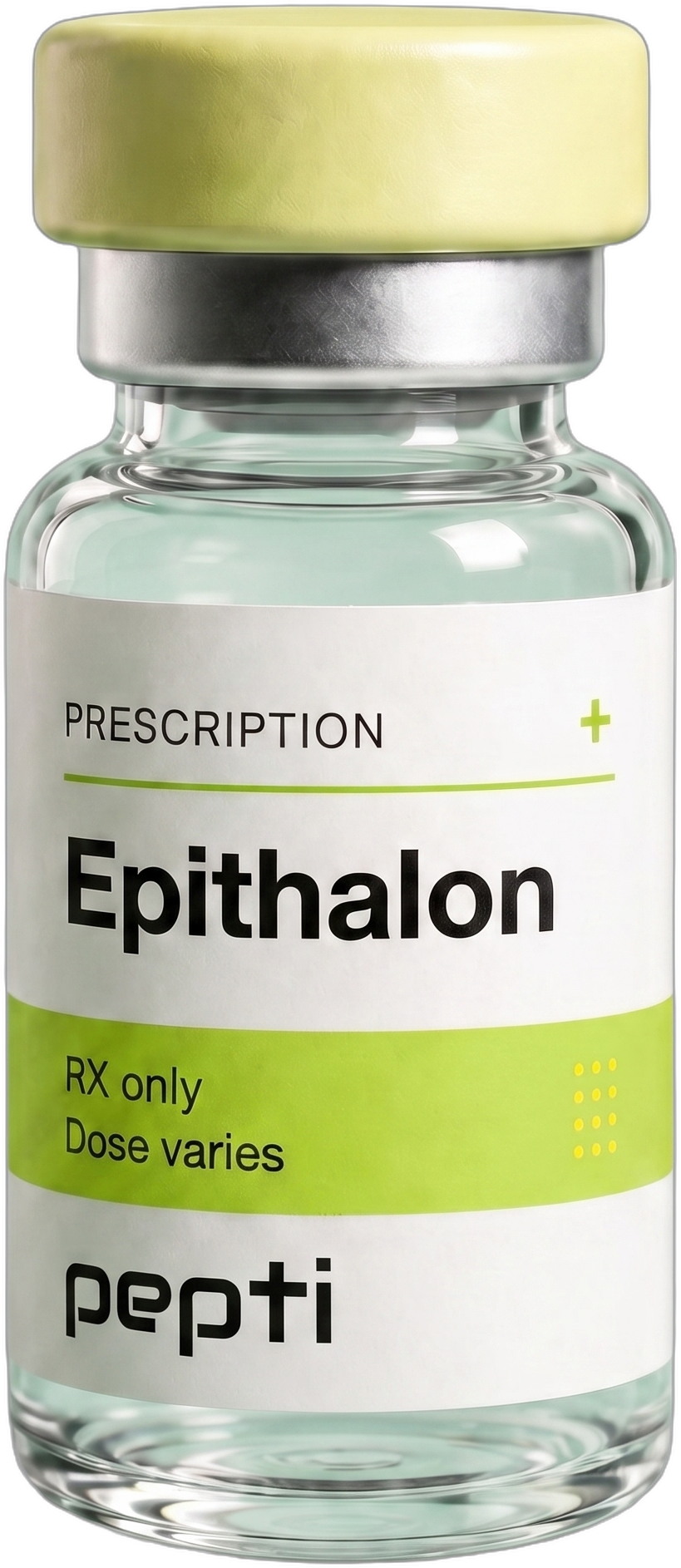
Epithalon peptide guide: Epithalon is an injectable longevity peptide studied for its relationship to telomeres, cellular aging pathways, and circadian biology. It is not a “reverse aging” cure, but under physician review it may be considered as part of a broader longevity plan that includes sleep, metabolic health, resistance training, nutrition, and biomarker tracking.
If you are new to peptides, the most important thing to know is that Epithalon should be approached like a medical therapy—not a wellness trend. That means prescription sourcing, clear goals, baseline health data, and follow-up with a clinician.
Key takeaways
- Epithalon is a synthetic tetrapeptide commonly discussed in longevity medicine because of research on telomerase activity, telomere biology, and pineal gland signaling.
- Human evidence is still limited compared with large drug trials, so expectations should be realistic and individualized.
- Injectable Epithalon is typically used in cycles, not as a daily forever medication, though exact protocols vary by clinician and patient context.
- Bloodwork matters because longevity protocols work best when hormone, metabolic, thyroid, inflammatory, and nutrient signals are understood before starting.
- Prescription sourcing is important for sterility, identity, purity testing, dosing accuracy, and physician oversight—especially with injectable peptides.
What is Epithalon peptide?
Epithalon is a synthetic peptide made of four amino acids: alanine, glutamic acid, aspartic acid, and glycine. It is often written as Ala-Glu-Asp-Gly and is modeled after peptide fractions originally studied from the pineal gland.
The pineal gland is best known for melatonin signaling and circadian rhythm regulation. That connection is one reason Epithalon appears in longevity conversations: sleep timing, cellular repair, hormone signaling, and aging biology overlap more than most people realize.
Epithalon is usually discussed for three broad areas:
- Telomere and telomerase research
- Cellular stress and aging pathways
- Circadian rhythm and pineal biology
In a medical setting, it is generally positioned as a longevity-support peptide rather than a treatment for a specific disease. At pepti, it is prescribed only after a physician review determines it is appropriate.
How does Epithalon work for longevity?
People search for Epithalon because of telomeres. Telomeres are protective caps at the ends of chromosomes. A simple analogy: they function a bit like the plastic tips on shoelaces, helping protect genetic material during cell division.
Telomeres naturally shorten as cells divide and as the body accumulates oxidative stress, inflammation, poor sleep, and metabolic strain. Telomerase is an enzyme that can help maintain telomere length in certain cells. Some early research suggests Epithalon may influence telomerase activity and gene expression related to cellular aging.
That does not mean Epithalon makes someone biologically younger overnight. Longevity is multi-factorial. A peptide cannot outwork chronically poor sleep, uncontrolled glucose, nutrient deficiencies, excess alcohol, or a lack of strength training.
A more grounded way to think about Epithalon:
- It may be used as a cellular aging support tool.
- It may fit into a preventive longevity protocol.
- It should be paired with measurable health markers, not vague “anti-aging” promises.
What does the research say about Epithalon?
Epithalon’s research base includes laboratory studies, animal research, and smaller human studies, much of it from Eastern European research groups. In the late 1990s and early 2000s, Epithalon was studied for effects on lifespan markers, melatonin secretion, immune signaling, and telomerase-related mechanisms.
Several commonly cited areas include:
- Telomerase activity: Cell studies have explored whether Epithalon can affect telomerase expression or activity in certain cell types.
- Pineal function: Research has examined relationships between Epithalon-like peptides and melatonin/circadian signaling.
- Aging models: Animal studies have investigated lifespan and age-associated changes, though animal data cannot be directly translated to humans.
- Immune and metabolic markers: Smaller studies have looked at broader physiologic changes in aging populations.
The honest beginner answer: Epithalon is intriguing, but it is not backed by the same scale of evidence as common medications used in cardiometabolic medicine. That is why physician guidance, conservative expectations, and follow-up tracking are central.
Who is Epithalon usually for?
Epithalon is generally considered by adults interested in longevity, healthy aging, and cellular repair support. It may be discussed when someone is already working on the fundamentals and wants a physician-guided peptide option.
It may be a better fit for someone who:
- Wants a longevity-focused protocol, not a quick cosmetic result
- Is willing to track biomarkers over time
- Has stable health habits around sleep, nutrition, and movement
- Understands that benefits may be subtle and cumulative
- Wants prescription oversight rather than research-chemical sourcing
It may not be the right fit for someone who expects dramatic results in a few days, wants to self-dose without medical review, or has unresolved medical issues that need evaluation first.
How is injectable Epithalon typically used?
Injectable Epithalon is commonly discussed in short-cycle formats rather than continuous year-round use. Many longevity protocols use cycle lengths measured in days or weeks, often repeated periodically depending on the clinician’s approach, patient goals, and tolerability.
Exact dosing is individualized. Factors that can influence a physician’s plan include:
- Age and health history
- Current medications and supplements
- Sleep quality and circadian routine
- Metabolic markers such as glucose, insulin, and lipids
- Hormone and thyroid status
- Prior experience with injectable therapies
Because Epithalon is injectable, sterile technique and accurate reconstitution matter. This is one area where a prescription program has a major advantage over do-it-yourself peptide use.
How long does Epithalon take to work?
Epithalon is not usually a “feel it in 30 minutes” peptide. Some people report changes in sleep quality, recovery, or overall wellness during or after a cycle, but others may not feel anything obvious.
That does not automatically mean it is doing nothing. Longevity protocols often target underlying biology that is better evaluated through trends, not daily sensations. For many patients, a reasonable tracking window is 8 to 12 weeks, especially if Epithalon is part of a broader plan involving sleep, nutrition, exercise, and supplements.
Useful things to track include:
- Sleep duration and consistency
- Resting heart rate and HRV trends
- Energy and recovery scores
- Fasting glucose or A1c trends when relevant
- Inflammation and metabolic biomarkers
- Subjective mood, focus, and resilience
This is where wearable and lab data can help separate real patterns from wishful thinking.
What are the possible side effects of Epithalon?
Epithalon is generally discussed as well tolerated in peptide clinics, but side effects are still possible. Injectable therapies can cause local reactions, and any therapy that interacts with signaling pathways should be reviewed in context.
Possible issues may include:
- Redness, itching, or soreness at the injection site
- Headache or fatigue
- Changes in sleep patterns or vivid dreams
- Nausea or general discomfort
- Sensitivity reactions, which should be reported promptly
People with complex medical histories, active cancer concerns, autoimmune conditions, pregnancy, breastfeeding, or significant endocrine disorders should be especially careful and discuss risks with a physician. A longevity peptide should never be used to bypass appropriate medical evaluation.
Why bloodwork matters before Epithalon
For a longevity protocol, “how do I feel?” is useful—but incomplete. Baseline and follow-up bloodwork help identify what is actually going on under the hood and whether a protocol is supporting the intended direction.
Pepti offers physician-reviewed blood testing through at-home collection kits, including hormone, metabolic, and thyroid panels. If a physician requires bloodwork and you do not have recent labs, an at-home panel is available for $129.
Depending on your situation, relevant biomarkers we test may include:
- Thyroid markers that influence energy and metabolism
- Glucose, insulin, A1c, and lipid patterns
- Inflammation and liver/kidney safety markers
- Sex hormone signals when relevant
- Nutrient markers that affect recovery and cellular function
Follow-up testing can help answer practical questions: Are glucose and lipids improving? Is thyroid function stable? Are there deficiencies that need correction? Are other therapies or supplements creating unexpected changes?
How Epithalon compares with other longevity peptides
Epithalon is often grouped with peptides and injectables used for “longevity,” but each has a different target.
For example, NAD+ Injection is typically discussed for cellular energy and repair pathways related to NAD+ availability. MOTS-c is discussed in the context of mitochondrial optimization and metabolic signaling. GHK-Cu + Epithalon combines longevity and skin-support concepts in one injectable blend.
The point is not that one is universally “best.” A good protocol starts with your goals and data:
- If the focus is telomeres and aging biology, Epithalon may be discussed.
- If the focus is cellular energy, NAD+ may be more relevant.
- If the focus is mitochondrial metabolism, MOTS-c may be considered.
- If the focus is skin, collagen, and longevity support, a GHK-Cu and Epithalon blend may fit.
A physician can help choose the simplest option instead of stacking multiple products without a clear reason.
Can supplements and wearables improve an Epithalon protocol?
Yes—especially when they are personalized and measurable. Peptides are not a replacement for correcting deficiencies, improving sleep timing, or monitoring recovery.
Pepti’s Daily Pack is built from a patient’s own bloodwork. Instead of guessing which supplements to take, the protocol is assembled around actual deficiencies, lab patterns, and goals.
Pepti One, available as a band or ring, tracks sleep, HRV, heart rate, and recovery data through the Pepti One system. That can be useful during an Epithalon cycle because longevity work is often about trends: better sleep consistency, improved recovery, and more stable physiologic signals over time.
A simple framework is:
- Test: Run baseline bloodwork.
- Treat: Use physician-guided therapy when appropriate.
- Track: Monitor sleep, HRV, heart rate, recovery, and follow-up labs.
That loop is more useful than relying on “I think it’s working.”
Is it safe to buy Epithalon online?
This is where beginners should be cautious. Many websites sell “research peptides” labeled not for human use. These products may not come from licensed pharmacies, may lack meaningful sterility controls, and may provide limited recourse if the vial is mislabeled, contaminated, underfilled, or incorrectly dosed.
Doctor-prescribed care is different. It includes physician review, pharmacy sourcing, dosing instructions, safety screening, and follow-up. If you are comparing options, read more about gray market vs Pepti before putting any injectable product into your body.
The goal is not to scare people. It is to treat injectable peptides with the same seriousness as any other medical therapy.
Frequently asked questions
What is Epithalon used for?
Epithalon is used in longevity-focused care for its relationship to telomere biology, cellular aging pathways, and circadian signaling. It is not approved as a cure for aging or any disease, and it should be considered only with physician guidance.
Does Epithalon lengthen telomeres?
Some studies suggest Epithalon may influence telomerase activity and telomere-related mechanisms, but human evidence remains limited. It is better to view Epithalon as a potential longevity-support tool rather than a guaranteed telomere-lengthening treatment.
How often do people take Epithalon?
Epithalon is commonly discussed in short cycles measured in days or weeks, with timing individualized by a clinician. The right schedule depends on health history, goals, tolerability, and whether other therapies are being used.
Do I need bloodwork before Epithalon?
A physician may require baseline bloodwork, especially if your protocol involves longevity, hormones, metabolism, thyroid health, or multiple therapies. Follow-up labs help confirm that the plan is safe, targeted, and adjusted to your actual biology.
Ready to see whether Epithalon belongs in your longevity plan? Take the free assessment at /assessment and get matched with physician-guided next steps.