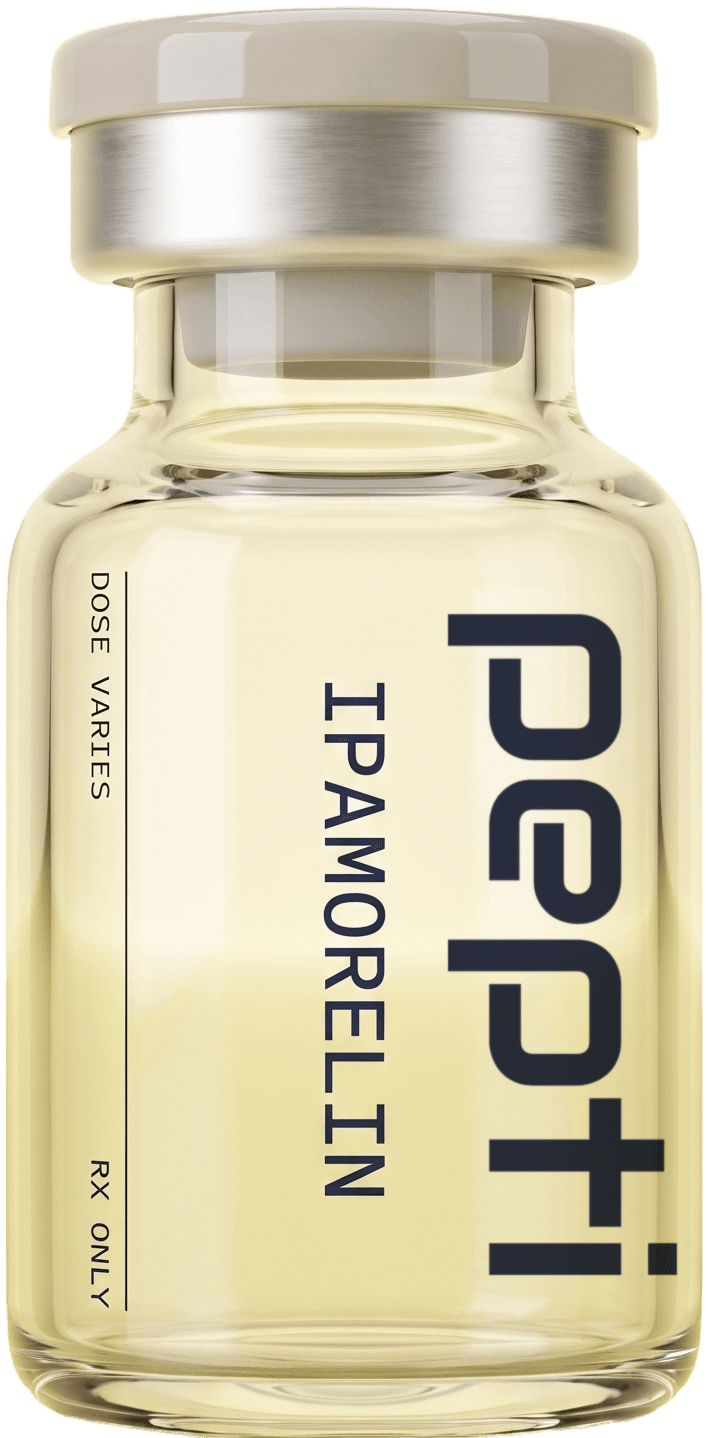
DSIP vs CJC-1295 is really a comparison of two different recovery levers: sleep signaling versus growth-hormone-axis support. DSIP is generally discussed for deep, restorative sleep, while CJC-1295 is used in physician-guided protocols to support growth hormone pulsatility, IGF-1, body composition, and tissue recovery.
The twist: Pepti also prescribes a combined DSIP / BPC-157 / CJC-1295 injectable blend for patients whose goals overlap across sleep, healing, and GH-axis recovery. Here is how to think about DSIP vs CJC-1295, when one may make more sense than the other, and why a blend can be useful when the problem is not just sleep or just recovery.
Key takeaways
- DSIP is sleep-first. It is most relevant when the primary issue is restless sleep, shallow sleep, or poor overnight recovery.
- CJC-1295 is GH-axis-first. It is most relevant when the goal is recovery capacity, lean-mass support, training adaptation, or age-related GH decline patterns.
- They are not interchangeable. Better sleep can improve recovery indirectly; GH-axis support may improve recovery biology but is not a sedative.
- The DSIP / BPC-157 / CJC-1295 blend is built for overlap. It combines sleep support, tissue-repair support, and GH-axis signaling in one physician-reviewed protocol.
- Bloodwork matters more with GH-axis peptides. Baseline and follow-up labs help clinicians track IGF-1, metabolic markers, thyroid status, and safety signals.
What is DSIP used for?
DSIP, or Delta Sleep Inducing Peptide, is an injectable peptide associated with sleep regulation and restorative sleep quality. It was first described in the 1970s in sleep-related research, and much of the modern interest centers on whether it can help patients who struggle to feel recovered despite spending enough hours in bed.
In practical terms, DSIP is usually considered when someone says things like:
- I fall asleep but wake up unrefreshed.
- My sleep feels light or fragmented.
- My HRV is low after hard training or stress.
- I recover poorly even when nutrition and training are consistent.
- I want sleep support without using a traditional sedative.
Important distinction: DSIP is not simply a knock-you-out sleep drug. It is better understood as a sleep-recovery peptide that may support deeper, more restorative sleep architecture in appropriate patients. It should still be paired with fundamentals like consistent sleep timing, light exposure, caffeine timing, and stress management.
What is CJC-1295 used for?
CJC-1295 is a growth hormone-releasing hormone analog used to support the body’s GH-axis signaling. In Pepti’s prescribed options, it appears in GH-focused protocols such as CJC-1295 / Ipamorelin, which combines CJC-1295 with a growth hormone secretagogue to encourage more physiologic GH pulses.
Growth hormone and IGF-1 are involved in:
- Protein synthesis and lean tissue maintenance
- Connective tissue remodeling
- Sleep-associated recovery processes
- Exercise adaptation
- Metabolic function and body composition
Human research on CJC-1295 has shown measurable GH-axis effects. In a 2006 clinical study, CJC-1295 increased growth hormone exposure several-fold and raised IGF-1 for multiple days after administration. That does not mean every patient needs GH-axis therapy, but it does explain why clinicians pay attention to labs, symptoms, and goals before prescribing.
CJC-1295 is usually more relevant when the patient’s main goal is not just better sleep, but improved recovery capacity over weeks to months.
DSIP vs CJC-1295: what is the main difference?
The main difference between DSIP vs CJC-1295 is the target system.
DSIP is aimed at sleep depth and overnight restoration. CJC-1295 is aimed at the GH-axis, which can influence recovery, tissue remodeling, and body composition. Both may affect how recovered you feel, but they start from different biological angles.
| Comparison point | DSIP | CJC-1295 |
|---|---|---|
| Primary goal | Deep restorative sleep | GH-axis support |
| Best-fit use case | Poor sleep quality, low overnight recovery | Training recovery, lean tissue support, age-related GH patterns |
| Timeline people track | Nights to weeks | Weeks to months |
| Common tracking metrics | Sleep quality, awakenings, HRV, morning energy | IGF-1, body composition, recovery, strength trends |
| Lab importance | Helpful, especially for fatigue workups | More important due to GH/IGF-1 and metabolic effects |
A simple way to choose: if the bottleneck is sleep, DSIP is the more direct tool. If the bottleneck is recovery biology, CJC-1295 may be the more direct tool. If both are involved, a blend may be worth discussing with a clinician.
When is the DSIP / BPC-157 / CJC-1295 blend a better fit?
The DSIP / BPC-157 / CJC-1295 blend is designed for patients whose recovery picture has more than one layer. It brings together three commonly requested mechanisms:
- DSIP: sleep and overnight restoration support
- BPC component: tissue and gut-supportive recovery signaling
- CJC-1295: GH-axis support for repair and adaptation
This can be relevant for someone who is training hard, dealing with nagging soft-tissue issues, sleeping poorly, and not bouncing back like they used to. In that case, choosing only a sleep peptide or only a GH-axis peptide may miss part of the pattern.
For patients focused mainly on localized tissue support or gut-health goals, standalone BPC-157 may be a cleaner starting point. For patients focused primarily on GH-axis optimization, CJC-1295 / Ipamorelin or other physician-selected GH-supportive protocols may be more targeted.
Best-fit profile for the blend: sleep disruption plus recovery demands plus a clinician-identified reason to support the GH axis.
How long does DSIP take to work compared with CJC-1295?
DSIP is typically evaluated over nights to a few weeks because sleep quality can shift quickly. Patients and clinicians often track sleep onset, number of awakenings, perceived depth of sleep, morning energy, and wearable recovery trends.
CJC-1295 is usually evaluated over a longer window. Because GH-axis changes influence downstream processes like IGF-1, connective tissue remodeling, and body composition, clinicians often think in 8-to-12-week blocks rather than a few nights.
That timeline matters when judging results. If someone expects CJC-1295 to feel like a sleep medication on night one, they are using the wrong scorecard. If someone expects DSIP to drive body-composition changes by itself, that is also the wrong scorecard.
What doses are commonly discussed for DSIP and CJC-1295?
Peptide dosing should be prescribed and adjusted by a licensed clinician, not copied from online forums. In general terms, DSIP and CJC-1295 are both discussed in microgram-range injectable protocols, with DSIP often timed closer to bedtime and GH-axis peptides commonly used in evening or nighttime schedules.
The exact schedule depends on the prescription, patient goals, tolerance, medical history, and whether the peptide is used alone or as part of a blend. A physician may start conservatively and adjust based on response, side effects, labs, and recovery data.
This is also where sourcing quality matters. Pepti prescriptions are physician-reviewed and filled through licensed pharmacy channels, rather than research-chemical vendors where dosing accuracy, sterility, and recourse may be unclear.
What bloodwork should you track with DSIP vs CJC-1295?
Bloodwork is not just paperwork; it is how clinicians reduce guesswork. For DSIP-focused therapy, labs can help rule out common reasons for poor sleep and fatigue, including thyroid imbalance, glucose issues, inflammation patterns, or nutrient deficiencies.
For CJC-1295 or any GH-axis protocol, baseline and follow-up testing is even more relevant. Clinicians may want to understand IGF-1 trends, fasting glucose, A1c, lipids, thyroid markers, liver and kidney markers, and broader metabolic context.
Pepti offers physician-reviewed blood testing through at-home collection kits, including hormone, metabolic, and thyroid panels. If a physician requires bloodwork and a patient has no recent labs, Pepti can offer an at-home panel for $129. You can also review the biomarkers we test to understand what clinicians may look at before and during therapy.
How to track results: sleep, HRV, and recovery data
DSIP vs CJC-1295 is easier to evaluate when you track objective and subjective data together. Sleep and recovery peptides are not judged by one single metric; the pattern matters.
Useful markers include:
- Sleep duration and consistency
- Sleep interruptions
- Morning energy
- HRV trends
- Resting heart rate
- Training performance and soreness
- Injury or tissue-recovery symptoms
- IGF-1 and metabolic labs when GH-axis peptides are used
This is where a test, treat, track approach helps. The Daily Pack can be built around the patient’s own bloodwork, so supplements are aligned with actual deficiencies and goals. Pepti One tracks sleep, HRV, heart rate, and recovery so patients can see whether a protocol is translating into better overnight recovery and day-to-day readiness.
Which is better: DSIP or CJC-1295?
Neither is universally better. DSIP is better aligned with sleep-quality goals, while CJC-1295 is better aligned with GH-axis and recovery-adaptation goals.
Choose DSIP-oriented care when the main pattern is poor restorative sleep. Choose CJC-1295-oriented care when the goal is broader recovery capacity and a clinician sees a reason to support GH signaling. Consider the DSIP / BPC-157 / CJC-1295 blend when sleep, tissue recovery, and GH-axis support are all part of the same clinical picture.
The best protocol is not the most aggressive one. It is the one that matches your goals, your labs, your tolerance, and your ability to measure progress over time.
Frequently asked questions
Is DSIP the same as CJC-1295?
No. DSIP is generally used for deep restorative sleep support, while CJC-1295 is a GH-axis peptide that supports growth hormone signaling and downstream IGF-1 activity. They may both influence recovery, but they work through different biological pathways.
Can DSIP and CJC-1295 be used together?
They can be combined in a physician-prescribed protocol when clinically appropriate, including Pepti’s DSIP / BPC-157 / CJC-1295 blend. Combining them makes the most sense when the patient has overlapping goals such as sleep quality, tissue recovery, and GH-axis support.
Does CJC-1295 help with sleep?
CJC-1295 is not a sleep medication, but GH secretion is naturally linked to deep sleep and overnight recovery. Some patients may notice improved recovery or sleep-associated benefits, but DSIP is the more sleep-targeted peptide.
Do I need bloodwork before using DSIP or CJC-1295?
A physician may recommend bloodwork, especially for CJC-1295 or any GH-axis protocol. Baseline and follow-up labs help confirm whether the protocol is appropriate, monitor IGF-1 and metabolic markers, and adjust treatment safely.
Ready to compare options with a physician-reviewed plan? Take the free Pepti assessment at /assessment to see which sleep, recovery, or GH-axis protocol may fit your goals.