Thymosin Alpha-1 mechanism is best understood as immune modulation, not a simple immune boost. Thymosin Alpha-1 appears to help coordinate innate and adaptive immune signaling, especially through dendritic cells, T cells, natural killer cells, and cytokine balance.
That matters because the immune system works best when it responds strongly enough to threats, then calms down appropriately. Thymosin Alpha-1 is studied for chronic infection support, immune resilience, and situations where immune signaling may be sluggish, imbalanced, or overly inflammatory.
Key takeaways
- Thymosin Alpha-1 is an immune-modulating peptide, meaning it may help normalize immune communication rather than simply stimulating everything.
- Its best-described effects involve T cells, dendritic cells, NK cells, and cytokines, which are central to antiviral and antimicrobial defense.
- Published protocols often use small subcutaneous injections, commonly in the 0.8 mg to 1.6 mg range, but dosing should be individualized by a physician.
- It has been studied since the 1970s and in human trials for hepatitis, sepsis, cancer adjunctive care, and viral immune support, with evidence varying by condition.
- Baseline health context matters. At-home blood testing, symptom history, medication review, and follow-up help clinicians decide whether peptide therapy is appropriate.
What is Thymosin Alpha-1?
Thymosin Alpha-1, often abbreviated Tα1 or TA-1, is a 28-amino-acid peptide originally isolated from thymosin fraction 5, a thymus-derived preparation first characterized in the 1970s. The thymus is a small immune organ behind the breastbone that plays a major role in T-cell development, especially earlier in life.
The synthetic form of Thymosin Alpha-1 is designed to match the naturally occurring peptide sequence. It has been researched internationally under the drug name thymalfasin and has been used in some countries as an immune adjuvant. In the United States, access depends on clinical context, physician evaluation, and pharmacy sourcing.
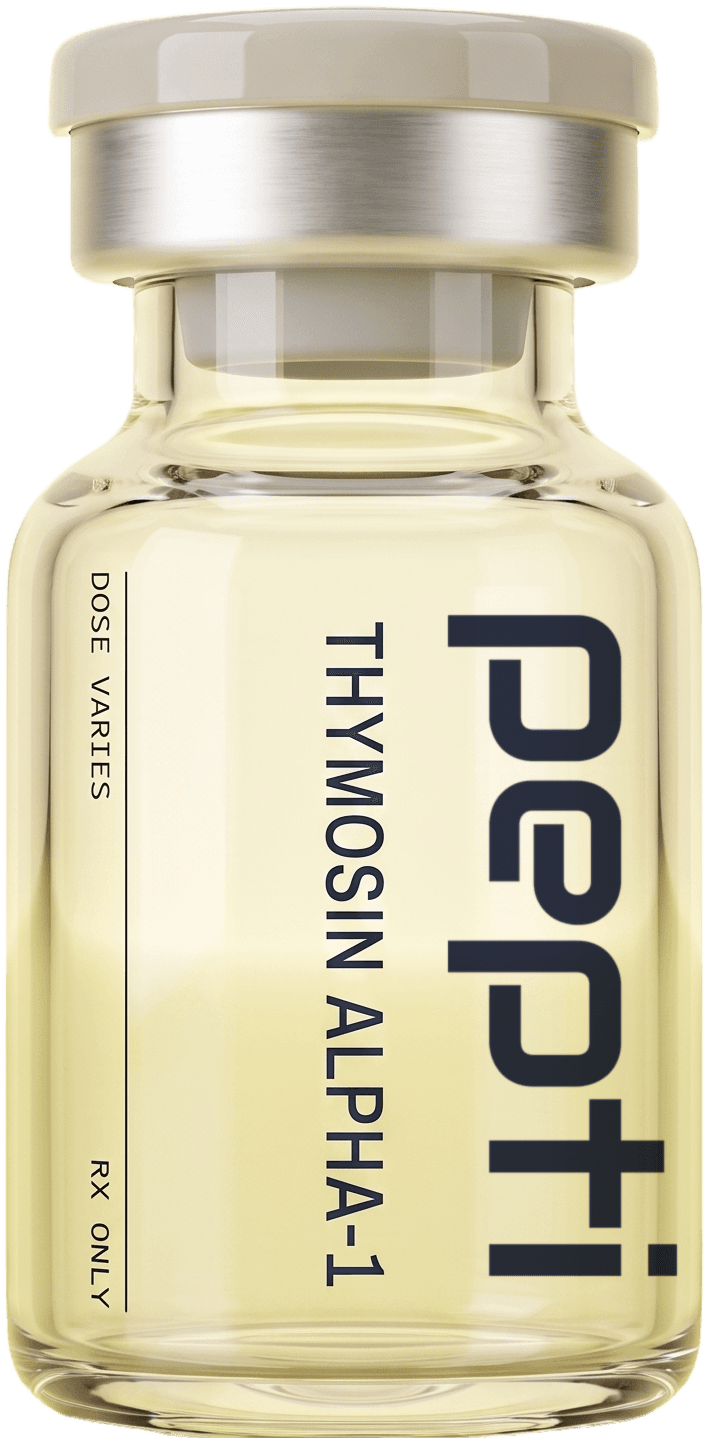
At pepti, Thymosin Alpha-1 is positioned as a doctor-prescribed injectable peptide for immune support, not as a cure for infections or a replacement for standard medical care.
How does Thymosin Alpha-1 work in the immune system?
The short version: Thymosin Alpha-1 seems to improve immune coordination across multiple cell types. The longer version is that it influences both innate immunity, the fast first-line response, and adaptive immunity, the targeted response involving T cells and antibodies.
1. It may activate dendritic cells, the immune system’s scouts
Dendritic cells are antigen-presenting cells. Their job is to detect suspicious material, process it, and present it to T cells so the adaptive immune system knows what to target.
Research suggests Thymosin Alpha-1 can support dendritic cell maturation and function. That may include better antigen presentation through major histocompatibility complex molecules and improved communication with T cells.
Think of dendritic cells as the scouts and briefers of the immune army. If the briefing is weak, the response can be slow or poorly targeted. If the briefing is too intense, inflammation can escalate. Thymosin Alpha-1 is interesting because it appears to help tune that briefing process.
2. It may support T-cell signaling and balance
T cells are central to cellular immunity. CD4 helper T cells coordinate immune activity, while CD8 cytotoxic T cells help identify and eliminate infected or abnormal cells.
Studies have reported that Thymosin Alpha-1 may increase T-cell maturation markers, support interleukin-2 signaling, and improve CD4/CD8 immune coordination in certain settings. It is also studied for its ability to support a Th1-type immune response, which is important for intracellular threats such as viruses.
That does not mean more immune activity is always better. A balanced T-cell response is the goal. Overactivation can contribute to tissue irritation and autoimmune flares, while underactivation can leave people feeling like they never fully bounce back.
3. It may influence natural killer cells
Natural killer cells, or NK cells, are part of innate immunity. They patrol the body and respond quickly to infected or stressed cells without needing the same level of antigen-specific training as T cells.
Thymosin Alpha-1 has been studied for effects on NK cell activity, particularly in immune-compromised or chronic viral contexts. NK cells are one reason researchers are interested in TA-1 for immune resilience: they sit at the intersection of fast response and immune surveillance.
For patients asking about immune support, this is an important distinction. Thymosin Alpha-1 is not just about antibodies. Much of the interest centers on cell-mediated immunity, the side of the immune system that helps manage infected cells.
4. It may help regulate cytokines
Cytokines are messenger proteins. They tell immune cells when to activate, recruit help, reduce inflammation, or begin tissue repair.
In studies, Thymosin Alpha-1 has been associated with changes in cytokines such as interferon-gamma, interleukin-2, interleukin-10, and tumor necrosis factor-alpha, depending on the disease model and immune context. This is one reason the phrase immune-modulating peptide is more accurate than immune stimulant.
A true immune stimulant would push the gas pedal. A modulator may help the system use the gas and brake more appropriately.
Thymosin Alpha-1 and toll-like receptors
One of the most discussed mechanisms involves toll-like receptors, especially TLR2 and TLR9. Toll-like receptors are pattern-recognition receptors that help immune cells detect microbial signals.
A 2007 line of research helped connect Thymosin Alpha-1 with TLR signaling, dendritic cell activation, and downstream immune effects. TLR signaling can influence interferons and other cytokines that matter in antiviral defense.
This is also why TA-1 research often shows context-dependent effects. In one setting, the peptide may support immune activation. In another, it may help temper excessive inflammatory signaling. The immune system is not a light switch; it is a network.
What is Thymosin Alpha-1 studied for?
Thymosin Alpha-1 has been researched across several immune-related areas. The strength of evidence varies, and many studies use it as an adjunct rather than a stand-alone therapy.
Common research areas include:
- Chronic viral infections, including hepatitis B and hepatitis C studies from the 1990s and 2000s
- Immune support during severe infections, including sepsis research and meta-analyses published in the 2010s
- Respiratory viral illness, including COVID-era studies from 2020 onward, especially in hospitalized or immune-compromised populations
- Adjunctive oncology immune support, where the goal is immune resilience and treatment tolerance, not direct cancer treatment by the peptide itself
- General immune dysregulation research, particularly in people with recurrent infections or low immune markers
It is important to be precise: Thymosin Alpha-1 is not an antibiotic, antiviral, or vaccine. It does not directly kill pathogens the way an antimicrobial peptide may. For example, LL-37 is often discussed for antimicrobial defense, while Thymosin Alpha-1 is discussed more for immune communication.
How is Thymosin Alpha-1 different from other immune peptides?
People often group immune peptides together, but their mechanisms can be very different.
Thymosin Alpha-1 is primarily an immune-signaling peptide. It is studied for T-cell, dendritic cell, NK cell, and cytokine effects. LL-37 is an antimicrobial defense peptide with membrane and immune-signaling activity. Glutathione is not an immune peptide in the same way; it is the body’s master antioxidant and is often used to support oxidative stress and detox pathways.
That distinction matters clinically. Someone dealing with recurrent infections, poor recovery, high oxidative stress, or inflammatory symptoms may need a very different plan depending on their labs, history, medications, and risk profile.
What does Thymosin Alpha-1 feel like?
Mechanism does not always translate into a dramatic day-one sensation. Some people using physician-guided immune support report better resilience over time, fewer dips in energy during immune stress, or improved recovery patterns. Others may not feel obvious changes, especially if their baseline immune issue is not well matched to the therapy.
Because immune signaling shifts are subtle, tracking matters. Symptoms alone can be noisy. Sleep, heart rate, recovery, and HRV data from Pepti One can help patients and clinicians see whether recovery trends are improving alongside the treatment plan.
What dose of Thymosin Alpha-1 is used in studies?
Published Thymosin Alpha-1 protocols vary. Many clinical studies have used subcutaneous injections around 1.6 mg twice weekly, while some acute or higher-need protocols have used more frequent dosing for limited periods. Other wellness-oriented clinical protocols may use smaller or individualized schedules.
This is not a dosing recommendation. The right protocol depends on medical history, immune status, medications, pregnancy status, autoimmune risk, infection history, and physician judgment.
At pepti, treatment starts with an online assessment and physician review so the plan can be matched to the person, not copied from a message board.
Why bloodwork matters before immune peptide therapy
For immune-modulating peptides, baseline context is important. A person with recurrent infections, fatigue, inflammation, or poor recovery may have overlapping issues: thyroid dysfunction, metabolic strain, nutrient deficiencies, hormonal imbalance, sleep disruption, or medication effects.
Pepti offers physician-reviewed at-home blood testing, including hormone, metabolic, and thyroid panels. If a physician requires bloodwork and the patient has no recent labs, an at-home panel is available for $129. You can also review the biomarkers we test to understand how lab data informs safer therapy decisions.
Follow-up testing can help answer practical questions:
- Are liver and kidney markers appropriate for continued therapy?
- Are thyroid or metabolic issues contributing to fatigue or immune complaints?
- Are inflammatory or recovery trends improving?
- Should the plan shift toward sleep, nutrition, hormones, or oxidative stress support instead?
The best peptide plan is rarely peptide-only. For some patients, the Daily Pack can build daily supplement sachets from their own bloodwork, while Pepti One tracks sleep, HRV, heart rate, and recovery. That creates a simple loop: test, treat, track, then adjust.
Is Thymosin Alpha-1 safe?
In published studies, Thymosin Alpha-1 has generally been well tolerated. Reported side effects are often mild and may include injection-site irritation, headache, fatigue, or flu-like symptoms. However, immune modulation is not automatically appropriate for everyone.
People with autoimmune disease, transplant history, active cancer care, pregnancy, complex infections, or immune-suppressing medications should only consider Thymosin Alpha-1 with physician oversight. The goal is not to push the immune system harder at all costs; it is to support the right response in the right person.
If you are comparing sources online, avoid research-chemical or gray-market peptides that are not prescribed for you. Doctor-prescribed care offers physician review, licensed pharmacy fulfillment, clearer dosing instructions, quality standards, and recourse if something is not right. Learn more about gray market vs Pepti.
Frequently asked questions
What is the main Thymosin Alpha-1 mechanism?
The main Thymosin Alpha-1 mechanism is immune modulation through dendritic cells, T cells, NK cells, and cytokine signaling. It appears to help coordinate immune responses rather than simply stimulating the immune system.
Is Thymosin Alpha-1 the same as an antiviral?
No. Thymosin Alpha-1 is not an antiviral drug and should not be used as a replacement for standard infection treatment. It is studied as immune support, often as an adjunct in research settings.
How long does Thymosin Alpha-1 take to work?
Timelines vary based on the person and the reason it is prescribed. Some people notice changes in resilience or recovery over several weeks, while immune-marker changes may require follow-up tracking and lab context.
Do I need bloodwork for Thymosin Alpha-1?
A physician may request bloodwork depending on your history, symptoms, and risk factors. At-home testing can help identify thyroid, metabolic, hormonal, or nutrient-related issues that may affect immune resilience and treatment decisions.
Ready to find out whether Thymosin Alpha-1 or another physician-guided plan fits your goals? Take the free assessment at /assessment.