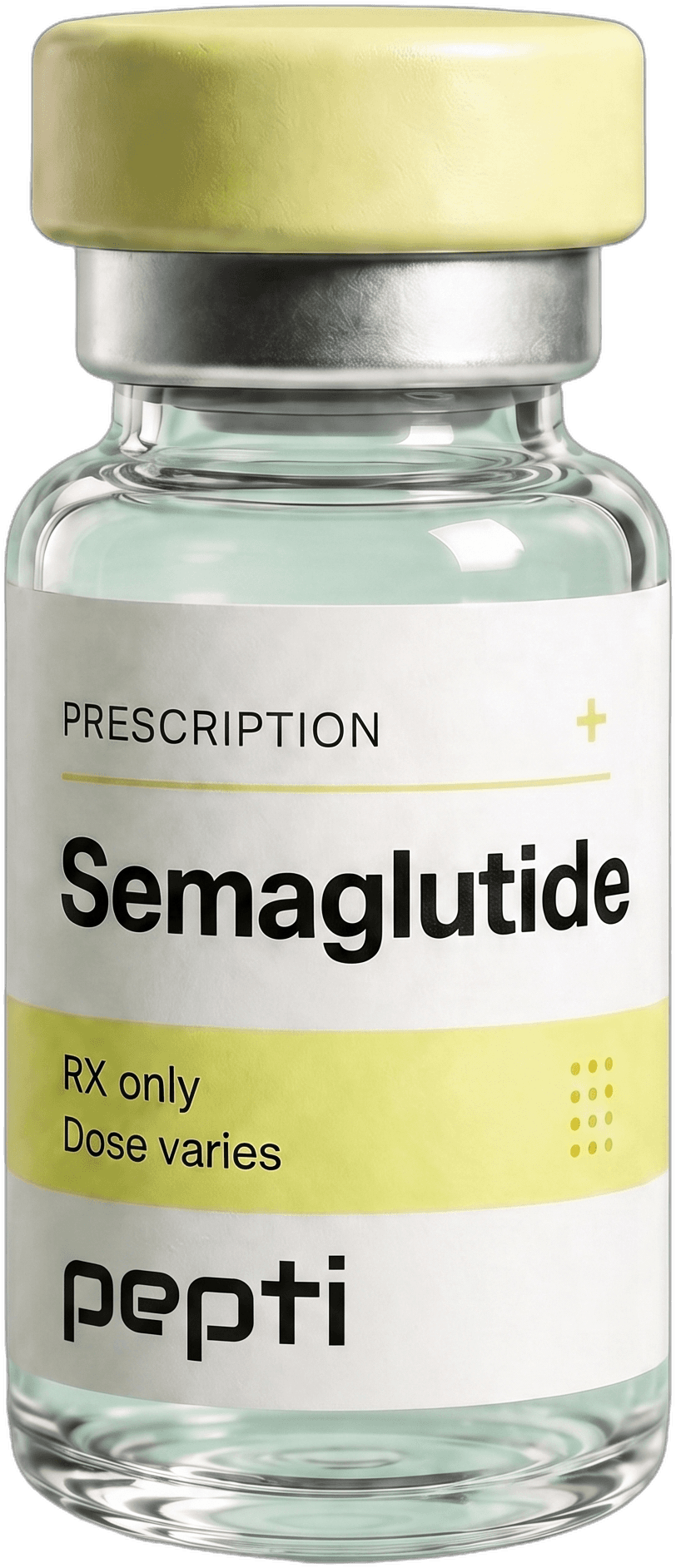
Gray-market peptide vials look cheap. A research-chem site might sell a vial for a third of what doctor-prescribed treatment costs per month, and on a price-per-vial spreadsheet, that looks like an easy win. But vial price isn't treatment price — and the gap between the two is where gray-market buyers quietly pay more than anyone.
What the cheap vial doesn't include
Verification. You don't know the dose is real, the compound is right, or the vial is sterile. Serious gray-market users know this, which is why forums recommend paying a testing service to analyze each batch — real money per order, on top of the "cheap" vial, to buy certainty a pharmacy provides by default.
A protocol. Dosing, reconstitution, timing, what to stack, what to avoid with your medications and conditions — the gray market outsources all of it to forum consensus. Getting it wrong wastes the vial at best.
Bandwidth and supplies. Bacteriostatic water, syringes, sourcing research, vetting new vendors when the old one disappears. It's a hobby's worth of overhead attached to your health.
Recourse. When a batch is bad, the money is gone. When a reaction happens, there's no one to call. When the vendor exits, your card and personal data went with an anonymous operator. None of this appears on the price tag; all of it is part of the price.
What all-in pricing actually covers
Doctor-prescribed care bundles the entire treatment into one published monthly number. At Pepti that includes the medication itself — compounded at an FDA-registered pharmacy that tests what it ships — plus the physician review, a written dosing protocol, ongoing access to your care team, supplies, and shipping. The full catalog with current prices is here, and what peptide therapy costs is broken down further in our cost guide.
Compare totals honestly: the gray-market route plus independent testing plus supplies plus your time lands closer to prescribed care than the vial price suggests — while still carrying every risk the pharmacy route eliminates.
The asymmetry that matters
Here's the real math. If the gray-market vial is fine, you saved some money that month. If it isn't — underdosed, contaminated, mislabeled — you injected it. The downside isn't a bad purchase; it's a health event with no one accountable. Pricing that risk at zero is the only way the gray market ever looks cheap.
FAQ
Why is doctor-prescribed peptide therapy more per month than a research vial?
Because it's a different product: tested medication from a licensed pharmacy, a physician's review and protocol, follow-up care, and accountability. The vial is one ingredient of that.
Is compounded semaglutide priced the same way?
Yes — GLP-1s at Pepti are one all-in monthly price with the physician care included. See semaglutide costs.
How do I know a "legit" site isn't just a gray-market seller with better design?
Run the public-record checks — pharmacy license, LegitScript, named prescribers, full pricing, real company identity. We keep the full checklist at gray market vs Pepti.