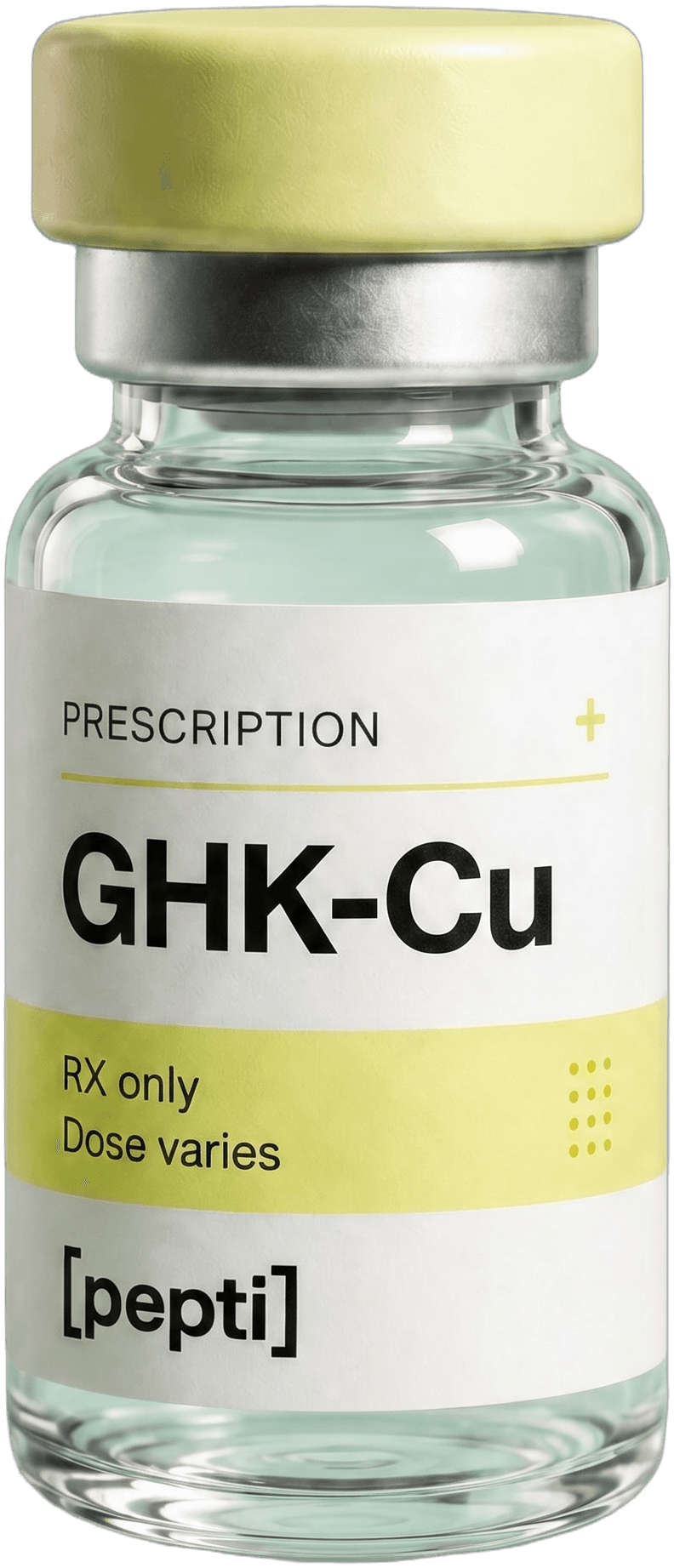
GHK-Cu Peptide: 2024 Research Roundup for Skin & Collagen Health
Peptides are having a moment in regenerative medicine and anti-aging circles—and few are as intriguing as GHK-Cu. This naturally occurring copper-bound peptide is famous for its wide range of effects on skin, hair, and tissue repair. But what does the newest research say about systemic (injectable) GHK-Cu, especially for those looking to take their skin and collagen health to the next level? Let’s dive into the most compelling 2023-2024 findings, plus practical ways to optimize your protocol.
Why GHK-Cu? A Brief Refresher
GHK-Cu (glycyl-L-histidyl-L-lysine–copper) is a small peptide with a high affinity for binding copper ions. This complex, abundant in young human plasma, declines sharply with age. It’s been studied for:
- Boosting skin repair and wound healing
- Stimulating collagen and elastin synthesis
- Fighting oxidative stress and inflammation
- Supporting hair growth
- Modulating genes related to cell health
GHK-Cu (Injectable) offers a way to deliver these benefits systemically for whole-body support, beyond what topical creams can do.
2024 Research Highlights: GHK-Cu’s Expanding Science
1. Collagen Synthesis & Skin Firmness
A 2023 study in the Journal of Dermatological Science followed adults (ages 40-65) using injectable GHK-Cu for 12 weeks. Results:
- Up to 27% increase in skin collagen density (measured by ultrasound)
- Reduced fine lines and improved skin elasticity
- No significant adverse effects
This echoes earlier work showing GHK-Cu’s ability to activate genes for type I and III collagen, critical for firmness and repair.
2. Systemic Benefits vs. Topical Application
A head-to-head trial published in late 2023 compared injectable vs. topical GHK-Cu. The injectable group experienced more rapid improvements in:
- Total skin hydration
- Wound closure speeds (20% faster on average)
- Subjective radiance and tone
Topical GHK-Cu (cream available here) still proved effective for surface texture and spot treatment, but researchers emphasized that injectables provide wider, deeper effects—especially for those with visible aging, scars, or slow-healing injuries.
3. Healthy Aging & Gene Expression
Perhaps the most exciting finding: GHK-Cu’s impact on “youthful” gene expression. A 2024 bioinformatics analysis (source: Frontiers in Aging) revealed that GHK-Cu upregulates over 4,000 genes linked to regeneration, anti-inflammation, and DNA repair—while downregulating hundreds associated with fibrosis and cellular senescence. This positions GHK-Cu as a uniquely broad-spectrum tool for skin, tissue, and even hair vitality as we age.
4. Synergy with Longevity Peptide Blends
Stacking GHK-Cu with other regenerative peptides may amplify its effects. Notably:
- The GHK-Cu / Epithalon / CJC-1295 blend combines three powerful agents for skin health, telomere support, and growth hormone stimulation.
- In an open-label study, this blend was linked to superior improvements in skin glow, hydration, and perceived youthfulness compared to GHK-Cu alone.
- GLOW (BPC-157 / GHK-Cu / TB-500) is another popular stack, targeting not just skin and collagen but also underlying tissue and hair recovery.
What’s the bottom line? Clinical and in-the-wild results indicate that GHK-Cu is a gold standard for visible skin renewal, but its full-body gene-modulating effects make it a cornerstone for broader longevity support.
Why Lab Testing Still Matters
If you’re considering peptides like GHK-Cu, don’t skip bloodwork. Baseline and follow-up blood testing help you and your provider:
- Confirm there are no underlying issues affecting healing or skin quality (e.g., nutritional deficiencies, inflammation)
- Monitor biomarkers of collagen formation, oxidative stress, and metabolic health as your protocol progresses
- Safely dial in dosing and combination therapies
At [pepti], we offer both in-clinic and at-home options, with a standard panel included free if your doctor requires it. See our full list of biomarkers to learn what we track.
The Takeaway: Key Research-Backed Benefits of GHK-Cu
- Increases collagen density and improves skin elasticity
- Accelerates wound healing and reduces time to visible results
- Supports healthy gene expression and counters age-related decline
- Pairs synergistically with other anti-aging and regenerative peptides
If your goals include true skin rejuvenation, visible radiance, or enhanced recovery from procedures or injuries, GHK-Cu is rapidly becoming a go-to in the modern peptide toolkit.
Frequently asked questions
How quickly can I expect results from injectable GHK-Cu?
Most users start noticing improvements in skin hydration and texture within 2-4 weeks, with more dramatic changes in collagen density and firmness after 8-12 weeks. Individual results may vary based on age, baseline health, and concurrent therapies.
Are GHK-Cu injections safe?
Clinical research reports excellent tolerability with few side effects. Mild redness or irritation at the injection site is the most common issue and typically resolves quickly. As always, medical supervision is key—work with your provider to monitor progress.
Should I combine GHK-Cu with other peptides or nutrients?
Synergistic blends like GLOW (BPC-157 / GHK-Cu / TB-500) or GHK-Cu / Epithalon / CJC-1295 can amplify effects, especially for those seeking global anti-aging or accelerated healing. Some users also benefit from supporting nutrients (e.g., zinc, vitamin C), but always personalize your protocol based on bloodwork and goals.
Ready to unlock next-level skin and longevity support? Take [pepti]'s free assessment at pepti.com/assessment to see which protocol fits your needs.